
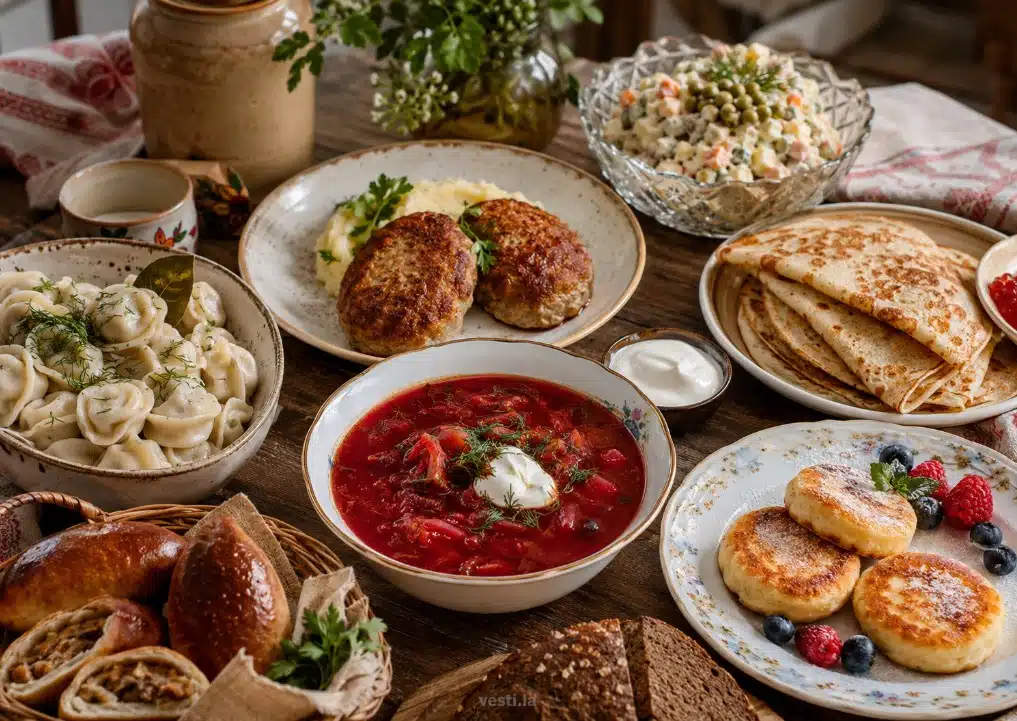
Searching for Russian food near me can lead to several very different places: a formal restaurant, a neighborhood deli, an Eastern European supermarket, a bakery, a prepared-food counter or a delivery kitchen.
The best choice depends on what you want. A restaurant is ideal for a complete plated meal. A deli may be better for home-style kotleti, salads and chilled dishes. A market can offer frozen dumplings, pantry staples and ready-to-heat food.
This guide explains what to search for, which dishes are most useful to recognize and how to choose between restaurants, delis, markets, bakeries, takeout and delivery.
To find Russian food near you, search beyond restaurants. Check Russian and Eastern European delis, specialty markets, bakeries, prepared-food counters, delivery apps and grocery freezers. Useful dishes to search by name include borscht, kotleti, pelmeni, beef Stroganoff, blini, syrniki, Olivier salad, pirozhki, solyanka and Napoleon cake. Verify current menus before visiting because many traditional dishes rotate by day.
Restaurant, deli, market, bakery or delivery?
“Russian food near me” does not describe one type of business. The strongest local result depends on whether you want a restaurant dinner, prepared food for home, imported groceries, fresh pastries or a fast delivered meal.
Russian restaurant
A restaurant is the best fit when you want food cooked to order, table service and a complete plated meal. Menus may include soup, appetizers, dumplings, hot mains, fish, grilled meat, desserts and banquet-style dishes. Some restaurants emphasize familiar comfort food, while others present Russian classics in a more polished contemporary way.
Check whether the restaurant serves lunch, dinner or both. Kotleti, soups and dumplings may appear only on a weekday menu, while roasts and seafood may be limited to dinner or special occasions.
- Dine-in
- Lunch or dinner
- Plated sides
- Possible banquet menu
Russian deli
A deli is often more useful when you want familiar home-style food without a formal meal. Prepared counters may sell kotleti, stuffed cabbage, cooked grains, potato dishes, salads, fish and desserts by piece, portion or weight.
The advantage is flexibility. You can build a family dinner from several items, compare the available dishes visually and buy exactly the amount you need. Availability may change throughout the day.
- Hot or chilled food
- Flexible quantities
- Family meals
- Rotating selection
Russian or Eastern European market
A market is the strongest choice for frozen dumplings, packaged kotleti, buckwheat, preserves, pickled vegetables, dairy products, dark bread, smoked fish, tea, sweets and imported pantry staples.
Many markets combine grocery shelves with a deli, bakery and hot-food section. That makes one visit useful for prepared meals and products for cooking at home.
- Frozen foods
- Groceries
- Prepared-food counter
- Imported products
Bakery or café
A bakery or café is a better target when you want pirozhki, blini, syrniki, Napoleon cake, pastries, tea and lighter breakfast or lunch food.
Search by the specific item. “Pirozhki near me” or “syrniki near me” may uncover a bakery that a broad cuisine search misses.
- Breakfast
- Pastries
- Coffee or tea
- Quick takeout
Takeout kitchen
Takeout kitchens can be ideal for a ready-to-eat dinner with kotleti, potatoes or buckwheat, soup, salad and bread. Some operate from small storefronts, while others focus on pickup and advance orders.
Look carefully at portion descriptions. A photograph may show two patties and several sides even when the listed price covers only one entrée.
- Fast dinner
- Lunch combinations
- Family trays
- Pickup
Delivery service
Delivery apps are useful when restaurants and delis do not maintain detailed websites. They may also reveal grocery stores, community meal services and small kitchens with same-day delivery.
Compare the app listing with the business’s own menu when possible. Delivery platforms can keep old dishes visible after availability changes, and fees can make a modest meal much more expensive.
- Restaurant delivery
- Grocery delivery
- Prepared meals
- Menu varies
What should you order first?
A first Russian meal does not need to include every famous dish. The easiest way to understand the cuisine is to build a balanced order: one soup or starter, one main dish, one fresh or pickled side and one dessert.
For a traditional comfort-food experience, begin with borscht or solyanka. Add kotleti, beef Stroganoff or pelmeni as the main course. Pair it with Olivier salad, cabbage, cucumber salad or pickled vegetables. Finish with syrniki or a slice of Napoleon cake.
- Borscht or solyanka for a hot first course
- Kotleti, beef Stroganoff or pelmeni as the main dish
- Olivier salad, cabbage salad or pickled vegetables on the side
- Blini, syrniki or Napoleon cake for something sweet

The main Russian dishes people search for
Searching by the exact dish name often works better than searching only for “Russian restaurant.” Menus, delivery applications and grocery listings may index each dish separately.

Borscht
Borscht is one of the first dishes many people search for, but the name covers several styles. A meat-based version may include beef, cabbage, potato, carrot and beet in a deeply flavored broth. A vegetarian version may rely entirely on vegetables.
Ask whether the broth contains meat if you need a vegetarian option. A bright beet color does not reveal how the soup was made.

Russian kotleti
Kotleti are ground-meat, poultry or fish patties often served with mashed potatoes, buckwheat, gravy, cabbage or pickles. They may be pan-fried, baked, breaded or finished in sauce.
Restaurants, delis and prepared-food counters may offer very different versions. Explore the complete Russian kotleti guide.

Beef Stroganoff
Beef Stroganoff combines tender beef with a creamy savory sauce, often with mushrooms and onion. It may be served with mashed potatoes, noodles, rice or another starch.
Restaurant interpretations range from restrained and beef-forward to very creamy. Menu photographs and recent reviews can help clarify the style.

Solyanka
Solyanka is known for a salty, sour and savory profile. Meat versions may contain several cooked or cured meats, pickled ingredients, olives and lemon.
Fish and mushroom versions also exist, so the menu description matters.
Pelmeni
Small filled dumplings commonly served with butter, sour cream, broth or dill. They may be boiled to order, sold frozen or packed as a takeout meal. Confirm the filling because beef, pork, mixed meat, chicken and other versions are possible.
Vareniki
Filled dumplings associated with several Eastern European traditions. Potato, cheese, cabbage, mushroom and fruit fillings are common. They may appear beside pelmeni, but the filling and culinary context differ.
Golubtsy
Stuffed cabbage rolls usually combine cabbage leaves with a meat-and-rice or other filling, then cook slowly in sauce or broth. Delis often sell them by piece.
Buckwheat dishes
Buckwheat is a common accompaniment to kotleti, mushrooms, meat and gravy. It can also appear as a prepared side sold by weight.
Roast and braised dishes
Depending on the restaurant, menus may include roasted poultry, braised meats, potatoes, cabbage, mushroom sauces and family-style platters.
Why a Russian deli can be more useful than a restaurant
Delis offer visibility and flexibility. You can compare the food before ordering, buy one portion or several family-size containers and combine hot dishes, salads and sides without committing to a formal meal.

What to check at the counter
- Which items were prepared that day?
- Are hot dishes sold individually or by weight?
- What meat is used in kotleti and stuffed dishes?
- How long can chilled salads be stored?
- Are sauces included or sold separately?
- Can large trays be ordered in advance?
A busy prepared-food counter is often useful because food turns over quickly. Still, appearance alone cannot confirm freshness, ingredients or storage conditions. Ask directly when an item contains mayonnaise, fish, pork, dairy or eggs.

Olivier salad
Olivier salad commonly combines potatoes, carrots, peas, eggs, pickles and a meat component with mayonnaise. Recipes differ, so confirm whether it contains sausage, chicken, ham or no meat.
Because it is mayonnaise-based, keep it chilled and avoid leaving it in a warm car.

Herring under a fur coat
Often called shuba, this layered salad typically includes salted herring, potato, carrot, beet and mayonnaise.
Herring and beet are central flavors. Ask how it is portioned because a small-looking slice can be filling.

Kholodets
Kholodets is meat set in a firm natural or prepared jelly. It is served cold and may be paired with mustard or horseradish.
Texture is as important as flavor, so buy a small portion before committing to a family tray.
What to look for in a Russian or Eastern European market
A market visit is more useful when you know which departments matter. The store may combine pantry staples, dairy, frozen food, bakery products, imported sweets and a full prepared-food section.
Pantry staples
Buckwheat, grains, pasta, flour, preserves, pickles, canned fish, tea, sunflower oil, mustard and seasonings are common starting points.
Dairy and chilled foods
Farmer’s cheese, sour cream, kefir, butter, cheeses and prepared salads may appear in the refrigerated section. Check dates and storage instructions.
Bread and bakery products
Dark rye bread, seeded loaves, buns, pirozhki and sweet pastries may be baked in-house or delivered from a regional bakery.
Frozen dumplings
Pelmeni and vareniki come in many fillings and package sizes. Compare meat percentage, dough thickness and cooking directions.
Frozen prepared meals
Kotleti, stuffed cabbage, blini, fish dishes and pastries may be raw, partially cooked or fully cooked. The label matters.
Sweets and tea
Candy, chocolate, wafers, cookies, preserves and tea can be useful additions, especially for a gift basket or dessert table.
Blini, syrniki and pirozhki deserve separate searches
A bakery or café may offer excellent Russian food without serving restaurant-style dinners. Search for individual items when you want breakfast, a snack, pastries or portable food.

Blini
Blini may be served with sour cream, jam, berries, cottage cheese, smoked salmon or savory fillings. Some cafés make them to order, while bakeries may sell filled blini chilled for reheating.
Check whether the menu means thin crepe-like blini or thicker pancakes, because English descriptions can be inconsistent.

Syrniki
Syrniki are compact cottage-cheese pancakes with a browned outside and tender center. They are commonly served with sour cream, jam, berries or condensed milk.
A good syrnik should taste of cheese rather than flour. Texture ranges from creamy to more cake-like.

Pirozhki
Pirozhki are individual baked or fried pastries filled with meat, cabbage, potato, mushroom, egg, rice, fruit or other fillings.
Ask which fillings are available that day and whether the pastries are baked or fried. Freshness matters because older pastries can become dry or oily.
Some dishes appear mainly for holidays or advance orders
A standard weekday menu does not represent the full range of Russian celebratory food. Stuffed fish, roast goose and elaborate layered salads may require advance ordering or appear only during holiday periods.

Stuffed fish
Stuffed fish can be a highly prepared family or holiday dish rather than an everyday restaurant entrée.
Confirm portion size, bones, filling and whether it is sold whole or by weight. A full fish may require ordering several days ahead.

Roast goose with apples
Goose is more likely to appear on a holiday menu, catering list or special family order than on a casual daily lunch menu.
Ask about ordering deadlines, weight, carving and included side dishes. A roast may be priced by weight rather than as a fixed entrée.

Napoleon cake
Russian-style Napoleon cake is built from thin pastry layers and cream. A good slice should be tender and cohesive without becoming an indistinct wet mass.
Bakeries may sell slices, small cakes or full celebration cakes by advance order. Keep it refrigerated and transport it level.

The freezer can be one of the most useful sections
Frozen-food aisles may carry pelmeni, vareniki, kotleti, blini, stuffed cabbage, prepared fish, pastries and ready-to-heat meals. These products can turn one store visit into several future dinners, but labels require careful reading.
Products that look similar may be raw, partially cooked or fully cooked. Cooking time and food-safety requirements are not interchangeable.
- Check whether the product is raw or precooked.
- Identify the meat, fish or filling.
- Compare the first ingredients, not only the front label.
- Look for cooking, baking or reheating instructions.
- Keep frozen items cold during transport.
- Do not rely only on exterior browning to judge doneness.
Russian food delivery and takeout require different choices
Soups, dumplings, sauced meat dishes and many home-style combinations travel well. Crisp breading, delicate pastries and freshly fried food may lose texture inside sealed containers.
- Borscht or solyanka in a secure soup container
- Beef Stroganoff with the starch packed separately
- Kotleti with gravy requested on the side
- Pelmeni with butter or sour cream packed separately
- Olivier salad transported promptly and kept cold
- Napoleon cake kept level and refrigerated

Do not rely on the dish name alone
Russian and Eastern European prepared foods often contain ingredients that are not obvious from appearance. Ask direct questions when avoiding pork, dairy, eggs, gluten, fish or mayonnaise.
Pork
“Meat” kotleti, pelmeni and stuffed cabbage may use mixed beef and pork even when pork is not named in the title.
Dairy
Sour cream, butter, milk and farmer’s cheese appear in many soups, sauces, pancakes and desserts.
Eggs
Eggs may appear in salads, pastries, kotleti, syrniki, breading and mayonnaise-based dishes.
Gluten
Bread, breadcrumbs, flour and dough are common in kotleti, dumplings, pastries, pancakes and cakes.
Fish
Herring, smoked fish, stuffed fish and fish kotleti may be stored near meat or vegetable prepared foods.
Vegetarian labels
A vegetable dish may still contain meat broth, dairy, egg or mayonnaise. Confirm rather than assuming.
Search by city, neighborhood and community—not only “near me”
Automatic location results can miss businesses whose websites are incomplete, whose menu is stored as an image or whose strongest presence is on a delivery platform or social page.
New York City
Search Manhattan, Brooklyn, Brighton Beach, Queens and nearby areas separately. Restaurant, deli and delivery results may differ substantially by borough.
South Florida
Search Miami, Sunny Isles Beach, Aventura, Hallandale Beach, Hollywood and Fort Lauderdale rather than relying on one broad Miami query.
Chicago and other major cities
Add “Russian deli,” “Eastern European market,” “prepared food” and exact dish names to city searches.
Toronto and Canada
Search for Russian, Ukrainian and broader Eastern European stores, but verify how each business identifies its cuisine and menu.
London and European cities
Bakeries, imported-food stores and catering businesses may appear more prominently than traditional restaurants.
Neighborhood searches
Searching the neighborhood name plus the dish often uncovers menus and community recommendations missed by generic results.
How to judge a restaurant, deli or prepared-food counter
A polished display can look appealing, but useful local discovery depends on more than presentation. Turnover, temperature, labeling, portioning and staff knowledge all affect the experience.
Look for active turnover
A busy counter where trays are replaced throughout the day is generally more promising than a large display that appears untouched. Freshly replenished food usually keeps a better texture, especially for kotleti, potatoes, grains and pastries.
Turnover matters even more for mayonnaise-based salads, cooked fish and fried items. Ask when a batch was prepared rather than assuming that a full tray is new.
Check temperature and storage
Hot food should be held hot, chilled food should remain cold and frozen products should be solidly frozen. Condensation, leaking packages or softened frozen products are practical warning signs.
When buying several chilled dishes, bring an insulated bag if the trip home is long. Prepared salads, dairy-based desserts and fish should not spend unnecessary time at room temperature.
Ask precise ingredient questions
“What is in this?” may produce a vague answer. More useful questions are: Does it contain pork? Is the broth meat-based? Is the sauce made with dairy? Are the dumplings filled with beef, pork or mixed meat?
Good staff do not need to recite a formal recipe, but they should be able to identify the main protein, common allergens and whether the product is raw or fully cooked.
Compare portion and price together
A lower listed price may cover one kotleta, one pirozhok or a small side rather than a complete meal. A deli price may be per pound, while a restaurant price includes sides and service.
Before deciding that one place is expensive, compare the full portion, included accompaniments, packaging and whether the food is ready to eat.
How to build a satisfying order without buying too much
Russian and Eastern European prepared-food counters can encourage over-ordering because many dishes look inexpensive individually. A few salads, two mains, several sides and dessert can quickly become a much larger purchase than planned.
A better strategy is to decide the role of the meal first. Are you buying lunch for one person, dinner for two, a family meal or a tasting selection? The right quantity changes dramatically.
Lunch for one
Choose one soup or one main dish, one modest side and a small salad. A large soup plus bread may already be enough. If ordering kotleti, confirm whether one or two patties are included.
Dinner for two
Share one soup, select two different mains and add one vegetable or salad. One dessert is usually enough for comparison, especially when Napoleon cake or syrniki are rich.
Family dinner
Buy one large hot dish or several kotleti, one grain or potato side, one chilled salad, pickled vegetables and bread. Add dessert only after estimating how filling the savory dishes will be.
When food is sold by weight, ask for the empty container to be tared correctly and request the approximate total before the order is finalized. For party trays, ask whether the listed price includes garnish, sauce, serving utensils or delivery.
Value is not only the lowest price. A slightly more expensive deli meal that reheats well and feeds several people may be better than a cheaper restaurant entrée that arrives without sides.
Use this seven-step plan when “near me” results are weak
- Start with the broad phrase. Search “Russian food near me” and scan restaurants, markets, delis and delivery results instead of opening only the first restaurant.
- Repeat the search with a city or neighborhood. Automatic location results may ignore nearby areas or city districts with stronger Eastern European food communities.
- Search exact dish names. Try borscht, kotleti, syrniki, pirozhki, pelmeni, Olivier salad and Napoleon cake separately.
- Add the business format. Use phrases such as “Russian deli,” “Eastern European market,” “Russian bakery,” “prepared food” or “Russian delivery.”
- Open the current menu. Do not rely only on review photos or old snippets. Search within the menu for transliterated and English names.
- Check recent activity. Recent posts, delivery listings, updated hours and current photographs are more useful than years-old reviews.
- Call before making a special trip. This is especially important for holiday dishes, deli salads, stuffed fish, roast goose and rotating lunch specials.
The best Russian food choice changes with the situation
Quick weekday lunch
A deli, café or takeout counter is usually more efficient than a full-service restaurant. Look for soup, kotleti, buckwheat, potatoes, salad and pirozhki sold in clear portions.
Lunch specials may offer the best value, but confirm service hours because they often end early.
Relaxed dinner
A restaurant is useful when you want several courses, table service and dishes served at their intended temperature. This is a good time to compare borscht, Stroganoff, fish or a plated kotleti meal.
Family meal at home
A deli or market can supply a complete dinner without the cost of individual restaurant entrées. Buy mains, sides and salads separately, then reheat only the foods that need it.
Holiday or celebration
Advance-order menus are often more important than the daily menu. Stuffed fish, roast goose, large layered salads and full cakes may require deposits and pickup windows.
Breakfast or coffee meeting
A bakery or café with syrniki, blini, pastries and tea is a better match than a restaurant centered on soups and meat dishes.
Cooking at home
Choose a specialty market for frozen dumplings, grains, preserves, farmer’s cheese, sour cream and other ingredients. Read preparation instructions before buying unfamiliar frozen products.
Menus change, so listings need visible verification
Food-discovery pages become unreliable when they copy old menus and never revisit them. A strong listing should show when the dish was confirmed and whether the source was an official menu, direct business information, a delivery platform or a recent in-person check.
Prices, hours, delivery zones and preparation methods can change without warning. A restaurant may remove kotleti, a deli may switch meat suppliers, a bakery may stop producing one filling and a market may replace an imported frozen brand.
Future Vesti pages should separate permanent offerings from rotating food. “Usually available,” “weekend only,” “holiday order,” “frozen product” and “daily deli selection” are not interchangeable labels.
- Record the exact business and location.
- Name the confirmed dish or product.
- Identify restaurant, deli, bakery, market, takeout or frozen format.
- Include the verification date.
- State whether availability is permanent or rotating.
- Provide a way to report changes.
How to bring prepared Russian food home without ruining it
Prepared food often tastes best when each component is handled separately. Hot soup, chilled salad, crisp pastries and gravy-covered meat should not all be packed or reheated in the same way.
Kotleti and meat dishes
Reheat gently so the center becomes hot without drying the edges. Cover loosely in the oven or add a small amount of sauce. Microwave heating is convenient, but short intervals are better than one long cycle.
Soups
Transfer soup to a saucepan when practical and heat gradually while stirring. Sour cream, lemon and fresh herbs are usually better added after reheating.
Salads
Keep Olivier, shuba and other chilled salads refrigerated. Do not heat them, and return unused portions to the refrigerator promptly.
Dumplings
Cook frozen pelmeni or vareniki according to the package directions. Precooked restaurant dumplings can be reheated gently with butter, broth or a small splash of water.
Pirozhki and bread
A moderate oven usually restores texture better than a microwave. Avoid overheating, which dries the dough before the filling becomes warm.
Napoleon cake
Keep the cake cold, level and covered. Remove it shortly before serving rather than leaving it at room temperature for a long period.
Ask the business for storage guidance when buying a large tray or an unfamiliar product. Their instructions should take priority because ingredients and preparation methods differ.
Addresses alone are not enough for a food atlas
A directory can list dozens of businesses and still fail the reader if it does not explain what each place actually offers. A useful Vesti listing should answer practical questions before someone leaves home.
For a restaurant, the page should identify the relevant menu section, whether the dish is available at lunch or dinner and what sides are included. For a deli, it should explain whether food is sold by piece, portion or weight. For a market, it should distinguish fresh prepared food from frozen and packaged products.
- Exact business name and current address
- Business type: restaurant, deli, bakery, market or delivery kitchen
- Confirmed dishes or products
- Typical availability and service hours
- Takeout, delivery and dine-in options
- Source and date of verification
- Important ingredient or ordering notes
Photos can help readers recognize a counter or dish, but they should not replace current menu confirmation. Old review photographs may show products that are no longer sold.
As the Russian food cluster grows, broad guides should lead to city pages, city pages to verified places and place pages back to the relevant dishes. That structure is more useful than publishing hundreds of thin location pages with repeated text.

Share your recipe and win cash prizes
Gotuimo welcomes original family recipes, quick dinners, desserts, comfort food, traditional dishes and creative ideas from cuisines around the world.
Join the Recipe ContestFrequently asked questions
Where can I find Russian food near me?
Search Russian and Eastern European restaurants, delis, bakeries, grocery stores, prepared-food counters and delivery applications. Try exact dish names as well as broad terms because some businesses do not use “Russian restaurant” in their primary category.
What Russian dishes should I try first?
A practical first meal could include borscht or solyanka, followed by kotleti, beef Stroganoff or pelmeni, with Olivier salad or pickles and a dessert such as syrniki or Napoleon cake.
Is a Russian deli the same as a Russian restaurant?
No. A restaurant focuses on meals served to order. A deli commonly sells chilled or hot prepared foods by piece, portion or weight. Some markets combine a deli counter, grocery store and small café.
What can I buy at a Russian food market?
Common products include frozen pelmeni and vareniki, kotleti, buckwheat, preserves, pickled vegetables, bread, dairy products, smoked fish, sweets, tea and ready-made salads or hot dishes.
What is the difference between blini and syrniki?
Blini are flour-based pancakes that may be thin and filled or topped with sweet and savory ingredients. Syrniki are compact pancakes made primarily from cottage cheese or farmer’s cheese.
Do Russian kotleti always contain pork?
No. Kotleti may contain beef, pork, a beef-and-pork mixture, chicken, turkey, fish or vegetables. Ask which protein is used because menus may simply say “meat cutlets.”
Is all borscht made with meat?
No. Borscht may be prepared with meat broth, pieces of meat or as a vegetarian soup. Confirm the broth and ingredients rather than assuming from the menu description.
Which Russian foods are good for delivery?
Soups, beef Stroganoff, pelmeni, kotleti, grain and potato sides, Olivier salad and many baked goods travel reasonably well. Ask for gravy, sour cream and delicate sauces separately when possible.
Why does the same dish have several English spellings?
Russian food names are transferred from the Cyrillic alphabet into English, and transliteration systems differ. Menus may also replace the traditional name with a descriptive translation.
How can I tell whether an online menu is current?
Check the business’s official website or ordering page, look for recent updates and call before traveling for one specific dish. Deli selections and lunch specials may change daily.
Are vegetarian dishes always free of meat broth?
Not necessarily. Vegetable soups, cabbage dishes, grains and sauces may still use meat broth, butter, sour cream or egg. Ask directly when this matters.
What should I order from a Russian deli for a family dinner?
A practical combination is one hot main such as kotleti or stuffed cabbage, one starch such as buckwheat or potatoes, one chilled salad, pickled vegetables and a dessert.
The best Russian food result may not be a restaurant
A restaurant is the right choice for a plated dinner, but a busy deli may have the most familiar kotleti, a bakery may be best for pirozhki and Napoleon cake, and a specialty market may provide the broadest selection of frozen and prepared food.
Search by dish, format, neighborhood and city. Check current menus, verify ingredients and distinguish permanent items from rotating specials.
As Vesti Food Atlas grows, this guide will connect directly to verified restaurant, deli, market, bakery, delivery and city pages rather than sending readers to thin or unconfirmed listings.


