
Vesti Food Atlas · Drink comparison
Ayran, tan, kefir and lassi can all arrive pale, cool and dairy-based, yet they do not offer the same experience. One is usually a clean, salty yogurt drink designed for the meal. Another may be herb-scented or sparkling. A third is defined by active fermentation, while the fourth can move from savory to sweet and fruit-filled without changing its name.
Ayran and tan are generally the closest pair: both are savory drinks built around yogurt, water and salt, though regional recipes and commercial products vary. Kefir is a fermented cultured-milk drink with a different production method and a more distinctly cultured flavor. Lassi is a broad South Asian yogurt-drink family that may be salty, spiced, sweet or blended with fruit. They overlap in appearance, but not in identity, taste or the role they play at the table.
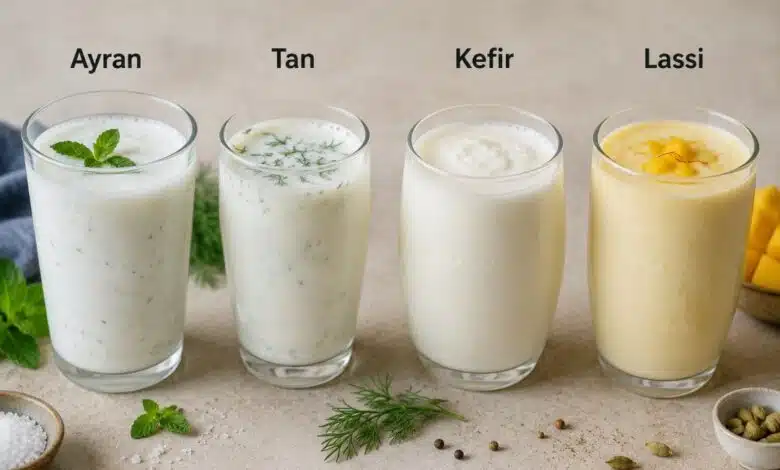
Salty, light and meal-friendly, usually made from yogurt, water and salt.
A related savory drink with regional differences; herbs or carbonation may appear.
Fermented cultured milk with a tangier aroma and a character of its own.
A flexible yogurt drink that may be savory, sweet, spiced or fruit-based.
Four drinks that look more alike than they taste
Place four unmarked glasses on a table and the confusion becomes understandable. Ayran may be bright white and lightly foamed. Tan can look almost identical, especially when still and unflavored. Plain kefir may be only slightly thicker, while a salted lassi can sit in the same visual neighborhood. The color tells you very little. Even thickness can mislead because restaurant mixing, brand formulas, fat content and serving temperature change the body of each drink.
The first sip, however, usually separates them. Ayran often tastes direct: yogurt tang, cool water and a measured salty finish. Tan can occupy a similar space but may bring mineral notes, herbs, a livelier acidity or bubbles, depending on the tradition and product. Kefir has the aroma and flavor of a cultured drink rather than diluted yogurt alone. Lassi may be savory and restrained, but it can just as easily taste of mango, rose, cardamom, sugar or other additions.
That is why “yogurt drink” is a useful starting category but a poor final definition. It describes a shared visual family without explaining technique, cultural context or intended use. Calling all four the same would be like calling every filled dough a dumpling and stopping there. The broad resemblance is real; the distinctions are what help you order intelligently.
Menus can deepen the confusion. A kebab restaurant may list ayran with almost no description because regular customers already know it. An Armenian market may place tan in a refrigerated case among other savory dairy drinks. Kefir may be sold in a dairy aisle near milk and drinkable yogurt. Lassi may appear under beverages, desserts or house specialties, and a restaurant may assume that “lassi” means mango lassi unless you ask about a salty version.
Start with the production method, not the color
The cleanest way to compare these drinks is to ask what happened before the liquid reached the glass. Was finished yogurt diluted with water and seasoned? Was milk fermented with a culture that gives the drink its defining flavor? Was yogurt blended into a savory or sweet beverage with spices, sugar or fruit? Those questions reveal more than the shade of white or the amount of foam.
| Drink | Basic structure | Typical flavor direction | What makes it distinct |
|---|---|---|---|
| Ayran | Yogurt mixed with water, commonly seasoned with salt | Savory, tangy, clean and refreshing | Its deliberately light, salty character and strong role as a meal beverage |
| Tan | Yogurt or a related cultured dairy base mixed with water; formulas vary | Savory and tangy; sometimes herbal, mineral or sparkling | Regional Armenian and neighboring traditions, plus a wide range of bottled styles |
| Kefir | Milk fermented with kefir cultures | Cultured, tart and sometimes lightly yeasty or effervescent | Fermentation is central to the drink rather than simply the yogurt used as a base |
| Lassi | Yogurt blended with water or milk and savory or sweet additions | Ranges from salty and spiced to sweet and fruity | It is a diverse drink family, not one fixed flavor profile |
A packaged product may bend these general patterns. Industrial producers can add stabilizers, flavorings, milk solids or carbonation. Restaurants can make their drinks thinner, richer, saltier or sweeter than you expect. The table is therefore a map, not a courtroom definition. It helps you ask better questions without pretending that every household, region and manufacturer follows one formula.
Ayran: a cool, salty drink built for the meal
Ayran is generally made by blending plain yogurt with water and salt until smooth. It is closely associated with Turkish food culture and is also part of a wider family of savory yogurt drinks found across neighboring regions. The familiar restaurant version is cold, pourable and refreshing, with enough acidity to wake up the palate but usually not enough thickness to feel like a snack in itself.
Its most recognizable quality is balance. Good ayran does not taste like salty milk, nor should it resemble a sweet smoothie with the sugar removed. The yogurt brings body and acidity, the water makes it drinkable beside food, and the salt sharpens the whole glass. Some versions are whisked or dispensed to create a generous cap of foam. Others are still and simple. The foam changes the first impression more than the basic identity.
Ayran works particularly well with foods that are hot, grilled, fatty, smoky or chile-spiced. It does not compete with them through sweetness. Instead, it cools, refreshes and resets the mouth between bites. This is why it feels at home beside kebabs, grilled meat, rice, flatbread, pide, lahmacun and other savory foods. It is not limited to meat, though; it can also suit vegetable dishes, lentil preparations and salty bakery foods.
For a fuller introduction to its ingredients, flavor and serving traditions, see Vesti’s guide to what ayran is and how to drink it. The present comparison focuses on where ayran ends and the neighboring drink categories begin.
First-time drinkers sometimes expect something close to buttermilk. The comparison can be useful only to a point. Both may be pale and tangy, but ayran is commonly understood through the deliberate combination of yogurt, water and salt, while buttermilk has its own production traditions and flavor. A better mental picture is “savory, drinkable yogurt made for the table.”
Ayran is also not automatically carbonated. Bottled products and related drinks can create that expectation, but a classic glass may be completely still. If bubbles matter to you, read the label or ask. A sparkling drink can feel brighter and more mineral; a still one tends to emphasize softness, yogurt and salt.
Tan: the closest relative, but not merely another spelling
Tan is a traditional Armenian yogurt-based drink and is also encountered in broader Caucasian and regional contexts. A simple form combines yogurt with water and salt. That basic structure makes tan look like an obvious synonym for ayran, and in some casual conversations the terms may be treated as near equivalents. Yet menus, households and producers can preserve meaningful distinctions in ingredients, texture, herbs, mineral water and carbonation.
The safest approach is cultural and practical at once: recognize the family resemblance without erasing the name on the bottle or menu. If a business calls its drink tan, call it tan. That name tells you something about the culinary tradition in which the drink is being presented, even when the ingredient list is short.
Tan may be still, but sparkling versions are common enough that many shoppers associate the drink with bubbles. Mineral water can give it a brisker texture and a slightly saline or stony impression. Dill, mint or other herbs may appear, especially in fresh or flavored versions. Commercial bottles range from very light and thirst-quenching to richer, yogurt-forward styles.
Look for carbonated water, mineral water, herbs and the exact dairy base. A bottle labeled tan may be plain and still, while another may be lively with bubbles and dill. Neither visual whiteness nor the word “traditional” tells you the entire formula.
At the table, tan fills much the same practical role as ayran: it can accompany grilled foods, breads, rice dishes, meat, vegetables and salty snacks. The bubbles in a sparkling version make it feel especially crisp with rich food. Herbs can connect it to fresh greens, cucumbers and summer dishes. A plain version may read as quieter and more dairy-centered.
The common mistake is to turn a close relationship into a claim of perfect sameness. Culinary language rarely behaves so neatly. Shared pastoral practices, regional exchange and related dairy techniques can produce drinks that resemble one another while remaining tied to different names and traditions. The reader does not need an artificial winner or a single origin story. The useful information is what is in this glass, how it tastes and how the maker identifies it.
When ordering tan in a restaurant, ask two short questions if the menu is vague: “Is it sparkling?” and “Does it contain herbs?” Those answers will often tell you more about the experience than a paragraph of generalized description.
Kefir: fermentation changes the entire drink
Kefir belongs in this comparison because it is pale, tangy, pourable and dairy-based. It is also the drink most likely to be misunderstood when someone groups everything under “salted yogurt.” Kefir is defined by fermentation with kefir cultures. The cultured character is not a side note; it is the organizing fact of the beverage.
Plain kefir is usually not salty. Its flavor can be tart, gently yeasty, creamy and more aromatic than ayran. Depending on the product and fermentation, it may show a faint natural effervescence. The texture often feels fuller than diluted yogurt, though commercial “drinkable” versions can be quite fluid. Sweetened and flavored kefirs also exist, which adds another layer of shelf confusion.
If ayran is designed to sit beside a kebab plate, plain kefir is often consumed more like a breakfast beverage, snack, cultured dairy food or ingredient. People may drink it on its own, pour it over grains, blend it with fruit or use it in cold preparations. That does not prevent it from accompanying savory food, but the social role is less tightly fixed around the meal.
Kefir’s acidity can be sharper and more complex than the clean tang of ayran. It may linger in the nose and finish. Some drinkers love that fermented depth immediately; others find it surprising. Salt is not there to frame the acidity, so the beverage reads as cultured first and refreshing second.
What kefir is not
It is not simply ayran without salt. Removing salt from ayran would not reproduce the microbial culture, aroma or fermentation profile associated with kefir.
What to inspect
Check whether the product is plain, sweetened or fruit-flavored. “Kefir” on the front does not guarantee a neutral drink, and added sugar can change how it pairs with food.
The distinction also matters in recipes. Swapping kefir for ayran can add acidity and body but may remove salt and change fermentation flavor. Swapping ayran for kefir can make a mixture thinner and saltier. In some home cooking the substitution may still work, but it is a deliberate adjustment rather than a perfect exchange.
For a shopper choosing among refrigerated bottles, the practical rule is straightforward: pick kefir when you want the taste of cultured fermentation itself. Pick ayran or tan when you want a savory, salted drink whose job is to accompany food.
Lassi: one name, several very different experiences
Lassi is not a single fixed recipe. It is a South Asian family of yogurt drinks that can be savory or sweet, plain or spiced, thin enough to drink easily or thick enough to feel almost like a shake. This range explains why an American diner may hear “lassi” and picture mango, while another person thinks first of a salted drink seasoned with cumin.
Salted lassi is the closest member of the lassi family to ayran in flavor direction. Both use yogurt and water and can be refreshing beside a meal. Yet salted lassi may include roasted cumin, black salt, mint, coriander, ginger or other seasonings that shift it away from ayran’s usually spare profile. Regional and household versions vary widely, so the word “salted” still does not reveal every spice.
Sweet lassi moves into another category. Sugar, fruit, rose, saffron, cardamom or other aromatics can turn the drink into a cooling treat or a dessert-like accompaniment. Mango lassi, perhaps the most familiar restaurant version in the United States, combines yogurt with mango and sweetness. It shares dairy and tang with ayran but not the same culinary function.
That difference matters when ordering spicy food. A sweet mango lassi can soothe heat, but it also adds fruit and sugar to the meal. A salty lassi refreshes in a more savory register. Ayran is usually leaner and simpler, with no fruit or dessert character. None is universally better; they answer different appetites.
A pale yellow lassi may contain mango, saffron or another flavoring. A white lassi may still be sweet. The menu description—or one direct question about sweetness—is more reliable than appearance.
Restaurants sometimes list only “lassi” and then provide flavor choices. Others use “plain lassi” to mean sweetened plain yogurt, while “salt lassi” or “chaas” identifies the savory direction. Because naming varies, ask whether the plain version contains sugar. That one question prevents the most common surprise.
Lassi also demonstrates why broad food comparisons need humility. A single sentence cannot represent every regional term, spice combination or preparation across South Asia. The useful comparison is not “lassi equals this exact formula.” It is “lassi names a wider family than ayran, and the menu must tell you which branch you are ordering.”
What each drink feels like in the glass
Ingredients explain identity, but texture determines whether you enjoy the first sip. The same drink name can cover a surprising range, especially in bottled products. Still, a sensory map gives first-time buyers a realistic set of expectations.
Temperature modifies all of these traits. Very cold ayran can feel thinner and less salty than it does after warming for ten minutes. Chilled kefir can hide some of its aroma. Ice can dilute lassi, while a thick restaurant blend may stay rich even when cold. When comparing brands, serve them at similar temperatures or the coldest glass may seem “lighter” simply because your palate is less sensitive.
Foam deserves its own note. In ayran, a foamy top can make the drink seem airy and luxurious without changing the ingredients. In kefir, small bubbles may come from fermentation rather than whipping. In lassi, blending creates a smooth froth that carries fruit or spices. Similar visual effects can therefore have different causes.
The ingredient label tells most of the story
When the front of the bottle offers only a familiar name and an attractive pastoral image, turn it around. The ingredient list often resolves the central questions in seconds: Is the drink salty? Is it sweet? Is it carbonated? Are herbs present? Is fruit doing most of the flavor work? Is the base yogurt, cultured milk or reconstituted dairy ingredients?
Stabilizers and milk solids are not automatically signs of a bad product. They can help a bottled drink maintain texture during transport and shelf life. The practical question is whether the result matches what you want. A very stabilized lassi may feel thick and uniform. A simple house-made ayran may separate slightly if left standing and then come back together with a stir.
Serving size also matters. Sodium or sugar numbers can look modest until you notice that a bottle contains more than one serving. Readers managing a medically prescribed diet should use the product’s current nutrition label and professional guidance rather than relying on a general article. Formulas differ too much for one universal claim.
These drinks are normally dairy-based. Confirm ingredients if you have a milk allergy, lactose intolerance or another dietary restriction. Plant-based products may borrow familiar drink names, but their flavor and texture can differ substantially from traditional dairy versions.
Which drink belongs with which food?
Pairing is less about rigid rules than about the kind of relief or contrast you want. A salty, light drink can refresh without changing the flavor direction of dinner. A fermented drink can add its own tangy layer. A sweet lassi can soften spice while behaving almost like a small dessert.
With kebabs, grilled meat and smoky food
Ayran is the most straightforward choice. Its salt and acidity meet the char and fat without adding sugar. Plain or sparkling tan can work equally well, especially when herbs echo a plate of greens, onions or lavash. Kefir is possible but may feel more breakfast-like and fermented than the meal requires. Sweet lassi creates a stronger contrast and may be better when the spices are intense.
With curry and chile heat
Both savory and sweet lassi have a natural place. A salted version preserves the savory arc of the meal; mango or sweet lassi adds cooling richness and sweetness. Ayran can also be refreshing, but it will not bring the fruit or aromatic spices many diners associate with the lassi experience.
With breakfast
Plain kefir feels particularly comfortable here. Its cultured flavor suits grains, bread, fruit and simple morning foods. Sweet lassi can act as a substantial breakfast drink, while savory lassi can accompany paratha or spiced dishes. Ayran is less common as an American-style breakfast beverage, though there is nothing technically preventing the pairing.
With salty pastries and breads
Ayran and tan are excellent partners for filled breads, cheese pastries and savory bakery foods. Their lightness prevents the combination from becoming too rich. Herbal tan can be especially appealing with spinach, cheese or herb-filled pastries.
As a drink without food
Kefir and lassi are often the easiest to treat as standalone snacks because they can have more body. Ayran and tan can still be deeply refreshing alone, especially in hot weather, but their saltiness may make some drinkers immediately imagine lunch.
Choose ayran or tan when the plate is rich and savory, kefir when you specifically want fermented dairy character, and lassi when you want the drink itself to contribute spice, fruit or sweetness.
Restaurant glass, grocery bottle or homemade pitcher
The same drink name can feel different depending on where you meet it. A restaurant has freedom to adjust the ratio and serve the drink moments after mixing. A manufacturer has to protect consistency, transport and shelf life. A home cook can change the formula by taste, which means the final glass may reflect family habit more than a standardized recipe.
Restaurant ayran
Fresh ayran may be whisked vigorously or dispensed from a machine that produces a dramatic foam. It can taste brighter than a bottle because it has not spent days in packaging. The kitchen may make it slightly saltier to stand up to grilled food. Ask whether it is house-made when the texture matters to you.
Bottled tan
A sealed bottle makes carbonation and herbs easy to identify on the label. Shake only if the package instructs you to do so; opening a carbonated dairy drink after vigorous shaking is an avoidable mess. Chilling matters because warm carbonation and dairy acidity can feel aggressive.
Plain kefir from the dairy case
Commercial kefir is often uniform and easy to pour, but brands differ greatly in tartness. A bottle labeled “plain” may still have a softer, milder profile than a traditional fermented version. Flavored kefirs can be closer to drinkable yogurt in sweetness, so compare ingredients rather than assuming every kefir is austere.
Fresh lassi from a blender
Restaurant lassi can be made to order, which allows fruit, sugar and thickness to be adjusted. Ice, milk or cream may appear in some recipes. A freshly blended mango lassi often has a vivid aroma that packaged versions cannot fully imitate, while a salted lassi can be customized with cumin or herbs.
Homemade preparation makes the categories feel less mysterious. Ayran can be blended from yogurt, cold water and salt. A home tan recipe may use mineral water or herbs. Lassi changes direction according to seasoning. Kefir is the outlier because its defining step is fermentation with the appropriate cultures, not simply blending a finished yogurt base.
The surprises that catch first-time buyers
Most disappointment comes from an expectation mismatch rather than a bad drink. Someone wants a salty companion for lunch and accidentally buys sweet strawberry kefir. Another person expects mango lassi and receives a cumin-scented salted version. A shopper opens sparkling tan after shaking it. The products did what their labels promised; the buyer simply read the category too broadly.
Assuming every white drink is unsweetened
Plain appearance does not rule out sugar. Sweet plain lassi and sweetened kefir may contain no visible fruit.
Using thickness as the definition
Ratios and stabilizers vary. A thick ayran and a thin kefir can cross visually without changing identities.
Expecting all tan to sparkle
Carbonated tan is common, but still versions also exist. Check the label before opening.
Calling tan “just ayran”
The similarity is useful, but the menu name and cultural context deserve to be preserved.
Ordering “lassi” without naming a style
Ask whether it is sweet, salted, mango, plain or spiced. The word alone covers a wide range.
Treating kefir as a salty meal drink
Plain kefir is generally cultured and tart rather than salted. It may pair well, but it solves a different craving.
Another mistake is assuming that one disappointing brand represents the entire drink. Salt, acidity, milk fat and thickness vary significantly. A very thin supermarket ayran may not resemble a foamy restaurant glass. A mild mass-market kefir may not prepare you for a sharper cultured version. Try a second expression before deciding that the whole category is not for you.
Finally, do not use “authentic” as a shortcut for personal preference. A drink can be presented faithfully within one tradition and still be too salty, sour, thick or herbal for your taste. The better question is whether the product clearly identifies its style and delivers it well.
How the names appear on menus and store shelves
Real-life ordering rarely begins with a perfect four-column comparison. It begins with a short menu line, a bottle written partly in another language or a delivery-app description that says little more than “yogurt drink.” Learning a few wording patterns is therefore more useful than trying to judge authenticity from packaging design.
Ayran, yogurt drink and salted yogurt beverage
A Turkish restaurant will often use the word ayran without translation. Another menu may add “yogurt drink,” “salted yogurt drink” or “traditional yogurt beverage.” Those descriptions point in the right direction, but they may leave out foam, thickness and whether the drink is house-made. A menu that translates ayran as a smoothie can create the wrong expectation because the typical drink is savory and lighter than the sweet fruit blends many American diners call smoothies.
Spelling is usually stable, though labels may use uppercase lettering or place a brand name before the drink. The useful details tend to sit in smaller print: original, mint, light salt, full-fat, carbonated or family size. “Natural” does not tell you whether salt has been added, so the ingredient panel remains more reliable than front-label mood words.
Tan, tahn and descriptive translations
Tan may also appear transliterated as tahn, especially when an Armenian business chooses a spelling that guides English pronunciation. A market label may identify it as an Armenian yogurt drink, salted yogurt beverage or carbonated dairy drink. These translations help the shopper, but they do not replace the product name. When both appear, use “tan” for the drink and the English phrase as a description.
Herbal styles may be labeled with dill, mint or cucumber. A sparkling product may announce carbonation prominently, but another may mention it only in the ingredients. If the bottle feels firm or the package warns you to open carefully, treat it like a carbonated beverage and do not shake it.
Kefir, cultured milk and drinkable kefir
Kefir is commonly sold under its own name because the term is already familiar in American dairy cases. The qualifying words matter: plain, whole milk, low-fat, cultured, probiotic, strawberry, vanilla or drinkable. Marketing language about live cultures may be accurate for a particular product, but formulas and post-fermentation treatment vary. For taste comparison, the most important distinction is still plain versus sweetened.
Some stores group kefir with yogurt drinks, while others place it beside milk or specialty cultured dairy. That shelf location is a retail decision, not a culinary definition. A plain kefir beside mango yogurt smoothies remains kefir; a bottled ayran beside buttermilk remains ayran.
Lassi, mango lassi, salt lassi and chaas
Lassi requires the closest menu reading because the unmodified word may mean different things from one restaurant to another. “Mango lassi” is clear. “Sweet lassi” and “salt lassi” are also clear. “Plain lassi” is not: it can mean yogurt without fruit but still contain sugar, or it can mean a lightly seasoned savory drink.
The word chaas may appear for a thinner savory buttermilk or yogurt-based drink seasoned with salt and spices. Culinary usage varies by region and household, so it should not be collapsed into one universal lassi formula. On a menu, the business’s own description is the best guide. Look for cumin, mint, black salt, ginger, coriander, rose, cardamom and fruit names.
Delivery apps deserve extra caution. Beverage photos may be generic, and modifiers can be hidden under flavor choices. Read the selected option before checkout. A default mango lassi can remain selected even when the listing title says only “lassi,” while ayran may be offered as a can, bottle or house cup with different sizes.
Pronunciation does not need to become a barrier. A respectful attempt at the listed name is enough, and pointing to the item is perfectly normal. What matters more is preserving the distinction after you learn it. Calling every savory white drink ayran, every fermented milk kefir or every sweet yogurt blend lassi makes the menu less useful, not more accessible.
A four-glass decision guide
By this point, the choice should feel less like memorizing definitions and more like choosing the role you want the drink to play. Begin with flavor direction, then check texture and bubbles.
If the choice is still unclear, ask the server or read the label for three things: salt, sugar and carbonation. Those clues solve most real-world uncertainty. Fermentation cultures then separate kefir from the drinks primarily created by blending yogurt with liquid.
The four glasses share a family resemblance, but each has a different center of gravity. Ayran is about spare savory refreshment. Tan is about a related regional tradition with flexible expression. Kefir is about fermentation. Lassi is about range. Once those centers are clear, the menu becomes easier to read and the refrigerator shelf stops looking like four versions of the same white bottle.
Questions that come up before the first sip
Ingredients and traditions vary, but these practical answers cover the differences readers are most likely to encounter in restaurants and grocery stores.
Is ayran the same as kefir?
No. Ayran is generally made by mixing yogurt with water and salt, while kefir is a cultured milk drink created through kefir fermentation. Ayran usually tastes salty and clean; plain kefir is typically unsalted, more fermented in aroma and often fuller in body.
Are ayran and tan interchangeable?
They can be close enough to fill a similar role with food, but they should not automatically be treated as identical names. Tan is strongly associated with Armenian culinary tradition and may be made with mineral water, carbonation or herbs. Read the label or ask how the restaurant prepares it.
Which is sweeter, ayran or lassi?
Ayran is normally unsweetened and salty. Lassi can be savory, but many restaurant versions—especially mango lassi—are sweetened. Ask whether a plain lassi contains sugar because menu terminology varies.
Which drink is usually carbonated?
Tan is the one most commonly encountered in a deliberately carbonated bottled style, although still tan also exists. Ayran is usually still, kefir may have gentle natural effervescence from fermentation, and lassi is generally not carbonated.
What should I order with kebabs?
Ayran is the classic easy choice because its salt, acidity and light body suit grilled meat and bread. Plain or sparkling tan can be equally refreshing. Choose lassi when you want sweetness or spices to become part of the pairing rather than staying in a strictly savory lane.
Can I substitute kefir for ayran in a recipe?
Sometimes, but the result will change. Kefir is generally more fermented, may be thicker and is usually not salted. You may need to thin it and adjust salt. Ayran can make a recipe lighter and saltier, so substitutions should be based on the purpose of the ingredient rather than appearance alone.
Do all four drinks contain dairy?
Traditional versions are dairy-based. Packaged plant-based products may use similar names, but they can differ in flavor, texture and fermentation. Anyone with a milk allergy or other dietary restriction should confirm the current ingredient list rather than relying on the drink name.
Which drink has the strongest fermented taste?
Plain kefir usually has the most obvious cultured or fermented character. Ayran and tan are tangy because of their yogurt base, but salt, water and serving temperature often make them taste cleaner and more refreshing. Lassi varies too widely for one answer because it may be savory, sweet or fruit-flavored.
How can I tell whether lassi is salty or sweet?
Look for words such as salted, savory, masala, mango, sweet or rose. If the menu says only plain lassi, ask whether sugar is added. A white color does not guarantee that the drink is unsweetened.


