
Vesti Food Atlas · Kotleti Counter Audit
Finding Russian kotleti is one skill. Ordering the right kind is another. The same food can appear as kotleti, kotlety, kotleta, chicken cutlets, meat patties, homemade cutlets or simply “prepared meat” behind a deli counter. One label may lead to a tender ground-meat patty with onion and soaked bread; another may lead to a breaded chicken fillet. This guide is for the moment after you have found the restaurant, deli or market and need to decide what, exactly, is worth bringing to the table.
Ask whether the item is made from ground meat, which meat is used, and how it is cooked. Russian-style kotleti are usually shaped from a seasoned ground-meat mixture and then pan-fried, baked or occasionally finished in sauce. They are not the same as a whole breaded cutlet, a hamburger served in a bun or a round meatball. Once those three facts are clear, the rest of the order becomes much easier.
Three versions of the same dinner decision
You found the place—now find the actual kotleti
Menus written for an English-speaking audience often avoid the word kotleti because the staff expects customers to understand “cutlet” or “patty” more quickly. Unfortunately, both translations are broad. In American English, a chicken cutlet usually means a thin piece of whole chicken breast. A patty may suggest a burger. Neither translation automatically tells you whether the item is a Russian-style ground-meat kotleta.
The most reliable clue is the description of the meat. Phrases such as “ground chicken,” “ground beef and pork,” “minced meat,” “house-made meat patty” or “Russian-style cutlet” point in the right direction. A photograph can help, but appearance is not enough. A thick breaded schnitzel may resemble a kotleta from above, especially when covered with gravy.
Spelling varies for legitimate reasons. Kotleta is singular in several Slavic languages. Kotlety and kotleti are common plural or transliterated forms. A bilingual label may show Cyrillic beside English. Our separate explanation of why the same cutlet appears under several spellings is useful when a menu looks inconsistent but the food itself is clearly related.
Do not treat imperfect transliteration as a warning sign by itself. Small family restaurants and neighborhood markets often inherit spellings from old menus, suppliers, family members or local customer habits. The practical question is not whether the menu passes a language exam. The practical question is what mixture is being shaped, cooked and served.
Ask: “Is this made from ground meat, or is it a whole breaded cutlet?” That single question separates kotleti from schnitzel-style food faster than a long discussion about names.
The menu audit begins with the cooking method
The method tells you what texture to expect. Pan-fried kotleti usually develop browned patches and a slightly firmer exterior while remaining soft inside. Baked versions may be lighter in color and more evenly cooked. Kotleti finished in sauce can become tender but lose any crisp edge. Grilled versions exist, though they may lean closer to a kebab or burger experience depending on the mixture.
Breading complicates the picture. Some kotleti are rolled lightly in breadcrumbs before frying. Others have no exterior coating. A thin crumb layer can help browning and moisture retention without turning the food into a schnitzel. A heavy, visibly crisp shell suggests a different style and should be described clearly on the menu.
Ask whether the kotleti are cooked to order or reheated. Reheating is not automatically a flaw. Prepared-food kitchens often cook in batches, and kotleti can reheat very well. What matters is how long they have been held and whether the kitchen uses a method that preserves moisture. A pan or covered oven can revive them more gracefully than a long blast in a microwave.
Gravy should be treated as a separate decision. It can protect a lean kotleta and make mashed potatoes more satisfying, but it can also hide a dry interior. If you are trying a restaurant for the first time, request sauce on the side when possible. That lets you taste the meat mixture before the sauce becomes the loudest thing on the plate.
Restaurant kotleti: the plated version
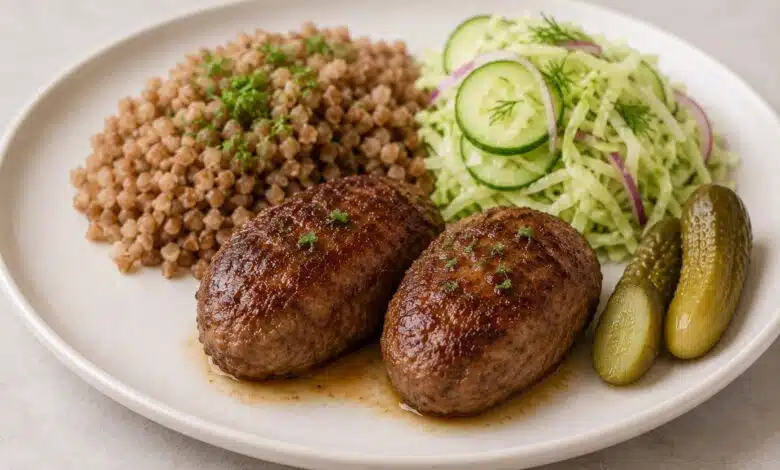
A restaurant order usually turns kotleti into a complete meal. One large kotleta or two smaller ones may arrive with mashed potatoes, buckwheat, rice, cabbage salad, pickles, sautéed vegetables, bread or gravy. The side dishes are not merely decoration. They reveal how the kitchen imagines the dish.
Mashed potatoes make the meal plush and familiar. Buckwheat creates a nuttier, drier contrast. Pickles and cabbage salad cut through richness. A fresh cucumber-tomato salad makes chicken kotleti feel lighter. Gravy pushes the plate toward comfort food, especially when the meat mixture is lean.
Portion size varies dramatically. Some restaurants serve two modest kotleti because the traditional plate assumes sides. Others shape one oversized patty for visual impact. Bigger is not automatically better. A very thick kotleta can brown beautifully outside while remaining dense in the center. Smaller pieces often cook more evenly and provide more browned surface.
Before ordering, ask what comes with the plate and whether substitutions are possible. A side of buckwheat may be central to the experience for one diner and unwelcome for another. If the menu offers a sampler, it can be an excellent way to compare chicken and meat versions without ordering two full entrées.
For a broader view of places that carry kotleti, prepared salads, soups and frozen foods, see our guide to where to find Russian kotleti in restaurants, delis and markets. This article picks up where that search ends: at the actual ordering decision.
The word “homemade” tells you less than you think
“Homemade” is one of the most persuasive words on a comfort-food menu. It suggests onions in a pan, a bowl mixed by hand and a recipe that has survived several kitchens. Sometimes that is exactly what it means. Sometimes it means only “our house style.”
A good menu description should do more. It should identify the meat, the cooking method or the most important ingredient differences. “Homemade chicken cutlet” still leaves open whether the item is ground chicken, a breaded breast, a Pozharsky-inspired cutlet or a frozen product reheated in-house.
Ask without embarrassment. A thoughtful kitchen will know whether the mixture contains soaked bread, breadcrumbs, milk, cream, egg, onion or butter. Staff may not reveal a full recipe, but they can usually explain the form. The answer matters for both expectations and allergens.
Comfort food does not need a family legend attached to every plate. It does need a clear identity.
Chicken kotleti need a different expectation
Chicken kotleti can be beautifully tender, but they are less forgiving than mixed beef-and-pork versions. Lean ground chicken dries quickly. The cook may add soaked bread, milk, cream, butter, egg or grated onion to protect moisture and soften the texture.
A good chicken kotleta should feel delicate without becoming mushy. The interior may be pale and fine-textured. A lightly browned crust provides contrast. It should not bounce like a processed nugget or crumble into dry granules.
Some restaurants use the name “chicken cutlet” for a whole breaded fillet. Others use it for ground chicken kotleti. If the menu photo is unclear, ask. Our detailed page on how chicken kotleti differ in texture and preparation explains baked, pan-fried and richer styles in more depth.
Chicken kotleti pair especially well with fresh salad, potatoes, rice and mild sauces. Strong gravy can overwhelm their gentler flavor. When ordering takeout, ask for sauce separately and avoid packing a wet salad underneath the hot meat.
Beef, pork and mixed-meat kotleti
There is no single mandatory meat formula. Some families prefer beef. Others use pork for richness. A beef-and-pork blend is common because pork contributes fat and softness while beef brings deeper flavor. Turkey, veal and mixed poultry versions also appear.
All-beef kotleti can be excellent when the mixture includes enough moisture and is not overworked. They can also become firm if the beef is very lean. Pork versions are often juicy and tender but may be richer than expected. Mixed meat usually offers the broadest margin for error.
Religious, cultural and dietary needs make the meat question essential. Do not assume “beef kotleti” means the mixture contains only beef unless the business confirms it. Some kitchens use a blend and name the dominant meat. Others fry different products on shared equipment.
Seasoning is usually savory rather than aggressively spicy. Onion, salt and pepper are common. Garlic, herbs and regional spice choices vary. The flavor should feel integrated, not like a sausage mixture packed into a patty.
At the deli counter, ask to see the inside
The deli counter is where kotleti become wonderfully practical and slightly mysterious. Several brown oval shapes may sit beside stuffed cabbage, cutlets, meatballs and schnitzel. Labels can be brief. Staff may be busy. This is where a focused question matters.
Ask which kotleti were made that day, which meat each tray contains and whether the price is per piece or per pound. If the counter allows, request one piece cut in half. The interior reveals moisture, texture and whether the mixture is fine or coarse. It also helps distinguish a ground-meat kotleta from a breaded fillet.
Look at the surface. Freshly cooked kotleti may have browned patches and a slight sheen. A dried gray edge suggests extended holding. Sauce can protect the surface, but pooled grease is less appealing. The pieces should hold their shape without looking compressed into rubbery blocks.
A well-run deli should provide reheating guidance. Ask whether the kotleti are fully cooked, whether they should be reheated covered, and whether a pan, oven or microwave is preferred. The answer may differ for chicken, beef and breaded versions.
Our guide to navigating an Eastern European prepared-food counter offers broader advice on portions, salads, sides and chilled meals. For kotleti specifically, freshness and moisture deserve the closest attention.
The deli label decoder
| Label | Likely meaning | What to ask |
|---|---|---|
| Beef kotleti | Ground-beef kotleti or a beef-dominant mixture | Does the mixture also contain pork or another meat? |
| Homemade kotleti | House-style patties with limited detail | Which meat, when made, and how cooked? |
| Chicken cutlets | Could mean ground chicken kotleti or whole breaded fillets | Ground chicken or whole chicken breast? |
| Pozharsky cutlets | A richer chicken-cutlet tradition or a house interpretation | What makes this version Pozharsky-style? |
| Meat patties | Broad English wording for a ground-meat item | Which meat, binder and seasoning are used? |
Labels are often written for speed rather than precision. The most useful counter staff will fill in the missing details. If the employee cannot explain the product at all, buy a smaller quantity first.
Frozen kotleti are not all at the same stage
The freezer aisle creates a different kind of risk: assuming every package can go straight into a pan. Some kotleti are raw and must be cooked fully. Others are partially cooked. Some are fully cooked and need reheating only. The package instructions are not optional fine print.
Raw frozen kotleti may look pale and soft through the package. Fully cooked versions are usually browned. Yet color is not a reliable safety indicator, especially when breading, sauce or photography is involved. Read the cooking stage exactly as stated.
Individually frozen pieces offer flexibility because you can cook only what you need. Kotleti frozen in a solid block require planning. Products packed in sauce may reheat gently but will not develop a crisp surface. Breaded versions need dry heat to preserve texture.
Check whether the instructions assume cooking from frozen or thawing first. Do not improvise based on another brand. Thickness, meat type and partial cooking all change the required time. A food thermometer is more reliable than judging by exterior color when cooking raw meat products.
The package must identify the cooking stage. If the wording is unclear, do not rely on appearance alone.
What the ingredient list reveals
The ingredient list helps explain texture before the package is opened. Meat should appear clearly. A blend may list beef, pork, chicken or turkey separately. Bread, breadcrumbs, milk, cream, egg, onion, soy protein, starch and added water can all serve structural or moisture-related roles.
A long ingredient list does not automatically mean the product is poor. Commercial food must disclose seasonings and functional ingredients that a restaurant menu may summarize. The useful question is whether the list supports the kind of kotleta you want.
Soaked bread or breadcrumbs can create tenderness and bind moisture. Egg may strengthen the mixture. Milk or cream may soften chicken kotleti. Added water can improve juiciness within limits, though excessive water may produce a spongy texture. Soy or starch may matter to diners with allergies or preferences.
Compare meat percentage when it is provided, but do not read one number in isolation. A very high meat percentage can still produce a dry kotleta if the meat is lean and the mixture lacks moisture. A balanced recipe may contain more bread or onion and still taste more satisfying.
Kotleti, burgers, meatballs and schnitzel occupy different plates
| Food | Structure | Typical service | Expectation |
|---|---|---|---|
| Kotleti | Seasoned ground-meat mixture, often with onion and a binder | Plated with potatoes, buckwheat, salad or gravy | Tender, savory and home-style |
| Burger patty | Usually ground meat with simpler seasoning | Commonly served in a bun | Meat-forward with a firmer bite |
| Meatball | Ground-meat mixture shaped round | Often with sauce, soup or pasta | Round, sauce-friendly and smaller |
| Schnitzel-style cutlet | Whole thin piece of meat, often breaded | Crisp, flat and plated with sides | Crunch and whole-muscle texture |
These categories can overlap at the edges. A cook may bread kotleti heavily. A meatball mixture may be flattened. A burger may contain onion and bread. The point is not to police every kitchen. It is to recognize the default expectation so that a menu translation does not surprise you.
A restaurant review can describe the wrong thing very confidently
Reviews are useful only when the reviewer expected the right dish. “It tasted like meatloaf” may be a complaint, but it can also indicate that the kotleta contained bread, onion and a soft ground-meat texture—exactly the qualities that distinguish it from a burger.
“Not crispy enough” is similarly ambiguous. If the reviewer expected schnitzel, the criticism tells you little about kotleti. “Too soft for a burger” may actually confirm a tender mixture. On the other hand, comments about a dry center, rubbery texture, stale oil or cold raw middle are relevant.
Look for detail. A useful review mentions chicken versus beef, freshness, portion size, sides, sauce and reheating. A photograph showing a cut interior is more informative than a distant plate shot. Recent reviews matter more because recipes, cooks and suppliers change.
Be cautious with the word “authentic.” Reviewers often use it to mean familiar, nostalgic, strongly flavored or served by people they associate with the cuisine. Those impressions can be sincere, but they do not replace a description of the actual food.
The first bite test
A good kotleta does not need theatrics. It should cut cleanly without resisting. The interior should look moist but fully cooked. The meat should hold together while yielding easily to the fork.
Then comes the texture. You want tenderness, not paste. A fine mixture can still feel natural if onion, meat fibers and browned surface create contrast. A coarse mixture can be satisfying, but it should not break apart into dry pebbles.
Flavor should feel even. One bite should not be all onion and the next all salt. If gravy is present, taste the meat first. If the kotleta is good on its own, the sauce becomes an addition rather than rescue work.
The best kotleta makes you notice how soft it is only after you have already reached for the next bite.
Ordering for one person versus feeding a family
For a mixed group, one kotleta per person may be enough if the pieces are large and the table includes soup, salad and sides. Small deli kotleti may require two. Children may prefer chicken versions, but richness and seasoning matter more than the label alone.
When ordering by weight, ask approximately how many pieces are in a pound. Piece size can vary enough to make weight-based planning confusing. For catering, request both the total count and the estimated servings.
What travels well—and what becomes disappointing
Kotleti generally travel well because they do not depend on a fragile crisp shell. They retain shape, reheat predictably and pair with sturdy sides. Problems usually come from packaging rather than the food itself.
Gravy should travel separately when possible. A crisp or browned surface softens under sauce. Hot kotleti should not sit directly on cold cucumber salad. Steam trapped around breaded pieces destroys texture. Mashed potatoes can become dense during a long trip, while buckwheat often remains more forgiving.
Our guide to which prepared foods keep their texture during delivery explains these tradeoffs across cuisines. For kotleti, the practical rule is to protect moisture inside without trapping unnecessary steam outside.
At home, reheat gently. A covered pan with a spoonful of water or broth can restore moisture. An oven works well for several pieces. The microwave is convenient but can toughen lean meat if used too long. Short intervals and resting time are better than one aggressive cycle.
The five questions worth asking
When the menu translation is imperfect but the food is right
A translated menu is a bridge, not a legal document. “Cutlet,” “patty,” “kotleta,” “kotlety” and “meat cake” may all appear. Some translations are elegant. Some are endearing. Some are so vague that they require a question.
What matters is whether the kitchen can explain the product honestly. A small deli that writes “chicken cutlets” but clearly identifies ground chicken kotleti when asked is more useful than a polished menu that uses heritage language inaccurately.
Respect works both ways. Diners should feel comfortable asking for clarity without mocking accents or wording. Businesses should understand that ingredient and cooking-method questions are reasonable, especially when pork, dairy, egg or gluten may be present.
The goal is not perfect terminology. The goal is a plate that matches the expectation created before the first bite.
A good kotleti order has a little contrast
Kotleti are soft, savory and comforting. They need contrast more than decoration. A neutral starch supports them. A fresh or pickled vegetable wakes up the plate. Sauce should complement rather than flood.
For beef-and-pork kotleti, buckwheat and pickles create a particularly satisfying balance. Chicken kotleti often shine with mashed potatoes and a fresh cucumber salad. A spoonful of gravy can be welcome, but a small bowl on the side is more useful than a blanket.
Good comfort food is not beige by definition. Add something crisp, sour or green. The plate will taste better and travel better. Even a simple lemony cabbage salad can make the entire meal feel more deliberate.
That is the pleasure of ordering kotleti well: not discovering a secret luxury, but assembling an ordinary meal with enough attention that nothing feels accidental.
Price, portion and the quiet math behind the counter
Price is easy to misunderstand because kotleti are sold in three different ways: per plate, per piece and by weight. A restaurant price usually includes sides and service. A deli price may cover only the meat. A frozen package may look inexpensive until you compare the number and size of pieces inside.
At a restaurant, read the plate as a complete composition. Two small kotleti with mashed potatoes, salad and bread may represent more food than one oversized kotleta sold with no sides. A higher price can reflect table service, made-to-order preparation and a composed meal rather than a more expensive meat mixture.
At a deli counter, ask whether the displayed price is per pound or per item. This sounds obvious, yet labels are often placed between trays, and customers assume the nearest number belongs to the product they are pointing at. If the kotleti vary in size, buying by count can produce a surprising total. If they are sold by weight, ask roughly how many pieces are in a pound before planning dinner.
Frozen products require another calculation. Compare net weight, piece count and cooking loss. A box containing eight very small kotleti may not feed four adults. A more expensive package with larger pieces and a higher meat content may deliver better value. Price per ounce is useful, but only when the products are at the same cooking stage. Raw kotleti and fully cooked kotleti do not compare neatly because moisture and cooking loss differ.
For a family meal, build the budget around the whole plate. Prepared buckwheat, mashed potatoes and deli salads can quickly cost more than simple sides made at home. One sensible compromise is to buy the kotleti from the specialist counter and prepare the starch and fresh salad yourself. The meal still benefits from the deli’s strongest item without turning convenience into an unnecessarily expensive dinner.
Catering orders need the clearest math. Ask for the exact number of pieces, average size and suggested servings. “Medium tray” is not a universal measurement. If the kotleti are one item in a buffet, guests may take one. If they are the main protein, plan for more. Add a small buffer because soft, familiar foods tend to attract repeat visits to the table.
The reheating test: where good kotleti survive and weak ones surrender
A restaurant plate gives you the cook’s preferred moment. Deli and frozen kotleti ask you to create that moment again. Reheating is therefore not an afterthought; it is part of the buying decision.
The microwave is fastest and least forgiving. Lean chicken kotleti can tighten around the edges before the center is hot. Use medium power or short intervals, cover loosely and let the piece rest. Resting allows heat to move inward without another aggressive burst. If the kotleta has gravy, the sauce can protect it, but stir or rotate so cold spots do not remain.
A covered skillet is excellent for fully cooked, unbreaded kotleti. Add a small spoonful of water, broth or sauce, cover and warm over moderate heat. The trapped steam heats the center while the pan restores some surface character. Remove the lid briefly at the end if the exterior needs to dry.
The oven works well for several pieces. Arrange them in one layer, cover at first to protect moisture, then uncover briefly if browning matters. Breaded kotleti benefit from dry heat and should not be buried under foil for the entire reheating time. A toaster oven can handle a small batch efficiently.
Air fryers can revive a crisp coating, but they also dry lean meat quickly. Lower heat and shorter time are safer than treating the kotleti like frozen fries. Sauce-covered versions do not belong in an air fryer unless the appliance and container are designed for it.
Raw frozen kotleti are a different task entirely. Follow the package directions and verify safe doneness with an appropriate food thermometer. Do not use deli reheating advice for uncooked meat. Partially cooked products also require full cooking, even when the exterior already looks browned.
A useful buyer’s test is to reheat one piece before committing to a large quantity. Good kotleti should remain tender and cohesive. If the first piece turns rubbery after careful warming, the issue may be the product rather than your technique. If it stays moist, you have found the kind of prepared food worth keeping in rotation.
What a good prepared-food counter quietly gets right
The best counters do not need chandeliers, nostalgic signage or a hundred trays. They need clarity. Labels should identify the product. Staff should know the meat and cooking stage. Hot and cold foods should be handled in a way that makes sense. The display should look active rather than abandoned.
Turnover is one of the strongest signals. A tray that is refilled regularly often offers a fresher product than a beautiful mountain of food that sits untouched. This does not mean the counter must be crowded. It means the business appears to understand how much it sells and when to prepare the next batch.
Surface appearance tells part of the story. Kotleti should not have a leathery edge, cracked crust or pool of separated fat. A little browning and a light sheen are appealing. Very wet sauce can hide deterioration, so ask when the tray was prepared.
Staff confidence matters more than sales language. “These are chicken, made this morning, fully cooked, and best reheated covered in a pan” is a useful answer. “They are very good” is not enough. A trustworthy employee may even steer you toward the fresher tray or explain that a particular version is better for the oven than the microwave.
Good counters also understand accompaniment. They can suggest a side that matches the kotleti rather than simply pointing to the most expensive salad. Chicken may suit cucumber salad and potatoes. Rich mixed-meat kotleti may benefit from cabbage, pickles or buckwheat. This kind of advice shows familiarity with the food as a meal.
Clean presentation matters, but perfection is not required. Kotleti are handmade-looking food. Slight differences in shape are natural. What should remain consistent is size within the same batch, full cooking, proper holding and honest labeling.
Finally, notice whether the counter welcomes small purchases. Being able to buy one or two pieces encourages customers to test unfamiliar items. A business that insists on a large commitment without providing information makes discovery harder. The best deli relationship often begins with one kotleta, one side and a clear reheating instruction.
Questions from the kotleti counter
These are the practical questions that come up when the menu is vague, the counter is busy or the freezer package is not as clear as it should be.
What should I ask before ordering Russian kotleti?
Ask whether the item is made from ground meat, which meat is used, how it is cooked and what comes with the portion. At a deli, also confirm when it was prepared and whether the price is per piece or by weight.
Are Russian kotleti made from ground meat?
Usually, yes. Russian-style kotleti are commonly shaped from seasoned ground or minced meat, often with onion and a moisture-retaining ingredient such as soaked bread or breadcrumbs.
Are kotleti the same as hamburgers?
No. Both may use ground meat, but kotleti are generally seasoned and structured as a plated home-style dish rather than a burger patty intended for a bun. They often include onion, bread or another binder and are served with potatoes, buckwheat, salad or gravy.
What is the difference between kotleti and schnitzel?
Kotleti are usually made from a ground-meat mixture. Schnitzel is typically a thin whole piece of meat that is breaded and fried. Menu translations sometimes call both cutlets, so ask whether the meat is ground or whole.
Can Russian kotleti contain pork?
Yes. Pork may be used alone or blended with beef for richness and tenderness. Even a label that emphasizes beef may refer to a mixed recipe, so confirm when pork avoidance matters.
Are chicken kotleti usually breaded?
Not always. Some are lightly coated in breadcrumbs before frying, while others are cooked without an exterior coating. A heavily breaded whole chicken fillet is a different type of cutlet.
How many kotleti come in one restaurant order?
There is no standard number. A plate may include one large kotleta or two smaller pieces, usually with sides. Ask about the portion if the menu gives only a dish name and price.
Can deli kotleti be reheated in a microwave?
They can, but short intervals are better than one long cycle. Lean chicken kotleti toughen easily. A covered pan or oven often preserves moisture more evenly, especially when reheating several pieces. Follow the deli’s instructions when available.
How do I know whether frozen kotleti are already cooked?
Read the package statement and cooking directions. Do not rely on color or photography. The label should identify the product as raw, partially cooked or fully cooked and explain whether to cook from frozen or after thawing.
What sides are commonly served with kotleti?
Mashed potatoes, buckwheat, rice, cabbage salad, cucumber-tomato salad, pickles and gravy are common companions. The exact combination depends on the kitchen and the type of kotleti.


