
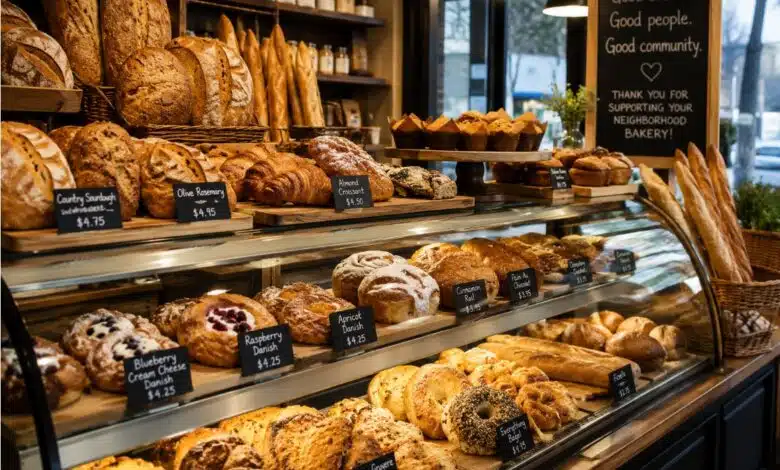
A good neighborhood bakery has a rhythm before it has a brand. The bread is not equally good at every hour. The croissants do not wait politely all day without changing. Filled pastries have a shorter emotional life than cookies. Holiday breads appear for a few weeks, then vanish. By late afternoon, the shelves tell you what sold, what was overproduced and what the regulars knew to reserve.
This is why judging a bakery from one beautiful display can be misleading. A bakery is a cycle: mixing, proofing, baking, cooling, filling, selling, replenishing and deciding what deserves another batch. The best neighborhood bakeries make that cycle visible without turning it into theater.
I think of a strong bakery less like a luxury boutique and more like a beautifully run wardrobe. There should be dependable basics, a few seasonal pieces, one or two signatures, and enough editing that every shelf has a reason to exist.
A good neighborhood bakery combines reliable bread cycles, fresh pastries, a clear regional identity, seasonal rotation and practical takeaway. The strongest signs are consistent crust and crumb, products baked in waves rather than all at once, fillings that taste fresh instead of overly sweet or heavy, staff who can explain timing, and a selection that reflects what local customers actually buy.
Before the door opens, the bakery has already made its most important decisions
The first loaf begins long before the first customer. Dough may be mixed the previous evening, fermented overnight, shaped before dawn and baked in stages. Pastry dough needs chilling and turns. Fillings must be cooked, cooled and portioned. The bakery’s quality is determined by this invisible schedule.
A neighborhood bakery cannot simply bake everything at six in the morning and expect every product to remain equally good until closing. The strongest shops plan several small peaks.
Bread wants enough cooling time to set its crumb. Croissants want to be eaten while their layers still feel crisp and distinct. Custard pastries want controlled refrigeration. Savory pies may need reheating. Cookies and rusks tolerate a longer day.
A bakery that understands timing
Produces in waves, tells customers what just came out, and does not pretend every item has the same ideal selling window.
A bakery that only understands display
Fills the shelves early, keeps everything looking abundant and relies on glaze, packaging or reheating to hide age.
Abundance can be reassuring and suspicious at the same time
A completely full bakery case at closing may look generous, but it raises questions about turnover. A nearly empty case at noon may suggest poor planning. The ideal is movement: products being replaced, trays changing, staff bringing out new batches and customers buying enough that the display never feels frozen.
Good bakeries accept that some items will sell out. Sellouts are not automatically proof of excellence, but a bakery that never risks selling out may be baking for appearance rather than freshness.
The morning bread test begins with sound, not perfume
The smell of bread can make almost any bakery feel convincing. Crust tells you more. A good loaf should sound dry and resonant when handled, not soft from steam trapped in plastic.
Ask when the loaf was baked, but also ask when it should be eaten
A baguette may be best within hours. A sourdough loaf can improve after cooling. Dense rye may slice better the next day. Enriched breads may stay soft for several days. The staff’s answer reveals whether the bakery understands the product beyond the point of sale.
The bakery should know its everyday loaf
A neighborhood bakery does not need twenty breads. It needs one or two dependable loaves people return for: the sandwich bread, rye, sourdough, flatbread or seeded loaf that works in actual kitchens. Signature pastries attract first visits. Reliable bread creates regulars.
A good bakery bakes in cycles because customers eat in cycles
Morning customers want breakfast bread and pastries. Lunch customers want filled breads, savory slices and sandwiches. Late-afternoon customers want something for dinner or tomorrow.
Bakeries that understand neighborhood behavior adjust production to local routines. A shop near offices may peak at lunch. A residential bakery may see a second wave before dinner. A market bakery may bake around weekend shopping.
Fresh does not always mean hot
Bread cut while too hot can become gummy. Custard-filled pastry should not be warm merely to prove it is recent. Some products need cooling to achieve the right texture.
Ask when the item was baked and when the bakery recommends eating it. Hot is not the same as ready.
Filled pastries reveal whether the bakery respects the center as much as the crust
Filled pastries are where weak bakeries become obvious. Dough can be beautiful while the filling tastes canned, overly sweet, watery, stale or disconnected.
What the filling should contribute
Filling-to-dough ratio is part of the bakery’s personality
Some traditions favor generous filling; others emphasize laminated dough, bread structure or decorative shaping. A large amount is not automatically better. The filling should support the style.
A fruit turnover should not collapse into jam. A cheese pastry should not taste like empty bread. A meat pie should not leak enough fat to destroy the bottom crust.
For immediate eating
Choose crisp laminated pastry, warm savory fillings and delicate custard items. These lose the most during transport.
For tomorrow
Choose sturdy buns, filled breads, cookies, dense cakes, rolls and pastries designed to reheat.
The glaze should not be a rescue operation
Shine is attractive, but excessive icing can hide dry dough and weak fruit. A strong bakery lets the filling and crumb remain identifiable.
Regional specialties give a bakery roots instead of a generic menu
A neighborhood bakery becomes memorable when it offers products with a clear place, tradition or family story. That could mean Polish pączki, Armenian gata, Georgian khachapuri, Mexican pan dulce, Japanese milk bread, French viennoiserie, Turkish börek, Balkan burek, Jewish rye, Ukrainian pampushky or Italian regional breads.
The point is not collecting countries on one shelf. It is depth.
One specialty done well is more valuable than twelve decorative imitations
A bakery does not become international simply by placing pistachio on everything or renaming a Danish. It becomes culturally specific through technique, repetition and context.
Vesti’s story about how immigrant food businesses keep family recipes in circulation applies directly to bakeries. Bread and pastry often preserve techniques that disappear from home kitchens first because they demand time, temperature control and practiced hands.
Ask how the specialty is normally eaten
Some breads belong with soup. Some pastries belong with tea. Some cheese-filled breads are a meal. Some holiday loaves are sliced thin and shared. Serving context can explain a product better than the ingredient list.
A neighborhood bakery becomes more useful when lunch is not an afterthought
Sweet pastry photographs beautifully. Savory bakery food builds loyalty. A strong bakery understands that customers need breakfast, lunch, dinner bread and something portable.
Savory fillings demand discipline
Meat, cheese, spinach, potato and mushroom fillings all release moisture differently. The bakery must manage temperature, seasoning and holding time so the product remains safe and structurally sound.
A greasy bottom, wet spinach pocket or cold dense meat filling signals poor balance between dough and center.
The bakery lunch should travel
A good savory item can be wrapped, carried and eaten without collapsing. That does not mean it must stay crisp forever. It means the bakery understands the journey.
For products that may sit in a car, office or delivery bag, Vesti’s guide to foods that keep their texture during takeout explains why sturdy breads and filled pastries often outperform delicate fried or cream-filled foods.
Freshness is visible in edges, bottoms and empty spaces
Customers often check the top of a pastry. The bottom tells more. A crisp base suggests proper baking and cooling. A damp base may mean wet filling, poor storage or time.
A discount shelf is not a failure
Day-old bread, discounted cookies and reduced sturdy pastries can be excellent value. Clear labeling is the important part. A bakery that distinguishes fresh, day-old and freezer-ready products is more trustworthy than one that quietly mixes them.
Freshness and quality are not identical
A poorly made pastry can be fresh. A well-made dense cake may improve overnight. Judge the product according to what it is supposed to be.
Warmth is not proof. A bakery can reheat an old pastry. Look at texture, aroma, filling and turnover.
Seasonal products tell you whether the bakery listens to weather, harvest and memory
Seasonality in a bakery can mean fruit, holidays, climate or customer ritual. Strawberry pastries in spring, plum cakes in late summer, pumpkin bread in autumn, nut rolls in winter and special breads around religious holidays all give the year shape.
The seasonal menu should be edited
Adding one thoughtful fruit tart is more convincing than changing the entire display to artificial pumpkin flavor. Strong seasonality feels connected to ingredients and community habits.
Holiday products reveal the bakery’s real relationships
Preorders, pickup schedules and special sizes show whether the bakery understands how families use the product. A holiday bread is not simply a decorated loaf. It may have a place in a meal, ceremony or gift exchange.
Seasonal products also support cultural continuity. Customers who no longer bake a labor-intensive roll or cake at home can still bring it to the table.
Coffee should support the bakery, not cover for it
Many neighborhood bakeries add espresso, tea, hot chocolate, bottled drinks or cultured dairy beverages. Drinks can extend the visit, but they should not become a distraction from the baked goods.
A strong pairing
Coffee with laminated pastry, tea with filled buns, ayran with savory börek, or sparkling water with rich cheese bread.
A confused pairing
Sweet smoothie beside a heavily glazed pastry, or a flavored latte that erases every subtle bakery flavor.
The drink menu should understand whether the bakery is sweet, savory, breakfast-focused or regional. A Turkish bakery may make ayran or tea central. A French-style bakery may emphasize coffee. An Eastern European bakery may sell tea, compote or cultured drinks.
If you are deciding what to drink with a savory pastry, Vesti’s ayran food-pairing guide explains why salty yogurt drinks work with warm dough, cheese, meat and spice.
Takeaway is where good bakery technique meets good packaging
A bakery item does not stop changing when it enters the box. Steam softens crust. Icing sticks to lids. Fruit leaks. Cream warms. Bread dries at cut edges.
Packaging should match the product
Ask for reheating instructions before leaving
Oven, toaster oven, pan and microwave create different results. A bakery should know which method protects crust and filling.
Labels should make the bakery easier to love
A customer should not need to guess whether a pastry contains cheese, meat, nuts, custard or fruit. Clear labels are not a loss of charm. They are hospitality.
This matters especially in immigrant bakeries, where transliteration can produce several spellings and one English word may flatten multiple products.
Vesti’s article on why traditional foods appear under different names explains why labels vary across bakeries without necessarily signaling that one is incorrect.
A good counter conversation should be short, useful and confident
Bakery service is not theater. The best interaction gives the customer enough information to choose well without slowing the line into a seminar.
The most useful question is specific
Ask, “Which bread is best for dinner tonight?” or “Which pastry will still be good tomorrow?” Those questions give staff something practical to answer.
“What is your best item?” often leads to the bestseller, not the product that fits your plans.
Notice what time repeat customers arrive and what they reserve. Neighborhood knowledge often reveals the true baking cycle.
Price should reflect labor, ingredients and usefulness
A bakery price includes more than flour. Fermentation time, butter, nuts, fruit, skilled shaping, filling preparation, refrigeration and unsold-product risk all matter.
Cheap is not automatically honest, and expensive is not automatically artisanal.
Good value
A loaf that stays useful for several meals, a pastry with real filling, a regional product that requires skill, or a cake that travels and serves the promised number of people.
Weak value
Decorative size, heavy icing, oversized packaging or a viral product that photographs better than it eats.
Day-old pricing can be excellent bakery culture
Discounting suitable products reduces waste and gives customers access to bread for toast, crumbs, croutons or reheating. The bakery should label age and storage honestly.
Neighborhood value includes reliability
A bakery you can trust for bread every week may matter more than one spectacular pastry you wait an hour to buy once.
Late afternoon tells you whether the bakery planned for real life
By late day, the bakery should not look exactly like opening. Some delicate items should be gone. Bread for dinner may remain. Sturdy cakes, cookies and takeaway products should still be available.
The last loaf can be better than the first pastry
Do not assume the bakery is only worth visiting in the morning. Some shops bake bread again for afternoon pickup or produce savory items for lunch and dinner. The key is knowing the bakery’s clock.
The red flags are rarely dramatic
Everything looks identical at every hour
This may suggest one early production run, low turnover or heavy reliance on shelf-stable products.
Every pastry is glazed heavily
Glaze can be part of the style, but it can also hide dryness and flatten differences between fillings.
Staff cannot explain timing
If no one knows what was baked when, the bakery may be functioning more like a reseller than a production shop.
Regional names without regional technique
A familiar label does not guarantee the expected dough, filling or shape.
Beautiful tops, wet bottoms
This is one of the clearest signs of poor filling control, packaging or holding.
Hot products sealed immediately in plastic
Steam softens crust and creates condensation.
A menu too large for the kitchen
An enormous selection can mean several products are bought frozen, made infrequently or held too long. Variety is useful only when the bakery can maintain turnover.
A first visit should be an edit, not a haul
The first time I enter a bakery, I do not buy twelve items. I choose one bread, one pastry that defines the bakery and one item that tells me something about the region or neighborhood.
A useful first bakery order
This small order reveals more than an overloaded box. You can judge freshness, technique, sweetness, filling and shelf life without confusing everything.
Return at a different hour
A second visit in the afternoon may reveal a different bakery: dinner breads, savory pies, discounts, fewer pastries and more regular customers.
Storage is part of quality, not an afterthought
Many bakery disappointments happen after the purchase. Bread is refrigerated until it turns firm. Croissants are microwaved until they become limp. Cream pastries sit in a warm car. A beautiful cake slides because the box was placed on a tilted seat.
Freezing can be smarter than pretending you will eat everything
Many loaves, buns and unfilled pastries freeze well. Slice bread before freezing if you want individual portions. Cool everything completely before wrapping so trapped moisture does not damage texture.
A good bakery should know which of its products freeze successfully. That answer is part of service.
The family test is whether the bakery works on an ordinary Wednesday
A neighborhood bakery becomes part of family life when it solves small needs: one school snack, one loaf for dinner, one pastry for a visiting relative, one cake that does not require a special occasion.
Children often remember bakeries through repetition rather than sophistication. The same roll after school, the same cookie on Saturday, the same holiday bread each winter. Those routines create food memory.
Useful for families
Clear portions, simple breads, practical prices, reliable hours and products that can be stored or frozen.
Less useful than it looks
A display dominated by oversized luxury pastries with nothing suitable for breakfast, lunch or a child’s snack.
Small sizes are a sign of confidence
A bakery that offers individual rolls, small cakes or modest pastry portions understands that customers may want taste without excess. Bigger is not always more generous.
A neighborhood bakery succeeds when people use it between celebrations
Celebration cakes and holiday breads matter, but everyday use is what makes the bakery part of the neighborhood.
The strongest shops sell school snacks, breakfast rolls, sandwich loaves, Friday pastries, dinner bread and small gifts. They understand that customers need products for ordinary life.
The bakery becomes a calendar
Customers know when strawberry pastries arrive, when holiday preorders open, when pączki appear, when hot cross buns disappear and when the first apple cake signals autumn. These cycles create memory through repetition.
Local role is visible in practical details
A bakery becomes culturally meaningful when it remains useful.
A bakery inside an international market has a different job
Market bakeries often serve two audiences at once: customers who know exactly what they want and shoppers encountering the products for the first time. The display therefore has to carry more explanation.
Fresh bread may sit beside packaged imported cakes, frozen pastries and shelf-stable sweets. These are different product categories and should not be judged by one freshness standard.
What to inspect first
Production date, packaging, turnover, refrigeration, whether bread is baked on-site and whether pastries arrive frozen or finished in the store.
What to ask
Which items are made here, which arrive from a regional bakery, and which are imported packaged products.
Vesti’s international market field guide explains how bakery, refrigerated and prepared-food departments should be evaluated differently.
Bakery reviews are useful only when they mention the product and the hour
“Everything was fresh” tells you almost nothing without timing. A croissant bought at opening and one bought before closing are different tests.
Useful review details
Specific loaf names, pickup times, whether the pastry survived travel, how a cake was packaged, whether a regional specialty matched its expected texture, and whether staff explained storage.
Weak review details
“Cute,” “Instagrammable,” “expensive” or “authentic” without any description of taste, texture, size or service.
If several recent customers mention soggy bottoms, early sellouts or excellent dinner bread, that pattern is more informative than one emotional review.
Holiday orders test organization as much as baking skill
A bakery can make an excellent everyday loaf and still struggle during holiday production. Seasonal demand compresses several weeks of family expectation into a few pickup days. Nut rolls, poppy seed cakes, challah, babka, pączki, hot cross buns, fruit breads, cookies and celebration cakes all compete for oven time, cooling racks and packaging.
The strongest bakeries make the system visible. Preorder deadlines are clear. Pickup windows are realistic. Customers know whether payment is required in advance and whether substitutions are possible.
A holiday product should still taste like the bakery
Seasonal demand is not an excuse for rushed fillings, dry edges or decorative overload. The holiday item may be larger, richer or more elaborate, but the bakery’s core standards should remain recognizable.
Preorders preserve regional products
A labor-intensive bread or pastry may not sell every week. Concentrated holiday demand makes the production financially possible and keeps the technique active for another year.
Small neighborhood bakeries often produce traditional holiday foods in limited quantities because ingredients, labor and oven space are finite.
Allergen clarity is part of hospitality, not an optional extra
Bakeries handle flour, eggs, dairy, sesame, peanuts, tree nuts and fillings across shared surfaces. A beautiful handwritten label cannot replace reliable ingredient knowledge.
Staff should know whether a product intentionally contains an allergen and whether cross-contact is likely. They do not need to promise safety they cannot guarantee.
Visual similarity can be dangerous
Two pastries may look identical while one contains walnut, almond paste or cheese. A mixed box should remain identifiable after it leaves the shop.
Clear information helps everyone
Even customers without allergies benefit from knowing whether a filling is sweet cheese, savory cheese, custard, nut paste or fruit. Better labels create better expectations.
Waste tells you whether the bakery understands its own neighborhood
Bakeries face a difficult balance. Empty shelves disappoint customers. Full shelves at closing create waste. The answer is not endless abundance but responsive production.
A strong bakery studies weekdays, weather, school schedules, religious calendars and local events. Rain may reduce foot traffic. A festival may double pastry sales. Friday bread demand may differ from Tuesday.
Responsible surplus
Day-old sales, donation, freezing, breadcrumbs, bread pudding and staff meals can give suitable products a second use.
False freshness
Reheating, reglazing or repackaging old products without disclosure protects appearance rather than quality.
Small batches can create variety across the week
Instead of producing every item daily, a bakery may rotate specialties. Customers learn that one bread appears on Thursday and one pastry on Saturday. This rhythm can increase freshness and reduce waste.
Rotation is not inconvenience when it is communicated clearly. It becomes part of the bakery’s identity.
The room should help the bread, not compete with it
A stylish bakery does not need marble, brass and a wall of dried flowers. It needs light that lets customers see crust and filling, cases at sensible temperatures, room for lines and packaging that protects the product.
Design becomes useful when it reduces confusion. Bread is grouped by style. Savory and sweet items are easy to distinguish. Refrigerated products are clearly separated. Pickup orders do not block walk-in customers.
Open kitchens can build trust
Seeing dough shaping, racks and ovens can help customers understand labor. Yet an open kitchen is not proof of quality by itself. Clean workflow and good results matter more than performance.
Seating changes the bakery’s role
A few tables can turn a bakery into a breakfast stop or community meeting place. Too much café seating can shift attention away from bread production. The right balance depends on the neighborhood.
You notice the bread first, understand the display quickly and leave with the product intact.
The second visit is the real test
A spectacular first pastry can be luck. A second visit reveals consistency. Return at a different hour and choose a different category.
If the first visit was morning croissants, try afternoon bread. If the first purchase was a sweet specialty, test a savory item. If the bakery impressed you with display, see whether storage advice and takeaway are equally strong.
A useful second-visit audit
A neighborhood bakery earns loyalty when quality survives repetition. The best shop is not always the one that creates the most exciting first photograph. It is the one that becomes dependable without becoming dull.
The smallest detail often decides whether the bakery becomes a habit
It may be the paper bag that keeps the crust intact, the staff member who remembers which loaf you prefer, or the honest warning that a pastry will not survive a long drive. These details are not decoration. They show that the bakery understands how its food enters ordinary life after it leaves the counter.
A neighborhood bakery becomes valuable when the experience remains good at home: the bread slices cleanly, the filling still tastes fresh, the reheating advice works and the box opens without damage. That practical confidence is what turns curiosity into return visits.
The bakery worth returning to understands tomorrow
A good neighborhood bakery knows which bread will become toast, which pastry must be eaten now, which cake belongs at a holiday table and which filled bun can survive a commute.
Its quality is not only in the first bite. It is in the cycle: what is baked, when it appears, how it travels and why customers come back at the same hour next week.
Frequently Asked Questions
What makes a neighborhood bakery good?
A good neighborhood bakery combines reliable bread, fresh pastry, clear regional specialties, sensible seasonal rotation and honest takeaway advice. Consistency matters more than a huge menu.
What time should I visit a bakery for the freshest bread?
It depends on the bakery’s schedule. Many shops bake early, but strong neighborhood bakeries may produce a second bread or pastry wave later in the morning or before dinner. Ask when the specific loaf is baked.
How can I tell whether a pastry is fresh?
Look at the layers, bottom crust, filling and aroma. Laminated pastry should not feel greasy or collapsed, fruit filling should retain flavor, and the bottom should not be wet from poor holding.
Is bread better when it is still hot?
Not always. Bread needs time to cool so the crumb can set. Cutting some loaves too early can make them gummy. Warm rolls may be ready immediately, while sourdough and dense rye often benefit from cooling.
What bakery items travel best?
Sturdy breads, filled buns, cookies, dense cakes, rolls and many savory pastries usually travel well. Laminated pastries, fried items, custard products and heavily decorated cakes need more careful packaging and shorter travel times.
Why do good bakeries sell out of some items?
Small-batch production protects freshness and reduces waste, so occasional sellouts are normal. Constant early sellouts can also mean poor planning, especially when the same everyday bread is unavailable every afternoon.
Are day-old bakery products worth buying?
Often yes. Bread can become toast, croutons or breadcrumbs, and cookies or dense cakes may remain excellent. The bakery should label day-old products clearly and price them accordingly.
How should I choose a regional bakery specialty?
Ask what the bakery makes in-house, what customers reserve for holidays and how the item is traditionally served. One well-made specialty tells you more than a shelf of generic pastries with international names.
What should I buy on a first visit to a neighborhood bakery?
Choose one everyday bread, one pastry to eat immediately, one regional specialty and one sturdy item for later. This gives you a clear sense of the bakery without overbuying.
How should bakery bread and pastries be stored?
Storage depends on the product. Crusty bread needs airflow at first, cream-filled pastries need refrigeration, and many savory pastries reheat best in an oven or toaster oven. Ask the bakery for specific instructions.


