
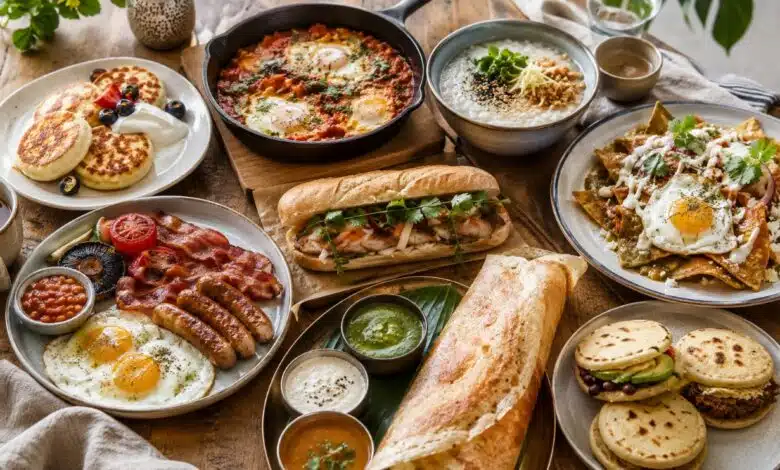
Breakfast is one of the fastest ways to learn how a food culture thinks about time. Some breakfasts are quiet and soft: porridge, cheese pancakes, rice, tea. Others are loud, layered and ready to argue with the day: eggs in tomato sauce, tortillas under salsa, sausages, beans, chutney, pickles and bread.
The mistake is assuming every breakfast dish belongs to the same kind of morning. Syrniki and coffee invite one pace. A full English breakfast asks for another. Bánh mì breakfast may be grabbed on the move. Dosa can arrive crisp enough to require immediate attention. Arepas can be a simple side or an entire handheld meal.
So this guide is organized as eight mornings rather than eight dictionary entries. Each dish comes with its own rhythm, ordering logic, texture, ideal setting and common misunderstanding.
International breakfast dishes vary from light and portable to rich and restaurant-sized. Syrniki are soft cheese pancakes; shakshuka centers eggs in spiced tomato sauce; congee is savory rice porridge; chilaquiles combine tortillas, salsa and toppings; a full English breakfast is a substantial plated meal; bánh mì breakfast is crisp, savory and portable; dosa is a thin fermented crepe with chutneys and fillings; and arepas are corn cakes served plain, topped or generously filled.
Before choosing a dish, choose the kind of morning
A breakfast dish can be perfectly made and still feel wrong for the day. Congee is comforting after travel, illness or a cold morning. Chilaquiles are more exciting when you have time to sit. A full English breakfast can be satisfying before a long day and absurd five minutes before a flight.
Appetite, time and setting matter as much as cultural curiosity.
Morning one: syrniki and the art of making cottage cheese feel elegant
Syrniki are thick, tender cheese pancakes associated with Eastern European breakfast tables. They are usually made from farmer’s cheese, tvorog or a similar fresh cheese, mixed with egg and a modest amount of flour.
The best syrniki taste like cheese first and pancake second. They should be soft inside, lightly browned outside and substantial without becoming dense.
What good syrniki feel like
Tender, creamy, lightly tangy and browned at the edges. They may be delicate, but they should not collapse into wet curds.
What weak syrniki feel like
Rubbery from too much egg, cakey from too much flour, or greasy from poor frying temperature.
The toppings should create contrast
Sour cream adds cool tang. Jam or fruit adds sweetness and acidity. Honey is softer and rounder. Fresh berries keep the plate from becoming heavy.
A balanced syrniki order
Restaurant syrniki often become dessert-like
Whipped cream, chocolate, caramel and excessive powdered sugar can hide the cheese. A luxurious plate is not automatically a better one.
What to ask
Ask whether the syrniki are made from farmer’s cheese or ricotta-style cheese, how many come in an order and whether the toppings are served separately.
Morning two: shakshuka is breakfast built around sauce, not just eggs
Shakshuka centers eggs cooked in a sauce of tomatoes, peppers, onions and spices. The exact seasoning and texture vary widely.
The dish is often described too simply as “eggs in tomato sauce.” That misses the point. The sauce must be good enough to eat with bread after the eggs are gone.
Green shakshuka is a different dish, not a lesser copy
Versions built around greens, herbs, leeks or cream shift the emphasis away from tomato. They can be excellent, but they should be ordered for their own character rather than as a substitute for red shakshuka.
Additions can help or clutter
Feta, sausage, chickpeas, eggplant and herbs can deepen the dish. Too many toppings turn the pan into an overloaded brunch menu.
Takeout is possible, but the texture changes
Eggs continue cooking in a hot container, and bread softens if packed together. Dine-in is usually the stronger format.
Morning three: congee is quiet food with an enormous range
Congee is rice cooked with a large amount of water or broth until it becomes porridge. It appears across several Asian cuisines under different names, textures and topping traditions.
The base can be nearly plain or deeply savory. What matters is how the toppings create contrast.
The base
Smooth, soft and calming. Thickness ranges from loose and soupy to dense enough to hold toppings on the surface.
The contrast
Ginger, scallion, fried dough, pickles, preserved egg, pork, chicken, fish, sesame oil or chile crisp.
Congee is not bland by accident
A gentle base allows salty, aromatic and crisp toppings to stand out. The mistake is judging the plain spoonful before mixing or layering the bowl.
A first congee order
Preserved egg can be a strong first impression
It brings a distinctive aroma, creamy texture and deep savory flavor. Order it when you want to explore, not because you feel obligated to prove bravery.
Congee belongs to more than breakfast
It can be comfort food, late-night food, food for illness, travel or recovery. Restaurant menus may serve it all day.
Morning four: chilaquiles are a race between crispness and sauce
Chilaquiles combine fried or baked tortilla pieces with salsa, then add cheese, crema, onion, eggs, chicken or other toppings.
The dish is defined by controlled softening. Tortillas should absorb sauce without becoming immediate paste.
Ask whether the kitchen serves them crisp or soft
Some diners want chips with noticeable crunch. Others prefer them fully softened. Neither is automatically correct.
Takeout changes the dish fastest here
The tortillas continue absorbing salsa in the container. Sauce on the side can preserve texture, but the result becomes closer to a do-it-yourself version.
Morning five: the full English breakfast is a composition, not a pile
A full English breakfast may include eggs, bacon, sausage, baked beans, mushrooms, tomatoes, toast and sometimes black pudding or other additions.
The plate is substantial, but balance still matters. Salty meat, soft eggs, acidic tomato, earthy mushrooms and crisp toast should each play a role.
What makes it satisfying
Contrasting textures, properly cooked eggs, crisp bacon, browned mushrooms and enough toast to connect the plate.
What makes it exhausting
Grease pooling under everything, overcooked eggs, pale sausage and beans covering the entire plate.
Black pudding is optional, not a test
It brings rich, savory, spiced flavor and a distinctive texture. Try it if curious, but the breakfast remains complete without it.
Tomato and mushrooms are not decorative vegetables
They provide moisture, acidity and earthiness. Without them, the plate can become a continuous sequence of meat, starch and salt.
A balanced order
This is usually not a breakfast to rush
It is best eaten seated and hot. Takeout compresses crisp, soft and saucy components into one container.
Morning six: bánh mì breakfast is built for movement
Bánh mì can appear at breakfast with eggs, pâté, pork, sausage, cheese, pickled vegetables, herbs and chile.
The bread matters enormously. It should be light enough to bite easily and crisp enough to protect the filling.
Breakfast bánh mì can be simpler than lunch versions
Egg, pâté, cheese or sausage may take the lead. The sandwich does not need every meat in the case.
The pickles protect the sandwich from heaviness
Their acidity and crunch are essential. Removing them can leave bread, mayonnaise and meat without contrast.
Bakery quality matters here
A strong filling cannot rescue dense, leathery bread. Vesti’s neighborhood bakery guide explains the bread, crust and takeaway details that matter in a breakfast sandwich.
Morning seven: dosa is crisp enough to demand your full attention
Dosa is a thin fermented crepe associated especially with South Indian food traditions. It is commonly made from rice and lentil batter and served with chutneys and sambar.
The dish can be plain, filled, folded, rolled, soft, paper-thin or thick depending on style.
Plain dosa
Best for understanding fermentation, crispness and the relationship with chutney and sambar.
Masala dosa
Filled with seasoned potato, creating a more substantial breakfast or lunch.
The first bite should happen quickly
Dosa loses crispness as it sits and absorbs steam. This is one of the least forgiving dishes for photography, delivery or long conversation.
How to eat the plate
Chutneys are not garnish
Coconut, tomato, mint, peanut and other chutneys can change the entire bite. Sambar adds warmth, lentils and acidity.
Takeout is a compromise
Some restaurants separate dosa from fillings and sauces, but the crepe still softens. Dine-in is the stronger first experience.
Morning eight: arepas can be breakfast, bread or a full handheld meal
Arepas are round corn cakes associated especially with Venezuela and Colombia. They may be grilled, fried, topped, split or filled.
The most useful breakfast distinction is between a simple arepa served with eggs or cheese and a larger filled arepa that becomes the entire meal.
The corn should remain visible
Even under filling, the arepa should taste toasted, tender and corn-based. An overloaded filling should not erase the base.
Breakfast portion matters
One large filled arepa may be enough. Two simple smaller arepas may suit a shared breakfast plate.
Vesti’s complete guide to Venezuelan and Colombian arepas, fillings and ordering explains reina pepiada, pabellón, arepa de queso, arepa de choclo and arepa con huevo in more detail.
Arepas travel better than several other dishes in this guide
Plain and moderately filled arepas can work well for takeaway. Sauce-heavy avocado fillings and fried egg versions need faster eating.
Eight breakfasts, compared by what actually matters at 8:00 a.m.
Sweet versus savory is not the only question
Texture, time, portability and portion determine whether a breakfast fits your morning.
The dish with the longest ingredient list is not automatically the most complete
A simple bowl of congee with three thoughtful toppings can feel more balanced than a plate crowded with meat, bread and sauce.
How to order unfamiliar breakfast food without turning the server into a tour guide
Ask one specific question. “Is this spicy?” “Is the arepa filled?” “Does the dosa come with sambar?” “Are the syrniki sweet?” “Are the chilaquiles crisp or soft?”
“What is authentic?” is usually too broad
Ask what the kitchen makes best, what regulars order in the morning or which version is most typical for that restaurant.
Do not apologize for choosing the approachable version
A plain dosa, mild shakshuka or cheese arepa can teach you more than the most complicated dish on the menu.
Which international breakfasts survive takeout?
Vesti’s guide to foods that travel well for takeout and delivery explains why steam, sauce and separate packaging matter so much for breakfast.
Where bakeries and markets fit into international breakfast
Not every breakfast dish needs a full restaurant. Syrniki may appear in a deli case. Arepas may be sold from a bakery counter. Bánh mì depends heavily on bakery quality. Packaged dosa batter, frozen arepas and congee ingredients may come from international markets.
Bakery strength
Bread, pastry, filled buns, breakfast arepas and portable sandwiches.
Market strength
Frozen products, sauces, grains, toppings, prepared foods and ingredients for home breakfast.
Vesti’s international market guide helps readers evaluate frozen sections, prepared-food counters and bakery turnover.
Prepared food can preserve breakfast traditions
Labor-intensive dishes survive when people can buy them ready-made. Vesti’s story about how immigrant delis preserve food traditions explains why everyday access matters as much as holiday memory.
The mistakes that flatten international breakfast into a trend list
Calling every savory breakfast heavy
Congee can be light. Dosa can be crisp and balanced. Arepas can be simple. Preparation matters.
Calling every sweet breakfast dessert
Syrniki with fruit and sour cream can be balanced rather than sugary.
Ignoring regional variation
Arepas, congee and dosa each contain many regional styles. One restaurant version is not the entire tradition.
Ordering for photographs instead of appetite
A full English breakfast and overloaded chilaquiles may look dramatic but exceed what you want to eat.
Using takeout for dishes built around crispness
Dosa and chilaquiles lose their defining texture quickly.
Assuming breakfast must be quick
Some dishes are designed for sitting, sharing and eating hot.
A two-day international breakfast itinerary without culinary chaos
The point is not to eat all eight dishes in one weekend. It is to understand the different breakfast logics.
Weather changes which breakfast feels intelligent
Congee, shakshuka and a full English breakfast feel especially satisfying in cool weather. Bánh mì, arepas, dosa and fruit-topped syrniki can feel lighter in heat.
Chilaquiles occupy the middle: hot and saucy, but bright enough for warm climates when salsa, onion and crema are balanced.
Cold morning
Congee, shakshuka, full English breakfast or hot masala dosa.
Hot morning
Bánh mì, arepas, lightly topped syrniki or a simpler dosa.
Why these eight dishes belong in one guide
Together they show that breakfast can be sweet, savory, portable, fermented, saucy, crisp, soft, corn-based, rice-based, bread-based or built around eggs.
They also show how migration changes breakfast. Syrniki move from home kitchens to deli counters. Bánh mì becomes an all-day sandwich. Arepas shift between bakery and street food. Dosa travels from specialist restaurants to broader breakfast menus.
Breakfast traditions survive through repetition
A dish remains alive when people still order it on an ordinary morning, not only during festivals or cultural events.
Knowing the dish makes ordering easier without turning it into homework
You only need enough context to understand the format, texture and portion. Curiosity should improve breakfast, not delay it until lunch.
The drink beside breakfast changes the pace of the meal
Tea, coffee, juice, broth and water are not interchangeable props. A rich breakfast often needs bitterness or acidity. A delicate breakfast may be overwhelmed by an aggressively sweet drink.
Sweet drinks can make a sweet breakfast tiring
Syrniki with jam and sweet coffee may become dessert-like. Bánh mì with sweet soda can flatten the pickles. Let the drink create contrast rather than duplicate the strongest flavor.
Hot drinks extend a seated breakfast
Tea and coffee encourage slower eating. That suits syrniki and a full English breakfast more than a crisp dosa that is losing texture by the minute.
Portion size is the hidden language of breakfast menus
A dish name does not tell you how much food will arrive. Syrniki may come as two large cakes or five small ones. One arepa may be a snack or an entire lunch. A full English breakfast may be modest or almost theatrical.
Ask before adding sides
Check how many pieces, eggs, meats or breads come with the order.
Share for comparison
Two people can split shakshuka and one bakery item, or share a full English and add fruit.
Breakfast excess often hides in extras
Toast, fries, extra meat, cheese, avocado and sweet drinks can double the meal without improving it. Choose one addition that solves a real need: freshness, protein, heat or texture.
Portable food is not always small
Bánh mì and filled arepas can be easy to carry while still being very substantial. Convenience should not be confused with lightness.
Which breakfasts are realistic to make at home?
Some international breakfasts are forgiving home projects. Others depend on equipment, fermented batter, bakery bread or coordinated timing.
Start with the structure, not every garnish
A first homemade shakshuka needs good sauce, eggs and bread. It does not need six toppings. A first congee needs proper rice texture and two or three toppings. Complexity can come later.
Market shortcuts can be intelligent
Frozen arepas, prepared pickles, dosa batter and bakery bread can preserve the essential format while making breakfast practical.
Dietary needs are easier to manage when you separate the base from the toppings
Vegetarian
Syrniki, shakshuka, many congee bowls, chilaquiles, dosa and cheese or bean arepas can all work. Check broths, beans and sauces for meat ingredients.
Vegan
Plain congee, some dosa, vegetable chilaquiles and bean or avocado arepas may be suitable when dairy, eggs and animal fats are omitted.
Gluten
Arepas and dosa may be naturally gluten-free, but shared surfaces and packaged ingredients require checking. Chilaquiles are corn-based, yet sauces and fryers can create cross-contact.
Dairy
Syrniki depend on cheese. Shakshuka, congee, bánh mì and dosa can often be ordered without dairy, while arepas and chilaquiles frequently include cheese or crema.
Allergies
Peanuts, sesame, dairy, eggs and shared cooking surfaces vary by cuisine and kitchen. Ask about the specific dish rather than assuming from the cuisine name.
How to read breakfast reviews without being fooled by brunch aesthetics
Breakfast reviews often praise atmosphere, coffee cups and presentation while saying little about texture. Look for details that can actually help you order.
Useful clues
Syrniki texture, egg doneness, congee thickness, chilaquiles softness, bread crust, dosa crispness and arepa size.
Weak clues
“Cute,” “authentic,” “huge” or “Instagrammable” without explaining the food.
Time-stamped reviews matter
A crisp bánh mì at opening and one after a long delivery are different tests. Dosa quality is especially sensitive to timing.
Repeated patterns are more useful than one dramatic complaint
If several recent diners mention overcooked shakshuka eggs, soggy chilaquiles or oversized arepas, that pattern deserves attention.
Breakfast texture matters more than most menus admit
International breakfast dishes are often introduced through ingredients, but texture is what decides whether the first bite feels exciting or disappointing. Syrniki should be tender, not bready. Dosa should be crisp where promised. Congee should feel smooth rather than watery. Bánh mì bread should fracture lightly instead of fighting the jaw.
Texture also determines pace. Crisp foods demand attention. Soft foods allow conversation. Saucy foods need bread, rice or tortillas to manage the plate.
The wrong packaging changes the dish before you taste it
Steam softens crisp surfaces. Cold toppings warm. Bread absorbs sauce. This is why dine-in and takeout versions should not be judged as if they were identical.
Travel mornings reward breakfasts with clear logistics
Before a flight, train or long drive, the most famous breakfast may be the least intelligent choice. Dosa loses texture. Chilaquiles continue softening. A full English breakfast can feel punishing when you need to move.
A practical travel-morning order
Choose food that can be eaten neatly, packed securely and digested comfortably. Travel breakfast is not the moment to prove ambition.
For children, familiarity can sit beside one new element
International breakfast does not need to become a challenge course. A child may begin with cheese arepa, plain dosa, mild congee, syrniki with fruit or a simple egg bánh mì.
Curiosity grows faster when the meal still feels safe. One new chutney, pickle or filling is enough for a first breakfast.
The second order should reveal a different side of the dish
If your first dosa was masala, try plain dosa next and focus on fermentation and crispness. If your first arepa was heavily filled, return for cheese or sweet corn. If your first congee was mild, add preserved egg or a stronger topping later.
Repeating the same bestseller is comforting, but comparison builds understanding. Change one variable at a time: sauce, filling, texture, regional style or time of day.
Do not make the second order larger. Make it more specific.
Breakfast value is not measured by how much food covers the plate
A large breakfast can look generous and still be poor value if the bread is stale, the sauces repeat one another or half the plate is filler. A smaller dish can feel complete when each component has a clear role.
Pay for the part that defines the dish
For bánh mì, that means good bread and balanced filling. For dosa, it means proper fermentation and crispness. For syrniki, it means real cheese texture. For arepas, it means a corn cake strong enough to matter beneath the filling.
One specialist dish is better than a confused sampler
Restaurants sometimes create international breakfast platters that combine several unrelated foods for novelty. Unless the kitchen genuinely specializes in each item, one focused dish is usually the better use of money and appetite.
One final morning: let the dish teach you its own pace
International breakfast becomes most rewarding when you stop forcing every dish into the same brunch template. Syrniki do not need towering garnish. Congee does not need to become spicy to feel interesting. Dosa does not need to survive a long photo session. A full English breakfast does not need three extra sides to prove generosity.
Notice what the dish asks from you. Some want immediate eating. Some want mixing. Some want bread. Some want a quiet spoon and a hot drink. The strongest first experience comes from respecting that structure before customizing it.
That approach also makes future ordering easier. Once you understand the original balance of sauce, grain, bread, egg, cheese or corn, you can recognize thoughtful variations instead of judging only by size or novelty.
A good breakfast introduces a culture without explaining everything at once
The pleasure is not collecting famous dishes. It is noticing how each breakfast solves the morning differently: with warmth, crunch, portability, fermentation, spice, softness or abundance. That difference is what makes the meal memorable long after the plate is cleared. It also gives every return visit a clearer purpose and a better appetite today.
One bowl, one pan, one sandwich or one corn cake can reveal how a cuisine thinks about comfort, speed, texture and the beginning of the day.
Start with the dish whose rhythm fits your morning. Then return for another one when your appetite—and your calendar—change.
Frequently Asked Questions
What are some popular international breakfast dishes?
Popular examples include syrniki, shakshuka, congee, chilaquiles, a full English breakfast, breakfast bánh mì, dosa and arepas. They range from sweet cheese pancakes to savory rice porridge, eggs, corn cakes and filled sandwiches.
Which international breakfast is best for a first-time diner?
Syrniki, classic shakshuka, chicken congee, masala dosa and cheese arepas are approachable starting points. Choose based on whether you want sweet, savory, light, crisp or substantial.
Which breakfast dishes travel best?
Bánh mì, filled arepas and syrniki with toppings packed separately travel reasonably well. Dosa and chilaquiles lose crispness quickly, while shakshuka eggs may continue cooking in the container.
What is the difference between congee and regular rice porridge?
Congee is rice cooked with much more liquid until it becomes soft and porridge-like. It may be plain or savory and is usually served with toppings such as ginger, scallion, meat, preserved egg or fried dough.
Are chilaquiles supposed to be crispy or soft?
Both styles exist. Some kitchens keep noticeable tortilla crunch, while others let the chips soften fully in salsa. Ask how the restaurant serves them if texture matters.
Is a full English breakfast eaten every day?
Not necessarily. It is a substantial breakfast often associated with weekends, hotels, cafés or days when a larger meal makes sense. Everyday breakfasts may be much simpler.
Is bánh mì commonly eaten for breakfast?
Yes. Breakfast versions may include eggs, pâté, sausage, cheese or pork with pickled vegetables and herbs. It is practical because it is portable and quick.
What is the best dosa for a beginner?
Plain dosa or masala dosa are excellent starting points. They make it easy to understand the fermented crepe, chutneys, sambar and potato filling without too many competing elements.
Are arepas always filled?
No. Venezuelan arepas are often split and filled, while many Colombian arepas are served plain, topped, with cheese or beside a larger breakfast plate.
Which international breakfast is the lightest?
Plain congee, a simple cheese arepa, lightly topped syrniki or a plain dosa can all be relatively light depending on portion and toppings. The cooking style matters more than the dish name alone.


