
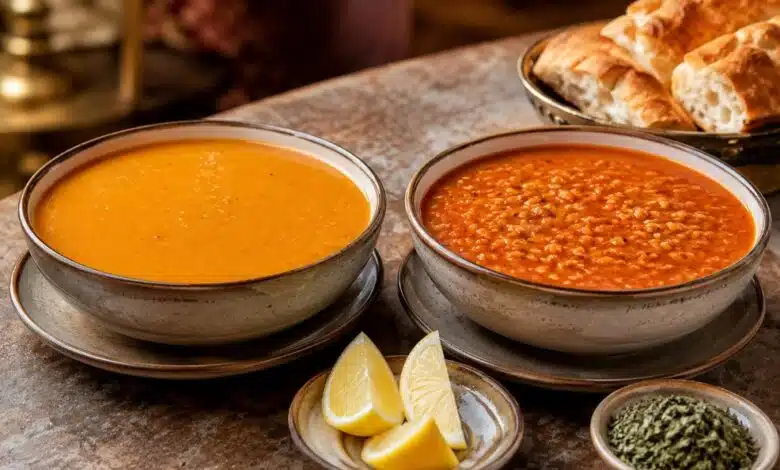
Two red lentil soups can look similar while differing in grains, texture, seasoning and dietary implications
Mercimek çorbası is usually a smooth lentil-centered soup. Ezogelin commonly adds bulgur and rice, creating a more textured and often more tomato-forward bowl.
The main difference between mercimek çorbası and ezogelin soup is that mercimek is usually built primarily around lentils and blended smooth, while ezogelin commonly combines red lentils with bulgur and rice. Ezogelin is therefore usually more textured and is normally not gluten-free because bulgur is made from wheat.
Both soups belong to Turkish cuisine, both may contain red lentils, and both can be served with lemon, mint and red pepper. That overlap explains why diners sometimes confuse them when reading an English menu or looking at a photograph.
The distinction matters for more than flavor. It can change the texture, the serving experience and whether the soup is suitable for someone avoiding wheat. Restaurant recipes vary, but the presence of bulgur remains the most useful practical clue.
How do mercimek and ezogelin compare at a glance?
Mercimek is usually smoother, milder and more lentil-focused, while ezogelin is usually grainier, more textured and more strongly seasoned with tomato, mint or red pepper.
| Feature | Mercimek çorbası | Ezogelin çorbası |
|---|---|---|
| Main base | Red or yellow lentils | Red lentils with bulgur and usually rice |
| Typical texture | Smooth or finely blended | More textured and grain-like |
| Common color | Golden, yellow-orange or light red | Orange-red or deeper tomato red |
| Common seasoning | Cumin, paprika, mint and lemon | Tomato paste, mint, red pepper and lemon |
| Bulgur | Not a defining ingredient | A defining ingredient in standard versions |
| Rice | Not normally central | Commonly included |
| Gluten | May be gluten-free if no flour or contaminated stock is used | Normally contains gluten because bulgur is wheat |
| Restaurant role | Starter or light meal | Starter or more substantial soup course |
What is mercimek çorbası?
Mercimek çorbası is Turkish lentil soup, most commonly made by cooking red or yellow lentils until soft and blending them with onion, vegetables and seasonings.
The soup usually has a smooth, cohesive consistency. Red lentils break down easily during cooking, which creates a naturally creamy appearance without requiring milk or cream.
Restaurant recipes may include carrot, potato, tomato paste, pepper paste, cumin or flour. A finishing drizzle may be made with olive oil, neutral oil or butter seasoned with paprika, red pepper or dried mint.
For a fuller explanation of the dish, including its ingredients, color and serving styles, read the Vesti.la guide to mercimek çorbası and Turkish lentil soup.
What is ezogelin soup?
Ezogelin çorbası is a Turkish soup that commonly combines red lentils, bulgur and rice with onion, tomato paste, mint, red pepper and lemon.
The grains make the soup more textured than a typical bowl of mercimek. Depending on the cook, the bulgur and rice may remain clearly visible or soften enough to create a thick, rustic body.
The name may appear as ezogelin, Ezo Gelin, ezogelin çorbası or bride’s soup. English translations vary, so the ingredient description is often more useful than the translated name.
How do the ingredients differ?
The clearest ingredient difference is that ezogelin usually includes bulgur and rice, while mercimek does not require either grain.
Mercimek çorbası commonly contains
- Red or yellow lentils
- Onion
- Carrot or potato in some versions
- Water, vegetable broth, chicken broth or meat stock
- Olive oil, neutral oil or butter
- Cumin, paprika, black pepper or dried mint
- Tomato or pepper paste in some versions
- Lemon for serving
Ezogelin commonly contains
- Red lentils
- Fine bulgur
- Rice
- Onion
- Tomato paste
- Butter or oil
- Dried mint
- Red pepper
- Lemon juice or lemon for serving
Neither list should be treated as one mandatory formula. Family recipes and restaurant preparations vary. Mercimek may contain tomato paste, and ezogelin may be blended more thoroughly than expected. The combination of lentils with bulgur remains the stronger identifier for ezogelin.
Which soup is smoother?
Mercimek çorbası is usually the smoother soup. It is commonly blended until the lentils and vegetables form a uniform base.
Ezogelin is generally more textured because it includes bulgur and rice. The grains absorb liquid and create a thicker, more substantial mouthfeel. Some restaurants cook the grains until very soft, but the finished soup usually retains more texture than mercimek.
| Texture clue | More likely mercimek | More likely ezogelin |
|---|---|---|
| Completely smooth surface | Yes | Possible but less characteristic |
| Visible fine grains | Unusual | Common |
| Silky spoon texture | Common | Less common |
| Rustic, substantial body | Possible | Common |
| Thickening as it cools | Common | Often more noticeable because of the grains |
Texture alone is not absolute proof. A restaurant can blend ezogelin or serve a rustic mercimek. Ask whether the soup contains bulgur when the distinction matters.
Do mercimek and ezogelin taste different?
Mercimek is generally milder and more directly focused on lentils, while ezogelin often has a stronger tomato, mint and red pepper profile.
Mercimek may taste earthy, gently sweet and softly spiced. Carrot and onion can add sweetness, cumin can add warmth, and lemon can brighten the bowl.
Ezogelin often tastes more assertive because tomato paste, dried mint and red pepper are central to many versions. Bulgur and rice also produce a grainier, more substantial finish.
Is one soup spicier?
Ezogelin is more likely to have noticeable red pepper character, but neither soup must be hot. Red pepper can contribute color and aroma without producing strong heat.
Restaurant versions vary, so ask whether the soup is spicy rather than assuming based on its red color.
Can you tell the soups apart by color?
Color can provide a clue, but it is not reliable enough to identify the soup by itself. Mercimek may be pale yellow, golden, orange or light red. Ezogelin is frequently deeper orange or red because tomato paste is common.
A red bowl is not automatically ezogelin. Mercimek can also contain tomato paste, pepper paste or paprika. Similarly, a lightly colored ezogelin may use less tomato paste than expected.
The more reliable visual distinction is texture. A uniform blended bowl points toward mercimek, while visible grains point toward ezogelin.
Which soup contains gluten?
Ezogelin normally contains gluten because bulgur is made from wheat. Mercimek may be prepared without gluten, but it is not automatically safe for a gluten-free diner.
Mercimek can still contain flour, commercial broth ingredients or cross-contact from shared kitchen equipment. Bread commonly served beside the soup also contains wheat unless the restaurant identifies it as gluten-free.
A useful gluten question
Ask: “Is this mercimek or ezogelin, and does it contain bulgur, flour or wheat-based stock?”
Simply asking whether the soup contains lentils is not enough. Both soups contain lentils, but ezogelin’s bulgur changes its allergen status.
Are mercimek and ezogelin vegan?
Either soup can be made vegan, but restaurant versions may contain butter, chicken broth or meat stock.
Mercimek often looks creamy because blended lentils create a smooth texture. That appearance does not prove that dairy is present. The more likely dairy ingredient is butter in the cooking base or red pepper topping.
Ezogelin may also use butter. An official Turkish version includes butter or margarine, showing why diners should not assume the soup is plant-based merely because the main ingredients are lentils and grains.
For vegan confirmation, ask about the broth, cooking fat and finishing drizzle separately.
Which soup is more likely to contain dairy?
Neither soup requires milk or cream, but both may contain butter. Butter can be used to soften onion, cook tomato paste or create a paprika and mint topping.
A glossy red drizzle may be made from oil or butter. Its appearance does not reveal which fat the restaurant used.
Requesting the topping on the side may help with preference, but it does not confirm that butter was absent from the soup base.
Are mercimek and ezogelin halal?
The plant ingredients are generally halal-friendly, but the broth and restaurant practices require confirmation.
A kitchen may use chicken broth, meat stock or a commercial concentrate. Those ingredients are not automatically halal unless the restaurant confirms their source.
Do not assume every Turkish restaurant is halal. Look for an official restaurant statement or ask directly.
What should a good bowl of each soup be like?
Good mercimek should be smooth and balanced, while good ezogelin should have tender grains without becoming gummy or porridge-like.
Good mercimek
- Fully softened lentils
- Smooth or finely blended consistency
- Pourable rather than gluey
- Balanced lentil and vegetable flavor
- Lemon that brightens rather than dominates
- Finishing fat that is aromatic rather than greasy
Good ezogelin
- Tender lentils, bulgur and rice
- Visible texture without hard grains
- Balanced tomato, mint and pepper
- Enough liquid to remain a soup
- No raw flour or scorched paste flavor
- Acidity that supports the grains and lentils
| Problem | More noticeable in | What may have happened |
|---|---|---|
| Chalky lentils | Both soups | Lentils were not cooked long enough |
| Gluey consistency | Mercimek | Too much flour, potato or reduction |
| Hard bulgur | Ezogelin | Bulgur was undercooked |
| Porridge-like body | Ezogelin | Too much grain or insufficient liquid |
| Heavy grease layer | Both soups | Excess butter or finishing oil |
| Burnt bitterness | Both soups | Scorched tomato paste, spices or butter |
Which soup is better for takeout and delivery?
Both soups travel reasonably well, but ezogelin may thicken more noticeably because bulgur and rice continue absorbing liquid.
Mercimek can also become thicker as it cools. Gentle stirring usually restores a more even texture. Follow the restaurant’s reheating guidance rather than adding a large amount of water immediately.
For either soup, ask for lemon, bread and pepper butter separately when possible. Separate packaging protects the bread from steam and lets you control acidity and richness.
Check whether the online listing is a cup, bowl or family container. Restaurant serving names are not standardized.
Should you order mercimek or ezogelin?
Order mercimek when you want a smoother, simpler lentil soup. Order ezogelin when you want more grain texture, tomato, mint and a more substantial bowl.
| Your preference | Better starting choice | Reason |
|---|---|---|
| Smooth texture | Mercimek | It is commonly blended |
| Visible grains | Ezogelin | Bulgur and rice create texture |
| Milder flavor | Mercimek | It is often more lentil-focused |
| Tomato and mint flavor | Ezogelin | Both are common defining seasonings |
| Avoiding wheat | Mercimek after confirmation | Ezogelin normally contains bulgur |
| More substantial soup | Ezogelin | Rice and bulgur add body |
What should you ask the server?
- Is today’s lentil soup mercimek or ezogelin?
- Does it contain bulgur or rice?
- Is it smooth or textured?
- Is the broth vegetable, chicken or meat based?
- Is butter used in the soup or topping?
- Is flour added as a thickener?
- Can lemon and pepper topping be served separately?
Where can you find mercimek çorbası nearby?
Use the Vesti.la local guide for menu-search terms, confirmed U.S. restaurant examples, dietary questions, pickup guidance and practical checks before visiting.
Find Turkish lentil soup near youWhat is the most important difference to remember?
Mercimek çorbası is generally the smoother and simpler lentil soup. Ezogelin commonly contains bulgur and rice, giving it more texture and making it unsuitable for a gluten-free diet in its standard form.
Color and spice level can overlap, so they are weaker clues. When a menu description is vague, ask whether the soup contains bulgur. That single question usually separates ezogelin from mercimek more reliably than appearance alone.
What is the main difference between mercimek and ezogelin soup?
Mercimek is usually a smooth lentil soup. Ezogelin commonly combines red lentils with bulgur and rice, giving it more texture.
Does ezogelin soup contain bulgur?
Yes. Bulgur is a defining ingredient in standard ezogelin soup, although individual restaurant recipes may vary.
Is mercimek soup smoother than ezogelin?
Usually, yes. Mercimek is commonly blended until smooth, while ezogelin generally retains texture from bulgur and rice.
Is ezogelin soup gluten-free?
No. Standard ezogelin contains bulgur, which is made from wheat and contains gluten.
Can mercimek soup be gluten-free?
It can be made without gluten, but diners should confirm whether the restaurant uses flour, wheat-containing broth or shared equipment.
Which soup is spicier, mercimek or ezogelin?
Ezogelin often has more red pepper, tomato and mint character, but neither soup must be hot. Restaurant seasoning varies.
Are mercimek and ezogelin vegan?
Either can be vegan, but restaurant versions may contain butter, chicken broth or meat stock. Confirm the broth and cooking fat.
Why does ezogelin have more texture?
Ezogelin commonly contains bulgur and rice in addition to red lentils, creating a more substantial grain-like texture.
Can a red lentil soup be either mercimek or ezogelin?
Yes. Both can use red lentils. The presence of bulgur and rice points more strongly to ezogelin.
Which soup should I order for a smooth texture?
Mercimek çorbası is the better starting choice because it is usually blended smooth or finely puréed.


