
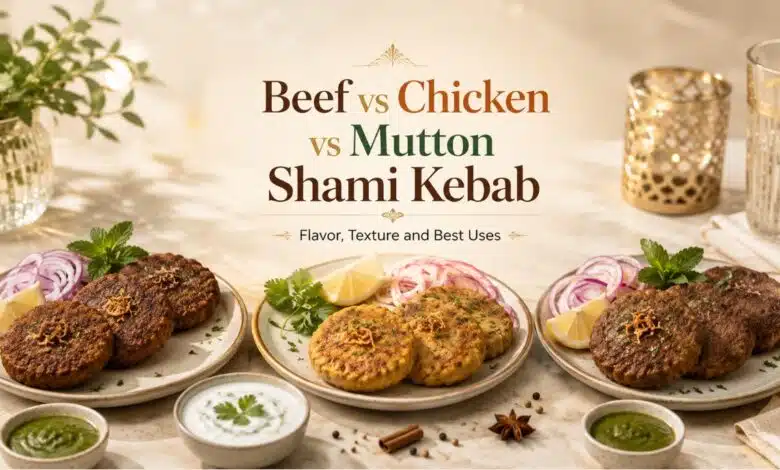
Beef, chicken and mutton shami kebab may share the same name, shape and basic preparation, yet they do not taste or behave exactly alike. The meat changes the richness of the patty, the amount of moisture needed, the way spices are perceived, the firmness of the mixture and how well the finished kebab survives freezing, reheating or service inside a bun. Choosing among them is therefore more than a matter of personal preference: it is also a question of texture, format and how the kebab will be served.
A restaurant menu may simply list “shami kabab” without identifying the meat. A frozen package may emphasize chicken or beef but reveal little about texture. A caterer may offer mutton shami only by preorder. The most useful way to compare the three is to look at what each meat contributes before the chana dal, aromatics and spices are added, then consider how the complete mixture performs after cooking.
The choice in plain language
Beef usually gives the deepest everyday savory flavor and the most substantial bite. Chicken is lighter and often milder, but it can dry out when made too lean. Mutton brings the strongest aroma and richest traditional character. None is automatically superior; the better choice depends on whether you want a delicate snack, a robust meal, a freezer-friendly batch or a patty that can stand up to bread, chutney and toppings.
Three versions that begin with the same idea
Classic shami kebab is built by cooking meat with chana dal or another split pulse, aromatics and spices until the ingredients are tender. The mixture is reduced, cooled and processed, then shaped into small flat patties and browned in a pan. That common process creates the recognizable shami identity, but the meat still leaves a clear signature.
Beef shami kebab
Savory, familiar and substantial. Beef usually carries warm spices well and produces a patty that feels satisfying without needing an especially large portion.
Chicken shami kebab
Lighter in aroma and often softer in flavor. Chicken can create a tender patty, but very lean meat and excessive reheating can make it dry.
Mutton shami kebab
Rich, aromatic and distinctive. Mutton gives the mixture a more pronounced meat character that remains noticeable beside chutney, bread and rice.
Recipes can narrow or widen these differences. A fatty chicken mixture may feel richer than a lean beef version. Strong green chile can dominate a mild meat. A generous amount of chana dal can soften the identity of all three. The comparison therefore works best when the overall recipe style is reasonably similar.
Terminology also needs care. In some menus, “mutton” refers to mature sheep; in others, especially in South Asian usage, the word may refer to goat. A restaurant that lists mutton shami should be asked directly when the distinction matters.
Beef vs chicken vs mutton shami kebab
| Feature | Beef | Chicken | Mutton |
|---|---|---|---|
| Overall flavor | Deep, savory and broadly familiar | Mild, clean and lighter | Pronounced, rich and aromatic |
| Texture tendency | Substantial and cohesive | Tender but vulnerable to dryness | Rich, soft and slightly more assertive |
| Spice relationship | Supports warm spices without disappearing | Lets herbs, ginger and chile stand forward | Can handle robust spice and strong chutney |
| Freezer performance | Usually dependable when properly packed | Convenient but easier to overcook during reheating | Good flavor retention, though fat quality matters |
| Best serving formats | Bun kebab, plates, rice, catering and frozen packs | Snacks, lunchboxes, appetizers and lighter meals | Traditional plates, rolls, rice bowls and special meals |
| Best for first-time diners | Often the easiest starting point | Good for diners who prefer mild meat | Best for diners comfortable with stronger meat aroma |
| Main risk | Can become dense if too lean or overprocessed | Can become dry and chalky | Can taste heavy when fat and spice are poorly balanced |
The table describes tendencies, not guarantees. A skilled cook can make exceptionally tender beef shami and juicy chicken shami, while a poor recipe can make any version dry or greasy. The meat sets the starting conditions; technique determines whether those conditions become strengths.
What beef contributes to shami kebab
Beef gives shami kebab a deep savory base that remains recognizable after the meat is cooked with lentils and processed. It tends to feel substantial, which makes it useful for portions that must work as more than a small snack. A pair of beef patties can carry a bun, a rice plate or a catering portion without seeming lost beside other ingredients.
Beef also handles warm spices well. Cumin, coriander, black pepper, cloves, cinnamon and cardamom can build complexity without completely covering the meat. This makes beef a flexible choice for recipes ranging from mild family-style patties to strongly seasoned restaurant versions.
Fat level matters. Very lean beef may produce a mixture that feels dense after the cooking liquid is reduced. Excessively fatty beef can create a heavy or oily patty, especially when additional oil is used for frying. The best result is not simply the fattiest meat; it is meat with enough richness to remain tender after simmering, grinding and reheating.
Beef is often a practical first choice for diners who do not yet know which version they prefer. Its flavor is noticeable but usually less distinctive than mutton, and its texture is often more forgiving than very lean chicken.
What chicken contributes to shami kebab
Chicken creates a lighter flavor platform. Ginger, garlic, green chile, cilantro and mint can become more prominent because the meat itself is less assertive. This makes chicken shami appealing as a breakfast item, tea-time snack, lunchbox component or mild appetizer.
The challenge is moisture. Chicken breast alone can become dry after simmering, processing, frying and reheating. Dark meat, a balanced mixture or careful cooking can improve tenderness. The pulse should support the chicken rather than absorb so much moisture that the patty becomes chalky.
Chicken shami often works well for children or diners who prefer a less pronounced meat flavor, but “mild” should not mean bland. Proper seasoning still matters. A good chicken version should taste aromatic and savory, not merely like soft chicken held together with lentils.
Frozen chicken shami deserves particular care because it may pass through two heating stages: initial production and home reheating. Gentle pan heating or a short air-fryer cycle often protects the interior better than long exposure to dry heat.
What mutton contributes to shami kebab
Mutton gives shami kebab a richer and more aromatic identity. Its flavor remains present even after cooking with chana dal and strong spices. For diners who enjoy goat or sheep dishes, this creates a kebab with more personality than a mild chicken patty and a different richness from beef.
The meat works especially well with black pepper, cumin, coriander, cardamom, cloves and fresh green chile. Chutney, onion and lemon provide important contrast. Without acidity or freshness, a rich mutton patty can feel heavy, especially when served with buttery bread.
Mutton can become very tender after slow cooking, but the quality of trimming affects the final mixture. Tough connective pieces must be cooked sufficiently, while excessive hard fat can create an unpleasant waxy sensation after cooling. A well-made patty should taste rich without leaving a greasy coating.
This version is often suited to special meals, traditional service, rolls and rice plates. It may be less common in mass-market frozen products, so availability can depend on local Pakistani or South Asian businesses and caterers.
How the interior texture changes with the meat
All shami kebab should be finer than a burger or chapli kebab, but “fine” does not mean identical. Beef tends to create a substantial, evenly cohesive center. Chicken can feel especially soft when moisture is controlled, yet it becomes crumbly when too lean. Mutton can feel rich and tender, with a slightly more pronounced meat fiber if the mixture is not processed as finely.
Beef: firm tenderness
The patty should hold a clean edge while yielding easily to a fork. Density suggests too little moisture, too much lean meat or overprocessing.
Chicken: delicate tenderness
A successful patty feels light and cohesive. Dry crumbs, cracked edges and a powdery bite indicate an imbalanced mixture.
Mutton: rich tenderness
The center should be soft and aromatic without greasy pockets. Poor trimming or insufficient processing can create uneven bites.
The pulse still matters
Chana dal helps define all three versions. Too much can make the meats taste similar; too little can move the result toward an ordinary meat patty.
A cut patty is often more informative than the browned surface. The inside reveals whether the mixture is dry, gummy, fibrous or well integrated. Restaurant photos rarely show this, which is why reviews mentioning softness or crumbling can be useful leads—though current quality still varies by batch.
Fat and moisture decide whether the patty feels tender
Shami kebab passes through several moisture-changing stages. The meat and pulse simmer, the liquid is reduced, the mixture is processed, and the shaped patty is browned. Each stage can remove water or redistribute fat. Meat choice changes how much margin for error the cook has.
Beef usually tolerates moderate reheating, provided it is not extremely lean. Chicken has the smallest margin because lean white meat dries quickly. Mutton may contain enough fat for richness, but poorly distributed fat can feel heavy after the patty cools.
| Problem | Beef | Chicken | Mutton |
|---|---|---|---|
| Too dry | Dense, tight and less aromatic | Crumbly, chalky and visibly cracked | Fibrous or tough despite rich flavor |
| Too wet | Sticky mixture and weak browning | Soft patties that spread or break | Heavy mixture with oily moisture |
| Too fatty | Greasy surface and dense cooling texture | Less common but possible with skin or added fat | Waxy or heavy finish |
| Balanced | Substantial but tender | Light, soft and cohesive | Rich, tender and cleanly aromatic |
Moisture cannot be judged only by touch before frying. A mixture may feel soft because it contains excess liquid rather than because it is properly balanced. The better test is whether a shaped patty holds clean edges, releases no visible water and browns without collapsing.
The same spice blend does not taste the same with every meat
Beef tends to anchor warm spices. Cumin, coriander and black pepper deepen its savory character, while sweet spices add complexity. Chicken allows green herbs, ginger and chile to appear brighter. Mutton can carry stronger spice without losing its identity, but heavy seasoning should not be used to mask poor meat quality.
Salt perception also changes. A mild chicken mixture may seem underseasoned even when the salt level is similar to beef because the overall flavor is lighter. Mutton’s strong aroma can make a recipe feel more seasoned before additional salt or chile is added. Tasting the cooked mixture before shaping is therefore more reliable than applying one fixed seasoning rule to all meats.
Chutney changes the final comparison. A sharp mint-cilantro chutney brightens beef, gives chicken needed intensity and cuts mutton richness. Tamarind-based sauces add sweetness and acidity but can dominate a delicate chicken patty when used heavily.
The meat-to-lentil balance should not erase the meat
Chana dal is central to classic shami structure, but the goal is not to make three meats taste identical. The pulse should support cohesion and tenderness while allowing beef, chicken or mutton to remain recognizable.
Chicken often needs careful restraint because too much dal can make the lighter meat disappear. Beef can carry a slightly stronger pulse presence while remaining savory. Mutton remains identifiable even in a substantial lentil mixture, although too much pulse can flatten its rich aroma and create a dry result.
Commercial products may use more pulse for cost, consistency or handling. That does not automatically make them poor, but the package should identify ingredients clearly enough for buyers to understand what they are purchasing.

How to choose among them at a restaurant
Do not assume the meat from the cuisine alone. Pakistani restaurants may serve beef, chicken or mutton shami, and the same business may change versions between a regular menu, catering menu and daily special. Ask what meat is used before ordering when the distinction matters.
Confirm the meat
Ask whether the shami is beef, chicken, mutton or a mixed-meat preparation.
Confirm the format
Separate patties, bun kebab, roll and rice bowl create different portions and may include sauces that change the flavor.
Ask whether it is made in-house
A restaurant may use frozen patties, prepare its own batch or source from a caterer. Each route can be good, but it sets different expectations.
Check availability
Mutton or special batches may require preorder, while beef and chicken are more likely to appear as regular items.
Order a plain patty first
When comparing quality, a separate patty with chutney reveals more than a heavily dressed sandwich.
For broader restaurant, market and delivery strategies, the Kebabs Shami Near Me guide explains how to filter mixed local results and search the spellings restaurants actually use.
Which meat works best in frozen shami kebab?
Beef is often the most forgiving frozen option. It generally retains enough savory character after storage and reheating, and its substantial texture survives handling well. Chicken is convenient and widely appealing, but the final heating method matters because prolonged dry heat can make it tough. Mutton retains strong flavor, though buyers should evaluate fat quality and package condition carefully.
The package should answer more important questions than the front image: Is the product fully cooked or raw? What percentage of the ingredient list is meat and pulse? Are patties individually separated? Does the package provide clear skillet, oven or air-fryer directions? Is halal status stated on the current packaging?
| Frozen priority | Best starting choice | Reason |
|---|---|---|
| Most substantial everyday option | Beef | Strong flavor and dependable reheating texture |
| Mildest flavor | Chicken | Lighter aroma and broad family appeal |
| Strongest traditional meat character | Mutton | Rich aroma remains noticeable after freezing |
| Lowest risk of overcooking | Usually beef | Chicken dries fastest; mutton fat can become heavy if overheated |
| Best for heavily dressed bun kebab | Beef or mutton | Stronger flavors remain present beside bread, chutney and toppings |
The dedicated guide to finding frozen shami kebab near you covers freezer aisles, delivery marketplaces, package inspection, transport and storage in greater detail.
Choosing meat for homemade shami kebab
Begin with the meal you want rather than buying meat first and forcing it into a recipe. Beef suits robust patties for sandwiches, meal prep and freezing. Chicken suits lighter snacks and lunch portions. Mutton suits occasions where the kebab itself should carry a strong traditional flavor.
Choose beef when
You want a reliable all-purpose batch, expect to freeze portions, plan to make bun kebab or prefer a clearly savory meat flavor.
Choose chicken when
You want a lighter patty, prefer brighter herbs and chile, or need a mild option. Use enough moisture and avoid extending the final frying time.
Choose mutton when
You enjoy a stronger meat aroma, want a richer special-meal version or plan to serve the kebabs with sharp chutney, lemon, onion and bread.
A food processor can help create the correct fine texture, but it should not be used to compensate for poorly cooked ingredients. Meat and dal must be tender, excess liquid must be reduced, and the mixture should cool before processing. Overloading the processor can produce uneven patches or a pasty mass.
The best serving format for each meat
Beef has enough depth for bun kebab, paratha rolls and rice bowls. Its flavor remains clear beside bread, egg, chutney and onion. It also works well as separate patties for catering because the texture is usually sturdy enough for handling.
Chicken is especially suitable for appetizer plates, tea-time snacks, breakfast, lunchboxes and lighter wraps. A fresh green chutney adds energy without overwhelming the mild meat. Heavy creamy sauces can make the patty taste less distinct.
Mutton benefits from acidity and fresh contrast. Lemon, raw onion, mint chutney and cucumber-based raita balance its richness. It works well with paratha, naan or rice, but a very buttery bread and oily sauce can make the meal feel unnecessarily heavy.
Best bun kebab
Beef for balance and strength; mutton for a richer, more aromatic sandwich.
Best light snack
Chicken with mint-cilantro chutney, onion and lemon.
Best special plate
Mutton with fresh accompaniments, bread or rice and a restrained amount of sauce.
Nutrition depends on the complete recipe, not only the meat
It is tempting to rank chicken as automatically lighter, beef as heavier and mutton as richest, but the finished patty includes pulse, oil, egg or other binders and the serving format. A chicken shami fried in substantial oil and placed in buttery paratha may be a heavier meal than a small beef patty served with salad.
Portion size matters just as much. Two small patties are not nutritionally equivalent to a large bun kebab with egg and sauces. Frozen products also vary in meat percentage, sodium, added fat and serving size. Compare the current label rather than relying on the meat name as a complete health description.
Diners managing allergies or dietary requirements should ask about egg, breadcrumbs, flour, dairy-containing sauces and shared cooking surfaces. Halal status should be verified through the restaurant’s current statement or product packaging rather than assumed from the dish name.
How to recognize a good version of each meat
Good beef shami
It tastes savory and aromatic, keeps its shape and remains tender. The center should not feel like compressed dry mince, and the pulse should not dominate.
Good chicken shami
It feels soft and light without crumbling. Herbs and spices remain clear, and the interior is moist enough to eat without depending on sauce.
Good mutton shami
It has a pronounced but clean meat aroma, a tender center and no hard or waxy fat pockets. Fresh accompaniments should balance the richness rather than conceal an unpleasant flavor.
Common mistakes when choosing or preparing the meat
Assuming chicken cannot be rich
Added fat, oil, bread and sauces can make a chicken version heavier than expected.
Choosing extremely lean meat
Lean meat may sound desirable, but shami passes through several cooking stages and needs enough moisture for tenderness.
Using spice to hide poor meat
Strong masala cannot correct stale aroma, hard fat or dry texture.
Ignoring the meat on menus
“Shami kabab” alone does not identify beef, chicken or mutton. Ask before ordering.
Reheating every version the same way
Chicken generally needs gentler treatment, while beef and mutton can tolerate slightly stronger browning.
Comparing only price per package
Patty count, weight, meat percentage, separation and cooking state all affect actual value.
Planning a batch for family meals, parties or catering
The best meat can change when the goal moves from cooking six patties for dinner to preparing several dozen for a gathering. Large batches introduce practical concerns that do not matter as much at home: consistency, holding time, transport, reheating, portion cost and how well the patties survive being stacked or arranged on trays.
Beef is often the easiest large-batch choice because its flavor remains clear after reheating and its texture is usually sturdy enough for catering. The patties can be shaped in advance, frozen between separators and browned in rounds without becoming too fragile. Beef also works with a wide range of accompaniments, which makes it useful when guests have different preferences.
Chicken can be excellent for lighter catering menus, but it needs a stricter reheating plan. A tray left under dry heat for too long may lose tenderness even when the patties were well prepared. Smaller batches, covered holding pans and serving close to cooking time help preserve quality. Chicken also benefits from offering fresh chutney and lemon separately rather than coating every patty in sauce before service.
Mutton brings the strongest character to a party menu and may feel more special, but it can be more expensive and polarizing. Some guests love its aroma, while others prefer milder meat. For a mixed group, mutton often works best as one option beside beef or chicken rather than the only shami kebab served.
| Event need | Best option | Why |
|---|---|---|
| Large mixed-age gathering | Beef | Broad appeal, sturdy texture and flexible serving |
| Light brunch or tea table | Chicken | Milder flavor and easy appetizer portions |
| Small traditional dinner | Mutton | Richer flavor and more distinctive presentation |
| Mixed tasting platter | All three | Lets guests compare flavor and texture directly |
| Make-ahead freezer tray | Beef or chicken | Easy portioning and practical reheating |
Labeling matters when several meats are served together. Patties can look nearly identical after browning. Separate platters, small menu cards or different garnish arrangements prevent confusion for guests who avoid a particular meat.
Storage and reheating affect each meat differently
Freshly shaped shami kebab can be refrigerated for short-term use or frozen for later cooking, but the mixture should be cooled promptly and stored safely. Patties freeze more neatly when placed in a single layer until firm, then transferred to a sealed container with parchment or freezer separators between layers.
Beef usually reheats well in a lightly oiled skillet because the surface can regain browning without the interior drying immediately. Chicken should be heated more gently and removed as soon as it is hot through. Mutton can tolerate a little stronger browning, but overheating may make the fat feel heavy and the aroma overly intense.
A microwave is convenient but does not restore the browned surface. It may also heat unevenly, especially when several patties overlap. A covered skillet, oven or air fryer generally produces a better exterior, though the exact method should follow the package instructions for commercial products.
For beef
Use moderate heat and a small amount of oil. Turn once or twice and stop when the center is hot and the surface refreshed.
For chicken
Use gentler heat and avoid long uncovered cooking. A short covered warm-up followed by brief browning can protect moisture.
For mutton
Warm thoroughly but do not keep the patties sitting in rendered fat. Fresh lemon and onion help balance richness after reheating.
For mixed batches
Reheat each meat separately when possible. One timing rule may overcook chicken before beef or mutton reaches the preferred surface.
Once thawed, follow current food-safety guidance and package instructions rather than relying on appearance alone. Commercial products may be raw, partially cooked or fully cooked, and those categories require different handling.
How to compare the three in a fair tasting
A useful comparison removes unnecessary variables. Serve one plain patty of each meat at the same temperature, with the same chutney, onion and lemon on the side. Avoid placing one version in a bun while another is served alone, because bread, egg and sauce can hide the differences you are trying to notice.
Begin with aroma. Chicken is usually the mildest. Beef gives a deeper savory smell. Mutton is the most pronounced and may reveal itself before the first bite. Next, cut each patty and compare the edge. A moist, clean cut suggests good balance; crumbling, gumminess or greasy pockets point to recipe or technique problems.
Take a bite without sauce first. Notice how quickly the patty yields, whether the meat remains identifiable and whether the pulse supports or dominates the mixture. Then taste with chutney and lemon. A strong meat should remain present, while a mild version should still taste seasoned rather than disappearing completely.
Smell before tasting
Compare meat aroma without the distraction of sauce.
Cut through the center
Look for moisture, cohesion and even texture.
Taste the plain patty
Identify meat, pulse and spice balance.
Add the same accompaniments
See which meat remains balanced beside chutney and lemon.
Judge the finish
Notice whether the patty feels clean, dry, greasy, heavy or pleasantly rich after swallowing.
This tasting also helps separate personal preference from quality. You may prefer chicken even when the beef patty is technically excellent, or dislike mutton despite careful preparation. The purpose is not to force one winner but to understand what each version does well.
Price and value are not the same thing
The least expensive package or restaurant portion is not always the best value. A lower price may reflect smaller patties, more pulse, fewer pieces, a lower meat percentage or a product that requires additional preparation. A more expensive mutton batch may still be worthwhile for a special meal, while a dependable beef package may provide better everyday value.
Compare cost by usable serving rather than package alone. Count the patties, check their weight, estimate how many people the package realistically serves and consider whether the product is ready to heat or needs full cooking. Individually separated patties may justify a slightly higher price because they reduce waste and allow one or two portions to be cooked at a time.
Restaurant value also depends on format. Two plain patties may seem expensive beside a bun kebab, but they allow the diner to evaluate the shami itself. A larger sandwich may include bread, egg, chutney and onion but only one modest patty. Neither is automatically a better purchase; they answer different needs.
A practical decision guide
| Your priority | Start with | Why |
|---|---|---|
| First time trying shami kebab | Beef | Balanced, substantial and broadly representative |
| Mild meat flavor | Chicken | Herbs and chutney can stand forward |
| Strong traditional meat character | Mutton | Rich aroma remains central |
| Freezer meal preparation | Beef, then chicken | Beef is forgiving; chicken works when reheated gently |
| Bun kebab or loaded sandwich | Beef or mutton | Stronger flavor survives bread and toppings |
| Light appetizer or lunchbox | Chicken | Milder flavor and lighter presentation |
| Rice plate or special dinner | Mutton or beef | Both remain present beside rice, chutney and raita |
The most informative comparison is a plain patty from each version, served with the same accompaniments. A heavily dressed bun or roll introduces too many variables. Once you know which interior and meat flavor you prefer, you can choose the serving format that suits it.
Which meat is best for shami kebab?
There is no single best meat. Beef is a dependable all-purpose choice, chicken is lighter and milder, and mutton has the strongest aroma and richest traditional character. The best option depends on the texture and serving format you prefer.
Is beef or chicken shami kebab softer?
Either can be soft when prepared well. Chicken can feel lighter and more delicate, but it also dries out more easily. Beef usually produces a more substantial, cohesive patty.
What does mutton shami kebab taste like?
Mutton shami kebab tastes rich, savory and more aromatic than most beef or chicken versions. Warm spices, mint chutney, onion and lemon complement its stronger meat character.
Which shami kebab is best for beginners?
Beef is often the easiest starting point because it has a familiar savory flavor, handles warm spices well and usually offers a balanced texture. Diners who prefer very mild meat may prefer chicken.
Which meat is best for frozen shami kebab?
Beef is generally the most forgiving during freezing and reheating. Chicken is also convenient but can dry out when overheated. Mutton retains strong flavor, although the fat and package condition should be checked carefully.
Can chicken shami kebab become dry?
Yes. Very lean chicken, too much chana dal, prolonged frying or aggressive reheating can create a dry, crumbly patty. Balanced moisture and gentle reheating help preserve tenderness.
Does mutton mean goat or sheep?
The meaning varies by country and business. In some South Asian restaurant contexts, mutton may refer to goat, while elsewhere it refers to mature sheep. Ask the restaurant or manufacturer when the distinction matters.
Which shami kebab is best for bun kebab?
Beef is a strong all-purpose choice because it remains noticeable beside bread, chutney, onion and egg. Mutton also works well when a richer, more aromatic sandwich is wanted.
Is chicken shami kebab healthier than beef or mutton?
Not automatically. Nutrition depends on the cut of meat, pulse ratio, oil, binders, portion size and serving format. A chicken patty fried heavily or served in buttery bread may be richer than a small beef patty with salad.
How can I tell which meat a restaurant uses?
The dish name alone may not identify the meat. Check the menu description and ask whether the shami kebab is made with beef, chicken, mutton or a mixture before ordering.
Can all three meats be used with chana dal?
Yes. Beef, chicken and mutton shami kebab can all be made with chana dal. The amount should support cohesion and tenderness without hiding the flavor of the meat.
Which version has the strongest flavor?
Mutton usually has the strongest and most distinctive meat flavor. Beef is deep and savory, while chicken is typically the mildest and allows herbs, ginger and chile to stand forward.


