
Ajapsandali Near Me: Where to Find Authentic Georgian Eggplant Stew
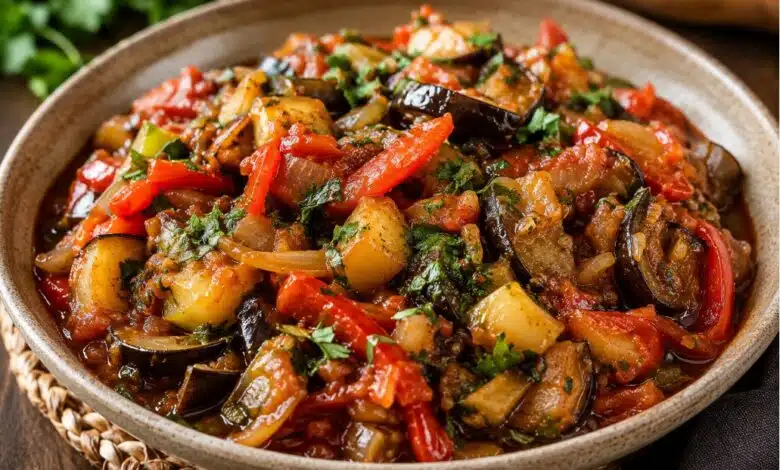
Finding ajapsandali near you usually means searching beyond the best-known Georgian dishes and reading the vegetable, starter and cold-appetizer sections of a restaurant menu. Khachapuri and khinkali may attract the most attention, but ajapsandali is one of the clearest examples of how Georgian cooking builds deep flavor from eggplant, tomatoes, peppers, onions, garlic, herbs and patient cooking.
Ajapsandali may be described as Georgian vegetable stew, Georgian eggplant stew, vegetable ragout, ajapsandal or Georgia’s answer to ratatouille. Some restaurants serve it warm and spoonable. Others serve it cool or at room temperature, allowing the garlic, herbs and tomato to settle into the vegetables.
The dish belongs naturally on a shared Georgian table. It can sit beside bread, pkhali, eggplant rolls, bean dishes, grilled meat, pickles and Georgian wine without competing with them. If Georgian cuisine is new to you, our broader guide to Georgian food and the Georgian table explains how vegetable plates, breads, dumplings, meats, sauces and wine work together.
Ajapsandali is especially useful when the rest of the order contains rich cheese bread or grilled meat. Its tomato acidity, herbs and soft vegetables provide contrast. A table with khachapuri, khinkali and kebabs can feel heavy without a vegetable dish; adding ajapsandali changes the rhythm of the entire meal.
Where can you find ajapsandali near you?
The strongest place to begin is a full-service Georgian restaurant with a menu that extends beyond khachapuri and khinkali. Ajapsandali is more likely to appear where the kitchen prepares several vegetable dishes, cold starters, walnut-based plates, beans, grilled meats and regional specialties.
It may appear under starters, cold appetizers, hot appetizers, vegetable dishes, sides or traditional Georgian dishes. Do not search only the entrée section. Ajapsandali is frequently treated as a shared plate rather than a private main course.
Current official menu listings are available in New York City, Washington, South Florida and San Francisco. Other restaurants may also prepare the dish even when search engines do not show a dedicated page for it.
In cities without a Georgian restaurant, try searching for Georgian catering, Georgian festivals, Eastern European markets with prepared food, Caucasus cultural events and pop-up dinners. A local Georgian community may offer home-style dishes that are not part of a permanent restaurant menu.
Ajapsandali is also practical to prepare at home. Unlike khinkali or filled breads, it does not require dumpling folding, dough fermentation or special shaping. The main challenge is controlling vegetable moisture and preserving enough texture.
Restaurants currently listing ajapsandali
The restaurants below identify ajapsandali directly on publicly available menus. Prices, recipes and availability can change, so follow the official menu link and confirm the dish before traveling.
Laliko
Laliko lists ajapsandali among its starters. The menu describes eggplant, bell peppers, tomatoes and spices topped with a slice of cheese.
This presentation shows why diners should not automatically assume every restaurant version is vegan. The vegetable base may contain no meat, but the finished plate can include dairy.
Laliko is useful for a complete dinner because ajapsandali can be ordered with pkhali, eggplant rolls, khinkali, grilled food and Georgian wine. Ask whether the cheese can be omitted when a dairy-free plate is needed.
Supra
Supra describes ajapsandali as Georgia’s take on ratatouille, made with eggplant, onion, tomato, potato and fresh herbs. The official menu marks the dish vegetarian and gluten-free.
The potato makes this version heartier than preparations based primarily on eggplant, tomato and peppers. It may feel substantial enough to share as more than a small appetizer.
Supra offers a broad Georgian menu, making it practical for mixed groups. Ajapsandali can balance cheese bread, grilled meat, dumplings and richer walnut dishes.
Argo Georgian Restaurant
Argo lists ajapsandali with eggplant, bell pepper, tomato, onion and parsley. The menu description focuses on the vegetables and does not present the dish with cheese.
Argo is a useful option for diners traveling from Miami, Fort Lauderdale, Hollywood, Aventura and other parts of Miami-Dade or Broward County. Because South Florida traffic can significantly increase travel time, confirm that ajapsandali is available before leaving.
Georgian Cheese Boat
Georgian Cheese Boat lists ajapsandali as a vegetarian stew containing eggplant, tomato, zucchini, bell pepper, potato and fresh herbs.
This ingredient list produces a broader vegetable mixture than versions focused almost entirely on eggplant, tomatoes and peppers. Zucchini adds moisture and softness, while potato gives the bowl additional body.
The restaurant also serves Georgian cheese breads, bean dishes, grilled items and dumplings, allowing ajapsandali to function as the vegetable element in a shared meal.
Finding ajapsandali in New York City
New York has one of the strongest concentrations of Georgian restaurants in the United States, but ajapsandali is not always listed as prominently as khachapuri, khinkali or pkhali.
Laliko in the West Village currently provides a clear official listing. Its version includes cheese, so it is better described as vegetarian rather than automatically vegan.
Other Georgian restaurants in Manhattan, Brooklyn and Queens may prepare ajapsandali seasonally or offer it through catering even when it is absent from the visible daily menu. Search each restaurant’s ordering platform as well as its main website because some dishes appear only in online ordering systems.
Where to search beyond Manhattan
Brooklyn has a long-established Georgian dining presence. Brighton Beach, Sheepshead Bay and surrounding neighborhoods contain restaurants, bakeries and food businesses connected to Georgian and wider post-Soviet communities.
A bakery may focus on breads and pastries, but some also sell hot dishes, salads and prepared vegetable plates. Call rather than assuming that a bread-focused business does not prepare ajapsandali.
What to ask a New York restaurant
- Is ajapsandali on today’s menu?
- Is it served hot or cold?
- Does it contain potato or zucchini?
- Is cheese added to the plate?
- Is butter used in the vegetables?
- Can it be ordered as a larger catering portion?
New York menus can change between lunch, brunch and dinner. Confirm the relevant meal period instead of relying on a menu from another part of the day.
Finding ajapsandali in Washington, DC
Supra is the clearest current Washington option because its official menu directly names ajapsandali and lists the principal ingredients.
The restaurant describes it as Georgia’s take on ratatouille. That comparison helps unfamiliar diners understand the broad category, but the Georgian use of herbs, garlic and seasoning gives ajapsandali its own identity.
How to build a balanced order at Supra
Ajapsandali is soft and vegetable-focused. Pair it with one Georgian bread, one crisp or walnut-based starter and one grilled or bean dish.
A useful order for several people could include ajapsandali, pkhali, shotis puri or khachapuri, lobio and one grilled meat. This provides a contrast of soft vegetables, bread, walnuts, beans and char.
If you are unfamiliar with the difference between Georgia’s many cheese breads, our guide to khachapuri styles explains Adjarian, Imeretian, Megrelian and other common versions.
Finding ajapsandali in Miami and South Florida
Argo Georgian Restaurant in Hallandale Beach is the strongest verified South Florida option in this guide. Its menu identifies ajapsandali directly and lists eggplant, bell pepper, tomato, onion and parsley.
Hallandale Beach is positioned between Miami-Dade and central Broward, making the restaurant reachable from Aventura, Hollywood, Sunny Isles Beach, North Miami Beach and Fort Lauderdale.
Diners coming from Boca Raton, West Palm Beach, western Broward or southern Miami-Dade should confirm availability first. The trip makes more sense when it is part of a full Georgian meal rather than a journey for one small side dish.
How to order a complete meal at Argo
Use ajapsandali as the vegetable center of the table. Add one khachapuri rather than several, one grilled meat or kebab, and a fresher plate such as Georgian salad.
Lobio can turn the meal into a satisfying vegetarian combination, particularly when served with mchadi. Pkhali or eggplant rolls add walnuts and garlic but may make the table feel very soft, so include bread, salad or grilled food for contrast.
Finding ajapsandali in San Francisco
Georgian Cheese Boat currently lists a vegetarian ajapsandali with eggplant, tomato, zucchini, bell pepper, potato and fresh herbs.
This version illustrates why the name does not describe one rigid recipe. Some Georgian cooks consider eggplant, peppers, tomatoes and herbs the essential core. Others add potatoes or zucchini for body, seasonal availability or household preference.
What the extra vegetables change
Zucchini contributes moisture and a softer texture. Potato absorbs tomato juices and seasoning while making the dish more filling. Together they can create a bowl closer to a hearty vegetable stew than a concentrated eggplant preparation.
Because Georgian Cheese Boat specializes in cheese breads, ajapsandali can provide useful acidity and vegetables beside an otherwise rich order.
How to search for ajapsandali in other U.S. cities
A city may have Georgian food without a page optimized around the word ajapsandali. Restaurant menus can be stored in PDFs, photographs, ordering platforms or social media posts that search engines do not index well.
Search several spellings and descriptions
- ajapsandali near me;
- ajapsandal near me;
- Georgian eggplant stew;
- Georgian vegetable stew;
- Georgian ratatouille;
- eggplant and pepper stew;
- Georgian vegetable ragout;
- ajapsandali restaurant;
- Georgian catering ajapsandali.
Search by cuisine first
Begin with “Georgian restaurant near me” or “Georgian food near me,” then inspect the full menu. Searches focused only on ajapsandali can miss restaurants whose menus are not indexed dish by dish.
Try wider regional categories
Restaurants may identify themselves as Caucasus, Eastern European or Eurasian rather than strictly Georgian. Ajapsandali also appears in neighboring culinary traditions, although ingredients and spelling may vary.
Look for catering menus
Home-style vegetable dishes often appear in catering packages even when they are not practical for small daily restaurant batches. Ask whether the kitchen can prepare a tray for a family meal or event.
Check Georgian cultural events
Festivals, community celebrations, wine dinners and temporary pop-ups can include dishes that are difficult to find on permanent menus.
What is ajapsandali?
Ajapsandali is a Georgian vegetable dish usually built around eggplant, tomatoes, peppers, onions, garlic and fresh herbs. Some versions include potatoes, zucchini, fresh chile or adjika.
It may be roasted, fried, layered, simmered or prepared through a combination of methods. The goal is not simply to cook vegetables until soft. Good ajapsandali develops concentrated flavor while keeping the herbs, garlic and tomato lively.
Eggplant is usually the central ingredient because it absorbs seasoning and gives the dish its substantial texture. Tomato supplies acidity and moisture. Peppers add sweetness. Onions create a savory base, while herbs distinguish the dish from a generic eggplant stew.
Is ajapsandali a side dish or main dish?
It can be either. A small restaurant portion functions as a starter or shared side. A larger bowl with potato and bread can become a light vegetarian meal.
Is it a summer dish?
Ajapsandali is strongly connected to vegetables that reach their best flavor in warm weather. However, restaurants can prepare it throughout the year using greenhouse produce or preserved tomatoes.
Is it always chunky?
No. Some cooks preserve clear pieces of eggplant, pepper and onion. Others simmer the vegetables until they become soft and almost unified.
What does ajapsandali taste like?
Ajapsandali usually tastes savory, garlicky, herbal and gently sweet. Eggplant absorbs the tomato, onion, spices and herbs, while peppers provide sweetness and aroma.
A roasted version can taste smoky and concentrated. A simmered version may be softer, wetter and more tomato-forward. A chilled version often tastes sharper because the acidity and garlic become more noticeable as the dish rests.
The dish should not taste like unseasoned boiled vegetables. Even a mild version should have enough salt, garlic, herbs and acidity to remain interesting without meat or cheese.
What texture should good ajapsandali have?
There is no single required texture, but the eggplant should be fully tender. Raw or spongy eggplant is one of the clearest signs that the dish needs more cooking.
Peppers and onions may retain a slight bite, particularly when the vegetables are roasted separately. Tomatoes should create enough moisture to coat the vegetables without turning the bowl into thin soup.
Chunky restaurant-style ajapsandali
Distinct vegetables remain visible. This version works well as a plated starter and generally travels better because it does not collapse immediately.
Soft home-style ajapsandali
Longer cooking allows eggplant, tomato and onion to blend. The result can be spoonable, rich and comforting.
Why some versions become oily
Eggplant absorbs oil readily. Frying can create excellent flavor, but excessive oil makes the dish heavy and masks the herbs and tomato.
Why some versions become watery
Eggplant, tomatoes, zucchini, peppers and onions all release moisture. If they are crowded in one pot without browning or evaporation, the final dish can become thin.
What ingredients are commonly used in ajapsandali?
| Ingredient | Purpose | Common variation |
|---|---|---|
| Eggplant | Main body and silky texture | Roasted, fried, grilled or simmered |
| Tomatoes | Acidity, sweetness and moisture | Fresh, crushed or puréed |
| Bell peppers | Sweetness, color and aroma | Red, yellow or green |
| Onions | Savory foundation | Diced, sliced or slowly softened |
| Garlic | Sharpness and depth | Cooked until mellow or added late |
| Cilantro | Fresh Georgian herbal character | Used alone or with parsley |
| Parsley | Clean herbal freshness | Flat-leaf parsley is common |
| Basil | Sweet aromatic note | Green or purple basil |
| Potatoes | Body and heartiness | Included in some versions |
| Zucchini | Moisture and additional vegetable texture | More common in expanded restaurant versions |
| Coriander | Warm citrus-like spice | Ground seed or fresh herb |
| Adjika or chile | Heat and concentrated seasoning | Mild, hot or omitted |
Cheese is not essential to the stew itself, but some restaurants serve cheese on top or beside it. Butter may also be used, so dietary assumptions should be confirmed.
Why restaurant versions of ajapsandali differ
Ajapsandali is a home-style dish rather than a formula controlled by one standardized restaurant method. The balance changes with household tradition, region, season and available produce.
Roasted ajapsandali
Roasting concentrates flavor and reduces excess moisture. The eggplant and peppers may develop caramelized edges and a mild smoky aroma.
Fried ajapsandali
Frying can make eggplant especially silky and rich. The quality depends on controlling the amount of oil.
Simmered ajapsandali
Simmering creates a softer, more unified stew. Tomato and onion become part of the sauce rather than remaining distinct pieces.
Ajapsandali with potato
Potato makes the dish more filling and absorbs tomato juices. Too much can reduce the prominence of eggplant.
Ajapsandali with zucchini
Zucchini increases volume and moisture. It creates a broader summer-vegetable character but can make the dish watery when not browned properly.
Ajapsandali with cheese
Cheese adds salt and richness. It also changes a potentially vegan dish into a vegetarian one.
Spicy ajapsandali
Adjika or fresh chile can create noticeable heat. Other versions use coriander and black pepper for aroma without becoming spicy.
Cold ajapsandali
Chilling firms the vegetables and intensifies garlic and acidity. It may be served among cold starters rather than hot vegetable dishes.
Is ajapsandali the same as ratatouille?
No. Both dishes use eggplant, tomatoes, peppers and other summer vegetables, but they belong to different culinary traditions.
Ratatouille is associated with Provence and often uses zucchini, olive oil, tomatoes, eggplant and Provençal herbs. Ajapsandali belongs to Georgian and wider Caucasus cooking and commonly emphasizes cilantro, garlic, basil, coriander and sometimes adjika.
| Feature | Ajapsandali | Ratatouille |
|---|---|---|
| Tradition | Georgian and Caucasus | French Provençal |
| Central vegetable | Usually eggplant | Eggplant, zucchini, tomato and pepper |
| Herbs | Cilantro, parsley and basil | Thyme, basil and Provençal herbs |
| Seasoning | Garlic, coriander and optional adjika | Garlic, olive oil and Mediterranean herbs |
| Potato | Used in some versions | Not normally central |
| Service | Warm, chilled or room temperature | Warm or room temperature |
Is ajapsandali vegan, vegetarian and gluten-free?
The basic combination of vegetables, herbs, spices and vegetable oil can be both vegan and gluten-free. Restaurant preparation can change that answer.
Vegetarian
Ajapsandali generally contains no meat. Cheese or butter can still be included while the dish remains vegetarian.
Vegan
Ask whether the kitchen uses butter, cheese, meat broth or a dairy garnish. A menu may describe only the vegetables without listing every cooking fat.
Gluten-free
The traditional ingredients do not require wheat. Bread on the plate, flour in another component or shared preparation surfaces may matter for diners with celiac disease.
Nut-free
Ajapsandali does not normally require walnuts, but walnuts are widely used in Georgian kitchens. Pkhali, eggplant rolls and sauces may be prepared nearby.
How to order ajapsandali at a Georgian restaurant
Ajapsandali can function as a starter, side dish or light main. Ask about the portion size before choosing the rest of your meal.
Order it as a vegetable starter
It works naturally with pkhali, eggplant rolls, Georgian salad, pickles and bread.
Use it to balance khachapuri
Cheese bread is rich and dense. Ajapsandali brings tomato acidity, herbs and vegetables.
Pair it with grilled meat
The eggplant and peppers complement mtsvadi, kebabs, chicken and other charred dishes.
Build a vegetarian meal
Combine ajapsandali with lobio, pkhali, mushrooms, Georgian salad and bread. Confirm dairy ingredients when a vegan meal is required.
Do not order too many soft dishes
Ajapsandali, lobio, pkhali and eggplant rolls are all flavorful, but together they can create a table dominated by soft textures. Add bread, salad, pickles or grilled vegetables.
Questions to ask before traveling for ajapsandali
Does ajapsandali travel well for takeout and delivery?
Ajapsandali generally travels better than foods that depend on a crisp crust. The vegetables may soften further in a closed container, but the overall character remains intact.
Keep bread separate
Bread absorbs tomato juices quickly. Separate packaging prevents it from becoming soggy.
Keep cheese separate when possible
A cheese garnish can release moisture and mask the vegetables during a long trip.
Refrigerate chilled ajapsandali promptly
If the restaurant serves it cold, do not leave it in a warm car or on the counter for an extended period.
Reheat gently
Use a covered skillet or saucepan over moderate heat. Stir carefully so the eggplant does not become a uniform paste.
Expect the flavor to develop
Ajapsandali often tastes even more integrated after the vegetables, herbs and garlic have rested together.
What should you eat with ajapsandali?
Shotis puri or tonis puri
Warm Georgian bread absorbs the tomato-rich juices and turns a vegetable starter into a more substantial plate.
Khachapuri
Ajapsandali provides acidity and vegetables beside rich cheese-filled bread.
Mtsvadi or kebabs
Soft eggplant and peppers pair naturally with smoky grilled meat.
Lobio
Beans and ajapsandali create a filling meatless meal with complementary flavors.
Georgian salad
Fresh cucumber, tomato, onion and herbs add crispness beside cooked vegetables.
Pkhali
Walnut-rich vegetable spreads add a dense, nutty contrast, especially when served with warm bread.
Pkhali is not one specific vegetable dish but a family of Georgian preparations combining vegetables, walnuts, garlic, herbs and spices. Our guide explains what pkhali is and how its main varieties differ.
To compare restaurant options, see our separate guide to finding Georgian pkhali near you.
How to build your first Georgian meal around ajapsandali
A Georgian meal works best through contrast rather than by ordering every famous dish at once.
Choose one bread
Select one khachapuri style or a simpler Georgian bread. Several cheese breads can overwhelm the rest of the meal.
Choose one vegetable plate
Ajapsandali can fill this role by itself, or it can be paired with a small pkhali assortment.
Choose one substantial dish
Khinkali, mtsvadi, kebab, lobio or chicken can provide the main weight of the meal.
Add something sharp or fresh
Georgian salad, pickles, tkemali or fresh herbs prevent the meal from becoming too rich.
Example order for two people
- one ajapsandali;
- one Imeretian or Adjarian khachapuri;
- four to six khinkali or one grilled dish;
- one Georgian salad or pickle plate.
Example vegetarian order
- one ajapsandali;
- one pkhali assortment;
- one lobio;
- one Georgian bread or khachapuri;
- one fresh salad.
How can you recognize well-prepared ajapsandali?
The eggplant is fully tender
It should not feel raw, tough or dry in the center.
The dish tastes seasoned throughout
Salt, herbs, garlic and tomato should reach the eggplant rather than sitting only in the surrounding sauce.
The oil supports the vegetables
Some oil is necessary for richness and texture, but the plate should not contain a deep oily layer.
The herbs remain noticeable
Cilantro, parsley or basil should bring freshness rather than disappearing completely under long cooking.
The tomato is balanced
It should provide sweetness and acidity without turning the dish into tomato sauce with a few vegetables.
The vegetables are cohesive but recognizable
A soft stew can still retain pieces of eggplant and pepper. Total collapse is not always wrong, but it should feel intentional.
The dish fits its serving temperature
Hot ajapsandali should be aromatic and tender. Cold ajapsandali should taste lively rather than greasy or dull.
What if no restaurant near you serves ajapsandali?
Ajapsandali is one of the more approachable Georgian dishes to prepare at home because it requires no specialized dough technique.
The central challenge is moisture. Eggplant, tomatoes, peppers, onions and zucchini all release water. Roasting or browning some ingredients separately creates deeper flavor and prevents the final stew from becoming thin.
A practical home method
- cut the eggplant into substantial pieces;
- salt or roast it until tender;
- cook onions and peppers until softened;
- add tomatoes and allow excess moisture to reduce;
- combine the vegetables gently;
- season with garlic, coriander, pepper and optional adjika;
- finish with generous fresh herbs;
- rest briefly before serving.
Serve it warm for a comforting stew, at room temperature for a shared vegetable plate or chilled after the flavors have developed overnight.
Explore more ajapsandali guides
Traditional Ajapsandali Recipe
Prepare Georgian eggplant stew with exact quantities, fresh herbs, optional potato and oven or stovetop methods.
What Is Ajapsandali?
Learn about the dish’s ingredients, Georgian identity, regional variations and serving traditions.
Ajapsandali vs Ratatouille
Compare the seasoning, vegetables, texture, cooking methods and culinary origins of two summer stews.
What Does Ajapsandali Taste Like?
Understand its garlicky, herbal, smoky and tomato-rich character before ordering it.
Is Ajapsandali Vegan and Gluten-Free?
See which ingredients fit different diets and what restaurant details require confirmation.
How to Store and Reheat Ajapsandali
Keep leftover vegetables flavorful without making the eggplant watery or excessively soft.
Frequently asked questions
What is ajapsandali?
Ajapsandali is a Georgian vegetable dish usually made with eggplant, tomatoes, peppers, onions, garlic, herbs and spices. Some versions also contain potatoes or zucchini.
Where can I find ajapsandali near me?
Look for full-service Georgian restaurants, Georgian bakeries with hot food, Caucasus restaurants, caterers and Georgian cultural events. Search both ajapsandali and ajapsandal.
Is ajapsandali served hot or cold?
It may be served warm, at room temperature or chilled. The serving style depends on the recipe and restaurant.
Is ajapsandali the same as ratatouille?
No. They share several vegetables, but ajapsandali belongs to Georgian cooking and commonly uses garlic, cilantro, basil, coriander and sometimes adjika.
Is ajapsandali vegan?
It can be vegan when made with vegetables, herbs, spices and vegetable oil. Restaurant versions may include butter, cheese or another dairy ingredient.
Is ajapsandali gluten-free?
The traditional vegetable ingredients can be gluten-free, but bread, garnishes and kitchen cross-contact should be confirmed when strict avoidance is necessary.
Does ajapsandali contain potatoes?
Some versions contain potatoes and others do not. Potato makes the dish heavier and more filling.
Is ajapsandali spicy?
It may be mild or moderately spicy. Adjika and chile are optional, so ask about the restaurant’s current preparation.
What does ajapsandali taste like?
It tastes savory, garlicky, herbal and gently sweet, with soft eggplant, tomato acidity and sweet peppers.
Can ajapsandali be ordered for takeout?
Yes. It generally travels well because it does not depend on crisp texture. Keep bread and cheese in separate containers when possible.
Check the menu, confirm the preparation and build a complete Georgian meal
Ajapsandali remains less common than khachapuri or khinkali, but verified menu listings can be found in New York City, Washington, South Florida and San Francisco.
The versions differ meaningfully. One restaurant may serve eggplant, tomatoes and peppers with cheese. Another may add potatoes. Another may include zucchini and create a broader summer-vegetable stew.
Before traveling, check the current menu and ask whether the dish is available, how it is served and whether it contains cheese, butter, potatoes or zucchini.
Once it reaches the table, treat ajapsandali as more than a side dish. It can balance cheese bread, grilled meat, dumplings, beans and walnut-rich vegetable plates while showing how deeply satisfying Georgian vegetable cooking can be.
