
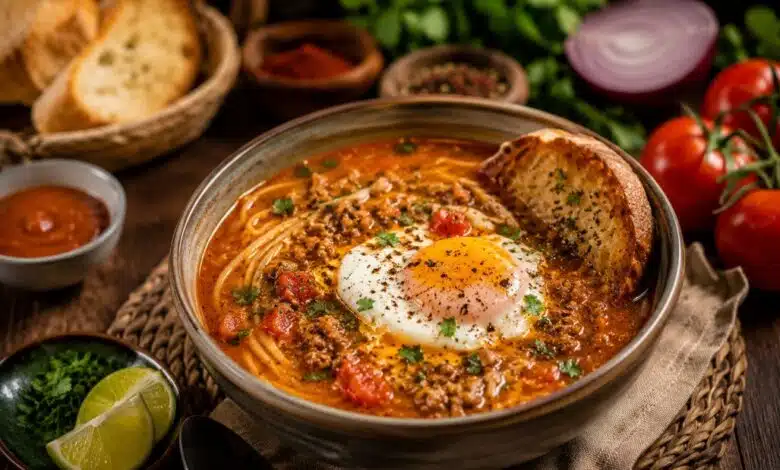
Sopa criolla tastes familiar and distinctive at the same time. Beef broth, noodles, tomato and egg suggest straightforward comfort food, yet ají panca, cooked red onion, garlic, oregano and evaporated milk give the soup a flavor that is recognizably Peruvian rather than simply another bowl of beef noodle soup.
Sopa criolla tastes savory, beefy, tomato-rich and warmly aromatic, with gentle chile depth rather than aggressive heat. Ají panca contributes an earthy, slightly fruity pepper character; oregano lifts the aroma; milk or evaporated milk softens the tomato and rounds the broth; and egg adds richness. Thin noodles absorb those flavors, while lime and rocoto may bring acidity or extra heat at the table.
The complete flavor profile of sopa criolla
The core flavor of sopa criolla is savory rather than sweet, sour or fiery. Beef establishes the foundation. Tomato brings acidity and a small amount of natural sweetness. Onion and garlic deepen during cooking, while ají panca adds dark chile flavor and brick-red color. Oregano introduces a dry herbal aroma that becomes especially noticeable in the rising steam.
Milk or evaporated milk usually appears near the end of cooking. It does not necessarily make the soup taste like cream. Instead, it softens the sharper edges of tomato and chile, making the broth feel rounder and smoother. Egg contributes a separate richness: the white adds tender substance, and a soft yolk can dissolve into the liquid and make individual spoonfuls more luxurious.
The soup is rarely one-dimensional. A spoonful may begin with warm beef broth, move toward tomato and ají panca, then finish with oregano and black pepper. Noodles give those flavors somewhere to settle. A squeeze of lime raises the acidity, while rocoto or a hot sauce can introduce a sharper form of heat than the mellow ají panca in the base.
A balanced bowl should not taste primarily of milk, tomato sauce, dried herbs or commercial stock. Each element should remain recognizable while contributing to one continuous broth. This integration is what separates carefully prepared sopa criolla from a generic soup assembled from familiar ingredients.
The soup is hearty, but it does not need to feel heavy. A version with a clear, well-seasoned broth, fine noodles and one egg can feel restorative. A restaurant version containing potato, cream, rice and a fried egg may be much richer and can function as an entire meal.
What happens from the first aroma to the final spoonful
Sopa criolla changes as you eat it. The first impression comes from aroma, especially oregano, warm beef, tomato and chile. The first spoonful is often more broth-forward. As the egg breaks and noodles release starch, the bowl may become slightly richer and thicker. Lime, hot sauce and bread can alter the later spoonfuls again.
The aroma should suggest cooked onion, oregano, warm beef and red chile. A strongly milky smell is possible in a richer version, but it should not completely cover the savory base.
Beef and tomato usually arrive first. Ají panca creates depth behind them rather than a sudden burst of heat. Salt and black pepper establish the immediate seasoning.
The noodles soften the intensity of the broth and make its seasoning feel more evenly distributed. Angel hair creates a delicate texture; wider pasta makes the bite more substantial.
A soft yolk makes the broth silkier and richer. A firm egg contributes more like a tender solid ingredient, offering contrast without dramatically changing the liquid.
Oregano and black pepper remain after the beef and tomato fade. Lime adds brightness, and rocoto introduces a cleaner, hotter finish when served on the side.
This progression explains why the soup should be tasted before condiments are added. A large squeeze of lime can make the first spoonful lively but may hide the softness contributed by dairy. Too much hot sauce can replace ají panca’s gentle complexity with a simpler, sharper burn.
It is also useful to stir the bowl gently before deciding that the flavor is uneven. Milk, egg yolk, noodles and heavier pieces of beef can settle differently. A careful stir can reconnect the broth without destroying a poached egg you want to enjoy separately.
Ají panca gives the soup depth, not just heat
Ají panca is one of the ingredients that makes sopa criolla taste specifically Peruvian. The chile is valued for its dark red color, mild warmth and earthy-fruity flavor. In a well-prepared aderezo, it tastes rounded and integrated rather than raw, metallic or aggressively spicy.
People unfamiliar with Peruvian peppers sometimes see the red broth and expect a hot soup. The color can be misleading. Ají panca usually contributes less immediate heat than many bright red hot peppers. Its effect is closer to warmth, depth and a slightly smoky impression, though the exact flavor depends on the paste and how long it is cooked.
The cooking stage matters. Ají panca paste added directly to liquid can retain a harsh or muddy quality. When it is fried with onion, garlic and tomato, its sharper edges mellow. Oil carries its aroma through the broth, and the chile becomes part of the foundation rather than a separate spoonful of paste.
What ají panca should not do: it should not make every spoonful taste like hot sauce. Its purpose is to deepen the beef-and-tomato base, contribute warm red color and leave a gentle pepper note behind the oregano.
Some cooks combine ají panca with ají amarillo. Ají amarillo can bring brighter fruitiness and more noticeable warmth. Rocoto may be served separately for diners who want a sharper, more forceful chile experience. These additions can be delicious, but they produce a different heat pattern from ají panca alone.
A restaurant description that mentions ají panca provides useful evidence about the likely flavor. A listing that says only “beef noodle soup” may still refer to sopa criolla, but it does not tell the diner whether the kitchen has preserved this important chile component.
Tomato, red onion and garlic create the soup’s cooked sweetness
Tomato gives sopa criolla acidity, body and color, but the soup should not taste like diluted pasta sauce. Fresh tomato is usually cooked with onion, garlic and chile until the mixture loses its rawness. Tomato paste may intensify color and concentration until the mixture loses its rawness. Tomato paste may intensify color and concentration, yet it should remain part of a broth rather than becoming the dominant identity.
Red onion adds a sweetness that becomes evident only after patient cooking. Raw onion is sharp and sulfurous; cooked onion becomes softer and supports the beef. Garlic fills the space between onion, tomato and meat. None of these aromatics should feel like a separate garnish floating in stock.
The term aderezo is useful because it describes more than a quick sauté. It is the cooked flavor base on which the soup depends. When the aderezo is well developed, the broth tastes unified. When it is rushed, the tomato may seem sour, the onion may remain harsh and the ají panca may taste like uncooked paste.
Bright but not sharp
Tomato should lift the beef and add enough acidity to keep the soup from feeling flat. Its sweetness becomes more noticeable after cooking, while milk softens the remaining edge.
Sour, sweet or sauce-like
Undercooked tomato can taste raw and acidic. Too much paste may make the soup sweet, dense and closer to sauce than broth.
Sweet and nearly invisible
The onion should deepen the soup without announcing itself as a raw, crunchy ingredient. It becomes part of the background structure.
Savory rather than pungent
Garlic should reinforce the meat and chile. Excessive raw garlic can cover oregano and make the soup taste sharper than intended.
A small amount of lime at the table interacts with this tomato base. Lime can make a rich bowl feel lighter, but it also increases acidity. Add it gradually, particularly when the soup already tastes bright.
The beef determines whether the soup tastes light, meaty or almost stew-like
Beef is the main savory anchor of sopa criolla, yet different cuts and preparations produce noticeably different experiences. Finely chopped steak creates tender, distinct pieces. Ground beef disperses fat and browned flavor throughout the broth. Larger cubes make the bowl feel more rustic and substantial.
A recipe based on good beef stock can taste deeply meaty even when the amount of solid beef is modest. A quick version made with water depends more heavily on properly browned meat and a concentrated aderezo. Restaurant kitchens may use prepared stock, house-made broth or a combination.
| Beef format | Flavor effect | Texture | What to expect |
|---|---|---|---|
| Ground beef | Distributes browned meat flavor throughout the bowl | Crumbly and integrated with noodles | A home-style, very savory soup with meat in nearly every spoonful |
| Finely chopped steak | Produces cleaner, more distinct beef flavor | Tender small cubes or strips | A broth-forward bowl with clear pieces of meat |
| Larger beef cubes | Makes the soup feel more substantial | Can be tender or chewy depending on the cut | A heartier presentation approaching a light stew |
| Strong beef stock with less meat | Creates depth without making the bowl crowded | Lighter solid texture | A more elegant, broth-centered version |
Browning is important because it creates roasted, savory notes that boiling alone cannot provide. Meat dropped into watery broth without browning can taste pale and separate. Properly browned beef contributes flavor to the pot even after the pieces are removed temporarily while the aderezo cooks.
Fat level also changes the experience. Lean beef produces a cleaner broth but can become dry if overcooked. Beef with more fat gives richness and carries chile aroma, though too much grease can collect on the surface and make the soup tiring. A balanced bowl should feel nourishing rather than oily.
The beef must remain tender enough to eat with a spoon. Chewy strips interrupt the soft texture created by noodles, milk and egg. Ground beef should remain juicy, not dry or grainy.
Milk makes the soup rounder, not necessarily thick
Evaporated milk is common in sopa criolla because it adds concentrated dairy richness without requiring a large volume. The broth may become slightly opaque and shift from red-brown toward orange, but it should remain fluid. The soup is not required to resemble chowder or cream sauce.
Dairy changes perception as much as texture. It reduces the apparent sharpness of tomato and chile. Salt may feel less aggressive. Beef becomes softer in character, and the transition between broth and egg feels more natural.
A small amount of milk can be difficult to identify as a separate taste. Instead, the diner notices that the soup feels complete and mellow. A larger amount creates an obvious creamy note. Cream produces a richer, heavier result than evaporated milk, while regular milk may create a lighter finish.
Milk can also expose cooking errors. Boiling dairy too aggressively may cause separation or a grainy appearance. Adding cold milk carelessly to a fiercely boiling acidic broth can make the texture less smooth. Gentle heat near the end helps preserve a cohesive finish.
Not every version contains dairy. A milk-free sopa criolla can taste brighter, more tomato-forward and more clearly beefy. It may also feel lighter. That variation should not automatically be considered inferior, particularly when it reflects the cook’s household style.
Diners with dairy allergies must ask rather than rely on color. A reddish, relatively clear broth can still contain evaporated milk. Conversely, an orange-looking soup may derive some opacity from tomato, egg or starch rather than a large amount of dairy.
Egg changes both richness and the rhythm of eating
Egg is not merely decoration. It adds protein, tenderness and a form of richness different from milk. The way it is cooked determines whether the broth changes gradually or the egg remains a separate component.
A poached egg with a soft yolk is interactive. The diner can taste several spoonfuls of the original broth, then break the yolk and create a silkier second phase. A fully set poached egg contributes tender pieces of white and yolk without dramatically thickening the liquid.
A fried egg creates stronger visual contrast. Crisp edges can add texture, while the yolk may remain runny. This version can feel more restaurant-like and substantial. During delivery, however, residual heat may continue cooking the yolk.
Eggs cracked into a communal pot may set in irregular shapes. The white spreads through the broth while the yolk remains whole or partly broken. This produces a homestyle appearance and distributes egg more broadly through the soup.
Soft-poached egg
Creates a silky broth when broken and gives the diner control over when the yolk enters the soup.
Firm poached egg
Adds tender protein without greatly changing the broth’s texture or color.
Fried egg
Offers a distinct topping, possible crisp edges and a richer restaurant presentation.
Egg stirred into the pot
Distributes soft strands or curds through the broth, making every spoonful slightly different.
Egg omitted
Produces a lighter bowl in which beef, tomato, ají panca and noodles become more prominent.
Extra egg
Makes the soup more filling and shifts it toward a complete meal rather than a first course.
A diner who dislikes runny yolk should request a fully cooked egg. A diner ordering delivery should expect more cooking during transit. Egg allergies require direct confirmation because egg may be cooked in the shared pot rather than simply placed on top.
Oregano is the aroma many diners remember afterward
Oregano gives sopa criolla its dry, warm herbal lift. Beef and tomato dominate the first taste, but oregano often remains in the nose and finish. Crushing dried oregano near the end of cooking releases fragrant oils that would be weaker if the herb had spent a long time boiling.
The herb connects several parts of the bowl. It brightens beef, supports tomato and prevents milk from making the soup feel dull. Black pepper often reinforces its warmth. The combination creates an aroma associated with comfort without making the soup smell like a generic herb blend.
Too little oregano leaves the broth flatter and more ordinary. Too much can create bitterness or a medicinal impression. The herb should be noticeable in the steam but not form a dusty layer across the surface.
A useful tasting cue: lift a spoonful and smell it before tasting. If oregano is fresh and well proportioned, it should appear clearly above the warm beef and tomato without overpowering either.
Parsley may appear as a garnish, and some contemporary bowls use cilantro. These herbs contribute freshness but do not reproduce oregano’s role. Cilantro can substantially change the aroma and may make the soup feel closer to other Peruvian broths if used heavily.
Noodles control how brothy or filling the soup feels
Noodles do not add a strong flavor of their own, yet they transform the way sopa criolla tastes. Pasta absorbs seasoned broth, carries fat and dairy, and makes each spoonful less intense than drinking the liquid alone. The noodle-to-broth ratio determines whether the bowl feels like soup with pasta or pasta submerged in soup.
Angel-hair noodles are common because they cook quickly and integrate easily. Their fine texture lets beef, tomato and oregano remain dominant. They can also become overly soft quickly, particularly during delivery or reheating.
Spaghetti provides more chew and separates more clearly from the broth. Linguine and fettuccine create an even heavier mouthfeel. A wider noodle may make a small portion feel like a full meal, especially when potato and egg are also present.
| Noodle type | Mouthfeel | Flavor effect | Delivery behavior |
|---|---|---|---|
| Angel hair | Fine, delicate and quick-cooking | Keeps the broth and aromatics in focus | Softens rapidly and may absorb substantial liquid |
| Thin spaghetti | Slightly firmer and more defined | Adds moderate chew without overwhelming the broth | Travels somewhat better than angel hair |
| Regular spaghetti | Noticeably chewy and substantial | Makes the bowl feel more pasta-centered | Holds shape longer but continues absorbing broth |
| Linguine or fettuccine | Broad, heavy and meal-like | Softens the perceived seasoning through greater starch and bulk | Can become dense after a long journey |
Freshly served noodles should be tender but still identifiable. They do not need the firm bite expected from a dry pasta dish, yet they should not dissolve into the broth. A delivered bowl deserves a different standard because travel time inevitably changes the texture.
Restaurants may be able to package noodles separately. This preserves texture but can slightly reduce flavor absorption. At home, storing broth and noodles separately is the most effective way to keep leftovers from becoming thick overnight.
Is sopa criolla spicy?
Sopa criolla is generally mild to moderately seasoned, not intensely hot. Ají panca provides deep pepper flavor and red color with relatively restrained heat. Many people who avoid very spicy food can enjoy a standard bowl, though restaurant recipes differ.
The source of heat matters. Ají panca creates a slow, mellow warmth. Ají amarillo may add brighter heat and fruitiness. Rocoto is sharper and potentially much hotter. A restaurant may cook these peppers into the broth or offer a sauce separately.
Milk and egg reduce the perceived heat by adding fat and softness. Lime can make chile seem brighter even when it does not increase the actual amount of capsaicin. Salt also affects perception: an overly salty broth may feel harsher and hotter than a balanced one.
Never judge spice level solely by color. A dark red bowl may be mild because of ají panca and tomato paste. A lighter soup may contain a small amount of a much hotter pepper.
Why restaurant versions can taste dramatically different
Sopa criolla has a stable flavor family rather than one immutable formula. Restaurants make choices about beef, stock, tomato, dairy, noodles, egg and accompaniments. Those decisions can move the bowl from light and aromatic to creamy and almost stew-like.
A light, broth-forward version
This style uses strong beef stock, modest noodles, limited dairy and finely chopped meat. Tomato and ají panca season the broth without making it dense. The egg may be poached, and potato may be absent. The result feels warming but not heavy.
A creamy restaurant version
More evaporated milk or cream creates a softer, richer broth. A fried egg, potato and bread can make the presentation especially substantial. Tomato acidity becomes less obvious, while black pepper and oregano may stand out more clearly against the dairy.
A tomato-forward version
Fresh tomato and paste produce deeper color and greater acidity. This style can feel lively and robust when balanced by broth and milk. When unbalanced, it may resemble thin tomato sauce with noodles.
A ground-beef version
Ground beef spreads through the soup and gives nearly every spoonful a meaty texture. Fat may enrich the broth more visibly. This version often feels particularly homestyle and comforting.
A steak version
Finely chopped steak creates cleaner bites and a clearer separation between meat and broth. The soup may look more refined, though tenderness depends on the cut and cooking time.
A potato-and-rice version
Potato inside the soup and rice on the side make the meal much heavier. Starch softens the perceived acidity and spice. This version can satisfy as lunch without a second course.
A milk-free version
Without dairy, the broth tastes brighter, more directly beefy and more chile-forward. Tomato acidity is clearer, and the soup may look darker or more transparent. Egg can still provide richness.
None of these profiles should be treated as the only valid expression. The better question is whether the components remain balanced and whether the restaurant accurately describes its version.
Which sopa criolla version are you most likely to enjoy?
Your preferred version depends on what you already enjoy in other soups. Sopa criolla can be approached through familiar preferences rather than through a fixed idea of what an authentic bowl must look like.
Ready to find a restaurant bowl?
The main Best Sopa Criolla Near Me guide identifies U.S. restaurants with public menu evidence and explains how to verify same-day availability, delivery and each restaurant’s ingredient profile.
What does sopa criolla taste similar to?
No familiar American soup is an exact match, but comparisons can help a first-time diner imagine the bowl. Sopa criolla shares the comforting structure of beef noodle soup, some of the tomato warmth of a light tomato broth and part of the richness of an egg-enriched soup. Ají panca and oregano keep it from tasting identical to any of those references.
Compared with American beef noodle soup
Both contain beef, broth and noodles. Sopa criolla is generally redder, more aromatic and more layered because of tomato, ají panca, oregano, milk and egg. American beef noodle soup often emphasizes carrot, celery and clear stock instead.
Compared with tomato soup
Sopa criolla contains tomato but remains beef-centered. It is less sweet and less uniformly creamy than tomato bisque. Meat, noodles, chile and egg create a much more substantial texture.
Compared with ramen
Both can combine meat broth, noodles and egg, yet the flavor systems are different. Sopa criolla depends on a Peruvian onion, tomato, garlic and ají panca aderezo, often with oregano and evaporated milk. It does not rely on soy sauce, miso, kombu or ramen-style alkaline noodles.
Compared with sopa a la minuta
This is the closest comparison. The two names may describe closely related or overlapping Peruvian beef-and-noodle soups. Some restaurants distinguish them through dairy, tomato, seasoning, preparation speed or house tradition; others treat the names as nearly interchangeable.
Compared with caldo de gallina
Caldo de gallina is poultry-based and usually paler. It may contain noodles, potato and egg, but it lacks the same beef, tomato and ají panca profile. Caldo de gallina tastes cleaner and more directly like chicken or hen broth.
Compared with aguadito de pollo
Aguadito is greener, cilantro-forward and commonly contains rice and chicken. Its herbal character is fresh and vivid, while sopa criolla is redder, beefier and rounder.
| Soup | Dominant flavor | Texture | Main difference from sopa criolla |
|---|---|---|---|
| Sopa criolla | Beef, tomato, ají panca and oregano | Brothy to gently creamy with noodles and egg | The reference profile |
| Sopa a la minuta | Quick beef-and-noodle soup | Closely related and often overlapping | Difference depends on the cook or restaurant |
| Beef noodle soup | Clear beef stock and vegetables | Usually lighter and less creamy | Lacks the same ají panca, oregano, dairy and egg combination |
| Caldo de gallina | Strong poultry broth | Clear, substantial and noodle-rich | Chicken or hen replaces the red beef-and-tomato base |
| Aguadito | Cilantro, chicken and rice | Green, brothy and herbaceous | Fresh cilantro character rather than tomato and oregano |
| Tomato bisque | Sweet-acidic tomato and cream | Smooth and uniformly creamy | No beef, noodles, chile aderezo or egg structure |
How lime, rocoto and bread change the taste
Condiments and accompaniments can alter sopa criolla enough that the first and final spoonfuls seem like different versions. The best approach is to taste the unmodified broth first, then adjust gradually.
Lime
Lime increases brightness and cuts through dairy, egg yolk and beef fat. A few drops can make a heavy bowl feel more energetic. Too much lime can hide the gentle fruitiness of ají panca and make tomato seem sharper.
Rocoto sauce
Rocoto introduces more immediate heat and a fresher pepper character. Add a small amount to one side of the bowl first. This allows comparison with the original broth and prevents the entire serving from becoming hotter than intended.
Fried or toasted bread
Bread gives crispness at first, then absorbs broth. A fried slice contributes additional richness, while plain toast offers a drier contrast. Leaving bread submerged too long produces a soft, custardy texture that some diners enjoy and others do not.
Black pepper
Freshly ground pepper strengthens the warm finish and works naturally with oregano and beef. Excessive pepper can make the soup feel harsher, particularly when the broth is already salty.
Fresh herbs
Parsley adds clean greenness without dramatically changing the identity. Cilantro has a stronger personality and can move the aroma toward other Peruvian soup styles. A light garnish is less disruptive than a large handful.
How temperature changes the flavor
Sopa criolla should be served hot, but temperature affects what the diner perceives. Extremely hot broth can mute subtle flavors and make salt or chile difficult to judge. As the bowl cools slightly, tomato, oregano and dairy become easier to distinguish.
Fat and gelatin also change with temperature. A hot broth feels fluid and aromatic. As it cools, beef richness becomes more noticeable and the soup may seem heavier. Egg yolk thickens the liquid further once broken.
Delivery creates a different problem. Soup may remain very hot while noodles continue cooking inside the sealed container. By the time it reaches the diner, the flavor can still be excellent but the broth-to-noodle ratio may have changed.
Reheating should be gentle. A hard boil can overcook noodles and egg, separate dairy and reduce delicate oregano aroma. Warm the soup gradually and add a little broth or water if the noodles have absorbed too much liquid.
Does sopa criolla taste better the next day?
The broth base can taste more integrated the next day because beef, tomato, ají panca and oregano have had time to settle together. The complete soup, however, usually loses noodle quality in storage. Pasta continues absorbing liquid and may become very soft.
Egg also changes. A soft yolk will not remain runny after refrigeration and reheating. Dairy can become more pronounced as the broth thickens. Potato, when present, may begin breaking down and contribute additional starch.
The best make-ahead approach is to store the beef-and-aderezo broth separately from noodles, egg and final dairy. Fresh noodles and a newly cooked egg restore much of the original texture. Milk can be added gently during reheating.
Restaurant leftovers are less flexible because all components are already combined. Add a small amount of water or unsalted broth during reheating, and warm only the portion you intend to eat.
How to recognize a balanced bowl
A balanced sopa criolla tastes like one dish rather than a collection of ingredients. Beef should anchor the broth. Tomato and ají panca should provide color, warmth and acidity. Milk should round the edges. Egg and noodles should add substance without making the liquid disappear.
When the soup tastes flat
Flatness can result from weak beef stock, insufficient salt, an undercooked aderezo or stale oregano. Lime may brighten the bowl, but acidity cannot replace missing savory depth. Hot sauce can add excitement without correcting an undeveloped foundation.
When the soup tastes too sharp
Raw tomato, undercooked ají paste, excessive garlic or too much lime can make the flavor aggressive. Dairy may soften the sharpness, but a properly cooked base should already be rounded.
When the soup tastes too heavy
Too much cream, grease, pasta, potato or egg can overwhelm the broth. A small amount of lime may help, but proportion is the real solution. A rich version should still taste like soup.
When the soup tastes primarily of bouillon
A concentrated salty flavor with little beef complexity may indicate heavy reliance on commercial stock base. Bouillon can be part of a practical recipe, but it should support rather than erase tomato, chile and oregano.
What first-time diners often misunderstand
The most common misunderstanding is that red color means extreme spice. In sopa criolla, red usually signals tomato and ají panca more than intense heat. Another misconception is that milk makes the dish a thick cream soup. Many bowls contain dairy while remaining clearly brothy.
A first-time diner should taste the broth before adding lime, rocoto or extra salt. Notice the beef, tomato and oregano first. Then break the egg, if soft, and compare the richer broth. This small sequence reveals more about the dish than seasoning the entire bowl immediately.
How the soup feels as a meal
Sopa criolla can feel light, medium or very filling depending on its construction. A broth-forward bowl with fine noodles and a poached egg works as a starter. A version with abundant beef, wide pasta, potato, bread and rice may be more substantial than many entrées.
The combination of starch, protein and warm broth creates lasting satisfaction. Milk and egg increase richness, while beef and noodles make the soup feel complete. This is one reason portion size matters when planning the rest of a restaurant order.
For a focused first tasting, order the soup alone with lime and bread. If sharing, pair it with something texturally different, such as anticuchos or a modest seafood dish. A second creamy or potato-heavy entrée may make the meal feel repetitive.
In cold weather, a rich version can be especially appealing. In warmer weather, a smaller portion with less dairy and a little lime may feel more comfortable. Sopa criolla is strongly associated with warmth and comfort, but it is not limited to one season.
Flavor questions about sopa criolla
These answers summarize the sensory details diners most often want to know before ordering their first bowl.
What does sopa criolla taste like?
Sopa criolla tastes savory, beefy, tomato-rich and aromatic. Ají panca adds mild earthy chile depth, oregano contributes a warm herbal aroma, and milk or evaporated milk gives many versions a rounded finish. Egg and noodles make the soup filling without necessarily making the broth thick.
Is sopa criolla spicy?
Sopa criolla is usually mild to moderately seasoned rather than very hot. Ají panca provides red color and deep pepper flavor with relatively gentle heat. Some restaurants add hotter peppers or serve rocoto sauce separately, so the exact spice level should be confirmed.
Is sopa criolla a creamy soup?
Many versions contain milk or evaporated milk, but the broth usually remains fluid rather than becoming as thick as chowder or bisque. Dairy softens tomato acidity, rounds the chile flavor and gives the soup a silky finish. Milk-free versions also exist.
What does ají panca taste like in sopa criolla?
Ají panca tastes earthy, mildly fruity and gently warm. It contributes dark red color and complexity rather than extreme heat. When cooked properly with onion, garlic and tomato, it becomes an integrated part of the broth instead of tasting like raw chile paste.
How does egg affect the taste of sopa criolla?
Egg adds richness and tender texture. A soft yolk can dissolve into the broth and make it silkier, while a firm poached or fried egg remains a more separate component. Extra egg also makes the soup feel more like a complete meal.
Can you taste the oregano in sopa criolla?
Yes. Oregano is often one of the clearest aromas rising from the bowl. It adds a dry, warm herbal note that supports beef, tomato and ají panca. The herb should be noticeable without becoming bitter or medicinal.
Does sopa criolla taste like tomato soup?
Not exactly. Tomato adds color, acidity and body, but sopa criolla remains a beef-and-noodle soup. It is less sweet and less uniformly creamy than tomato bisque and includes ají panca, oregano, meat, noodles and usually egg.
Does sopa criolla taste the same as sopa a la minuta?
The soups can taste very similar because both may contain beef, broth, noodles, tomato and egg. Some cooks use the names interchangeably, while others distinguish them through dairy, chile, seasoning or preparation. The restaurant’s ingredient description provides the clearest answer.
What should I expect when ordering sopa criolla for the first time?
Expect a hot, savory and filling beef noodle soup with warm tomato and chile flavor, oregano aroma and possible creaminess from evaporated milk. The egg may be poached, fried or cooked directly in the broth. Taste the soup before adding lime or hot sauce.
Where can I find sopa criolla near me?
Search full-service Peruvian restaurants and inspect their soup menus for sopa criolla, sopa a la minuta or Peruvian beef noodle soup. Current U.S. listings exist in several states, but availability may change. Check the restaurant’s current menu and call before making a long trip.


