
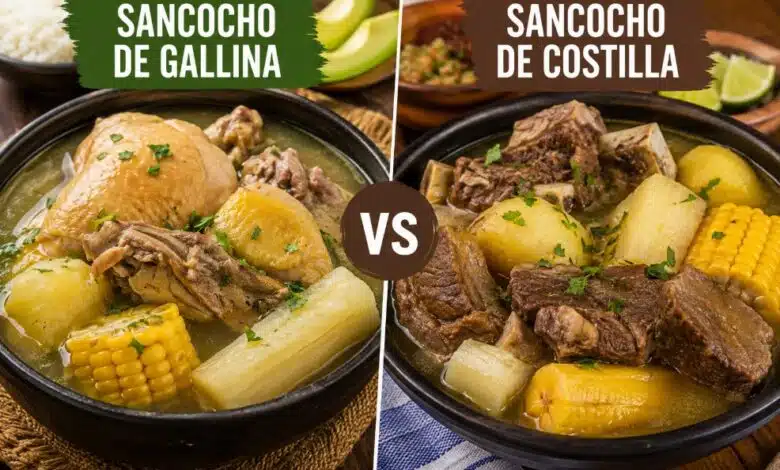
Sancocho de gallina and sancocho de costilla can arrive at the table with many of the same familiar Colombian ingredients — yuca, green plantain, corn, potatoes, herbs and a generous bowl of hot broth — yet they do not eat like the same dish. Gallina builds the meal around poultry and has particularly strong associations with western Colombian traditions. Costilla moves in a richer beef direction, with rib meat, bone and connective tissue capable of giving the broth a deeper, heavier character.
If both appear on the menu, there is no automatic winner. The better choice depends on whether you want poultry or beef, how rich you want the broth to feel, whether you enjoy bone-in meat, what sides are included and how large the restaurant’s serving actually is.
This comparison focuses on those practical differences rather than trying to force every Colombian kitchen into one recipe. If you are still deciding where to get the dish rather than which version to order, the broader guide to best sancocho colombiano near me covers current restaurant examples, prices, portion sizes and local search strategies across several U.S. cities.
The biggest difference is the meat, but it changes more than the meat
Sancocho de gallina is built around hen or a poultry-centered preparation. Sancocho de costilla is built around beef rib. That sounds like a simple substitution, but changing the protein changes the broth, aroma, mouthfeel, eating pace and often the price.
Hen produces a savory poultry broth that can still be substantial without developing exactly the same fatty or gelatin-rich character as beef ribs. Gallina also carries a particularly recognizable place in Colombian regional cooking, especially in western Colombia.
Costilla introduces beef, bone, fat and connective tissue. Given enough cooking time, rib can produce a broth with more obvious beef depth and a rounder, richer mouthfeel. The meat itself can become tender while retaining enough structure to make each piece feel like a proper component of the meal rather than shredded garnish.
Choose it for poultry, tradition and a slightly lighter meat direction
Expect hen or chicken character surrounded by the dense roots and starches that still make sancocho a filling main meal.
Choose it for beef, bone-in richness and a deeper meat character
Rib gives the pot a different level of beef intensity and can make both the broth and the meat feel heavier.
Neither version is automatically more authentic. Colombian traditional cooking is regional, and sancocho itself changes across communities, families and restaurants. Even two gallina preparations can differ substantially in broth density, vegetables, seasoning and side service.
Sancocho de gallina is much more than Colombian chicken soup
Translating sancocho de gallina simply as “chicken soup” can make the dish sound much lighter and simpler than it usually is.
A restaurant serving gallina-style sancocho may combine the poultry with large pieces of yuca, green plantain, corn and potato in a broth designed to function as a meal rather than a small opening course. Rice, avocado, arepa, salad or plantain can arrive separately depending on the restaurant.
The word gallina traditionally refers to hen rather than the generic English menu word “chicken.” That matters because mature hen can behave differently during cooking from the young birds commonly sold as standard supermarket chicken. It can have a more assertive flavor and firmer meat structure, which suits long, moist cooking.
U.S. restaurant menus do not always preserve that distinction perfectly. A menu may translate gallina as chicken for English-speaking customers even while keeping the Spanish dish name. When the exact poultry matters to you, ask rather than trying to reverse-engineer the kitchen from the translation.
Valle del Cauca
Why gallina carries a strong regional identity
Sancocho de gallina is especially associated with western Colombian cooking, and Ginebra in Valle del Cauca is known for its sancocho tradition. That regional connection is one reason gallina should not be treated as merely the less expensive alternative to beef.
For diners interested in the cultural range of Colombian sancocho, gallina provides a very different starting point from costilla.
A good gallina broth does not need to imitate beef richness. Its appeal can come from balance: savory poultry, herbal freshness, sweet corn, plantain, soft yuca and enough body from the starches to keep the soup substantial.
Because the broth is not necessarily dominated by beef fat or bone flavor, the vegetables can sometimes feel more prominent. A piece of corn may taste sweeter. Cilantro and other aromatics can stand out more clearly. Yuca may contribute a larger share of the broth’s body.
Sancocho de costilla turns beef rib into the center of the pot
Costilla means rib. On a Colombian restaurant menu, that word is far more informative than a generic label such as beef soup.
Beef ribs bring three things that matter to sancocho: meat, bone and connective tissue. Long cooking softens the meat while allowing fat, gelatin and beef flavor to move into the surrounding broth.
This can make costilla taste deeper and heavier than gallina even when the vegetables are almost identical.
The bone also changes how you eat the dish. Some pieces may require a fork, spoon and occasionally a little patience rather than behaving like neat cubes of boneless stew meat. For diners who enjoy bone-in short ribs or slow-cooked beef, that is part of the pleasure rather than an inconvenience.
It tells you the kitchen is specifically identifying rib. It does not tell you the exact cut size, number of pieces, ounce weight or whether the restaurant uses the same beef-rib cut as another Colombian restaurant.
This is also why sancocho de res and sancocho de costilla should not automatically be treated as identical menu entries. Res tells you beef. Costilla tells you rib.
Some restaurants offer both and charge slightly more for costilla. Others make rib their standard beef sancocho. The only reliable approach is reading the individual menu.
Gallina vs costilla at the table
| What changes | Sancocho de gallina | Sancocho de costilla |
|---|---|---|
| Main protein | Hen or poultry | Beef rib |
| Broth direction | Savory poultry with vegetables and herbs often more apparent | Deeper beef character with potential richness from bone and connective tissue |
| Meat texture | Firm but tender poultry when cooked properly | Tender rib meat, often bone-in |
| Eating style | Usually straightforward spoon-and-fork eating | Bone-in pieces can require more handling |
| Richness | Can feel lighter in meat character while remaining filling | Usually the richer beef direction |
| Regional association | Especially important in Valle del Cauca traditions | Common beef-rib expression found across Colombian restaurant menus |
| Best first choice for | Chicken-soup lovers and diners curious about gallina traditions | Beef-stew and short-rib lovers |
Notice how few of the differences have anything to do with authenticity. The decision is mostly about the style of meal you want.
The broth tells you whether the protein choice mattered
If gallina and costilla taste exactly the same except for the chunk of meat sitting in the center, the restaurant has missed an opportunity.
The protein should influence the broth.
In gallina sancocho, poultry should create a savory foundation without completely burying the vegetables. Corn, plantain and herbs can remain expressive. Yuca and potato may contribute much of the body.
In costilla, beef and bone can move the broth toward a darker, more rounded meat flavor. Properly cooked connective tissue can also contribute gelatin, producing a fuller sensation on the palate.
This does not mean costilla should feel greasy. Richness and excessive surface fat are different things.
Look for poultry flavor, vegetable integration and enough body to support the roots without becoming bland.
Look for developed beef character, richness without an oily finish and clear evidence that the rib cooked with the pot.
Taste the broth before adding lime, rice or ají. Those accompaniments are useful, but they can quickly hide the difference you are trying to understand.
Hen and beef rib reward different kinds of slow cooking
Both versions benefit from time, but the texture goals are different.
Poultry should remain moist enough to eat comfortably while contributing flavor to the broth. Overcooked lean chicken can become dry and stringy even while sitting in liquid. Hen can have a firmer natural structure, so tenderness should not be confused with the ultra-soft texture expected from braised beef.
Costilla has connective tissue that needs time to soften. A rushed rib can remain chewy. A properly cooked rib should loosen comfortably while still giving you a satisfying piece of meat.
Bone-in pieces can create another difference in perceived portion size. A large rib may make the bowl look very generous while some of that volume and weight is bone.
This is one reason exact price-per-ounce comparisons between gallina and costilla are rarely useful unless the restaurant provides unusually detailed meat weights.
Yuca, plantain and corn keep the two versions in the same sancocho family
The protein difference is dramatic, but the surrounding ingredients often create the shared identity of the dish.
Yuca is one of the most useful ingredients to judge. Properly cooked yuca should be tender and easy to break with a spoon or fork. A dry, woody or hard center can make even an excellent broth frustrating to eat.
Green plantain contributes starch and restrained sweetness. It should not taste like the ripe sweet plantain served beside many Colombian meals.
Corn adds a different sweetness and aroma. Corn on the cob also gives sancocho some of its recognizable visual character, though not every regional or restaurant preparation uses the same quantity.
Potato can soften and contribute additional body. Depending on how long it cooks and what variety the kitchen uses, it may remain intact or partially blend into the broth.
Tender, starchy and capable of thickening the broth slightly.
Dense, savory-starchy and only mildly sweet.
Sweetness, aroma and a firmer texture against the soft roots.
Additional starch and softness; presence varies by recipe.
Freshness and fragrance that can keep a heavy pot from tasting flat.
The balance among these ingredients can matter more than sheer quantity. Five enormous pieces of starch do not automatically make a better sancocho if everything tastes underseasoned or undercooked.
A restaurant can turn either version into a very large meal
One common mistake is assuming gallina will always be the smaller or lighter order.
Current Colombian restaurant menus show why that assumption fails. Some kitchens serve gallina in measured 24-ounce and 32-ounce formats, before counting the rice, salad or additional side served with the soup.
Thirty-two fluid ounces equals one quart of soup. Add poultry, yuca, plantain, potato and corn to that container, then serve rice and another accompaniment beside it, and the result is clearly an entrée-sized meal.
Current Colombian restaurant menus in Houston provide measured gallina servings at these sizes, demonstrating how substantial a restaurant sancocho can become.
Costilla portions are harder to compare because menus frequently identify a bowl as regular or large without publishing liquid volume or rib weight.
When no ounces are listed, ask whether the serving is designed as an appetizer or a full meal and whether rice or avocado comes with it.
If you are planning to order an empanada, arepa, bandeja paisa or another substantial Colombian dish, understanding the soup size before ordering can save you from accidentally ordering two dinners.
Costilla often costs more, but restaurant pricing does not follow one rule
Beef rib can be more expensive than poultry, so it is reasonable to see costilla priced above gallina on the same menu.
But the difference can be surprisingly small.
Some current Colombian restaurant menus place gallina and costilla only a dollar or a few dollars apart. Others widen the gap because of portion size, meat sourcing, included sides or the restaurant’s overall pricing structure.
Current menus also show gallina across a wide range of prices. A straightforward restaurant serving can sit in the high teens, while larger or more complete servings can move into the twenties.
When gallina is the better value
The serving is similarly sized, includes comparable sides and you genuinely prefer poultry. Paying extra for beef simply because it looks more premium adds no value if gallina is what you wanted.
When costilla is worth more
The rib is generous and properly cooked, the broth has benefited from the beef and the difference in price is modest relative to the complete meal.
Avoid comparing only the menu headline price. One restaurant may include rice and avocado, while another lists the soup alone and charges separately for sides.
Delivery-platform prices can also differ from dine-in or direct pickup prices. The final checkout total may include fees that have nothing to do with the food itself.
The same side can behave differently beside gallina and costilla
Rice, avocado, lime, ají and arepa are not merely decorative extras. They change the balance of the meal.
White rice
Rice absorbs broth quickly. With gallina, it can make a relatively lighter poultry broth feel denser. With costilla, too much rice can make an already rich bowl feel especially heavy.
Avocado
Cool avocado works beautifully with both versions. Against costilla it provides relief from beef richness; beside gallina it adds extra creaminess without changing the broth itself.
Lime
Acidity can brighten both styles, but add it only after tasting the original broth. A large squeeze can erase subtle differences between poultry and beef.
Ají
Heat and acidity are best controlled at the table. Colombian sancocho does not need to be aggressively spicy before ají is added.
Arepa
Arepa makes either soup more filling. If your sancocho is already 24 or 32 ounces with rice, consider whether you genuinely need another starch.
Salad
A fresh salad can be particularly welcome beside rich costilla, but it also works as a temperature and texture contrast with gallina.
Gallina can taste lighter without being light food
“Lighter” is a relative word here.
Compared with a beef-rib pot, gallina may produce a less intensely beefy or gelatin-rich broth. That does not turn the dish into a small diet soup.
A generous bowl can still contain poultry, yuca, green plantain, corn, potato and broth, followed by rice, avocado or arepa on the side.
A measured 32-ounce gallina restaurant serving illustrates the point perfectly: poultry may taste lighter than rib, while the complete portion remains enormous.
Choose gallina because you prefer its flavor profile, not because the menu word guarantees a small meal.
Costilla can taste richer without being greasy
A properly developed beef-rib broth can have body and depth without leaving a thick layer of unpleasant oil on every spoonful.
Fat carries flavor, and beef rib naturally contains more of it than very lean meat. The goal is integration.
Gelatin from connective tissue can make the broth feel full even when visible surface fat is controlled. This distinction matters because diners sometimes mistake grease for richness.
If the broth tastes deeply beefy, the rib is tender and the vegetables still have their own identity, the kitchen has achieved much more than simply adding fat.
Which version works better for someone trying sancocho for the first time?
There is no universal first bowl, but your existing food preferences make the decision easy.
If chicken soup, caldo de pollo or poultry stew already feels like comfort food, gallina is the natural entrance. The yuca, green plantain and corn introduce the heavier sancocho structure without asking you to commit to bone-in beef.
If your favorite slow-cooked dishes are short ribs, beef stew, pot roast or bone-in soups, costilla is likely to feel more immediately exciting.
Two people have an even better option: order one of each and share.
Taste both broths before adding anything. Then compare the meat, yuca and plantain. Add rice only after you understand the original bowls.
Share both instead of ordering identical bowls. It is one of the simplest ways to understand how much the protein changes Colombian sancocho.
Choose gallina when these details sound better to you
You want poultry rather than red meat.
You are curious about the gallina traditions associated with western Colombia.
You want the corn, plantain, herbs and roots to remain highly noticeable.
You prefer meat that is easier to eat without working around a large rib bone.
The restaurant’s gallina portion comes with better sides or a more practical size.
You simply prefer chicken or hen broth to beef broth.
Choose costilla when the rib is the reason you are ordering sancocho
You love beef stew, short ribs or other slow-cooked beef dishes.
You want a deeper beef character in the broth.
Bone-in meat is a positive part of the experience for you.
You enjoy gelatin-rich slow cooking and softer connective tissue.
The price difference from gallina is small enough that preference matters more than budget.
You specifically searched for sancocho de costilla rather than sancocho in general.
If neither list describes what you want, look beyond these two. Colombian restaurant menus may also offer res, pescado, cola or trifásico.
The quality test changes slightly depending on which bowl you order
Gallina: savory poultry integrated with roots and herbs.
Costilla: developed beef character without an excessively oily finish.
Gallina: flavorful and cooked through without unpleasant dryness.
Costilla: rib meat tender enough to separate easily from bone and connective tissue.
Both: tender, not woody or hard through the center.
Both: integrated with the broth while retaining enough structure to recognize.
Both: cooked through, sweet and still texturally distinct.
Gallina: poultry should not disappear behind starch.
Costilla: beef should not overwhelm every vegetable or leave the bowl unpleasantly fatty.
Do not score either bowl based on broth clarity. Yuca and potato naturally release starch, while meat and bone alter the liquid during long cooking.
Large chunks are not a quality guarantee either. A huge piece of yuca that remains hard in the center is less enjoyable than a smaller properly cooked piece.
What if the menu says pollo instead of gallina?
Treat the wording seriously but not obsessively.
Pollo means chicken. Gallina means hen. A restaurant deliberately distinguishing the two is giving you useful information.
English translations can blur that distinction, however. A restaurant may write “Sancocho de Gallina” in Spanish and describe it as chicken soup in English.
If you specifically want a traditional hen preparation, ask whether the kitchen is using gallina or ordinary chicken.
If your main goal is simply a satisfying poultry sancocho, the exact translation may matter less than the broth, portion and quality of the cooking.
What if the menu says res instead of costilla?
The distinction is similar.
Res tells you the dish is beef-based. It does not guarantee rib.
A restaurant can make excellent sancocho de res with a different slow-cooking beef cut. That bowl should be judged on its own terms rather than criticized for not containing costilla.
If bone-in rib is specifically what you want, ask before ordering whenever the menu says only res.
Gallina and costilla may not be available on the same day
A menu comparison does not guarantee simultaneous availability.
Colombian restaurants frequently rotate soups or concentrate labor-intensive preparations on certain days. Gallina can appear as a Sunday special. Another sancocho can belong to Saturday. A beef version may be available more regularly at a different restaurant.
This matters especially when you are planning a direct taste comparison.
If you want one gallina and one costilla from the same kitchen, check the current ordering menu or call before leaving.
A menu page can remain visible even while the item is marked sold out. That is useful evidence that the restaurant makes the dish, but it does not put a bowl in front of you today.
Both travel well, but costilla needs a little more room
Sancocho generally handles takeout better than food built around crispness.
Gallina is relatively straightforward as long as the container is strong enough for the hot liquid and heavy roots.
Costilla adds a packaging concern: large bone-in pieces can press against the container and displace more broth than boneless meat.
Otherwise it absorbs broth during the drive and changes the texture before you begin eating.
Do not leave it submerged in a hot soup container during a long ride.
Heavy bone-in pieces plus hot liquid make a secure container particularly important.
This preserves your ability to adjust acidity and heat at the table.
For leftovers, cool the soup promptly and follow normal safe food-storage practices. If you are unsure how long the restaurant meal has been sitting unrefrigerated, err on the cautious side rather than stretching the leftovers for another meal.
Dietary questions go beyond chicken versus beef
Choosing gallina instead of costilla answers only the main-protein question.
Restaurant stock can contain commercial bouillon or other ingredients not apparent from the name. Shared cookware can matter for allergies. Religious dietary requirements depend on sourcing and preparation, not just whether the menu says beef or chicken.
Anyone avoiding a particular meat should ask whether the broth itself is prepared exclusively from the protein named on the menu.
People with celiac disease or serious gluten intolerance should also verify seasoning products and kitchen cross-contact rather than assuming that yuca, corn, plantain and potato make the complete restaurant dish automatically gluten-free.
If both bowls are good, preference matters more than ranking
Costilla can be richer. Gallina can show more poultry and herbal character. Costilla can feel more luxurious to a short-rib lover. Gallina can carry stronger emotional meaning for someone who grew up around a Valle del Cauca-style family pot.
None of those observations creates a universal hierarchy.
The strongest restaurant comparison asks whether each version succeeds at what it is trying to be.
Gallina should taste like more than generic broth with a piece of chicken. Costilla should taste like the rib actually contributed to the pot rather than being dropped into a separately prepared soup.
In both versions, the yuca should be tender, the plantain should belong in the broth, corn should still have character and the sides should improve the meal rather than rescue it.
Gallina for poultry tradition, costilla for beef-rib richness
Choose sancocho de gallina when you want poultry, a strong connection to Colombian gallina traditions and a broth where herbs, corn and roots can remain especially noticeable.
Choose sancocho de costilla when slow-cooked beef rib, bone-in meat and a deeper beef broth are the reason the dish sounds appealing.
Then look beyond the protein. Portion size, side service, cooking quality and same-day availability can matter more than a one- or two-dollar price difference.
If you can order both, sharing gallina and costilla at the same table is better than trying to settle the question in theory. Taste the broth before adding anything, compare the meat and yuca, then decide which kind of sancocho you would order the next time the weather calls for a serious bowl.
What is the difference between sancocho de gallina and sancocho de costilla?
Sancocho de gallina is built around hen or poultry, while sancocho de costilla uses beef ribs. Gallina generally has a poultry-centered broth, while costilla can develop a richer beef character from rib meat, bone and connective tissue. Both may contain ingredients such as yuca, green plantain, corn and potatoes.
Which is better, sancocho de gallina or sancocho de costilla?
Neither is universally better. Choose gallina if you prefer poultry and want to explore a style strongly associated with western Colombian traditions. Choose costilla if you enjoy beef ribs, bone-in meat and a richer beef broth. Portion size, sides and cooking quality also matter.
Is sancocho de gallina the same as chicken soup?
It is a poultry soup or stew, but calling it ordinary chicken soup understates the dish. Restaurant versions can contain hen or chicken with yuca, green plantain, corn and potatoes and may be served with rice, avocado, arepa or salad, making it a complete meal.
What does costilla mean in Colombian sancocho?
Costilla means rib. Sancocho de costilla therefore identifies a beef-rib version rather than simply saying the soup contains beef. Rib meat, bone and connective tissue can contribute additional richness during long cooking.
Is sancocho de gallina associated with a particular part of Colombia?
Sancocho de gallina has especially strong associations with western Colombia and Valle del Cauca. Ginebra is particularly known for its sancocho tradition, although gallina-based sancocho is not limited to one municipality or one exact recipe.
Which sancocho is usually richer?
Sancocho de costilla usually moves in the richer beef direction because rib contains bone, fat and connective tissue. Gallina can still be a substantial meal because the soup may contain poultry, yuca, plantain, corn and potatoes plus sides such as rice and avocado.
Is sancocho de costilla more expensive than gallina?
It can be, but there is no universal price rule. Some Colombian restaurant menus price beef-rib sancocho slightly above gallina, while differences at other restaurants are larger. Portion size and included sides should be compared before deciding which offers better value.
How large is a restaurant serving of sancocho de gallina?
There is no standard restaurant size. Some current Colombian restaurant menus publish measured gallina portions of 24 ounces for medium and 32 ounces for large servings, while many other restaurants simply use labels such as regular or large without giving a volume.
What sides are served with gallina or costilla sancocho?
Common restaurant accompaniments include white rice, avocado, arepa, salad, plantain, lime and ají. The exact combination varies. Check what is included because a bowl with several sides can be a much larger meal than soup alone.
Can I order both gallina and costilla at the same restaurant?
Sometimes, but not always on the same day. Colombian restaurants may rotate soups, make gallina as a weekend special or temporarily sell out of one version. If you want to compare both during one visit, check the current menu or call the restaurant first.


