

Kotlet, kotleta, kotlety and kotleti look like competing spellings, but they usually reflect different languages, grammatical forms and food traditions.
In one menu the word may describe a ground-meat patty. In another it may refer to a breaded whole piece of pork or chicken. Translation alone does not always reveal which dish will arrive.
This guide explains the words, the regional differences and the most useful search terms for restaurants, delis, markets, delivery apps and local food searches.
Kotlet is a common singular form meaning a cutlet or patty in several Eastern European languages. Kotleta is another singular form, especially familiar in Polish. Kotlety commonly functions as a plural form in Polish and related usage, while kotleti is widely used in English for Russian-style ground patties. The exact meaning depends on language and menu context: it may be a minced-meat patty, a breaded chicken or pork cutlet, a fish patty or another regional preparation.
What does “kotlet” actually mean?
The safest definition is broader than “Russian meat patty.” Across several languages, a kotlet is some form of cutlet, patty or shaped meat preparation, but the exact food changes with the country and the menu.
In English, the word cutlet often suggests a thin piece of chicken, pork or veal. It may be breaded and fried, or simply cooked as a whole piece of meat. That expectation can be misleading when someone orders Russian kotleti, because Russian-style kotleti are usually made from a ground mixture shaped into individual patties.
The ground mixture may contain beef, pork, chicken, turkey, fish or vegetables. Onion, softened bread, breadcrumbs, milk, water, egg and grated vegetables can be used to control tenderness and moisture. The patties are usually pan-fried, although baked, breaded and sauce-finished versions are also common.
In Polish, however, kotlet can describe several different dishes. Kotlet mielony is a ground-meat patty, while kotlet schabowy is a breaded pork cutlet made from a whole piece of meat. The shared word does not make the dishes structurally identical.
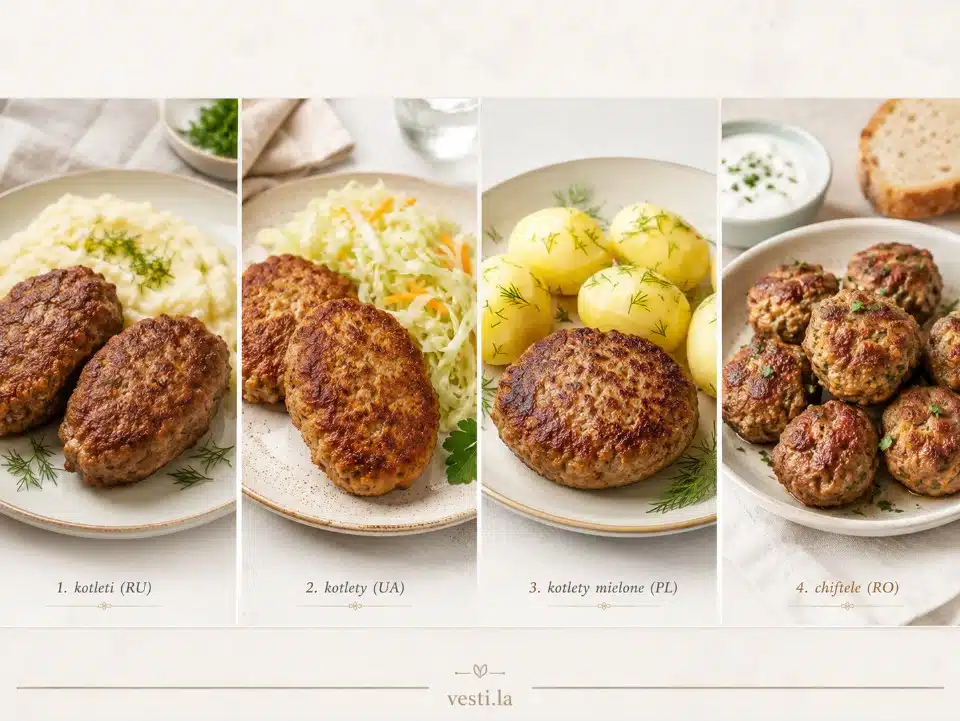
Kotlet, kotleta, kotlety and kotleti are not random misspellings
The forms usually come from different languages, singular and plural grammar, or competing transliteration systems. English-language menus often flatten those differences, which is why several spellings can appear in the same city.
Kotlet
This is a common singular form across several Slavic and neighboring languages. In search results it can refer broadly to a cutlet or patty.
Because the term is broad, searches for “kotlet” may return recipes, restaurant menus, breaded cutlets, ground patties and regional dishes from several countries.
Kotleta
Kotleta is a singular form familiar in Polish and other linguistic contexts. It may appear in grammatical phrases or in English writing that follows a particular source language.
The final -a does not guarantee a ground patty. The descriptive words around it remain essential.
Kotlety
Kotlety is commonly seen as a plural form, especially in Polish usage. English-language food sites also use it as a convenient plural for several kinds of cutlets.
A menu section labeled “kotlety” may include pork schnitzel-style cutlets, minced patties, chicken cutlets or fish preparations.
Kotleti
Kotleti is widely used in English writing for Russian and post-Soviet ground-meat patties. It often signals the home-style minced preparation rather than a whole breaded piece of meat.
It is still a transliteration rather than a universal English spelling, so restaurants may choose kotlety, kotleti, cutlets, patties or homemade meat patties.
What Russian kotleti usually are
When English speakers search for Russian kotleti, they are usually looking for seasoned ground patties served with potatoes, buckwheat, rice, vegetables, pickles or gravy.
Ground mixture
The mixture may use one protein or a blend. Beef and pork create a rich familiar style, while chicken and turkey require more attention to moisture.
Tenderizing ingredients
Soaked bread, breadcrumbs, onion, milk, water, egg or grated vegetables help create a softer interior than a typical plain hamburger patty.
Home-style service
Kotleti are commonly served as part of a complete plate rather than inside a bun. Mashed potatoes, buckwheat, cabbage and pickles are typical companions.
Pan-fried surface
Many versions are browned in a skillet, creating a savory exterior while keeping the center tender. Baking is also practical for larger batches.
Deli and takeout formats
Prepared-food counters may sell kotleti by piece, portion or weight. Frozen versions may be raw, partly cooked or fully cooked.
Menu translation
Russian kotleti may appear as Russian cutlets, homemade cutlets, meat patties, chicken patties, fish patties or house cutlets.
How regional kotlet traditions differ
The same word family appears across several cuisines, but culinary context matters. Similar shape or ingredients do not erase regional names, serving traditions or cultural identity.

Russian kotleti
Usually ground patties made from meat, poultry, fish or mixed ingredients. Softened bread and onion are common, and the dish is often served with potatoes, buckwheat, gravy or pickles.
English-language menus frequently use the plural spelling kotleti.

Ukrainian kotlety
Ukrainian home cooking includes many ground-meat, poultry, fish and vegetable cutlet traditions. Preparation varies by household and region.
The food should be identified in its Ukrainian context rather than automatically folded into a generic Russian label.

Polish kotlety mielone
Kotlety mielone are Polish minced-meat patties, commonly made from pork or a meat blend and served with potatoes, vegetables, salad or gravy.
The word mielone signals that the meat is ground. This distinguishes the dish from whole-meat cutlets such as schabowy.

Romanian chiftele
Romanian chiftele are seasoned meat patties or meatballs with their own naming, ingredients and serving traditions.
They can resemble kotleti visually, but they should not be renamed simply because both are shaped minced-meat dishes.
Balkan patties
Foods such as pljeskavica, ćevapi and various köfte traditions may share ground meat, seasoning and grilling or frying techniques. Their shapes, seasonings and cultural identities are distinct.
Central European cutlets
Breaded pork, veal or chicken cutlets may use the same broad word family as minced patties. Whole-meat structure and breading are the main clues.
Kotleti vs burger, meatball and schnitzel

A visual comparison helps, but ingredients and service style matter more than shape alone. A kotleta can look like a burger patty, and a flattened meatball mixture can resemble both.
- Kotleti: seasoned ground mixture, usually served with sides rather than in a bun.
- Burger: a patty designed primarily for sandwich service, often with a simpler meat mixture.
- Meatball: smaller and rounder, commonly served in sauce, soup or with pasta and grains.
- Schnitzel: usually a thin whole piece of meat that is breaded and fried.
| Food | Typical structure | Common service | Main clue |
|---|---|---|---|
| Kotleti | Ground meat, poultry, fish or vegetable mixture | Potatoes, buckwheat, vegetables, gravy | Home-style patty served as a main dish |
| Burger | Ground-meat patty | Bun, toppings, fries | Built for sandwich service |
| Meatball | Ground mixture formed into small balls | Sauce, soup, pasta or grains | Round shape and multiple pieces |
| Schnitzel | Thin whole piece of meat | Breaded and fried with sides | Not a ground mixture |
Chicken, beef, pork, turkey, fish and vegetable kotleti

Chicken kotleti
Mild and tender when properly prepared. Onion, bread, dairy or grated vegetables may be used to prevent dryness.
Confirm that “chicken cutlet” means a ground patty rather than a breaded breast cutlet.

Beef kotleti
Beef creates a deeper flavor and firmer texture. Mushroom gravy, buckwheat and potatoes are common pairings.
A good beef kotleta should remain tender rather than tasting like a dry unseasoned burger.

Pork kotleti
Pork adds richness and moisture. It may be used alone or blended with beef.
People avoiding pork should ask directly because a menu may describe a mixed patty only as “meat kotleti.”

Turkey kotleti
Turkey is lean, so successful recipes usually protect moisture with bread, onion, dairy or vegetables.
They are common in home cooking and meal-prep settings even when they are less visible on restaurant menus.

Fish kotleti
Fish kotleti may be delicate and lightly browned or firmer and breaded. White fish and salmon are possible.
Ask whether the patties are fried or baked and whether the product is fresh, chilled or frozen.

Meat-and-vegetable kotleti
Zucchini, cabbage, potato, carrot or mushroom can be mixed with meat to add moisture, flavor or volume.
Vegetable ingredients do not make the dish vegetarian unless meat is absent.
Why Pozharsky cutlets deserve their own name
Pozharsky cutlets are often grouped with chicken kotleti, but they are recognized as a distinct preparation. They are known for an enriched, tender chicken center and a crisp breaded exterior.
The breading changes both texture and search intent. Someone looking for soft home-style chicken kotleti may not want the same dish as someone searching for a crisp restaurant-style Pozharsky cutlet.
Menus may use “Pozharsky,” “Pozharsky chicken cutlet” or “breaded chicken cutlet.” Confirm the portion and included sides because restaurant presentations vary.

Which spelling should you type into Google or a delivery app?
Use more than one form because menus and search platforms may index them separately. Start broad, then narrow by cuisine, protein, city and business type.
- kotlet
- kotleta
- kotlety
- kotleti
- katleti
- Russian kotleti
- kotleti near me
- Russian cutlets
- meat patties
- chicken kotleti
- fish kotleti
- kotlet mielony
- Russian deli
- Eastern European market
For Russian-style patties
Search “Russian kotleti,” “kotleti near me,” “Russian meat patties,” “Russian chicken cutlets” and “Russian deli prepared food.”
For Polish minced cutlets
Search “kotlety mielone,” “Polish meat patties,” “Polish deli” or the dish name plus your city.
For a whole breaded cutlet
Add the protein and preparation: “breaded pork cutlet,” “kotlet schabowy,” “chicken schnitzel” or “breaded chicken cutlet.”
For delis and markets
Search the business format as well as the dish. Prepared counters may carry kotleti even when the store website does not list them in searchable text.
How to tell what kind of kotlet you are about to order
- Does the description say ground, minced, chopped or whole meat?
- Is the protein beef, pork, chicken, turkey, fish or a blend?
- Is the exterior breaded, lightly floured or uncoated?
- Is the dish pan-fried, baked, grilled or cooked in sauce?
- Does the menu show a bun, or is the patty served with sides?
- Are potatoes, buckwheat, vegetables, salad or gravy included?
- Does the restaurant identify the dish as Russian, Ukrainian, Polish, Romanian or another tradition?
- Is the item permanent, a lunch special or a rotating deli product?
When several clues point in the same direction, the menu becomes easier to read. “Ground chicken cutlet with mashed potatoes” strongly suggests a kotleta-style patty. “Breaded chicken cutlet sandwich” points toward a whole piece of chicken prepared for a bun.
Photographs help, but they should not be the only evidence. A flattened meatball mixture, a burger patty and a kotleta can look almost identical from above. Ingredients, service style and menu language provide stronger confirmation.
Six mistakes that create confusing search results
Assuming every cutlet is ground
English “cutlet” often means a whole piece of meat. Always look for words such as minced, ground or mielony.
Assuming every kotlet is Russian
The word family appears across several languages. Country, menu context and dish name matter.
Creating a new dish from every spelling
Kotleti and kotlety may be alternate English transliterations rather than separate preparations.
Ignoring the adjective
Words such as mielony, schabowy, chicken, fish or Pozharsky can completely change the dish.
Using photos as the only proof
A flattened patty can look like a burger or meatball mixture. Description and ingredients provide stronger evidence.
Erasing regional identity
Related foods should be compared carefully, not renamed under whichever cuisine has the strongest search volume.
Why one spelling may work better in one city than another
The best spelling for a dictionary is not always the best spelling for a local search. Businesses choose wording based on their audience, language background and menu software.
Restaurants
Search the cuisine and the dish together: “Russian kotleti restaurant,” “Polish kotlety mielone” or “Eastern European cutlets.”
Delis
Prepared-food counters may label the item only as chicken cutlets, meat patties or house cutlets. Search the deli itself and inspect current photos or menus.
Markets
Frozen products may use transliterated names on the front and English descriptions on the ingredient panel. Search both forms.
Delivery apps
Try singular and plural spellings. Delivery systems sometimes index “kotlet” but not “kotleti,” or the reverse.
City searches
Add a city or neighborhood rather than relying only on “near me.” This is especially useful in large metro areas with several Eastern European communities.
Voice search
Pronunciation may produce “katleti” or another spelling. Search platforms can still return useful results if you combine the term with Russian, Polish, deli or cutlets.
The ingredients explain why two kotleti can taste completely different
Even when two menus use the same word, the patties may differ in meat blend, moisture, binders, seasoning and cooking method. Those details matter more than the spelling alone.
Meat blend
Beef brings a deeper flavor and firmer structure. Pork adds fat and tenderness. A mixed beef-and-pork kotleta often balances both qualities.
Chicken and turkey are lighter but can dry out quickly. Fish requires a mixture that holds its shape without becoming dense or pasty.
Bread and breadcrumbs
Softened bread is not automatically a cheap filler. It can hold moisture and create a tender interior. Exterior breadcrumbs, by contrast, create a distinct crust.
The important question is proportion. Bread should support the protein rather than erase its flavor.
Onion and vegetables
Grated, minced or sautéed onion changes both moisture and sweetness. Zucchini, cabbage, potato, carrot or mushroom may also be mixed into the patty.
Vegetables can make kotleti softer and juicier, but a meat-and-vegetable patty is still not vegetarian.
Egg and binding
Some recipes use egg, while others rely on the natural binding of the meat, softened bread and proper mixing. The presence of egg does not guarantee tenderness.
Seasoning
Salt, black pepper and onion form the familiar base. Garlic, dill, parsley or other herbs may appear, especially in chicken, turkey and fish versions.
Handling
Overmixing can make a patty rubbery. A mixture that is too loose may collapse, while one that is too dry can crack and lose moisture during cooking.
Pan-fried, baked, breaded and sauce-finished kotleti
The same mixture can produce a different dish depending on how it is cooked. Cooking method changes the crust, moisture, reheating quality and suitability for takeout.
Pan-fried kotleti
Pan-frying creates the most recognizable browned surface. The goal is a savory crust with a fully cooked but still tender center.
Some cooks brown the patties first and finish them over lower heat or with a lid. Others cook them uncovered from start to finish.
Oven-baked kotleti
Baking is practical for family-size batches and prepared-food production. The crust is often lighter unless the patties are brushed with oil, baked at high heat or browned separately.
Baked kotleti can reheat well, but lean chicken and turkey versions still need gentle handling.
Breaded cutlets
Breading may coat a ground patty or a whole piece of meat. This is exactly where the word “cutlet” becomes ambiguous.
Pozharsky and some fish kotleti are breaded ground preparations, while schnitzel and schabowy are whole-meat cutlets.
Kotleti in sauce or gravy
Mushroom gravy, tomato sauce or a light pan sauce can add moisture and make the dish feel more restaurant-oriented.
Sauce should complement the patty rather than hide stale flavor or severe dryness.
Serving style can help identify the dish
The sides and presentation often reveal whether a menu item is a home-style kotleta, a burger, a breaded whole-meat cutlet or a restaurant specialty.
Mashed potatoes
A classic companion for Russian kotleti, Polish mielone and gravy-based versions. It strongly suggests a plated comfort-food main rather than a sandwich patty.
Buckwheat
Buckwheat is a strong clue for Russian and neighboring home-style service, especially with beef kotleti, mushrooms and gravy.
Cabbage and pickles
Fresh cabbage salad, sauerkraut and pickled vegetables add acidity and crunch to rich meat patties.
Bun and toppings
A bun, cheese, lettuce and burger sauce point toward a burger interpretation even if the patty itself is seasoned similarly to kotleti.
Multiple small pieces
Several small round pieces in sauce are more likely to be meatballs or a related regional dish than standard kotleti.
Large breaded cutlet
A thin breaded piece covering much of the plate is more likely schnitzel, schabowy or another whole-meat cutlet.
How to recognize a well-made kotleta
A good kotleta should hold together without feeling rubbery. The center should be moist but not raw, gluey or wet. The main protein should remain identifiable beneath the bread, vegetables and seasonings.
- The surface is evenly browned rather than burned on one side and pale on the other.
- The center is fully cooked yet tender.
- The patty is cohesive but not dense like processed sausage.
- Bread supports moisture without dominating the flavor.
- Chicken and turkey versions are not dry or cottony.
- Fish kotleti smell clean and fresh rather than strongly old or stale.
- Breaded versions have a coating that adheres to the filling.
- Gravy adds flavor but does not hide poor-quality meat.
At a deli, holding time matters. A freshly cooked kotleta can be juicy, while the same patty may dry out after sitting under heat for a long period. Ask when the tray was prepared if the surface looks tired or the edges appear hard.
How to buy kotleti when they are not served in a restaurant
Prepared-food counters and specialty freezers often provide more variety than restaurant menus. They also require more careful reading because the product may be raw, chilled, partially cooked or ready to heat.
At the deli counter
Ask which meat is used, whether the patties were made that day and whether they are sold individually or by weight.
Check whether gravy or sides are included. A low per-piece price can become a larger total once potatoes, salad and sauce are added.
In the refrigerated case
Chilled kotleti are usually intended for reheating within a limited period. Check the date, storage instructions and whether the product is fully cooked.
Keep chilled food cold during transport and refrigerate it promptly.
In the freezer
Frozen kotleti may be raw, partly cooked or fully cooked. The package directions take priority over general advice.
Compare the ingredient list, package weight, protein content and cooking method instead of choosing only by the photograph.
For takeout
Request gravy separately when possible. Steam can soften a browned or breaded surface, especially during a long delivery.
Reheat gently so the center becomes hot without drying the outside.
One food family can generate many keyword variations
Kotlet terminology is unusually difficult for search because the same spelling can describe different structures, while different spellings can describe nearly the same food. Search engines must interpret language, cuisine, location and user intent at the same time.
A person searching “kotlet” may want a definition, a recipe, a Polish dish, a Russian deli or a restaurant nearby. Someone searching “kotleti” may be looking specifically for Russian-style patties. A search for “chicken cutlet” may point toward a breaded whole chicken breast instead.
This is why one strong terminology page is more useful than several thin pages that repeat the same definition under separate spellings. The central page can explain all forms, while dedicated pages handle specific intents such as Russian kotleti near me, chicken kotleti, Polish kotlety mielone or Pozharsky cutlets.
Why the country name matters as much as the spelling
Adding a country or cuisine to the search phrase often improves the result more than changing one letter. “Russian kotleti,” “Ukrainian kotlety” and “Polish kotlety mielone” point toward different cultural contexts even when the finished patties share ingredients or shape.
Restaurants also use mixed menus. A single Eastern European deli may sell Russian-style kotleti, Ukrainian cabbage rolls, Polish sausages and Romanian salads. The business category alone cannot determine the identity of every dish.
Russian context
Expect ground patties served with potatoes, buckwheat, cabbage, pickles or gravy. Kotleti may also appear in prepared-food counters and frozen sections.
Ukrainian context
Ground-meat, poultry, fish and vegetable kotlety are common, with family and regional variations. The dish should be described within its Ukrainian culinary setting.
Polish context
The adjective is especially important: mielony signals minced meat, while schabowy identifies a breaded pork cutlet made from a whole piece.
Romanian context
Chiftele may resemble kotleti or meatballs, but they belong to a different named tradition and can use different herbs, shapes and sauces.
Balkan context
Pljeskavica, ćevapi and related patties may be grilled, differently seasoned and served with flatbread, onion, ajvar or kajmak.
International restaurant context
Modern menus may translate all of these foods as cutlets or patties. Read the description before assuming the restaurant has renamed the dish accurately.
Questions that quickly clarify the menu
You do not need a long conversation with the server or deli worker. A few precise questions usually reveal whether the item matches what you want.
- Is the meat ground or is it a whole piece?
- Which protein is used?
- Does it contain pork?
- Is it breaded?
- Is it pan-fried, baked or grilled?
- How many pieces are included?
- What sides come with the order?
- Is the item available every day?
- For frozen products, is it raw or fully cooked?
These questions are especially useful for chicken cutlets. The same English phrase can describe a ground chicken kotleta, a thin breaded chicken breast or a sandwich filling.
When ordering online, look for ingredient notes, photographs, side dishes and customer-uploaded menu images. If the listing remains unclear, call the business before placing a large order.
One terminology hub, several focused food guides
This page should remain the central explanation for the spelling family. It answers what the words mean, why they vary and how to interpret them.
Separate pages are justified only when the reader has a different goal. A local-search page should help find Russian kotleti in restaurants and delis. A chicken-kotleti page should compare ground chicken styles. A Polish page should explain kotlety mielone in their own culinary context.
Keep together
Kotlet, kotleta, kotlety, kotleti and katleti as spelling, grammar and transliteration variants.
Separate by intent
Russian kotleti near me, chicken kotleti, fish kotleti, Pozharsky cutlets and Polish kotlety mielone.
A shared food word can cross borders without creating one identical dish
Words for cutlets and patties traveled through languages, empires, migration and restaurant culture. As the word moved, cooks applied it to local ingredients and familiar methods. That is why the same root can describe a minced patty in one place and a breaded whole-meat cutlet in another.
This history is useful because it explains why arguments about the “one correct” meaning rarely help a diner. The word has been adapted by several culinary traditions, and modern English menus add another layer of translation.
Migration also changes how the food is labeled. A family-run deli may choose the spelling its customers recognize. A restaurant may translate kotleti as meat patties for clarity. A grocery package may preserve the original transliteration on the front while using an English product description on the back.
The best approach is therefore descriptive rather than possessive. Identify the country or tradition, explain whether the meat is ground or whole, note the cooking method and preserve the name used by the people preparing the dish.
A two-minute final check can prevent the wrong order
Open the newest menu, search several spellings and confirm the protein and preparation. If the listing only says “cutlet,” look at the side dishes and photographs, then call when the distinction between ground and whole meat matters.
For delis, ask whether the item is available today and whether it is sold hot, chilled or frozen. For delivery, check the number of pieces, included sides and whether gravy is packed separately.
This small verification step is more reliable than assuming that every search result uses kotlet terminology in the same way.

Share your family cutlet recipe
Gotuimo welcomes original family recipes, traditional dishes, quick dinners and creative variations from cuisines around the world.
Join the Recipe ContestFrequently asked questions
What is a kotlet?
A kotlet is a cutlet or patty, but the exact food depends on language and culinary context. It may be a ground-meat patty, fish patty, breaded chicken cutlet or another regional preparation.
What is the difference between kotlet and kotleta?
They are related grammatical forms used in different languages. The ending alone does not identify the cooking method, so the full menu description is more important.
Are kotlety and kotleti the same?
They are often alternate plural forms or transliterations for related cutlet and patty dishes. In English, kotleti frequently refers to Russian-style ground patties, while kotlety is common in Polish wording.
Are Russian kotleti the same as hamburgers?
No. Russian kotleti often contain onion, softened bread and other tenderizing ingredients and are normally served with sides rather than inside a bun.
What is kotlet mielony?
Kotlet mielony is a Polish minced-meat patty, commonly made from pork or a meat blend and served with potatoes, vegetables, salad or gravy.
What is kotlet schabowy?
Kotlet schabowy is a Polish breaded pork cutlet made from a whole piece of meat. It is not the same structure as a ground-meat kotlet mielony.
Can kotleti be made from chicken?
Yes. Chicken kotleti are common, but a menu phrase such as chicken cutlet may also mean a breaded whole chicken breast. Ask whether the meat is ground.
Are fish kotleti the same as fish cakes?
They can be similar, but fish-cake traditions vary widely. The term fish kotleti usually signals a Russian or related Eastern European preparation.
Why is katleti sometimes used?
Katleti is an alternate transliteration or spelling influenced by pronunciation and language background. Search platforms may treat it separately even when the intended food is kotleti.
Which spelling is best for a local search?
Use several: kotlet, kotleta, kotlety, kotleti, Russian cutlets and meat patties. Add the city, protein and business type for more precise results.
Do kotleti always contain pork?
No. They may contain beef, pork, mixed meat, chicken, turkey, fish or vegetables. Ask directly when avoiding pork.
Where can I find Russian kotleti near me?
Check Russian and Eastern European restaurants, delis, prepared-food counters, specialty markets, takeout kitchens and frozen-food sections. Use the Vesti Russian Kotleti Near Me guide for a full search strategy.
The spelling gives you a clue, but the menu gives you the answer
Kotlet, kotleta, kotlety and kotleti belong to the same broad family of food words, yet they can describe different preparations across Russian, Ukrainian, Polish and other culinary contexts.
Use the adjective, protein, country, cooking method and serving style to identify the dish. Ground patties, burgers, meatballs and schnitzels can overlap visually, but they are not interchangeable.
For local discovery, search several spellings and English descriptions, then confirm the current menu before making a special trip.


