
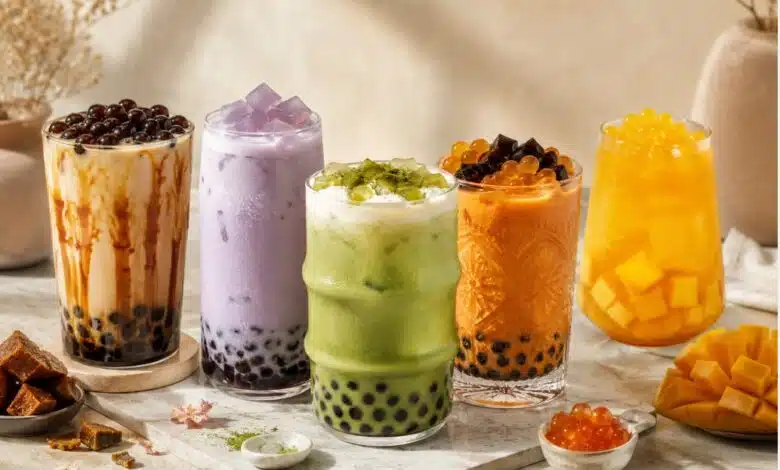
Bubble tea can look simple from across the counter: tea, milk, ice and a layer of dark pearls. The menu tells a different story. A single shop may offer black tea, jasmine tea, oolong, matcha, taro, fruit infusions, slushes, cheese foam, pudding, jelly, popping boba and several sugar levels. The drink is less a fixed recipe than a customizable system, which is why first-time customers often need more help ordering it than drinking it.
Bubble tea is a Taiwanese tea-based drink that may include milk, fruit, sweetener, ice and chewy or jelly-like toppings. Traditional tapioca pearls are the topping most strongly associated with it, but not every bubble tea contains pearls and not every boba shop drink contains dairy. The easiest way to order is to choose a drink base, decide whether you want milk or fruit, select one topping, then adjust sweetness and ice.
What is bubble tea?
Bubble tea is a broad category of customizable drinks that grew from Taiwanese tea culture. The most familiar version combines brewed tea, milk or creamer, sweetener, ice and tapioca pearls. Modern shops have expanded the category to include fruit tea, pure tea, matcha, blended drinks, slushes, yogurt-style drinks and dessert-like beverages topped with foam or pudding.
The “bubble” in bubble tea does not require one specific ingredient. People commonly associate the word with tapioca balls, but the name has also been connected with the frothy bubbles created when tea is shaken. In everyday English, bubble tea and boba tea now function as overlapping terms.
Boba has grown far beyond classic milk tea, with fruit teas, fresh milk drinks, slushes and dozens of topping combinations. Explore this complete guide to boba to learn more about flavors, toppings, recipes and local tea shops.
A standard cup can contain several separate components:
Tea or flavored liquid
Black tea, green tea, jasmine tea, oolong, matcha, fruit infusion, milk, juice or a blended base.
Milk, foam or fruit
Dairy milk, nondairy milk, creamer, cheese foam, fruit purée or blended ice changes body and richness.
Pearls, jelly or pudding
Tapioca pearls are traditional, but grass jelly, aloe, pudding and popping boba are also common.
This layered structure explains why two drinks with the same menu name can taste different at different shops. Tea strength, milk type, sweetener, ice, pearl freshness and topping quantity all affect the result.
Bubble tea, boba tea and milk tea are related but not identical
Bubble tea is the widest label. It can describe milk tea with pearls, fruit tea with jelly, matcha with red bean or a blended taro drink.
Boba tea is commonly used as another name for bubble tea, especially in the United States. The word boba can also refer specifically to tapioca pearls. Context determines whether someone means the complete drink or the topping.
Milk tea describes tea combined with milk, creamer or another creamy ingredient. Milk tea can be served without pearls, which means it is not automatically a complete “boba” order in the topping sense.
| Term | What it usually means | Must contain tea? | Must contain tapioca? |
|---|---|---|---|
| Bubble tea | The broad drink category | Usually, though some modern drinks are tea-free | No |
| Boba tea | Bubble tea or tea served with boba | Usually | Not always in modern menu usage |
| Milk tea | Tea combined with milk or creamer | Yes in the traditional sense | No |
| Fruit tea | Tea flavored with juice, syrup, purée or fruit | Usually | No |
| Brown sugar boba | Pearls coated in brown sugar syrup, often with milk | Not necessarily | Usually |
The safest way to order is to name both the beverage and topping: “jasmine milk tea with tapioca pearls” or “mango green tea with lychee jelly.” This removes the ambiguity created by broad labels.
Where did bubble tea come from?
Bubble tea developed in Taiwan during the late twentieth century, when cold shaken tea culture, milk tea and chewy tapioca desserts came together in a new drink format. More than one Taiwanese tea shop has been associated with its early development, so origin stories often depend on which feature is emphasized: adding tapioca to tea, shaking tea with ice or commercializing the combination.
The drink spread through East and Southeast Asia, then gained a strong following in North America, Europe, Australia and other regions. As it traveled, shops adapted it to local tastes. Menus became sweeter or less sweet, fruit selections widened, plant milks appeared and toppings moved far beyond black tapioca pearls.
The modern boba shop is therefore both Taiwanese in origin and global in expression. A classic pearl milk tea remains central, but the menu may also include matcha, Thai tea, horchata-inspired drinks, ube, coffee, yogurt, salted cream and seasonal fruit.
The history matters, but the cup still depends on technique
A shop can use fashionable flavors and still serve weak tea or hard pearls. Another can offer a short menu and produce an exceptional classic milk tea. Brewing, pearl timing, sweetness balance and ingredient handling matter more than the number of items on the board.
The main types of bubble tea
Most large menus become easier once they are divided into drink families. Instead of comparing fifty names, first decide whether you want creamy, fruity, tea-forward, blended or dessert-like.
Milk tea
Milk tea is the most recognizable starting point. It can taste deeply tea-forward or soft and dessert-like depending on the shop.
Best topping: tapioca pearls, pudding or grass jelly.
Fruit tea
Fruit tea usually feels lighter than milk tea and pairs well with jelly, aloe or popping boba.
Best topping: lychee jelly, aloe or fruit popping boba.
Pure tea
Pure tea is the clearest way to judge brewing quality. Foam or a light topping can add texture without hiding the leaves.
Best topping: grass jelly or no topping.
Blended and slush drinks
These drinks are colder and more filling. They are often less tea-forward and can separate during delivery.
Best topping: crystal boba or popping boba.
Brown sugar drinks
The visual “tiger stripe” effect comes from syrup coating the cup. The drink is usually rich and sweet.
Best topping: the included brown sugar tapioca pearls.
Foam-topped tea
The top and bottom are designed to interact. Sipping without fully mixing can produce alternating tea and creamy flavors.
Best topping: usually none or one light topping.
Choosing the right tea base
The tea base determines bitterness, floral aroma, roast character and caffeine. It also affects which milk, fruit and toppings will feel balanced.
Black tea
Black tea has enough strength to remain noticeable after milk and sugar are added. It is the classic base for pearl milk tea and works well with brown sugar, caramel, coffee, pudding and black tapioca.
Jasmine green tea
Jasmine tea is floral, light and especially useful in fruit drinks. Peach, mango, passion fruit, lychee, strawberry and citrus can sit over it without creating the heaviness of black tea.
Green tea
Unflavored green tea tastes cleaner and more vegetal than jasmine tea. It can pair with citrus, honey, aloe and lighter milk preparations. Poorly brewed green tea may become sharply bitter.
Oolong tea
Oolong ranges from floral and lightly oxidized to dark and roasted. Roasted oolong milk tea offers a deeper aroma than jasmine but often feels smoother than strong black tea.
Matcha
Matcha is powdered green tea rather than a conventional brewed infusion. It gives the entire drink color, body and a grassy, slightly bitter flavor. Sweetness and milk are important because weak matcha can taste dusty while excessive syrup hides it completely.
Tea-free bases
Taro milk, fresh milk with brown sugar, yogurt drinks and some fruit slushes may contain no brewed tea. Customers avoiding caffeine should still ask because recipes vary and tea may be included even when it is not obvious from the name.
Popular milk tea flavors and what they taste like
| Flavor | Typical taste | Best topping | Good first order? |
|---|---|---|---|
| Classic black milk tea | Malty, creamy and familiar | Tapioca pearls | Yes |
| Jasmine milk tea | Floral, soft and lighter | Crystal boba or pudding | Yes |
| Oolong milk tea | Roasted, aromatic and smooth | Grass jelly or tapioca | Yes for tea lovers |
| Thai milk tea | Sweet, spiced and strongly creamy | Tapioca or pudding | Yes for sweet-drink fans |
| Matcha milk tea | Grassy, creamy and slightly bitter | Red bean, pudding or tapioca | Yes if you enjoy matcha |
| Taro milk tea | Nutty, vanilla-like and starchy | Tapioca or crystal boba | Yes for dessert flavors |
| Brown sugar milk | Caramelized, rich and very sweet | Brown sugar pearls | Yes, but it may contain no tea |
| Honey milk tea | Floral sweetness over creamy tea | Grass jelly or tapioca | Yes |
Classic black milk tea is the most useful reference order. Once you know how a shop handles tea strength, milk and pearls, you can judge whether to move toward floral jasmine, roasted oolong or dessert-style flavors.
Fruit tea flavors: bright, floral and easier to customize
Fruit tea is usually made by combining brewed tea with syrup, juice, purée, fresh fruit or a concentrated fruit base. The best versions preserve enough tea character to keep the drink from tasting like ordinary juice.
Fruit tea often tastes best at a lower sweetness level than milk tea because fruit syrup already contributes sugar. Ordering 50% sweetness may still produce a clearly sweet drink.
Matcha, taro, brown sugar and other specialty drinks
Matcha milk tea
Good matcha milk tea should taste like matcha, not only green-colored milk. The drink should have a clean vegetal bitterness supported by sweetness and creaminess. Graininess, a stale smell or an aggressively sugary finish can indicate weak preparation.
Taro milk tea
Taro is a starchy root with a gentle nutty and vanilla-like flavor. Some shops use real taro, some use powder and others combine both. Bright purple color does not necessarily indicate greater taro content.
Brown sugar boba milk
This drink often uses fresh milk rather than brewed tea. Warm pearls coated in dark syrup create caramelized flavor and striped walls inside the cup. It is usually one of the sweetest, richest choices.
Ube drinks
Ube is a purple yam associated with Filipino cuisine. Its flavor is softly earthy, nutty and vanilla-like. Ube and taro are with Filipino cuisine. Its flavor is softly earthy, nutty and vanilla-like. Ube and taro are not the same ingredient even though both can appear purple.
Thai tea
Thai tea is usually strong, sweet and creamy, with a distinctive spiced aroma and orange color. It often contains more sweetness than a standard milk tea and works well with chewy tapioca.
Coffee and tea hybrids
Some shops combine coffee with milk tea, brown sugar or cream foam. These drinks may contain more caffeine than expected because both tea and coffee contribute stimulants.
Bubble tea toppings change texture more than flavor
Toppings are not decorative sprinkles. They turn the drink into something that must be chewed, spooned or sipped slowly. One topping is enough for most first orders.
Black tapioca pearls
Pearls absorb brown sugar or honey syrup and pair especially well with milk tea.
Best with: black milk tea, oolong, Thai tea and brown sugar milk.
Popping boba
Popping boba is different from tapioca and works better with fruit tea or slushes.
Best with: mango, strawberry, passion fruit and citrus.
Crystal boba
It usually has a neutral or lightly sweet flavor and travels somewhat better than hot tapioca pearls.
Best with: jasmine milk tea and fruit tea.
Grass jelly
Grass jelly has a mild herbal bitterness that balances sweet milk tea.
Best with: oolong, black milk tea and fresh milk.
Egg pudding
Pudding makes a drink more dessert-like and can be difficult to combine with very tart fruit tea.
Best with: milk tea, Thai tea and matcha.
Lychee or coconut jelly
Fruit jellies add texture without the density of tapioca.
Best with: fruit tea, green tea and slushes.
Aloe vera
Aloe is refreshing and usually lightly sweetened.
Best with: citrus, peach, lychee and jasmine tea.
Cheese foam
It is technically a topping even though it is sipped rather than chewed.
Best with: black tea, green tea, fruit tea and matcha.
What are tapioca pearls made from?
Tapioca pearls are made primarily from tapioca starch, which comes from cassava. The starch is formed into balls and cooked until the interior becomes chewy. Dark pearls may contain brown sugar, caramel coloring or another coloring ingredient.
Freshness is critical. Properly cooked pearls should be soft enough to chew easily but resilient enough to hold their shape. Undercooked pearls may have a hard center. Overcooked pearls become mushy, sticky or fragile.
Why pearls harden
Tapioca texture changes as the pearls cool and sit. Refrigeration accelerates hardening, which is why a shop may prepare them in several smaller batches throughout the day rather than one enormous batch.
Why warm pearls can melt ice
Fresh pearls may still be warm when added to the cup. They can soften surrounding ice and slightly warm the bottom of a cold drink. This contrast is normal in brown sugar drinks but can make texture less consistent during delivery.
Are pearls naturally sweet?
Plain tapioca starch has little flavor. The sweetness usually comes from the syrup in which the pearls are soaked. Pearls therefore add both texture and sugar.
Pearl quality test: chew one pearl by itself. It should be tender from the surface to the center, pleasantly elastic and flavored enough to taste good without the drink.
How to order bubble tea step by step
Decide whether you want milk tea, fruit tea, pure tea, brown sugar milk or a blended drink.
Black tea is bold, jasmine is floral, oolong is roasted and matcha is grassy. Fruit options are usually brighter and lighter.
Start with tapioca for milk tea or jelly for fruit tea. Multiple toppings can make the cup crowded.
Use the shop’s percentages when available. Fifty to seventy-five percent is a practical starting range.
Regular ice keeps the drink colder. Less ice gives more liquid but can make it warmer during travel.
Ask whether the drink contains dairy, creamer, condensed milk, milk powder or another ingredient you avoid.
A clear first order: “One medium jasmine milk tea with tapioca pearls, 50% sweetness and less ice, please.”
You do not need to use every customization. Shops develop recipes around standard settings, and some specialty drinks are intentionally fixed because changing sugar or ice would disrupt their balance.
The best bubble tea orders for beginners
The most common beginner mistake is ordering a complicated combination because every topping sounds interesting. Pearls, pudding, jelly and foam can compete for space and sweetness. One topping allows you to understand both the drink and the texture.
How bubble tea sweetness levels work
Many shops offer sweetness levels such as 0%, 25%, 50%, 75% and 100%. These percentages usually refer to the shop’s standard syrup amount rather than a universal quantity of sugar.
| Sweetness level | Likely experience | Best for | Main caution |
|---|---|---|---|
| 0% | No added syrup when customization is possible | Pure tea and naturally sweet ingredients | Pearls, fruit base or milk may still contain sugar |
| 25% | Lightly sweet | Tea-forward drinks | May feel too dry with strong black tea |
| 50% | Clearly sweet but balanced | Most milk and fruit teas | Sweet toppings raise the total |
| 75% | Sweet and dessert-like | Customers accustomed to sweet drinks | Can hide tea quality |
| 100% | The shop’s full recipe sweetness | Drinks designed around syrup intensity | May be overwhelming with sweet pearls |
Brown sugar syrup, fruit purée, flavored powder, condensed milk and presweetened toppings may not be fully adjustable. A drink marked 0% can still contain meaningful sugar from components prepared in advance.
How ice changes sweetness
More ice dilutes the drink as it melts. Less ice can make the same syrup level taste sweeter and heavier. No-ice drinks may require additional tea or milk, depending on the shop, and some businesses charge extra because the cup contains more liquid.
How many calories are in bubble tea?
There is no single calorie count for bubble tea. Cup size, tea base, milk, creamer, sugar, syrup and toppings can change the total dramatically. Unsweetened pure tea may contain very few calories, while a large brown sugar milk drink with pearls and foam can function like a full dessert.
The largest calorie contributors are usually:
A practical lower-calorie order is unsweetened or lightly sweetened tea with no topping, aloe or a modest portion of jelly. A practical middle ground is milk tea at 25% to 50% sweetness with one topping. Choosing a smaller cup often matters as much as changing the recipe.
Does less sugar always mean fewer calories?
Usually, but not every component is adjusted. Brown sugar pearls remain sweet, pudding may be presweetened and flavored powders can contain sugar. Ask whether the sweetness percentage changes the whole drink or only the added syrup.
Does bubble tea contain caffeine?
Bubble tea usually contains caffeine when it is made from black, green, jasmine or oolong tea. Matcha also contains caffeine because the powdered tea leaf is consumed in the drink. Coffee hybrids can contain even more.
Caffeine content varies according to tea type, leaf quantity, water temperature, brewing time and serving size. Milk and sugar may soften bitterness but do not remove caffeine.
Lower-caffeine choices
Choose a smaller size, ask whether a caffeine-free herbal or fruit base is available, or select a tea-free milk drink. Taro milk, brown sugar fresh milk and certain fruit slushes may be caffeine-free, but recipes differ.
Children and caffeine-sensitive customers
Do not assume that a colorful fruit drink contains no tea. Ask whether the base includes green, jasmine or black tea. A tea-free option may be more appropriate when caffeine is a concern.
Vegan, dairy-free and allergen questions
Bubble tea is highly customizable, but ingredient transparency can be complicated. A drink made with oat milk may still contain dairy-based powder, creamer, foam or pudding.
Dairy
Classic milk tea may use fresh milk, evaporated milk, condensed milk, milk powder or nondairy creamer. Despite the name, some nondairy creamers contain milk-derived ingredients. Customers with milk allergies need more information than customers making a preference-based substitution.
Vegan orders
Pure fruit tea, plain tea and plant-milk tea can be vegan when syrups and toppings contain no animal-derived ingredients. Pudding, cheese foam, milk powder and honey may make an otherwise plant-based drink unsuitable.
Gluten
Tapioca itself is derived from cassava and does not naturally contain gluten. That does not guarantee that every pearl, powder, syrup or topping is certified gluten-free or protected from cross-contact.
Egg
Egg pudding commonly contains egg. Some custard powders or dessert toppings may also contain egg-derived ingredients.
Nuts
Nut milks, nut-flavored syrups and shared equipment can matter. Taro and ube are not nuts, but flavor powders may be produced in facilities handling common allergens.
Soy
Soy milk is an obvious source, but soy-derived emulsifiers or creamers may appear in other drinks. Ask the shop to check packaging when the allergy is serious.
For a serious allergy: ask about the drink base, milk product, syrup, topping and shared equipment. A single “dairy-free” label may not describe every component in the cup.
How to recognize a good bubble tea shop
A polished logo and enormous menu do not guarantee a good drink. Quality becomes visible through tea aroma, pearl texture, sweetness balance, ingredient handling and staff knowledge.
Weak tea
If the drink tastes like sweet milk with no aroma, the tea may be underbrewed, diluted or overwhelmed by creamer. Strong tea should remain identifiable even in a creamy recipe.
Hard or mushy pearls
A hard core suggests undercooking or old refrigerated pearls. Pearls that collapse immediately may be overcooked or held too long.
Artificial flavor is not automatically bad
Bubble tea has always included commercial syrups, powders and creamers. The relevant question is whether the final drink tastes balanced and whether the shop is clear about ingredients. Real fruit and premium tea can improve a drink, but those labels alone do not guarantee skill.
Bubble tea delivery and takeout
Bubble tea is portable, but not every component travels equally well. Tea, milk and syrup remain stable for a reasonable trip. Ice melts, foam collapses and tapioca changes texture.
Best drinks for delivery
Fruit tea with jelly, pure tea, milk tea with crystal boba and sealed drinks without foam usually travel well. Choose regular ice when the delivery time is long enough for melting to become a concern.
More fragile drinks
Warm brown sugar pearls can cool and harden. Cheese foam can mix into the tea during transit. Slushes melt and separate. Fresh-fruit drinks may settle.
Should tapioca be ordered separately?
Some shops will package pearls separately, but cooled pearls may become firm. The best solution is usually a nearby shop and a short pickup window rather than extended separation.
Do not refrigerate the complete drink for too long
Refrigeration preserves the liquid but damages traditional tapioca texture. A tea without pearls may hold better, though ice dilution and dairy handling still matter.
For the best first experience, drink it soon
Freshly shaken tea and recently cooked pearls show the shop at its best. Order close to the time you plan to drink it, keep the cup upright and use the wide straw provided for toppings.
Common bubble tea ordering mistakes
How to create a balanced custom combination
A balanced order uses contrast rather than repetition. Rich milk tea benefits from a chewy or lightly bitter topping. Tart fruit tea benefits from a juicy or clean-textured topping. A very sweet base rarely needs sweet foam, pudding and syrup-coated pearls at the same time.
| Drink base | Recommended topping | Suggested sweetness | Why it works |
|---|---|---|---|
| Black milk tea | Tapioca pearls | 50% | Strong tea balances chewy sweet pearls |
| Roasted oolong milk tea | Grass jelly | 25% to 50% | Herbal jelly complements roasted tea |
| Jasmine milk tea | Crystal boba | 50% | Light topping preserves floral aroma |
| Mango passion fruit tea | Lychee jelly | 25% to 50% | Tart fruit controls overall sweetness |
| Matcha milk tea | Pudding or red bean | 50% | Soft sweetness balances matcha bitterness |
| Brown sugar fresh milk | No additional topping | Standard recipe | The included pearls and syrup already provide richness |
Bubble tea can be simple
The size of the menu makes bubble tea appear more complicated than it needs to be. Every order can be reduced to a few decisions: creamy or fruity, tea-forward or dessert-like, chewy or jelly-like, lightly sweet or fully sweet.
A classic black milk tea with pearls remains the best reference point. A jasmine fruit tea with jelly reveals the lighter side of the category. Matcha, taro, brown sugar, foam and blended drinks make more sense after those basic structures are familiar.
There is no universally best bubble tea flavor because the category is designed around preference. The useful goal is not to memorize every topping. It is to understand how tea, milk, fruit, sugar, ice and texture work together.
Choose one drink family, one flavor and one topping. Adjust sweetness carefully. Drink it while the tea is cold and the pearls are fresh. That is enough to turn an intimidating menu into a reliable order.
Frequently asked questions about bubble tea
These answers summarize the ingredients, terminology, customization and dietary questions that most often affect an order.
What is bubble tea?
Bubble tea is a Taiwanese tea-based drink category that may include milk, fruit, sweetener, ice and toppings such as tapioca pearls, jelly or pudding. Modern menus also include tea-free milk drinks, slushes, matcha and foam-topped beverages.
What is the difference between bubble tea and boba tea?
The terms are commonly used interchangeably. Bubble tea refers to the overall drink category, while boba can mean either the drink or the tapioca pearls themselves. A bubble tea does not always contain tapioca unless the topping is included or added.
What are boba pearls made from?
Traditional boba pearls are made primarily from tapioca starch derived from cassava. They are cooked until chewy and commonly soaked in brown sugar or honey syrup, which adds sweetness and flavor.
What bubble tea should a beginner order?
A classic black milk tea with tapioca pearls at 50% sweetness is a useful first order. For a lighter option, try jasmine milk tea with crystal boba. For a refreshing drink, choose mango passion fruit green tea with lychee jelly.
Does bubble tea have caffeine?
Most bubble tea contains caffeine when it is made with black, green, jasmine, oolong or matcha tea. Tea-free brown sugar milk, taro milk and some fruit slushes may be caffeine-free, but recipes vary by shop.
How many calories are in bubble tea?
The amount varies widely according to cup size, sugar, milk, creamer and toppings. Unsweetened tea may contain very few calories, while a large brown sugar milk drink with pearls and foam can be comparable to a rich dessert.
Can bubble tea be vegan?
Yes, when it is made with plant milk or a dairy-free fruit tea and uses vegan toppings. Customers should still ask about creamer, milk powder, pudding, cheese foam, honey and prepared flavor powders.
Are tapioca pearls gluten-free?
Tapioca starch is naturally gluten-free, but individual pearl products, flavorings and shared preparation equipment may create additional concerns. People with celiac disease should confirm ingredients and cross-contact with the shop.
What bubble tea sweetness level should I choose?
Fifty percent sweetness is a practical starting point for most milk and fruit teas. Choose 25% for a more tea-forward drink or 75% when you prefer dessert-level sweetness. Presweetened toppings can make the final cup sweeter than the selected percentage suggests.
Why do tapioca pearls become hard?
Tapioca pearls firm as they cool and sit, especially under refrigeration. They are best shortly after cooking. Long delivery times or storing the completed drink overnight can make the pearls dense and less pleasant to chew.


