
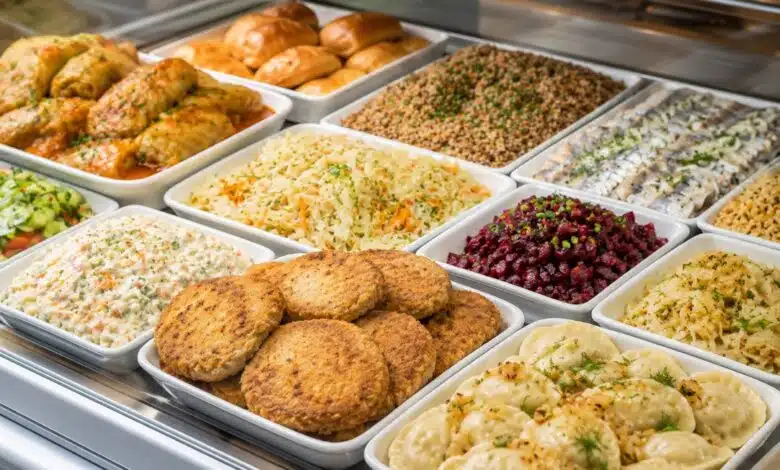
A practical counter walkthrough
An Eastern European deli counter can look like dinner heaven and a mild logistical puzzle at the same time. There may be trays of kotleti, cabbage rolls, roasted chicken, buckwheat, potatoes, beet salads, pickles, blini, dumplings, smoked fish, sliced meats and several pale containers that all appear to contain either sour cream, farmer cheese or something involving mayonnaise. The food is usually familiar enough to feel inviting, yet the ordering system may not be obvious if you did not grow up shopping this way.
The good news is that the counter is not a test. You do not need perfect pronunciation, an encyclopedic knowledge of regional cooking or the confidence of someone who has been buying the same cutlets every Friday for twenty years. You need three things: a dinner plan, a rough number of servings and the willingness to ask one or two practical questions.
This guide walks through the counter in the order a real shopper tends to experience it. We will begin with the visual scan, move through hot foods, chilled prepared dishes, salads, dumplings, smoked products and bakery items, and finish by building several complete dinners for different budgets and appetites.
First, read the counter like a dinner map
Do not begin by pointing at the first beautiful tray. Take twenty seconds and scan the whole case. Eastern European delis often group food by temperature and handling rather than by the way you imagine a restaurant menu. A tray of cooked chicken might sit near meat cutlets, while cabbage rolls may be closer to stuffed peppers. Salads can appear in a separate refrigerated stretch, and frozen dumplings may be in a case across the aisle.
What to identify first
Find the main proteins and the substantial starches. Once you know whether the counter has kotleti, chicken, cabbage rolls, meatballs, buckwheat, potatoes, rice or dumplings, the rest of the meal becomes easier to assemble.
What not to assume
A food displayed cold is not necessarily raw. Many deli dishes are cooked, chilled for storage and meant to be reheated at home. Ask before deciding.
Look for written labels, but do not panic when labels are short, handwritten or bilingual. The same dish may appear under English, Polish, Ukrainian, Russian, Romanian, Georgian, Lithuanian or transliterated names. A label is useful, not sacred. The staff can usually tell you the filling, whether meat is present and how the dish is normally served.
It also helps to notice the rhythm of the regular customers. One person may order “two cutlets, a pound of buckwheat and half a pound of beet salad.” Another may buy a container of soup, four blintzes and a small tub of sour cream. This is the counter’s natural grammar: main dish, weight or count, side, garnish.
The portion language that makes ordering easy
Prepared-food counters usually sell in one of three ways: by item, by weight or by container size. Kotleti, stuffed cabbage, chicken legs, blini and pastries are often sold by the piece. Salads, cooked grains, potatoes and stewed dishes are commonly sold by weight. Soups may be offered in small and large containers.
You do not need to know exact ounces before speaking. Start with the number of diners and ask for guidance. “How much would you suggest for two people?” is a completely normal question. Staff members who work the counter every day know how dense a potato salad is, how large the cabbage rolls are and whether one cutlet feels like a light lunch or half of a serious dinner.
The most useful sentence at a busy counter is direct: “I am putting together dinner for three. I want one meat dish, one side and one salad. What is especially good today?” This gives the server enough information to help without making them guess your entire life.
The foods that are usually ready to become dinner
Many of the most appealing deli-counter foods are already cooked. The counter is functioning as a home-style kitchen, not merely a butcher case. Still, “prepared” does not always mean “best eaten cold.” Some dishes are fully cooked and ready to eat immediately; others are fully cooked but designed to be reheated.
Kotleti and other cutlets
Kotleti are usually fully cooked meat patties made with chicken, pork, beef or a mixture. They may look simple, but a good one is juicy, lightly browned and tender rather than dense. Ask what meat is used because visual appearance does not reliably distinguish chicken from mixed meat. For a broader introduction to the dish, the site’s practical guide to finding kotleti explains the styles you may encounter in delis, restaurants and freezer cases.
At home, cutlets reheat gently in a covered skillet with a spoonful of water or broth, or in a moderate oven. A microwave works, but prolonged heating can toughen them. If the counter offers mushroom gravy or a creamy sauce, pack it separately so the crust does not become soggy during transport.
Stuffed cabbage and stuffed peppers
Golubtsi, holubtsi, gołąbki and similar stuffed cabbage rolls are usually fully cooked. Fillings vary: meat and rice, buckwheat and mushrooms, or other regional combinations. The sauce might be tomato-based, creamy or absent. These dishes improve with moist reheating because the cabbage and filling dry out when exposed to high heat.
Stuffed peppers follow a similar logic. They are often complete meals on their own, but a spoonful of sour cream, a slice of bread or a small salad makes them feel more generous. Ask whether the listed price includes sauce and whether the pepper contains rice, meat or both.
Roasted and braised meats
Roasted chicken pieces, pork, beef rolls, meatballs and braised meats are generally cooked. The important question is not safety alone but texture. Lean chicken breast needs gentler reheating than a sauced braise. A dark, glossy stew can usually tolerate an extra day and a slow reheat; a breaded cutlet is best sooner.
Counter instinct: foods resting in sauce usually reheat more forgivingly than foods whose pleasure depends on a crisp surface.
Cold, cooked, frozen or raw: ask before you leave
The largest source of confusion is the refrigerated prepared-food case. A cold tray may contain food that is fully cooked and simply chilled. A nearby package may contain raw dumplings or raw marinated meat. They can look equally “ready” through a plastic lid.
Never use floating as the only test for dumplings and never rely on browning to judge a meat-filled product. Package directions matter. If there is no label, ask the counter to write down the cooking method. “Boil from frozen for eight minutes” is more useful than trying to remember a rapid explanation while holding three containers and a loaf of bread.
Also ask whether a chilled food should be eaten the same day. Some delis prepare items continuously; others batch-cook. A product made that morning and a product approaching the end of its best window can sit in identical trays. A polite “When was this made?” is reasonable when freshness matters.
The cold side of the counter is where dinner gets personality
A plate of meat and potatoes can feel heavy. Eastern European deli counters usually solve that problem with acidity, crunch and herbs. This is why the salad and pickle case deserves more attention than a last-second scoop.
Mayonnaise-based salads
Olivier salad, crab-style salad, chicken salad, herring under a fur coat and other layered or mixed salads can be rich enough to function as a side dish and a small course. Order modestly. A few spoonfuls per person are often enough when the meal also contains meat, bread and potatoes.
Ask about ingredients that are not visually obvious. Olivier may contain meat, peas, potatoes, carrots, eggs and pickles. A pale seafood-style salad may use imitation crab. A beet salad may be dairy-free, or it may include mayonnaise, cheese or nuts.
Fresh vegetable salads
Cabbage salads, cucumber salads, tomato salads and shredded carrot salads give the meal lift. Their dressings may be vinegar-based, oil-based, creamy or sweet-sour. These are excellent choices when the main dish is fried, breaded or rich.
Pickles and fermented vegetables
Pickled cucumbers, sauerkraut, tomatoes, mushrooms, garlic and mixed vegetables are not decorative extras. They reset the palate. A small container can transform leftover cutlets and potatoes the next day.
Choose one acidic item rather than buying five similar jars at once. Crisp pickles work with fried foods. Sauerkraut works beautifully with pork, sausages and potatoes. Marinated mushrooms pair well with buckwheat and roasted meats. Beet salads add sweetness and color when the rest of the meal is beige in the most comforting possible way.
Dumplings: the freezer aisle and the counter are different worlds
Dumplings may appear in three places: hot and ready to eat, chilled and cooked, or frozen and uncooked. This changes everything about how you order and transport them.
Hot pierogi or varenyky may be sold by weight or by count and often arrive with butter, onions or sour cream. Cooked pelmeni may be packed plain so you can add butter, vinegar, mustard or broth at home. Frozen packages are usually designed for longer storage and home cooking.
The names are related but not interchangeable. Pierogi and varenyky commonly include potato, cheese, cabbage, mushrooms, fruit or meat, while pelmeni are usually smaller and meat-filled. The detailed comparison in this pierogi, varenyky and pelmeni story helps when a freezer case presents all three with minimal English descriptions.
For a wider look beyond Eastern Europe, the global dumpling collection explains how wrapper thickness, filling and cooking method change from one tradition to another.
Cutlets, smoked fish, sausages and sliced meats need different plans
The protein section can tempt you into buying as though every item belongs on the same dinner table. It does not. A smoked fish platter, breaded chicken cutlets and garlicky sausage may all be delicious, but they create three different meals.
Prepared cutlets and schnitzel-style items
These are easy dinner anchors. Pair them with potatoes, buckwheat or cabbage salad. If breaded, reheat in an oven or air fryer rather than steaming them in a microwave. If unbreaded and tender, a covered pan works well.
Sausages
Some sausages are fully cooked and need only warming. Others are raw. Some are smoked but still require cooking. Ask directly. Also ask whether the casing is edible and whether the sausage contains pork if that matters to you.
Smoked fish and herring
These are usually served cold or at cool room temperature, not reheated. Buy smaller amounts because the flavor is concentrated. Add boiled potatoes, dark bread, sliced onion, cucumber and perhaps a fresh salad. Smoked fish is not a natural side dish for every hot meat plate; it is better treated as the center of its own supper or appetizer spread.
Sliced meats and cheeses
These are useful for breakfast, sandwiches and grazing dinners. Ask for thin slices if you want sandwiches and slightly thicker slices for a platter. Strong smoked meats need plain bread and sharp pickles more than elaborate sauces.
The deli may also sell pâté, aspic, cured pork fat, head cheese or other traditional foods unfamiliar to a first-time shopper. There is no obligation to buy a full pound of curiosity. Ask for a small amount or a sample when the counter allows it.
Build dinner in four moves, not twelve purchases
The easiest way to overspend is to treat every attractive tray as a separate opportunity. Instead, build the meal in four moves: a main, a starch, a bright side and a finishing element.
The classic comfort plate
Chicken or mixed-meat kotleti, mashed potatoes or buckwheat, cabbage salad and mushroom gravy. Add pickles only if you want more acidity.
The cabbage-roll supper
Two cabbage rolls per hungry adult, a small amount of sour cream, dark bread and a cucumber-tomato salad. No second starch is necessary unless the rolls contain very little rice.
The dumpling night
Pierogi or varenyky, fried onions, sour cream and a crisp cabbage salad. For variety, combine two fillings rather than adding an unrelated meat dish.
The smoked-fish table
Smoked fish, boiled potatoes, rye bread, sliced onion, cucumbers and a small beet salad. Serve cool and keep the arrangement simple.
The no-cooking picnic dinner
Sliced meats, cheese, pickled vegetables, bread, a tomato salad and one pastry. This works especially well when the deli counter is part of a market and you are eating soon.
The freezer-rescue meal
A bag of pelmeni, butter, dill, sour cream and a jar of pickles. It is not glamorous, but it is coherent, quick and deeply satisfying.
A useful ratio for a mixed dinner is roughly half the visual plate devoted to the main and starch together, with the remaining space shared by salad, pickles and sauce. Eastern European comfort food can become monotonous when every component is soft and rich. One crunchy, acidic element fixes that.
If you are shopping for guests, buy one unfamiliar item, not six. Familiarity creates confidence; one surprise creates conversation. A table of only surprises creates leftovers no one knows how to reheat.
Soup, bread and bakery shelves can rescue an incomplete order
The deli counter is only one part of the meal. A shopper who leaves with a container of soup, a loaf of rye bread and two savory pastries may have built a better dinner than someone who bought six unrelated trays. Soup and bakery items are especially useful when the hot counter looks rich but not quite complete.
Soup is often the easiest first course
Borscht, chicken soup, mushroom soup, rassolnik, solyanka and bean-based soups may be sold hot or refrigerated. Ask whether sour cream, herbs or bread are included. A quart can serve several small bowls, but portion size depends on how thick the soup is. A dense bean or meat soup behaves more like a meal; a clear broth behaves like a beginning.
When taking soup home, keep the lid upright and place the container in a separate bag. If the deli packs garnish on top, ask for it separately when the trip is long. Fresh dill and sour cream are much nicer added after reheating than cooked into the soup during transport.
Bread is not an afterthought
Dark rye, seeded loaves, wheat bread, pampushky, lavash and small rolls can make the meal feel intentional. Rye bread is excellent with smoked fish, herring, pâté and soups. A soft roll works with kotleti. Flatbread fits grilled meats, salads and spreads. Choose bread based on the main dish rather than buying the largest loaf by habit.
Fresh bread also solves the “not enough food” problem more elegantly than adding another heavy side. One good loaf, butter and pickles can stretch a modest amount of meat or salad without making the table feel improvised.
Savory pastries are their own meal category
Pirozhki, chebureki, khachapuri, meat pies and stuffed buns may sit near the bakery rather than the prepared-food case. Some are best warm, some are excellent at room temperature and some lose their charm after refrigeration. Ask what was baked most recently and whether the filling is meat, cabbage, potato, cheese or mushroom.
A savory pastry plus soup and a fresh salad is often the smartest small dinner in the store. It is also a good option for a single diner because it avoids buying half-pound containers of several foods.
Spend where texture matters, save where the counter is strongest
Prepared-food counters can feel inexpensive because individual prices look modest, but the total climbs quickly when every tray becomes a “small taste.” The best value comes from understanding which foods are labor-intensive and which foods are easy to make at home.
Hand-shaped dumplings, stuffed cabbage, layered salads, blini and filled pastries often justify buying prepared because they require time, assembly and multiple steps. Plain boiled potatoes, rice or simple cucumber salad may be less compelling if you already have the ingredients and ten minutes at home. Still, convenience has value. The right question is not whether you could make it cheaper, but whether buying it solves tonight’s problem.
Worth paying for
Foods that require shaping, stuffing, folding, slow braising or several separate components. These are the dishes that make a deli counter feel like a gift.
Easy places to economize
Buy one prepared main and make a simple side at home, or buy a rich salad and serve it with your own bread, eggs or roasted vegetables.
Ordering by count can help control spending. Two cabbage rolls, four kotleti or six blini are easier to visualize than an open-ended scoop. For salads sold by weight, ask to see the amount before the lid is closed. “That is enough, thank you” is a normal sentence.
Another useful strategy is to buy tomorrow’s lunch on purpose. Extra kotleti can become sandwiches. Buckwheat can be reheated with mushrooms. Roast chicken can be folded into a salad. This is different from accidentally buying too much because the counter was beautiful.
Ingredients are often less obvious than the food looks
Eastern European prepared foods can be simple in appearance and surprisingly complex in ingredients. A potato filling may include cheese. A cabbage salad may contain sugar. A mushroom sauce may contain cream and flour. A vegetable soup may be cooked with meat broth. The only reliable method is to ask.
Vegetarian orders
Potato, cheese, cabbage, mushroom and fruit dumplings are common, but toppings may include bacon, cracklings or onions fried in animal fat. Ask whether the same water, pan or utensils are used for meat products when strict separation matters. Beet, carrot and cabbage salads may be meatless, but layered salads can include fish, eggs or mayonnaise.
Pork questions
Pork is common in sausages, mixed-meat cutlets, pelmeni, cabbage rolls and broths. “Beef” on a short label does not always guarantee an all-beef recipe if the product is a house mixture. Ask whether it contains any pork, not merely what the main meat is.
Dairy and eggs
Sour cream, farmer cheese, butter and eggs appear across savory and sweet dishes. Dough itself may contain egg, and mashed potatoes may contain milk or butter. Sauces are frequent hiding places for dairy.
Gluten and cross-contact
Dumplings, breaded cutlets, gravies, pastries and many sauces contain wheat. Even naturally gluten-free dishes may be prepared near flour or shared utensils. A deli counter is not the place to infer safety from appearance. People with serious allergies or celiac disease need direct information from staff and, when available, ingredient labels from the producer.
How to turn deli containers into a dinner that feels hosted
Prepared food does not need to remain in plastic containers. Ten minutes of arrangement can make the meal feel generous and calm rather than like a collection of errands.
Transfer hot mains to one serving dish, not six small plates. Put sauces in bowls. Slice bread. Place pickles and salads in shallow dishes so people can take small amounts. Add fresh dill, parsley or sliced green onion only where it suits the food. The goal is not to disguise where dinner came from. The goal is to make it easy to eat.
For a casual gathering, choose two mains rather than many. One meat dish and one vegetarian dish cover more people than three similar meat dishes. Add one starch, two contrasting salads, bread and a dessert. This creates abundance without making the table incoherent.
Dessert can be simple: syrniki, blintzes, poppy-seed roll, honey cake or a few pastries cut into smaller pieces. You do not need every sweet item in the bakery case. One good cake and tea can carry the evening.
Counter etiquette is mostly about clarity and pace
A busy deli counter rewards shoppers who know their next question. You do not need to rush, but it helps to avoid beginning a long family discussion after the server has lifted the scoop.
Stand back while scanning. Move forward when ready. State the item and amount clearly. Watch the scale if ordering by weight, and speak up before the container is overfilled. When you need several items, it is useful to say so at the beginning: “I have four things to order.”
Pronunciation mistakes are not a crisis. Pointing is acceptable. What matters is confirming the filling, quantity and preparation. If a staff member corrects a word, treat it as useful information rather than embarrassment.
During very busy periods, save broad questions such as “What is everything?” for another visit. Ask focused questions instead. “Which of these two is vegetarian?” can be answered quickly. “Explain the entire counter” cannot.
Regulars often receive fast service because they use shorthand, not because the counter is hostile to newcomers. After two or three visits, you will have your own shorthand too.
The trip home matters more than people admit
Counter food can be excellent at purchase and disappointing thirty minutes later because of poor packing. Ask for sauces, sour cream and fried onions separately. Keep crisp foods away from steam. Do not place a warm soup container directly against a delicate mayonnaise salad if the ride home is long.
Bring an insulated bag when buying chilled meats, dairy-rich salads, smoked fish or frozen dumplings. In warm weather, this is not fussy; it is basic respect for the food and your refrigerator.
Reheating without flattening every texture
Transfer foods into shallow containers before refrigerating when you have purchased a large hot quantity. Label unfamiliar items before the names disappear from memory. A quick phone photo of the counter label can prevent tomorrow’s “Is this mushroom filling or liver?” debate.
Plan the second meal before buying the first
Prepared food becomes expensive when leftovers are treated as a surprise. A better approach is to decide in advance which item can carry into tomorrow. Kotleti become excellent sandwiches with mustard and pickles. Roast chicken can be sliced into a cabbage salad. Buckwheat can be warmed with mushrooms and an egg. Extra dumplings can be pan-fried in butter for lunch.
Not every dish improves overnight. Crisp breading softens, delicate fresh salads wilt and dressed cucumbers can release water. Buy those in smaller quantities. Braised cabbage, soups, stews and stuffed rolls are usually more forgiving because their appeal does not depend on a dry, crisp surface.
Pack tomorrow’s portion before serving dinner if your household tends to finish whatever is on the table. This tiny act turns a generous purchase into two planned meals instead of one oversized one.
A useful rule: buy extra only when you already know its next form. “Maybe we will eat it” is not a meal plan.
A first visit should feel like a small field trip, not an exam
Go at a time when you are not rushing. Walk the case once. Decide whether tonight is a cutlet night, a dumpling night, a cabbage-roll night or a cold-platter night. Then order with a simple structure.
That is enough. You do not need to perform expertise. The best counter shoppers are not the ones who know every regional synonym; they are the ones who leave with a meal that makes sense.
When you want to continue exploring, use the deli as a source of small comparisons. Try two kinds of kotleti. Compare a fresh cabbage salad with fermented cabbage. Buy potato pierogi one week and cheese varenyky the next. The larger Russian and Eastern European food discovery guide can help you recognize the restaurant, bakery, grocery and takeout formats that often overlap with deli shopping.
Most importantly, treat the counter as a kitchen with a point of view. Ask what was made today. Ask what the staff takes home. Ask which dish sells out first. Those answers are often more useful than the longest printed menu.
Questions and answers
How do I know whether deli-counter food is already cooked?
Ask directly before buying. Many trays contain fully cooked food that is displayed cold and meant to be reheated, while nearby packages may contain raw or frozen items. Do not rely on appearance alone, especially with meat-filled dumplings, sausages or stuffed products.
How much prepared food should I order per person?
For a dinner with several components, begin with one substantial main item per adult, a moderate scoop of starch and a smaller portion of salad or pickles. The exact amount depends on the size of the cutlets, rolls or chicken pieces, so asking the server for a two-person or four-person estimate is usually more accurate than guessing by weight.
Can I ask for a sample at an Eastern European deli?
Sometimes. Sampling policies vary, especially for hot food, fish and packaged items. A polite request is fine, but do not assume every product can be sampled.
What is the best first meal to build from the counter?
Choose kotleti or stuffed cabbage as the main, add potatoes or buckwheat, then finish with cabbage salad or pickles. It is balanced, easy to reheat and representative without requiring adventurous ingredients.
Should sour cream and gravy be packed separately?
Yes whenever possible. Separate containers protect crisp textures, prevent leaks and let each diner control the amount.
Are frozen pierogi, varenyky and pelmeni already cooked?
Not necessarily. Some are raw, some are partially cooked and some are fully cooked. Read the package instructions or ask the deli. Meat-filled dumplings deserve particular care because the wrapper can become tender before the center is safely cooked.
How long will prepared deli food keep in the refrigerator?
It varies by ingredients, preparation time and packaging. Ask when the food was made and whether the deli recommends eating it the same day. Salads with mayonnaise, cooked meats, fish and dairy-rich dishes should be chilled promptly and handled more cautiously than pickled vegetables or bread.
What should I buy with smoked fish?
Boiled potatoes, rye bread, sliced onion, cucumbers and a small fresh or beet salad make a coherent meal. Keep the fish cold and do not plan to reheat it.
How can I order when I cannot pronounce the dish name?
Point to the tray, use the English description if one is available and ask about the filling or meat. Clear questions matter more than perfect pronunciation. A phone photo of the label can also help you remember what you bought.
What is the biggest mistake first-time shoppers make?
Buying too many rich items without a plan. Three meat dishes, two potato sides and several mayonnaise salads may all look appealing, but they do not create a balanced dinner. Pick one main direction and add one acidic or fresh counterpoint.
