
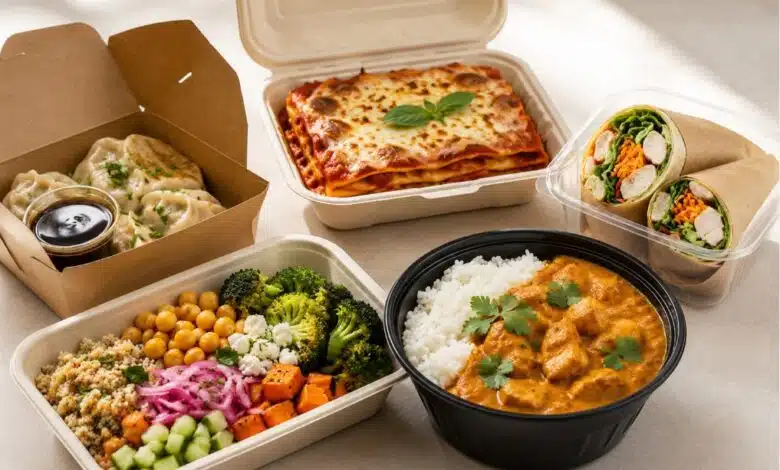
Some foods arrive looking almost exactly as they did under the restaurant pass: glossy, aromatic, still structured, and ready to eat. Others spend twenty minutes in a closed container and emerge as a damp little tragedy. The difference is not simply “good restaurant” versus “bad restaurant.” It is often physics, packaging, travel time, steam, sauce, and whether the dish was designed to survive a ride.
This guide is my practical way of reading a takeout menu before ordering. I think of every dish as a traveler. Does it hold heat without collapsing? Can the crisp part stay separate from the wet part? Will the sauce protect the food or smother it? Does the dish improve after resting, or does it peak the second it leaves the kitchen?
The five-part travel test I use before tapping “order”
I do not ask only, “Do I want this?” I ask, “Will this still be itself when it gets here?” That small shift saves money and disappointment. A dish can be excellent in the dining room and a poor delivery choice. It can also be deeply unglamorous on the menu and spectacular after thirty minutes in a container.
1. Structure
Structure is the dish’s ability to stay recognizable. A lasagna square has structure. A braised short rib has structure. A delicate tower of crisp pastry, microgreens, and sauce does not. The more a dish depends on height, air, crisp edges, or a very precise plating arrangement, the less friendly it is to transport.
2. Moisture control
Steam is the invisible villain of takeout. Hot food releases moisture. A closed lid traps it. That trapped moisture softens breading, pizza crust, fries, toasted bread, and roasted skin. Some dishes use moisture in their favor—stews, curries, and braises stay lush. Others turn from crisp to floppy before the driver clears the parking lot.
3. Temperature tolerance
A forgiving dish still tastes good when it drops from piping hot to pleasantly warm. Chili, biryani, dumplings, roasted chicken, and baked pasta usually pass this test. A poached egg, delicate tempura, or thin steak cooked to a specific doneness has a much narrower window.
4. Separation
Great delivery food often has components that can be packed separately. Sauce in a cup. Herbs in a packet. Crisp toppings in a small container. Bread away from soup. Dressing away from lettuce. This is not fussiness. It is the difference between dinner and edible weather damage.
5. Recovery
Some foods recover beautifully with two minutes of heat. Others do not. Pizza can revive in a skillet. Dumplings can be re-steamed or lightly pan-fried. Fries can improve in an air fryer, though never fully return to their first life. A dressed salad cannot be undressed, and a soggy breaded cutlet cannot become truly crisp without drying the meat.
Low-risk travelers
Braises, stews, curries, baked pasta, rice dishes, stuffed vegetables, dumplings, roasted chicken, barbecue, chili, grain bowls, sturdy cakes, and cookies.
High-risk travelers
Fries, tempura, delicate fried seafood, soft-scrambled eggs, dressed leafy salads, thin-crust pizza over long distances, soufflés, crisp tacos already assembled, and dishes with sauce poured over breading.
The dishes that behave like seasoned travelers
My favorite delivery foods are the ones that do not merely endure the ride. They settle into themselves. Sauces mingle, spices bloom, grains absorb flavor, and the dish arrives calm rather than compromised.
Excellent. Beef stew, lamb shank, goulash, coq au vin, short ribs, and similar dishes are protected by their own cooking liquid. A little rest usually helps rather than hurts.
Excellent. Indian, Thai, Japanese, Caribbean, and other curry traditions usually travel well, especially when rice, bread, herbs, and crisp garnishes are packed separately.
Very good. Biryani, pilaf, fried rice, arroz con pollo, jambalaya, and rice bowls hold heat and resist collapse. Steam can soften crisp toppings, so those should ride apart.
Very good. Lasagna, baked ziti, macaroni and cheese, moussaka, and casseroles retain heat and structure. They may even slice more neatly after a short rest.
Good to excellent. Steamed, boiled, or gently pan-fried dumplings are compact and resilient. The danger is condensation, not structural failure.
Good. Chicken thighs, ribs, pork shoulder, kebabs, and meatballs travel better than very lean cuts. Fat and sauce protect texture.
Stews, braises, and slow-cooked meats
These are the aristocrats of takeout. They were already cooked slowly, often cooled and reheated in restaurant prep, and built around tenderness rather than crispness. A container is not their enemy. If anything, the sealed environment helps preserve warmth and moisture.
Good examples include beef bourguignon, osso buco, ropa vieja, birria, chicken paprikash, Moroccan tagines, Korean braised short ribs, and pork adobo. I look for side dishes that are equally forgiving: mashed potatoes, polenta, rice, beans, or sturdy bread packed separately.
Curries and sauce-forward dishes
Curries understand travel. Their flavor is carried in liquid and fat, not in a fragile crust. The best move is to keep rice, naan, roti, herbs, chutneys, and crunchy toppings separate. When restaurants do this well, you can rebuild the plate at home in under a minute.
One caution: coconut-based sauces and cream-rich curries may separate slightly during a long ride. This usually looks more alarming than it tastes. A gentle stir often brings them back together.
Barbecue and smoked meats
Pulled pork, brisket, ribs, smoked chicken, and sausage can be wonderful delivery choices because they are flavorful at warm temperatures and often benefit from a short rest. The weak link is usually bread. If the bun sits under meat and sauce for forty minutes, it may surrender completely. Ask for buns and pickles on the side whenever possible.
The fried-food problem: delicious now, uncertain later
Fried food does not fail because it is “bad for delivery.” It fails because its best quality is a dry, crisp exterior—and the delivery container creates a humid microclimate. Hot food gives off steam. Steam rises, hits the lid, condenses, and falls back. The crust absorbs it. That is the whole tragedy.
Fried chicken
Bone-in fried chicken travels better than thin cutlets because the larger pieces retain heat and moisture. It still softens, but it does not become instantly miserable. Ventilated cardboard packaging is better than sealed plastic. Sauce should always be separate unless the dish is intentionally sauced, as with Korean fried chicken or buffalo wings.
Even then, think about timing. Sauced wings can remain enjoyable because the skin is not expected to stay dry. A delicate tempura shrimp coated in sweet sauce is far less forgiving.
Fries
Fries are the notorious weak point of delivery. Thick fries, wedges, and crinkle cuts usually fare better than shoestring fries because they retain heat and have more interior potato. Curly fries can do surprisingly well because their shape creates some air gaps. Loaded fries are a different category: they are meant to soften under cheese and toppings, so the expectation is already adjusted.
If fries matter to you, order from nearby, choose a restaurant that uses vented packaging, and reheat immediately in an air fryer or hot oven. A microwave is not a rescue plan. It is a softness amplifier.
Tempura and delicate seafood
This is one of the few categories I simply avoid for delivery unless the restaurant is extremely close. Tempura’s beauty is its dry, airy shell. That shell has almost no patience. Fried calamari, fish and chips, and delicate shrimp have the same problem, though thick fish fillets can survive better than small rings or thin pieces.
Pizza is not one delivery category
Pizza is supposed to travel, but different styles behave very differently. The box is familiar, yet the crust, moisture, toppings, and distance still matter.
Deep-dish and pan pizza
These are strong travelers. Their thick crust, substantial cheese layer, and dense construction hold heat. They may soften underneath, but they remain coherent. In fact, a brief rest can make a deep-dish slice easier to cut and eat.
New York-style pizza
Usually good within a reasonable distance. The main risk is steam trapped in the box, which softens the bottom. A quick skillet reheat restores more character than the microwave. Keep the pan dry and use medium-low heat so the crust crisps before the cheese overheats.
Thin-crust and cracker-style pizza
Delicious nearby, risky far away. The thinner the crust, the faster it loses crispness. This includes tavern-style pizza, which can still be enjoyable after travel but rarely arrives with the exact snap it had at the restaurant. For a deeper look at how Chicago balances deep dish, tavern-style pies, Italian beef, pierogi, tacos, bakeries, and neighborhood traditions, the Chicago neighborhood food guide offers a useful city-specific route.
Neapolitan pizza
This style has a very short ideal window. The center is naturally soft and moist, the crust is airy, and the pizza is meant to be eaten almost immediately. It can still taste good after delivery, but it will not be the same experience. If the restaurant is more than fifteen minutes away, I adjust my expectations or choose another style.
Topping strategy
Wet vegetables, fresh mozzarella, heavy sauce, and piles of meat increase steam and weight. Fewer toppings often travel better. Basil and arugula should be added after arrival. Burrata belongs in a separate container, always.
Sandwiches, burgers, wraps, and the bread question
Every takeout sandwich is a negotiation between bread and moisture. The filling may be perfect while the bread becomes too soft, too wet, or compressed beyond recognition.
Italian beef, French dip, and saucy meat sandwiches
These can be excellent when the jus is separate. Once the sandwich is fully dipped and then transported, the bread continues absorbing liquid until it crosses from luscious to unstable. If you like it wet, do the final dip at home. The same logic applies to meatball subs and hot roast beef sandwiches.
Burgers
Burgers are better travelers than people claim, but they need restraint. A sturdy bun, one or two patties, cheese, pickles, and a moderate amount of sauce can arrive well. A towering burger with onion rings, runny egg, multiple sauces, tomato, and shredded lettuce is a collapsing architecture project.
For longer trips, ask for lettuce, tomato, and sauce on the side. This may feel less spontaneous, but the burger arrives tasting like a burger rather than a warm salad trapped inside bread.
Wraps and shawarma
Wraps travel well when tightly rolled and not overfilled. Shawarma, gyros, kebab wraps, and burritos benefit from compact structure. Moisture is still the issue: watery tomatoes, too much sauce, or very hot filling can soften the wrap. Foil helps retain heat but also traps steam, so the best versions use a strong flatbread and balanced filling.
Banh mi and crisp baguette sandwiches
These depend on crust contrast, so distance matters. Pickled vegetables travel beautifully. The baguette does not. Ask for wet sauces in moderation and eat promptly. A short oven refresh can help, but remove cold vegetables first if possible.
“Could you please pack the sauce, lettuce, tomato, and pickles separately?” is not a difficult request. It is a practical one. Restaurants may not always be able to customize during busy periods, but when they can, the sandwich usually arrives much better.
Soups, bowls, curries, and everything that likes a lid
Some foods are naturally container-friendly. They are already served in bowls, built around moisture, and designed to remain enjoyable across a range of temperatures.
Soups
Most soups travel well, especially pureed soups, chowders, lentil soups, chili, pho broth, ramen broth, and hearty vegetable soups. The packaging question is not texture but leakage. A tightly sealed container, upright bag, and separate bread or crackers are essential.
Noodle soups need component separation. Broth should travel apart from noodles, herbs, bean sprouts, lime, and crisp toppings. Otherwise the noodles keep absorbing liquid and become bloated. Pho and ramen can be excellent at home when packaged correctly and disappointing when assembled too early.
Grain bowls
Rice, quinoa, farro, bulgur, and other grains are sturdy foundations. Roasted vegetables, beans, grilled chicken, falafel, meatballs, and pickles also hold up well. The danger is dressing. A little sauce is helpful; a large amount can turn the bowl heavy and muddy. Ask for it separately when possible.
Poke and sushi bowls
These travel fairly well over short distances because they are meant to be cool, but temperature control matters. Raw fish should not spend unnecessary time in a warm car or outside a door. Seaweed crisps, tempura crumbs, and wonton strips need separate packaging or they lose crunch quickly.
Ayran, lassi, and other meal-friendly drinks
Bottled or tightly sealed drinks can be excellent companions for spicy, grilled, or rich food because they do not depend on fragile texture. A cold yogurt drink such as Ayran and its lightly salty, tangy character pairs especially well with kebabs, pide, rice dishes, and roasted meats. The practical rule is simple: keep cold drinks in a separate bag from hot containers whenever possible.
Dumplings, noodles, and pasta: compact comfort with a few traps
Boiled and steamed dumplings
Pierogi, varenyky, pelmeni, khinkali, bao, gyoza, momos, and wontons are generally strong takeout choices. Their filling is protected by dough, and they are easy to reheat. Steam can make them stick together, so a little oil or butter helps. Sauces and sour cream should be separate.
Pan-fried dumplings are more delicate because the crisp side softens, but they still remain tasty. If texture matters, reheat them in a lightly oiled skillet rather than the microwave.
Noodles
Stir-fried noodles usually travel better than broth noodles because they are already coated in sauce and oil. Pad see ew, lo mein, yakisoba, chow fun, and similar dishes are forgiving. Thin rice noodles can clump, and very saucy noodles may continue absorbing liquid.
For ramen, pho, and udon soup, separation is everything. The restaurant that packs broth, noodles, protein, and garnish in separate containers understands delivery. The restaurant that sends one fully assembled bowl is asking the noodles to perform impossible emotional labor.
Pasta
Baked pasta is excellent. Creamy pasta is mixed. Tomato-based pasta is usually good. Delicate fresh pasta is risky. Alfredo and carbonara can thicken or separate as they cool; a spoonful of hot water and gentle tossing may help. Cacio e pepe can become clumpy because its emulsion is fragile.
Short shapes such as rigatoni, penne, and orecchiette tend to hold up better than very fine noodles. Stuffed pasta also travels well when not drowned in sauce.
Salads and cold foods: ask what is touching what
Salad delivery can be excellent because cold food avoids the steam problem. But it creates a different one: acid and salt continue working on greens. A dressed salad is on a countdown.
Leafy salads
Request dressing on the side. Always. Tomatoes, cucumbers, citrus, roasted vegetables, and salty cheese also release moisture, so a very composed salad may soften before arrival. Romaine, kale, cabbage, radicchio, and sturdy mixed greens travel better than delicate spring mix.
Grain, bean, and pasta salads
These are strong travelers. Lentil salad, chickpea salad, tabbouleh, couscous, farro, potato salad, and pasta salad often improve after a little rest because the flavors settle. Herbs may darken slightly, but the overall structure remains intact.
Cold deli foods
Hummus, baba ghanoush, tzatziki, beet salads, marinated vegetables, pickles, smoked fish, charcuterie, and cheese plates travel well when kept cold. Bread and crackers should remain dry and separate. This is one reason deli counters and market meals can make such satisfying takeout: the foods were designed for holding, packing, and serving later.
Breakfast and brunch delivery is a texture minefield
Breakfast food often depends on precise timing. Eggs continue cooking in the container. Toast steams. Pancakes compress. Hash browns lose crunch. Yet some breakfast dishes travel surprisingly well.
Best breakfast travelers
Breakfast burritos, baked egg casseroles, quiche, frittata, bagel sandwiches, muffins, pastries, banana bread, overnight oats, chia pudding, and breakfast potatoes tend to be reliable. They have structure and tolerate warm—not scorching—service.
Risky breakfast travelers
Soft-scrambled eggs, poached eggs, eggs Benedict, thin waffles, French toast with sauce already poured on, and delicate avocado toast are much less predictable. Hollandaise can split. Poached yolks can overcook. Toast absorbs moisture from eggs and vegetables.
If you order pancakes or waffles, request syrup, fruit compote, and whipped cream separately. The stack will still soften, but at least it will not arrive pre-soaked.
Desserts that travel like they have excellent luggage
Dessert is often the safest part of a delivery order. Cakes, cookies, brownies, bars, pies, tarts, doughnuts, and many puddings are stable. The main concerns are temperature, fragility, and frosting.
Excellent travelers
Cheesecake, flourless chocolate cake, brownies, loaf cakes, cookies, bread pudding, baklava, rice pudding, tres leches in a sealed container, and fruit pies are strong choices. They may shift in the box, but their texture survives.
More delicate choices
Ice cream, soufflé, pavlova, crisp mille-feuille, elaborate mousse domes, and tall frosted cakes need careful handling. Ice cream is obvious: distance and weather decide everything. Pavlova and layered pastry lose crispness around moisture. Tall cakes may slide if the driver brakes hard.
Doughnuts travel well in a ventilated box. Warm glazed doughnuts, however, can become sticky when stacked. Cream-filled pastries need cool handling and should not sit outside.
How to order better without becoming the difficult customer
You do not need to redesign the restaurant’s kitchen. A few intelligent requests are enough.
Read menu language carefully
Words such as crispy, tempura, delicate, airy, toasted, crackling, soft-poached, and just-seared signal a narrow quality window. Words such as braised, roasted, stewed, baked, smoked, marinated, stuffed, and slow-cooked suggest resilience.
Use reviews for packaging clues
Instead of reading only whether people liked the food, look for comments about leakage, soggy fries, separate sauces, vented boxes, portion stability, and delivery temperature. Packaging quality is part of the product when you are ordering at home.
Order one texture-sensitive item, not five
If you really want fried chicken, order it—but pair it with stable sides. Do not build an entire meal around fries, tempura vegetables, fried calamari, crisp spring rolls, and a dressed salad. That is too much pressure on one delivery bag.
Distance is an ingredient whether the menu admits it or not
A five-minute ride and a forty-minute ride are not the same product. Apps may show estimated delivery time, but that estimate includes restaurant prep, driver pickup, traffic, stacked orders, building access, and the walk from car to door.
| Estimated travel | Best bets | Proceed carefully | Usually skip |
|---|---|---|---|
| Under 15 minutes | Almost anything from a well-packaged restaurant | Fries, thin pizza, burgers, dressed salads | Very delicate tempura or runny egg dishes unless pickup is immediate |
| 15–30 minutes | Curries, rice, dumplings, pasta, barbecue, bowls, soups | Pizza, fried chicken, sandwiches, sushi | Shoestring fries, crisp tacos already assembled, eggs Benedict |
| 30–45 minutes | Braises, stews, baked dishes, chili, casseroles, roasted meats | Noodles, burgers, cold salads, seafood | Tempura, thin-crust pizza, delicate fried seafood, soft eggs |
| More than 45 minutes | Foods that reheat well and hold sauce | Anything requiring strict hot or cold temperature | Fragile textures and foods with narrow safety or quality windows |
Pickup gives you more control. You can leave as soon as the order is ready, keep the bag level, separate hot and cold items, and avoid stacked deliveries. For texture-sensitive food, pickup is often worth the extra effort.
The first ten minutes after delivery matter
Do not leave the bags closed while you answer emails, change clothes, or finish a television episode. Open them. Release steam. Check what needs immediate attention.
Pizza
Use a dry skillet over medium-low heat. Add the slice, cover loosely for part of the time so the cheese warms, then uncover to finish the crust. An oven also works well for multiple slices.
Fried foods
An air fryer or hot oven is the best recovery method. Spread food in one layer. Do not pile it. Reheat briefly and check often because thin pieces dry quickly.
Dumplings
Steam boiled dumplings gently, or pan-fry them with a small amount of oil and a splash of water under a lid. This restores heat without making the dough tough.
Rice and curry
Stir before reheating so heat distributes evenly. Add a spoonful of water to rice if it seems dry. Reheat until properly hot, then add fresh herbs, lime, yogurt, or crunchy toppings.
Sandwiches
Remove cold vegetables and sauces when possible. Warm the meat and bread separately, then rebuild. It sounds excessive until you taste the difference.
Perishable food should not sit at room temperature for long periods. Refrigerate leftovers promptly, use clean containers, and reheat thoroughly. When in doubt about how long food has been unrefrigerated or whether it stayed safely hot or cold, do not rely on smell alone.
What I would order in real-life situations
A rainy night when I want comfort food
I would choose a curry with rice, braised beef with mashed potatoes, baked pasta, dumplings with sour cream on the side, or chili with cornbread. These dishes arrive warm, complete, and emotionally stable.
Best mood: soft clothes, one bowl, no assembly stress.
A group dinner where everyone wants something different
I would order from a Mediterranean, Middle Eastern, Turkish, Georgian, Indian, or Eastern European menu with shared dips, breads, rice, grilled meats, dumplings, salads, and sauces. These cuisines often provide a mix of hot and cold foods that travel at different speeds without all failing at once.
A work lunch that must still look respectable
A grain bowl, sturdy salad with dressing separate, bento-style meal, rice plate, or wrap is easier to eat neatly than a dripping burger or overloaded tacos. Avoid anything that requires emergency napkins or produces a cloud of fried-food aroma in a small meeting room.
Best choice: compact, fork-friendly, and not dependent on immediate crispness.
A movie night
Pizza is obvious, but baked wings, dumplings, nachos with components separated, sliders, sturdy dips, and brownies also work well. I like food that can sit on a coffee table for a few minutes without collapsing.
A long-distance delivery from a restaurant I really want to try
I would skip the signature fries and choose the menu’s slow-cooked or baked dishes. The goal is not to recreate the dining room perfectly. It is to choose the part of the restaurant’s cooking that survives distance with dignity.
My final ordering logic
The best delivery order is not always the restaurant’s most famous dish. It is the dish whose essential character survives a closed container, a moving car, a delay at the lobby, and ten minutes on your kitchen counter.
Choose moisture when moisture is supposed to be there. Choose structure when the ride is long. Separate crisp from wet. Keep cold away from hot. Treat fries as a short-distance romance, not a dependable long-term relationship.
And remember: a takeout meal does not need to arrive restaurant-perfect to be excellent. It only needs to be chosen with the journey in mind.
Packaging is part of the recipe now
A restaurant can cook the same dish beautifully and still deliver two completely different experiences depending on the container. Packaging is no longer a neutral afterthought. It changes the final texture, temperature, aroma, and even the way a meal looks when you open it.
Vented boxes versus sealed containers
Vented cardboard helps fried chicken, pizza, pastries, and roasted foods release steam. Sealed plastic holds heat more aggressively, which is useful for curries, soups, braises, and saucy pasta, but dangerous for crisp surfaces. When I see a restaurant consistently using the right container for the right dish, I trust its takeout program more.
Compartmented trays
These are useful when the parts of a meal have different moisture levels. Rice can sit beside grilled chicken, while sauce, salad, and pickles remain contained. The tray is not perfect—steam still moves—but it reduces direct soaking and keeps flavors from blending before you want them to.
Paper wraps and foil
Paper can absorb a little surface moisture, which helps burgers, tacos, and sandwiches. Foil retains heat but traps steam. A smart combination often works best: paper around the food, foil outside, and wet condiments packed separately. The exact method matters less than whether the restaurant understands the trade-off.
Containers for cold food
Cold salads, sushi, raw fish, dairy drinks, and desserts need protection from hot bags. A sealed cold container inside the same insulated bag as steaming soup is not truly separate. For pickup, I carry two bags when the order mixes hot and cold food. It is a tiny detail that preserves quality and reduces unnecessary warming.
When the “wrong” food is still worth ordering
Rules are useful, but dinner is not a laboratory. Sometimes you want the fries, the tempura, the delicate pizza, or the eggs Benedict. I still order risky foods occasionally. I just change the plan.
I choose the closest location, select pickup instead of delivery, avoid peak traffic, and prepare the oven or air fryer before the food arrives. I also accept that the dish will be a home version of the restaurant experience, not a perfect duplicate.
This mindset matters. Disappointment often comes from expecting a fragile dish to ignore time and steam. When I know the limits, I can enjoy the flavor that remains instead of grading the meal against the first thirty seconds after it left the kitchen.
Order by priority
If the fragile item is the whole reason for the meal, build the logistics around it. Pick it up yourself. Eat it first. Keep the rest of the order simple. A crisp fish sandwich with a sturdy slaw and bottled drink has a better chance than a basket containing five different fried sides that all need immediate attention.
Use assembly to your advantage
Some of the best takeout meals arrive unfinished on purpose. Tacos with fillings separate. Pho with broth apart. Mezze with bread in another bag. Burgers with cold toppings on the side. This is not a defect. It gives you control over the final minute, which is often the most important minute.
A compact takeout scorecard
When I am undecided, I score a dish mentally. It takes about ten seconds.
Four or five points means I order confidently. Three points means distance matters. One or two points means I either pick it up myself or save it for dining in. The score is not scientific, but it forces me to think about the journey rather than the menu photo.
Frequently Asked Questions
What foods are best for takeout and delivery?
Stews, curries, rice dishes, dumplings, baked pasta, roasted meats, barbecue, grain bowls, soups, and sturdy desserts usually travel best. They retain heat, have stable structure, and do not depend on a crisp surface.
Why do fried foods get soggy during delivery?
Hot fried food releases steam inside the container. When the lid traps that moisture, it condenses and softens the crust. Vented packaging, short travel time, and reheating in an oven or air fryer can help.
Which pizza style travels best?
Deep-dish and pan pizza are usually the most forgiving because their thick crust and dense structure hold heat. New York-style pizza also travels reasonably well over moderate distances. Very thin or Neapolitan-style pizza has a shorter ideal window and may soften quickly.
How can I keep a takeout sandwich from becoming soggy?
Ask for sauces, jus, tomatoes, pickles, and other wet ingredients on the side. For hot sandwiches, keep the bread separate when the restaurant allows it, then assemble or dip the sandwich at home.
Are salads good for delivery?
They can be. Sturdy greens such as kale, cabbage, romaine, and radicchio travel better than delicate spring mix. Dressing should be packed separately, and crunchy toppings should stay dry until you are ready to eat.
What should I avoid ordering from a restaurant that is far away?
Avoid foods whose appeal depends on immediate crispness or exact doneness, including shoestring fries, tempura, delicate fried seafood, thin-crust pizza, soft-poached eggs, and fully dressed leafy salads. Choose braises, curries, baked dishes, and rice instead.
How should I reheat delivery fries?
Use an air fryer or a hot oven and spread the fries in one layer. Heat them briefly and check often. The microwave warms fries but usually makes them softer.
Do dumplings travel well?
Yes. Boiled and steamed dumplings are compact, retain heat, and reheat easily. Pan-fried dumplings lose some crispness, but a quick skillet reheating can restore part of their texture. Keep sauces and sour cream separate.
Is pickup better than delivery for crispy food?
Usually. Pickup reduces waiting, stacked orders, and unpredictable travel time. It also lets you open or vent the package sooner, which helps protect fried food and pizza crust from trapped steam.
What is the safest all-around delivery order for a group?
A meal built around rice, grilled or braised protein, dumplings, sturdy salads, dips, bread, and sauces on the side is dependable. It gives people variety without making the entire order depend on fragile fried textures.
