
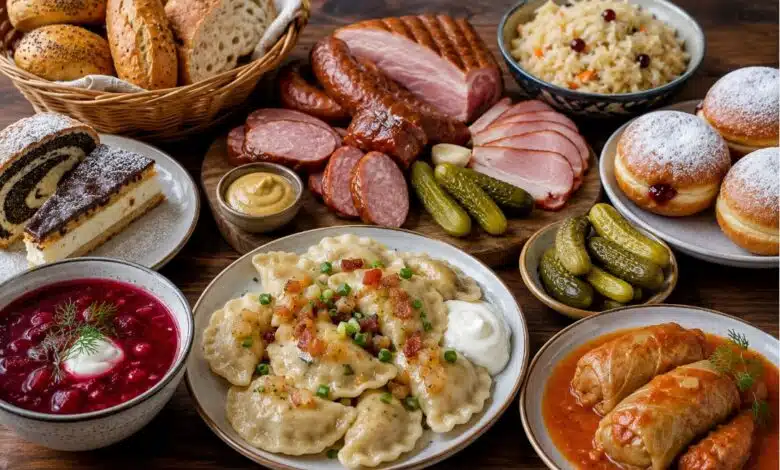
Polish food near you is rarely hiding in just one kind of place. The best pierogi may come from a restaurant, a deli counter, a church kitchen, a bakery café, a grocery freezer, or a tiny prepared-food shop that looks more practical than polished. The trick is knowing what each place does best—and what to order first.
When I search for Polish food in a new city, I do not begin by typing “best Polish restaurant” and trusting the first glossy result. That usually produces a narrow version of the cuisine: one plate of pierogi, one sausage, maybe a cabbage roll, and a dramatic red-and-white dining room. Polish food is much broader, much more everyday, and often much more delicious in places that do not behave like destination restaurants at all.
A Polish deli may have better bigos than a formal dining room. A bakery may be the place for pączki, makowiec, sernik, rye bread, and a hot lunch plate. A grocery store may carry excellent frozen pierogi from a local producer. A modest counter may sell trays of gołąbki, krokiety, naleśniki, soups, cutlets, and salads by weight. A restaurant is only one doorway into the food.
This guide is built like a field map rather than a restaurant ranking. It helps you identify the kind of Polish place you found, read the clues in the menu and display case, order with more confidence, and leave with a meal that tastes like more than a checklist of famous dishes.
First, decide what kind of Polish food experience you actually want
“Polish food near me” can mean five completely different things. You may want dinner in a dining room, a bag of frozen pierogi for Tuesday night, a bakery box, a tray of prepared food for a family gathering, or a deli sandwich with smoked meat and mustard. Searching without deciding which experience you want often leads to disappointment—not because the place is bad, but because it was never designed to do what you expected.
The sit-down restaurant
A Polish restaurant is the easiest entry point if you want a composed meal and someone else handling the timing. This is where soups arrive hot, potato pancakes can still be crisp, cutlets come straight from the pan, and pierogi are more likely to be served with browned onions, sour cream, butter, or bacon while the dough is still tender.
Restaurants are also the best choice when you want to compare textures. A plate of żurek followed by schabowy and a side of mizeria tells you more about Polish cooking than ordering three beige appetizers. The cuisine is built on contrasts: sharp fermented soup against creamy potato, crisp breading against soft meat, sweet beet against horseradish, tangy cucumber against rich pork.
The prepared-food deli
A Polish deli is often a more intimate look at everyday eating. The counter may hold soups, stuffed cabbage, cutlets, roast meats, sausages, potato dishes, buckwheat, beets, cabbage salads, herring, mushroom dishes, and several items whose English labels feel vague. This is where asking one calm question can unlock the entire meal.
The bakery with more than pastry
Some Polish bakeries are dessert destinations. Others are half bakery, half neighborhood canteen. You might find bread, cakes, yeast pastries, hot soup, sandwiches, savory pastries, and lunch plates in one room. Do not assume the pastry case is the whole story. Look for handwritten specials, steam-table trays, refrigerated salads, or customers carrying opaque takeout containers instead of cake boxes.
The grocery store or market
A Polish grocery is where the cuisine becomes a working pantry rather than a special occasion. Shelves of pickles, mustards, preserves, jams, mushroom products, flours, noodles, seasonings, canned fish, sweets, dairy, and drinks reveal how people actually cook and snack. The freezer is especially important. It may contain pierogi, pyzy, uszka, krokiety, dumplings, blintz-like pancakes, soups, and locally made prepared foods.
The hybrid shop
Many of the most useful Polish food businesses refuse to fit into one category. They may be a butcher, deli, grocery, bakery, and lunch counter at once. These hybrids are worth exploring slowly. The website may look outdated. The menu may be incomplete. The strongest evidence is often the rhythm of the room: regulars ordering quickly, staff moving between the meat case and hot counter, and shelves stocked for people who know exactly what they came to buy.
Pierogi are the beginning, not the entire conversation
Pierogi are popular for good reason. The combination of tender dough and savory or sweet filling is comforting, flexible, and easy to love. But “pierogi” is not one single experience. The filling, dough thickness, cooking method, toppings, and timing all matter.
Fresh restaurant pierogi
At a restaurant, ask whether the pierogi are boiled, pan-fried after boiling, or available both ways. Boiled pierogi are softer and put more attention on the filling. Pan-fried pierogi develop browned edges and a chewier surface. Neither is automatically better. Potato-and-cheese fillings often benefit from browned onions and a little crispness. Delicate seasonal fillings can be more expressive when boiled.
Deli-counter pierogi
Prepared pierogi from a deli can be excellent, but ask whether they are sold cooked, chilled, or frozen. Chilled cooked pierogi are convenient for reheating in a skillet. Frozen uncooked or par-cooked pierogi need different handling. Buying the wrong format is how people end up with split dough or gummy edges and then blame the pierogi.
Frozen pierogi
Frozen pierogi are not a consolation prize. In Polish communities, they are normal household food. The smart move is to read the ingredient list, note the filling ratio, and avoid overcooking. A gentle simmer is usually safer than an aggressive boil. Once they float, they may need only a short additional cooking time, depending on the package instructions and whether the filling was cooked before freezing.
Fillings worth trying beyond potato and cheese
Potato and cheese—often called ruskie or Ukrainian-style in Polish culinary tradition—is the classic gateway. From there, try sauerkraut and mushroom, meat, spinach, buckwheat, lentil, cabbage, farmer’s cheese, seasonal fruit, or sweet cheese. Some shops also make creative fillings, but I would taste at least one traditional version before chasing novelty. A neon-colored dough with truffle filling may be fun; it does not teach you much about the place’s fundamentals.
When a pierogi shop offers a mixed plate, use it. A sampler reveals whether the kitchen treats fillings as distinct recipes or as variations of the same mashed texture. Good pierogi should not all taste identical under different labels.
The Polish deli counter is where confidence matters more than vocabulary
You do not need perfect pronunciation to order well. You need curiosity, patience, and a sense of how much food you are buying. Prepared-food counters are often priced by weight, which makes a small request easy to underestimate. Two cabbage rolls, a scoop of potatoes, some beet salad, a cutlet, and a container of soup can become a very generous dinner.
Look before you order
Take one slow pass along the case. Notice what looks freshly replenished, what customers are choosing, and which items have labels. Dense foods travel well: cabbage rolls, stews, roasted meats, cutlets, potato dishes, buckwheat, and braised cabbage. Crisp foods are more time-sensitive. If a breaded cutlet has been sitting under steam, it may still taste good, but it will not have the same texture as one made to order.
Ask how to reheat it
This is one of the most useful questions in any deli. Some dishes want a skillet, some want a covered oven dish, and some want gentle microwave heat with a spoonful of water. A staff member may tell you to remove a lid, keep a sauce separate, or heat a cabbage roll slowly so the center warms without drying the leaf.
Prepared dishes to recognize
Gołąbki are cabbage rolls filled with meat and rice or other grains, often served with tomato or mushroom sauce. Bigos is a deeply flavored hunter’s stew built around cabbage, sauerkraut, meat, and sausage. Krokiety are thin pancakes rolled around a savory filling, breaded, and fried. Naleśniki are Polish crepes with sweet or savory fillings. Schabowy is a breaded pork cutlet. Mielone are seasoned ground-meat patties. Łazanki combine small noodles with cabbage, mushrooms, or meat.
These names help, but labels vary. A shop may use simplified English, family terminology, or regional names. The visual clues matter too. Rolled crepes in a breaded shell are likely krokiety. Large cabbage parcels are gołąbki. Dark sauerkraut stew with chunks of meat is probably bigos. Still, ask. Guessing is less useful than learning.
The cold case deserves attention
People rush toward hot food and miss the salads. Polish cold dishes can transform a heavy meal: grated beet, carrot and apple, cucumber with sour cream, sauerkraut salad, celery-root salad, herring preparations, vegetable salad with mayonnaise, and pickled vegetables. One bright, acidic side makes sausage, cutlets, or stuffed cabbage feel more balanced.
If you already enjoy Eastern European prepared-food counters, the same practical logic appears in many regional delis: inspect the turnover, ask about reheating, and build contrast rather than buying five rich dishes. Our guide to using an Eastern European deli counter goes deeper into that style of shopping.
A Polish bakery visit should never end with one doughnut
Pączki get the headlines, especially before Lent, but a Polish bakery can offer an entire landscape of textures: yeast dough, poppy seed, farmer’s cheese, fruit preserves, crumb toppings, layered cream cakes, dense cheesecake, honey cake, gingerbread, and dark rye bread.
Pączki
A good pączek is richer than a standard doughnut, with a tender interior and a filling that feels intentional rather than squeezed in as an afterthought. Rose preserve, plum butter, raspberry, custard, and advocaat-style fillings are common favorites. Freshness matters enormously. The same pastry can be magnificent at 9 a.m. and merely sweet by late afternoon.
Sernik
Polish cheesecake is often made with twaróg or a similar farmer’s cheese, giving it a different texture from American cream-cheese cheesecake. It can be dense, airy, crumb-topped, chocolate-covered, raisin-studded, or almost minimalist. Order a plain slice first if you want to judge the bakery’s cheese filling.
Makowiec and poppy-seed pastries
Makowiec is a rolled poppy-seed cake with a dark, aromatic filling. The best versions have enough filling to feel lush but not so much that the spiral collapses into paste. Poppy seed also appears in buns, layered cakes, and holiday pastries.
Drożdżówki
These yeast buns may be filled or topped with cheese, fruit, poppy seed, custard, or crumble. They are less theatrical than a cream cake and often more satisfying with coffee. This is the pastry I buy when I want breakfast rather than a sugar event.
Bread matters
Look for rye, mixed-grain loaves, seeded bread, and crusty rolls. Polish breads can be deeply flavored without being aggressively sour. A good loaf plus butter, smoked meat, mustard, and pickles can become the best meal you bring home from the entire trip.
The grocery aisle is where Polish food becomes part of your week
A restaurant visit is memorable, but a grocery store is where curiosity turns into habit. You leave not only with dinner but with breakfast, snacks, pantry ingredients, and a freezer plan.
Dairy and refrigerated foods
Look for kefir, buttermilk-style drinks, twaróg, cultured cream, farmer’s cheese, sliced cheeses, and refrigerated spreads. Product labels may be partly in Polish, so use the ingredient list and storage instructions. Twaróg can be eaten savory with herbs and radish, used in fillings, or sweetened for breakfast and desserts.
Pickles, preserves, and jars
Polish shelves are excellent for cucumbers, sauerkraut, beets, horseradish, mushrooms, vegetable salads, jams, plum butter, and fruit preserves. These items make fast meals feel complete. Sausage with mustard is good. Sausage with mustard, rye bread, horseradish, and a crunchy pickle feels like someone planned dinner.
Sweets and snacks
Chocolate-covered marshmallow sweets, wafers, gingerbread, filled chocolates, caramels, fruit jellies, and biscuits are easy entry points. Buy one or two unfamiliar items rather than filling a basket based only on colorful packaging. Polish sweets range from delicate to aggressively sweet, and the fun is discovering your own threshold.
Frozen foods
The freezer may be the most useful section for a newcomer. Besides pierogi, you may find uszka, potato dumplings, meat dumplings, krokiety, pancakes, soups, and prepared cutlets. Check whether the producer is local. In cities with large Polish communities, small regional companies often supply excellent products that never appear in mainstream supermarkets.
Sausages and smoked meats
“Kielbasa” simply means sausage, so the case may contain many styles with different textures, smoking levels, seasonings, and intended uses. Some are ready to eat; others need cooking. Ask before leaving. A garlic-heavy smoked sausage for sandwiches is not interchangeable with a fresh sausage meant for simmering or grilling.
Buy less than you think. Smoked meats are flavorful, and a small quantity goes far with bread, mustard, pickles, eggs, or potatoes.
Search like a local eater, not like a ranking page
The broad search “Polish food near me” is useful, but it is only the first pass. Better results often appear when you search by place type or dish. Try combinations such as Polish deli, Polish bakery, pierogi shop, Polish grocery, European market, Polish meat market, Polish restaurant, pączki bakery, frozen pierogi, or Polish prepared food.
Use maps as evidence, not judgment
Map photos tell you what kind of place you found. Look for the actual counter, shelves, pastry case, freezer, and menu board. A business may be listed as a grocery store while clearly operating a busy lunch counter. Another may be listed as a restaurant but function mostly as catering and takeout.
Read recent reviews for operational clues
Ignore dramatic declarations like “best ever” and “never again” until you understand the details. Useful reviews mention whether pierogi are made in-house, which soups appear on certain days, whether pastries sell out, how parking works, whether the deli counter is busiest at lunch, and whether the frozen foods are locally produced.
Recent photos matter more than old ones because displays, menus, and opening hours change. Holiday seasons can also distort availability. Pączki week, Christmas, and Easter may bring special items, long lines, preorder rules, or limited menus.
Search community institutions
Polish churches, cultural centers, festivals, schools, and community organizations may host food sales, holiday markets, fish fries, pierogi events, or seasonal dinners. These are not substitutes for restaurants, but they can lead you toward local producers and neighborhood cooks.
Call when the trip matters
If you are driving far for a specific cake, soup, or frozen item, call first. Small food businesses may sell out, change daily specials, close early, or operate different kitchen and retail hours. A thirty-second phone call can save a ninety-minute disappointment.
A first-visit plan that gives you the most information with the least regret
For your first Polish food outing, choose one primary destination and one nearby secondary stop. For example: lunch at a restaurant, then a bakery; or a deli meal followed by a grocery run. Trying to visit four businesses across a large city turns the day into parking logistics and leaves you too full to notice anything.
At the restaurant
Order one soup, one pierogi plate or dumpling dish, one meat or vegetable main, and one acidic side to share. This creates range without excess. If dessert matters, save it for the bakery unless the restaurant is known for a specific cake.
At the deli
Buy one hot dish, one cold salad, one soup, and one small item you have never tried. Ask how each should be reheated. Take a photo of the label if the name is unfamiliar; you will want it later when you decide you loved it.
At the bakery
Choose one pączek or cream pastry, one yeast pastry, one slice of cake, and bread. That is enough to understand the range without creating a box of sugar you stop appreciating after the second bite.
At the grocery
Pick up frozen pierogi, a jar of pickles, mustard or horseradish, one dairy item, and one sweet. This becomes a small tasting kit rather than a random haul.
What to avoid on the first trip
Do not judge the entire cuisine by one overstuffed sampler. Do not buy only fried food. Do not assume every sausage is ready to eat. Do not overlook the cold salads. Do not skip bread. And do not ask a busy counter worker to explain every item in the case while a line forms behind you—choose two or three questions that actually help you order.
The best Polish food search ends with more than one favorite place
A restaurant may become your soup place. A deli may become your Friday dinner shortcut. A bakery may own your holiday order. A grocery freezer may quietly solve weeknight meals. That is the real advantage of searching beyond a single “best restaurant” list.
Polish food lives in a network of counters, kitchens, bakeries, freezers, butcher cases, and family routines. Once you learn what each place does best, “Polish food near me” stops being a vague search and becomes a practical map of good things to eat.
Regional clues can make a familiar menu feel completely different
Polish food is not one uniform national menu. A restaurant may lean toward Silesian, Highlander, Kashubian, Podlasie, Greater Poland, or broadly central Polish cooking without announcing it in large type. Regional identity often appears in side dishes, dumplings, soups, sauces, and the way potatoes or cabbage are handled.
Silesian signals
Look for kluski śląskie, smooth potato dumplings with a small indentation that catches sauce, often served with roast meat and red cabbage. The plate is soft, savory, and designed around gravy. If you see roulade, Silesian dumplings, and modra kapusta together, order the trio rather than separating the components. They are meant to work as a complete arrangement.
Highlander and southern flavors
Menus inspired by the mountain regions may feature oscypek-style smoked sheep’s cheese, hearty soups, grilled meats, sauerkraut, mushrooms, and stronger smoky notes. In restaurants outside Poland, imported cheese may be limited or replaced by a similar local product, so read the description rather than assuming every version follows protected regional specifications exactly.
Coastal and northern dishes
Fish, herring, dill, potatoes, rye, and lighter sour flavors may appear more often. Herring is particularly worth trying in a deli because preparations vary: oil and onion, sour cream, beet, mustard, apple, or layered salads. Buy a small portion first. Herring has devoted fans, but its salty richness is not a shy introduction.
Holiday foods that appear seasonally
Christmas and Easter change Polish counters dramatically. You may see uszka, mushroom and sauerkraut dishes, poppy-seed desserts, babka, mazurek, white sausage, żurek kits, decorated cakes, and special breads. Holiday food often requires preordering. A shop that normally accepts walk-ins may move to a ticket system or sell only reserved trays during the busiest days.
Seasonal availability is not an inconvenience; it is part of the culture. When a bakery tells you a cake is only made for a holiday, believe them and make a note for next year.
A few ordering phrases make the counter easier, even in English
You do not need to perform Polish pronunciation to be welcomed. Clear, respectful English works in most places in the United States, Canada, and the United Kingdom. Still, understanding a few menu words reduces confusion and helps you match labels to what you see.
The most helpful questions remain simple: “Is this ready to eat?” “Does it contain meat?” “How should I reheat it?” “Is this sold by weight?” and “What is most popular today?” Those five questions prevent more mistakes than memorizing a long vocabulary list.
At a busy counter, decide on approximate quantities before your turn. For prepared food sold by weight, ask for a small portion first. You can always add more. For sliced meat or cheese, say how many people you are feeding or how many sandwiches you plan to make. Staff are usually better at estimating portions than a customer staring at the scale.
Vegetarian, gluten-aware, and dairy-sensitive ordering requires questions, not assumptions
Polish cuisine offers many naturally meat-free dishes, but traditional kitchens may use meat stock, bacon, lard, sour cream, butter, or shared fryers. A mushroom soup may be vegetarian—or built on chicken broth. Sauerkraut pierogi may be meat-free—or topped with bacon. Potato pancakes may be cooked in oil—or in a mixed kitchen where flour and meat products are everywhere.
Vegetarian choices
Potato-and-cheese pierogi, sauerkraut-and-mushroom pierogi, cheese naleśniki, mushroom dishes, barszcz, salads, breads, cakes, and potato dishes are the obvious possibilities. Ask about stock and toppings. If a deli labels something “meatless,” confirm whether that means vegetarian by your definition.
Gluten considerations
Traditional pierogi dough, breaded cutlets, krokiety, cakes, bread, noodles, and many dumplings contain wheat. Soups and sauces may be thickened with flour. Naturally gluten-free components such as potatoes, buckwheat, cabbage, beets, roast meat, or some sausages can still face cross-contact. A dedicated gluten-free Polish bakery or producer is a different situation from a conventional deli with one flourless dish.
Dairy considerations
Cheese fillings, sour cream, butter, creamy salads, cheesecakes, and many pastries contain dairy. Meat pierogi or sauerkraut pierogi may still be finished with butter. Ask for toppings on the side and read packaged labels carefully.
Turn a Polish food run into a complete table at home
The easiest way to make deli food feel intentional is to stop treating every container as an independent main dish. Build a table with one centerpiece, one starch, one acidic vegetable, bread, and a condiment. This creates balance and makes modest portions go further.
A simple combination might be gołąbki with boiled potatoes, beet salad, rye bread, and horseradish. Another could be grilled sausage with sauerkraut, mustard, pickles, and bread. Pierogi become a fuller meal with mushroom soup and cucumber salad. Bigos needs little more than bread and perhaps a crisp pickle because the stew already carries meat, cabbage, acidity, and smoke.
Reheat gently
Covered oven reheating works well for cabbage rolls, roasts, and baked dishes because it warms the center without drying the surface. A skillet is better for pierogi, cutlets, sausage, and potato pancakes when you want to restore browning. Soups and stews prefer low heat and occasional stirring. Add a spoonful of water or stock only when the food looks thick from refrigeration.
Serve cold foods cold
Do not warm beet salad, cucumber salad, herring, or mayonnaise-based vegetable salad merely because the hot dishes are ready. Their cool temperature is part of the contrast.
Use leftovers deliberately
Slice leftover sausage into scrambled eggs. Put roast meat on rye bread with mustard. Brown pierogi in a skillet for lunch. Serve bigos over a baked potato. Add leftover beets to a grain bowl. Prepared food becomes more useful when you see it as a pantry of components rather than a single oversized dinner.
Frequently Asked Questions
What should I order the first time I try Polish food?
Start with one soup, a mixed plate of pierogi, and a fresh or acidic side such as beet salad, mizeria, sauerkraut, or pickles. This gives you several textures and flavors without turning the meal into a wall of starch and fried food.
Where can I find the best pierogi near me?
Search beyond restaurants. Polish delis, bakeries with lunch counters, grocery freezers, church kitchens, and dedicated pierogi shops may all have excellent versions. Recent customer photos and reviews that mention in-house production are more useful than broad star ratings alone.
Are frozen pierogi worth buying?
Absolutely. Frozen pierogi are normal household food, not a lesser substitute. Choose a filling you like, follow the package directions, avoid a violent boil, and dry them briefly before pan-frying if you want browned edges.
What is the difference between a Polish deli and a Polish restaurant?
A restaurant focuses on made-to-order or plated meals, while a deli usually emphasizes prepared foods, smoked meats, sausages, salads, soups, takeout portions, and grocery items. Many Polish businesses combine both formats.
What Polish foods travel well for takeout?
Gołąbki, bigos, soups, roast meats, sausages, pierogi, buckwheat, braised cabbage, and many cold salads travel well. Fresh potato pancakes and crisp breaded cutlets are more sensitive because trapped steam softens them quickly.
What should I buy at a Polish bakery besides pączki?
Try sernik, makowiec, drożdżówki, rye bread, seeded loaves, crusty rolls, and any seasonal fruit or cheese pastry baked that morning. One rich dessert plus one simpler yeast pastry usually gives you a better sense of the bakery than a box filled with similar doughnuts.
How do I know whether Polish sausage is already cooked?
Ask the person at the meat counter and check the label. Some smoked sausages are ready to eat, while fresh sausages require thorough cooking. Do not assume that every product labeled kielbasa is prepared the same way.
What vegetarian Polish foods should I look for?
Common options include potato-and-cheese pierogi, sauerkraut-and-mushroom pierogi, mushroom soup, barszcz, potato pancakes, cheese or vegetable naleśniki, buckwheat dishes, salads, breads, and many pastries. Confirm whether soups, cabbage dishes, or pierogi toppings contain meat stock, bacon, or lard.
Is Polish food always heavy?
No. Rich dishes are prominent, but Polish cooking also includes clear soups, fermented foods, cucumbers, beets, cabbage salads, fish, mushrooms, grains, fruit dishes, and simple dairy-based meals. A balanced order feels very different from an all-fried sampler.
How can I find Polish food if there is no Polish restaurant in my city?
Search for Polish deli, European market, Polish bakery, pierogi, Eastern European grocery, Polish church food sale, or frozen Polish food. A nearby regional market may carry locally made pierogi, sausages, bread, and prepared dishes even when no dedicated restaurant exists.


