
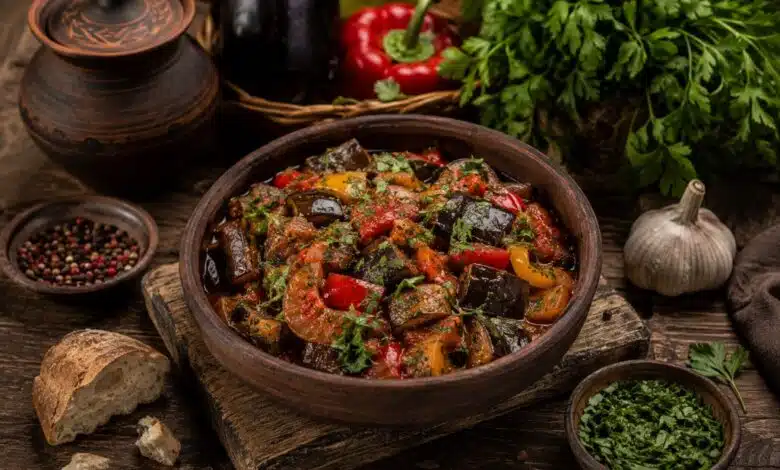
This traditional ajapsandali recipe combines tender eggplant, ripe tomatoes, sweet peppers, onions, garlic and generous fresh herbs in a rich Georgian vegetable stew. The vegetables are cooked in stages so the eggplant becomes silky, the peppers remain recognizable and the tomato sauce coats everything without becoming watery.
Ajapsandali is one of the most satisfying examples of Georgian vegetable cooking. It uses familiar ingredients, but the combination of cilantro, parsley, basil, garlic and ground coriander gives the finished dish a flavor that is different from French ratatouille, Spanish pisto or a basic tomato-and-eggplant stew.
The recipe below uses an oven-assisted method that is practical for a home kitchen. The eggplant and optional potatoes are roasted before they are combined with a stovetop tomato-and-pepper base. This reduces the amount of oil the eggplant absorbs and gives you better control over the texture.
A traditional one-pot method and a separately fried method are also included later in the guide. Each version produces a slightly different result. The oven method is structured and concentrated, the one-pot version is softer and more integrated, and the fried version is the richest.
Prefer to order the dish before making it yourself? Our guide to ajapsandali near me includes current restaurant menu leads and tips for finding it in different U.S. cities.
Traditional Georgian Ajapsandali Recipe
This recipe produces tender vegetables in a concentrated tomato, garlic and herb sauce. It can be served warm, at room temperature or chilled.
Ingredients
- 2 large eggplants, about 2 pounds total;
- 2 medium Yukon Gold potatoes, optional;
- 2 red bell peppers;
- 1 green bell pepper;
- 1 large yellow onion;
- 5 medium ripe tomatoes, about 1½ pounds;
- 5 garlic cloves;
- ⅓ cup neutral vegetable oil or sunflower oil, divided;
- 1 teaspoon ground coriander;
- ½ teaspoon freshly ground black pepper;
- ¼ to ½ teaspoon red pepper flakes, optional;
- 1½ teaspoons fine salt, plus more as needed;
- ½ cup chopped fresh cilantro;
- ⅓ cup chopped fresh flat-leaf parsley;
- ¼ cup chopped fresh basil;
- 1 small fresh chile, optional;
- 1 tablespoon adjika, optional;
- 2 tablespoons water only if needed.
Instructions
Recipe notes
- For a lighter version, omit the potatoes and increase the eggplant by approximately ½ pound.
- For a softer stew, simmer the combined vegetables for an additional 10 minutes.
- For a smokier flavor, grill or broil the eggplant and peppers before adding them to the tomato base.
- For a vegan version, use only plant-based oil and check that the adjika contains no unexpected animal ingredients.
- The basic recipe is naturally gluten-free when all packaged seasonings are verified and cross-contact is controlled.
Understanding the ingredients
Ajapsandali depends on ordinary vegetables, but ingredient quality changes the final result considerably. Ripe tomatoes need less correction, fresh eggplant becomes tender without excessive oil and generous herbs keep the stew from tasting heavy.
| Ingredient | Purpose | Possible substitution |
|---|---|---|
| Eggplant | Main texture and body | Italian, globe, Japanese or another fresh eggplant |
| Tomatoes | Acidity, sweetness and sauce | Good-quality canned tomatoes outside tomato season |
| Bell peppers | Sweetness, aroma and color | Any mixture of red, yellow, orange and green peppers |
| Onion | Savory foundation | White onion or several shallots |
| Garlic | Depth and characteristic aroma | No direct substitute; adjust quantity to taste |
| Potatoes | Optional starch and body | Omit for a lighter version |
| Cilantro | Fresh Georgian herbal character | Use more parsley only when cilantro is strongly disliked |
| Parsley | Clean green freshness | Additional cilantro |
| Basil | Sweet herbal fragrance | Purple basil or common sweet basil |
| Ground coriander | Warm citrus-like spice | Whole coriander seeds, toasted and ground |
| Adjika | Optional heat and concentrated seasoning | Fresh chile and additional garlic |
The recipe does not require a long spice list. Garlic, coriander, black pepper and fresh herbs provide more useful depth than a large collection of unrelated seasonings.
Avoid allowing one packaged spice blend to dominate. Ajapsandali should still taste of eggplant, ripe tomatoes, peppers and herbs.
How to choose eggplant for ajapsandali
Choose eggplants that feel heavy for their size and have smooth, taut skin. The flesh should feel firm but not rock-hard.
Very large mature eggplants may contain more seeds and can have a slightly bitter flavor. They still work, but salting becomes more useful.
Globe eggplant
Large globe eggplant is widely available in American supermarkets. Its thick pieces hold up well during roasting and simmering.
Italian eggplant
Italian eggplants are smaller and may have a slightly more delicate texture. Several may be required to reach the recipe weight.
Japanese or Chinese eggplant
Long narrow eggplants cook quickly and have tender skin. Cut them into thicker pieces so they do not disappear into the sauce.
Should the eggplant be peeled?
Peeling is optional. Leaving the skin on helps the pieces maintain their shape. Completely peeled eggplant creates a softer, more unified stew.
Striped peeling gives you a useful middle ground. Remove alternating strips of skin lengthwise before cutting the eggplant.
Should the eggplant be salted?
Salting is not mandatory for every modern eggplant. It can still help season the interior, draw out moisture and improve browning.
After salting, pat the pieces dry rather than rinsing them heavily. Excess water works against browning.
Which tomatoes are best?
Use ripe, flavorful tomatoes whenever possible. Roma tomatoes produce a thicker sauce with less water, while round slicing tomatoes may be juicier.
Fresh summer tomatoes
These provide the brightest flavor and most natural sweetness. They may need only salt, garlic and herbs.
Canned tomatoes
Good canned tomatoes are preferable to pale winter tomatoes. Use approximately one 28-ounce can of whole peeled tomatoes, drained lightly and crushed by hand.
Should tomato skins be removed?
They can remain in a rustic home-style stew. Peel the tomatoes when you prefer a smoother sauce.
To peel them, cut a shallow cross in the bottom, lower them into boiling water for about 30 seconds and transfer them to ice water. The skins should slip off easily.
Can tomato paste be added?
A tablespoon can deepen a weak tomato base. Fry it briefly with the onions or peppers before adding the tomatoes.
Do not use so much that the stew begins tasting like concentrated pasta sauce.
Which peppers should you use?
Red bell peppers contribute sweetness and color. Green peppers add a more vegetal and slightly bitter note. Combining them creates greater complexity.
Yellow or orange peppers can replace one of the red peppers. The exact color mixture is flexible.
Should peppers be peeled?
Peeling is unnecessary for peppers cooked in a skillet. Fire-roasted peppers may be peeled after charring to remove tough skin.
Can hot peppers be added?
Yes. Add a small fresh chile or red pepper flakes. Ajapsandali does not need to be very hot, so begin cautiously.
Should peppers remain firm?
They should be tender but can retain a slight bite. Their texture contrasts with the softer eggplant.
Should traditional ajapsandali contain potatoes?
Potatoes are common in many Georgian versions but are not universal. Their inclusion is a household and regional preference rather than a requirement that defines every bowl.
Advantages of adding potatoes
- They make the dish more filling.
- They absorb tomato, garlic and herbs.
- They create a firmer texture beside soft eggplant.
- They make ajapsandali suitable as a vegetarian main dish.
- They thicken the sauce slightly.
Reasons to omit potatoes
- The eggplant flavor becomes stronger.
- The stew feels lighter.
- The cooking time is shorter.
- The tomato and pepper flavors remain more concentrated.
- The dish works especially well as a starter.
Best potato varieties
Yukon Gold potatoes hold together while developing a creamy interior. Red potatoes are another good option.
Russet potatoes are starchier and may break down more easily. They can work in a softer one-pot version but require gentle stirring.
How small should the potatoes be cut?
Cut them slightly smaller than the eggplant. Large potato pieces may remain firm after the other vegetables are ready.
Which herbs and spices belong in ajapsandali?
Fresh herbs are essential to the dish’s character. They should not be treated only as decoration.
Cilantro
Cilantro adds a bright, citrus-like aroma. It is one of the clearest differences between Georgian ajapsandali and many Western European eggplant stews.
Parsley
Parsley provides fresh green flavor without dominating. Flat-leaf parsley works better than curly parsley for this recipe.
Basil
Green or purple basil adds sweet fragrance. Purple basil may taste slightly more peppery or clove-like.
Ground coriander
Ground coriander seed produces warm citrus-like depth. It complements fresh cilantro but is not a substitute for it.
Black pepper
Freshly ground black pepper adds aromatic warmth. It can be used even when no chile is included.
Adjika
Adjika is optional but useful when you want concentrated garlic, chile and spice. Products vary significantly in salt and heat, so taste before adding more seasoning.
When should herbs be added?
Add some near the end of cooking so their flavor enters the stew. Reserve the rest for finishing so the final bowl remains fresh and aromatic.
Equipment you need
- two large baking sheets for the oven method;
- a large heavy skillet or Dutch oven;
- a sharp chef’s knife;
- a large cutting board;
- a mixing bowl;
- a wide spoon or flexible spatula;
- measuring spoons;
- parchment paper, optional.
Why use a wide skillet?
A wide surface allows tomato liquid to evaporate and makes it easier to fold the vegetables without crushing them.
Can a slow cooker be used?
It can cook the vegetables, but it does not create the same browning. Roast the eggplant and peppers first, then use the slow cooker only to combine the flavors.
Can ajapsandali be made in an Instant Pot?
Pressure cooking is possible, but the vegetables can become extremely soft. It is less suitable when you want recognizable pieces of eggplant and pepper.
How to prepare the vegetables efficiently
Ajapsandali contains several vegetables, but preparation becomes manageable when they are handled in the order they cook.
- Cut and salt the eggplant first.
- Prepare the potatoes while the eggplant rests.
- Heat the oven and begin roasting the potatoes.
- Slice the onion and peppers.
- Dice the tomatoes.
- Chop the garlic and herbs last.
Keep the vegetables similar in size
Uniform pieces cook more evenly. Eggplant can be slightly larger because it softens and shrinks.
Do not cut the herbs too early
Chopped herbs lose aroma and can darken. Prepare them while the tomato base cooks.
Keep garlic separate
Do not add garlic with the onion at the beginning. It can burn before the peppers and tomatoes are ready.
Why the oven-assisted method works well
Roasting solves two common problems: excessive eggplant oil absorption and watery vegetables.
High dry heat removes moisture and browns the eggplant. When the roasted pieces enter the tomato base, they absorb flavor without immediately collapsing.
Spread the vegetables in one layer
Crowding traps steam. Use two sheets when necessary rather than placing all the eggplant in one deep pile.
Use enough oil to coat, not soak
The eggplant should look lightly glossy before roasting. It does not need to swim in oil.
Turn once
Turning exposes more surfaces to heat and produces more even browning.
Do not roast until completely dry
The eggplant should remain tender inside. Over-roasted pieces become leathery and fail to absorb the tomato sauce properly.
Traditional one-pot ajapsandali method
The one-pot method produces a softer, more integrated stew. It requires less oil and fewer dishes but offers less control over the texture of each vegetable.
Ingredients
Use the same ingredient quantities as the main recipe.
Method
- Heat 3 tablespoons of oil in a large heavy pot.
- Cook the onions until softened.
- Add the potatoes and cook for 5 minutes.
- Add the peppers and cook for another 5 minutes.
- Add the eggplant, tomatoes, salt, coriander and black pepper.
- Cover the pot and reduce the heat to low.
- Cook for approximately 35 minutes, stirring very gently two or three times.
- Add garlic, chile and adjika during the final 10 minutes.
- Add most of the herbs during the final 3 minutes.
- Rest the covered pot for 15 minutes and finish with the remaining herbs.
Should water be added?
Usually not. Tomatoes, eggplant, peppers and onions release moisture. Add only a spoonful at a time if the bottom begins sticking before the vegetables soften.
How soft will the vegetables become?
The eggplant and tomato will merge more fully than in the oven method. Potatoes may remain distinct when cut evenly and stirred carefully.
Separately fried ajapsandali method
This version creates the richest taste and the most precise texture. It also uses more oil and requires additional time.
Method
- Salt and dry the eggplant.
- Heat a thin layer of oil in a wide skillet.
- Fry the eggplant in batches until golden and tender.
- Transfer it to a rack or paper-lined tray.
- Fry the potato pieces until nearly cooked.
- Cook the peppers until softened and lightly browned.
- Prepare the onion and tomato base in a clean large pan.
- Add garlic, coriander, black pepper and optional adjika.
- Fold the fried vegetables into the tomato base.
- Simmer for 5 to 8 minutes.
- Add herbs and rest before serving.
How to prevent excessive oil
Keep the oil hot enough to brown the vegetables. Oil that is too cool soaks into the eggplant before the surface cooks.
Work in batches so the pan temperature does not drop. Drain each batch before combining everything.
Which method tastes most traditional?
There is no single universal method. Georgian households use frying, layering, roasting and simmering according to preference and available equipment.
How to control the final texture
For chunky ajapsandali
- roast or fry the vegetables separately;
- leave some skin on the eggplant;
- cut vegetables into substantial pieces;
- reduce the tomato sauce before combining;
- simmer only briefly after combining;
- fold rather than stir aggressively.
For softer home-style ajapsandali
- use the one-pot method;
- peel more of the eggplant;
- cut the vegetables slightly smaller;
- cook covered over low heat;
- allow a longer final simmer.
For a thick, spoonable stew
Use potatoes and reduce the tomato liquid thoroughly. Let the finished stew rest before serving.
For a lighter vegetable plate
Omit potatoes, roast the vegetables and serve the dish at room temperature with fresh herbs.
How to keep ajapsandali from becoming watery
Wateriness is the most common problem because nearly every main vegetable releases moisture.
Roast the eggplant
Roasting removes water before the eggplant enters the sauce.
Reduce the tomatoes
Cook them uncovered until the liquid becomes concentrated. Do not combine the vegetables while the tomato mixture still resembles soup.
Do not crowd the pan
Crowded vegetables steam instead of browning.
Use zucchini cautiously
Zucchini is optional and releases a large amount of water. Brown it separately and add it late.
Do not add stock automatically
The vegetables usually provide enough liquid. Added broth can dilute both flavor and texture.
Rest before judging
The sauce thickens as the potatoes and eggplant absorb liquid. Let the dish stand for 15 minutes before deciding that it is too loose.
How to keep ajapsandali from becoming oily
Measure the oil
Pouring directly from the bottle makes it easy to use much more than intended.
Roast instead of deep-frying
The oven method uses enough fat for tenderness without allowing the eggplant to absorb unlimited oil.
Salt and dry the eggplant
Removing surface moisture improves browning.
Use high enough heat
Low-temperature frying allows the eggplant to soak before browning.
Drain fried vegetables
Use a rack or absorbent paper before combining them with the tomato base.
Do not add oil during the final simmer
Taste first. Oil from the vegetables may already be sufficient.
How to season ajapsandali properly
Seasoning should happen in stages. Adding all the salt at the end leaves the eggplant and potatoes bland inside.
Salt the eggplant lightly
This seasons the main vegetable before cooking.
Season the onions and peppers
A small pinch helps them release moisture and develop sweetness.
Season the tomato base
Add coriander, pepper and part of the salt while the tomatoes reduce.
Taste after resting
Potatoes and eggplant continue absorbing seasoning. The flavor after 15 minutes may differ from the flavor immediately after cooking.
Balance heavy flavors with freshness
Fresh herbs, a little garlic or a few drops of acidity can lift a rich batch. Do not add large amounts of lemon or vinegar unless you want a distinctly tangy version.
Use adjika carefully
Adjika may already contain salt, garlic and chile. Add it before making final adjustments.
Ajapsandali recipe variations
Potato-free ajapsandali
Omit the potatoes and add another small eggplant. This produces a lighter, more eggplant-focused dish.
Smoky ajapsandali
Grill or broil the eggplant and peppers until charred. Peel the peppers and combine them with the tomato base.
Spicy ajapsandali
Add fresh chile, red pepper flakes or hot adjika. Increase gradually so the vegetables remain recognizable.
Zucchini ajapsandali
Add one medium zucchini, browned separately. Reduce the tomato liquid more thoroughly.
Ajapsandali with carrots
Add two diced carrots with the onions. They contribute sweetness and firmer texture.
Cold appetizer version
Prepare a potato-free batch, chill it overnight and finish with fresh herbs before serving.
Cheese-topped version
Serve with a small amount of salty Georgian-style cheese. This changes the dish from vegan to vegetarian.
Lower-oil version
Roast the vegetables with measured oil and use a nonstick pan for the tomato base.
Should ajapsandali be served hot or cold?
It can be served hot, warm, at room temperature or chilled.
Hot
Hot ajapsandali feels most like a comforting vegetable stew. The eggplant is especially soft and the garlic aroma rises with the steam.
Warm
Warm service often gives the best flavor balance. The vegetables remain tender, while the herbs and spices are easier to distinguish.
Room temperature
This is ideal for a shared Georgian table. The oil remains fluid and the herbs stay aromatic.
Chilled
Chilled ajapsandali tastes firmer, sharper and more garlicky. Allow it to stand briefly outside the refrigerator before serving for a softer texture.
How should it be garnished?
Finish with chopped cilantro, parsley or basil. A small amount of fresh chile or black pepper may also be added.
What to serve with ajapsandali
Georgian bread
Warm bread absorbs the tomato and herb sauce and makes the vegetables more substantial.
Khachapuri
The tomato acidity and herbs balance the richness of Georgian cheese bread.
Lobio
Georgian beans add protein and turn the meal into a filling vegetarian combination.
Pkhali
Walnut-based vegetable spreads create a dense, nutty contrast to the softer stew.
Georgian salad
Cucumber, tomato, onion and fresh herbs add crispness.
Mtsvadi or kebabs
Ajapsandali functions as a rich vegetable accompaniment for grilled meat.
Grilled chicken
The tomato, garlic and peppers prevent lean grilled chicken from tasting dry.
Rice or quinoa
These absorb the sauce and create a simple gluten-free meal when prepared safely.
Do not build the entire meal from soft stews and spreads. Bread, salad, pickles or grilled food provide useful contrast.
Can ajapsandali be made ahead?
Yes. The flavor often improves after the dish rests because garlic, herbs, spices and tomato move more evenly through the eggplant and potatoes.
One day ahead
Prepare the complete stew and refrigerate it. Reserve part of the fresh herbs for serving.
Several hours ahead
Cook the dish, let it rest and serve it at room temperature. Do not leave it unrefrigerated for an unsafe period.
Prepare components separately
Roast the eggplant and potatoes earlier in the day. Cook the tomato base and combine everything shortly before serving.
For a dinner party
Prepare ajapsandali the day before, reheat it gently and finish with fresh herbs. This reduces last-minute cooking without sacrificing flavor.
How to store and reheat leftovers
Cool the dish promptly and place it in shallow covered containers. Refrigerate it and use it within the normal refrigerated window for cooked leftovers.
Reheat a single portion in a covered skillet or saucepan over moderate heat. Remove the lid near the end if the vegetables release too much water.
Ajapsandali can also be eaten chilled or allowed to come closer to room temperature before serving.
Freezing is possible, although eggplant, zucchini and potatoes become softer after thawing.
Common ajapsandali recipe mistakes
| Problem | Likely cause | How to fix it |
|---|---|---|
| Raw or spongy eggplant | Pieces are too large or cooking time is too short | Cook until completely tender before serving |
| Watery sauce | Tomatoes were not reduced or vegetables were crowded | Simmer uncovered or roast vegetables separately |
| Greasy texture | Eggplant absorbed too much oil | Use the oven method or fry at a higher controlled temperature |
| Hard potatoes | Pieces are too large or added too late | Cut smaller and begin cooking them earlier |
| Bland flavor | Salt and herbs were added only at the end | Season in stages and finish with fresh herbs |
| Bitter flavor | Burned garlic, charred skin or too much green pepper | Control browning and remove heavily burned areas |
| Flat tomato flavor | Weak tomatoes or insufficient reduction | Use better canned tomatoes or a small amount of tomato paste |
| Mushy vegetables | Excessive stirring or long cooking after combining | Fold gently and shorten the final simmer |
| Herbs disappear | All herbs were added too early | Reserve a fresh portion for finishing |
| Too spicy | Excess adjika or chile | Add more tomato and roasted vegetables rather than water alone |
Frequently asked questions
What is ajapsandali made of?
Ajapsandali is usually made with eggplant, tomatoes, peppers, onions, garlic, fresh herbs, oil and spices. Potatoes, zucchini, carrots, chile and adjika may also be included.
Does ajapsandali need potatoes?
No. Potatoes are common in many versions but are optional. Omitting them creates a lighter dish with a stronger eggplant flavor.
Should eggplant be salted before cooking?
Salting is optional but can help season the eggplant, draw out moisture and improve browning, especially when using large mature eggplants.
Can ajapsandali be made in the oven?
Yes. Roasting the eggplant, potatoes and peppers helps control moisture and oil before the vegetables are combined with the tomato base.
Is ajapsandali spicy?
It can be mild or spicy. Chile and adjika are optional, while garlic, coriander and black pepper provide flavor without strong heat.
Is ajapsandali vegan?
The basic vegetable recipe is vegan when it is made with plant-based oil and contains no butter, cheese or meat broth.
Is ajapsandali gluten-free?
The traditional vegetable ingredients are naturally gluten-free, but packaged seasonings and kitchen cross-contact should be checked when strict avoidance is necessary.
Can ajapsandali be served cold?
Yes. It can be served hot, warm, at room temperature or chilled. Cold ajapsandali tastes firmer, sharper and more garlicky.
Why is my ajapsandali watery?
Tomatoes, eggplant, peppers and zucchini release moisture. Roast some vegetables separately and reduce the tomato base before combining everything.
Does ajapsandali taste better the next day?
It often does because the tomato, garlic, herbs and spices have more time to penetrate the eggplant and potatoes.
A successful ajapsandali recipe depends on tender eggplant and controlled moisture
Ajapsandali does not require rare ingredients or complicated equipment. Its quality depends on how ordinary vegetables are handled.
The eggplant must become completely tender without absorbing excessive oil. Tomatoes should reduce into a sauce that coats the vegetables rather than turning the dish into soup. Peppers should soften while retaining some character, and potatoes should be cooked through without dissolving.
Fresh cilantro, parsley and basil give the stew its brightness. Garlic and ground coriander create depth, while optional adjika or chile adds heat without becoming mandatory.
The oven-assisted method is the easiest approach for controlling both texture and oil. The one-pot method produces a softer family-style stew, while separately fried vegetables create the richest version.
Serve ajapsandali warm with bread and grilled food, at room temperature as part of a Georgian spread or chilled as a make-ahead vegetable appetizer. The dish is flexible enough for each of these roles while remaining recognizably Georgian.


