
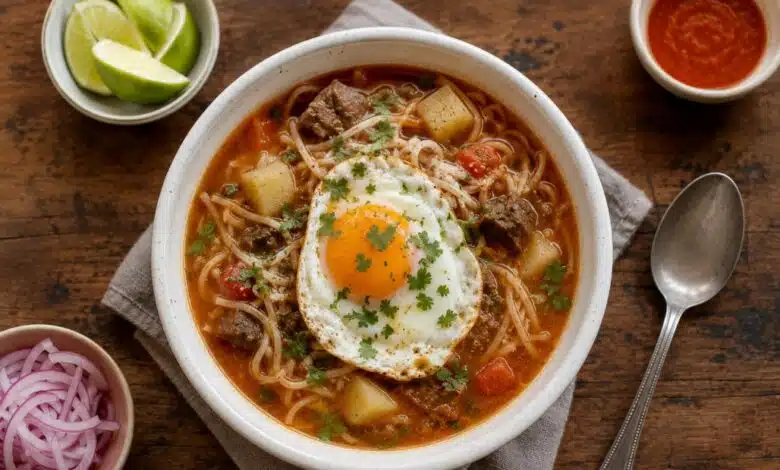
A good sopa criolla recipe is not difficult because the ingredients are unusual. It is difficult because several ordinary-looking steps must happen at the right intensity and in the right order. The beef needs real browning, the tomato and ají panca need enough time to lose their raw edge, the noodles must not overcook, the eggs need gentle heat, and the evaporated milk must enter without turning a clear, savory broth into a heavy cream sauce.
Traditional sopa criolla is made by browning small pieces of beef, developing an aderezo of red onion, garlic, tomato and ají panca, adding hot beef stock, cooking thin noodles in the seasoned broth, gently setting whole eggs and finishing with evaporated milk and oregano. The result should be beefy, tomato-rich, aromatic and lightly creamy, with enough broth surrounding the noodles to remain unmistakably a soup.
Classic Sopa Criolla Recipe
A balanced home version with chopped beef, ají panca, tomato, angel-hair noodles, gently poached eggs, evaporated milk and oregano.
Ingredients
- 1 pound beef sirloin, rump, top round or another tender steak
- 1 teaspoon kosher salt, divided, plus more as needed
- ½ teaspoon freshly ground black pepper
- 2 tablespoons neutral cooking oil
- 1 medium red onion, finely diced
- 3 large garlic cloves, finely minced
- 2 tablespoons ají panca paste
- 2 medium ripe tomatoes, peeled if desired and finely diced
- 1 tablespoon tomato paste
- 6 cups unsalted or low-sodium beef stock
- 4 ounces angel-hair pasta, broken into shorter lengths
- 4 large eggs
- ½ cup evaporated milk
- 1½ teaspoons dried oregano, lightly crushed
- Optional: 1 medium yellow potato, cut into small cubes
- Optional: lime wedges and rocoto sauce for serving
- Optional: 4 slices toasted or pan-fried bread
- Optional: chopped parsley for a fresh finish
Method
Trim any large pieces of exterior fat or tough connective tissue. Cut the beef across the grain into small cubes or short, thin strips. Season with part of the salt and all of the black pepper.
Heat a heavy pot over medium-high heat and add the oil. Brown the beef in one or two uncrowded batches. Let the pieces develop color before turning them. Transfer the browned beef to a plate.
Reduce the heat to medium. Add the onion to the same pot with a small pinch of salt. Cook until soft, lightly golden and no longer sharply aromatic, about 6 to 8 minutes.
Add the garlic and cook briefly without burning it. Stir in the ají panca paste and cook for 2 to 3 minutes, scraping the browned beef residue from the pot.
Add the diced tomatoes and cook until they soften and release their liquid. Stir in the tomato paste and continue cooking until the mixture looks concentrated, glossy and cohesive rather than watery.
Pour in the hot stock gradually while stirring. Return the browned beef and any collected juices. Bring the broth to a gentle boil, then reduce to a steady simmer.
Add the small potato cubes and simmer until nearly tender. Keep the pieces small enough to finish before the noodles become overcooked.
Break the pasta into manageable lengths and scatter it into the simmering broth. Stir immediately so the strands do not form a single bundle. Cook until slightly firmer than you want at the table.
Lower the heat so the surface moves gently rather than boiling violently. Make four spaces in the soup and crack one egg into each. Cover the pot and cook until the whites are set to your preference.
Reduce the heat to low. Add the evaporated milk around the eggs and stir only the surrounding broth. Crush the oregano between your fingers and add it. Taste and adjust salt.
Divide the noodles, beef, broth and eggs among warm bowls. Add fried or toasted bread and serve lime and rocoto separately so each diner can adjust the soup.
This formulation creates a soup with enough liquid for four substantial servings. The noodles will continue absorbing broth after the pot leaves the heat, so the finished soup should look slightly more fluid than you think necessary when it is first served.
The recipe is intentionally moderate in dairy. Half a cup of evaporated milk softens the tomato and ají panca without making the soup taste like cream. A richer restaurant-style bowl can use a little more, while a brighter version can use less.
Why the ingredient list is simple but not interchangeable
Sopa criolla is forgiving about household variation, yet the ingredients do not all perform the same job. Beef broth cannot replace the aromatic work of red onion and ají panca. Milk cannot correct raw tomato. Extra noodles cannot make a weak broth satisfying; they only absorb what is already present.
Beef
Beef provides browned flavor, tender bites and the central savory identity of the soup. Finely chopped steak produces a cleaner restaurant-style texture than large stew cubes.
Ají panca
Ají panca adds warm red color and an earthy, gently fruity chile character. It is usually milder than its color suggests and should be cooked in oil before liquid enters the pot.
Red onion and garlic
Red onion develops sweetness as it cooks. Garlic connects the beef, tomato and chile. Both need enough time to lose raw sharpness without burning.
Tomato
Fresh tomato brightens the broth, while a little tomato paste reinforces color and concentration. Neither should turn the soup into a thick pasta sauce.
Angel-hair pasta
Fine noodles cook quickly and carry the seasoned broth. They are also the first ingredient to lose quality when the soup waits too long.
Evaporated milk
Evaporated milk softens tomato acidity and gives the broth a smooth finish without requiring cream. It should be added near the end over controlled heat.
Egg
A whole egg creates a second stage of eating: the broth tastes one way before the yolk breaks and becomes silkier afterward.
Oregano
Oregano should be crushed just before use so its aroma rises from the bowl. Long boiling weakens its freshest character and can make it taste dusty.
Potato and bread are useful additions rather than mandatory proof of authenticity. Potato gives the soup more weight and can release a small amount of starch into the broth. Fried bread offers crisp contrast and turns into a broth-soaked bite as the meal continues.
Choosing beef that becomes tender before the noodles are done
Sopa criolla is not a long-simmered stew. The beef must become pleasant within a relatively short cooking window. That is why tender steak cuts or thinly sliced moderately tender cuts work better than large cubes intended for hours of braising.
| Beef option | Why it works | How to cut it | Main caution |
|---|---|---|---|
| Sirloin | Tender, widely available and easy to brown | Small cubes or short strips across the grain | Can become dry if cooked too long |
| Rump or top sirloin | Beefy flavor with enough tenderness for quick soup | Thin strips or small dice | Remove tough seams before cutting |
| Top round | Lean and economical | Slice very thinly across the grain | Large pieces may become chewy |
| Skirt or flank steak | Strong beef flavor | Short, thin slices across the grain | The grain direction must be respected |
| Ground beef | Fast, practical and evenly distributed | No cutting required | Produces a texture closer to many a la minuta versions |
Cut across the grain
Muscle fibers appear as visible lines running through a steak. Cutting perpendicular to those lines shortens the fibers and makes each bite easier to chew. This matters especially with flank, skirt and round.
Keep the pieces small
Pieces around half an inch or smaller cook quickly and fit naturally on a spoon. Oversized cubes may remain chewy when the broth and noodles are already ready. Very tiny pieces can dry during browning, so aim for consistency rather than mincing the meat.
Brown in batches
A crowded pot traps steam. Instead of browning, the beef releases water and turns gray. Use a wide pot and brown in two batches when necessary. The dark residue left on the bottom becomes part of the soup once onion, tomato and stock loosen it.
Do not cook the beef fully during browning
The first stage is about color, not complete doneness. The meat returns to the broth and finishes gently. Cooking it through twice can leave lean beef dry.
How to use ají panca without making the soup bitter or harsh
Ají panca paste is the ingredient most likely to distinguish this soup from an ordinary beef-and-tomato noodle soup. It is also an ingredient that needs cooking. Raw paste can taste earthy in an unpleasant way, with a sharp edge that remains separate from the broth.
Add ají panca after the onion has softened and the garlic has become fragrant. Cook it in the oil for several minutes while stirring. The color should deepen and the aroma should become warmer and less raw. Tomato then joins the base and supplies moisture before the chile scorches.
How much ají panca should you use?
Two tablespoons create a distinct but not overpowering flavor in six cups of stock. One tablespoon produces a gentler family-style bowl. Three tablespoons create a darker, more chile-forward soup and may require additional tomato or milk for balance.
Is ají panca very spicy?
It generally contributes more depth and color than intense heat. Individual commercial pastes vary, and some products contain salt, vinegar or preservatives. Taste a small amount and read the label before seasoning the soup aggressively.
Can dried ají panca be used?
Dried peppers can be seeded, softened in hot water and blended into a smooth paste. Strain the paste when the skins remain coarse. Homemade paste gives more control over salt and acidity but requires additional preparation.
What can replace ají panca?
No substitute reproduces it exactly. A mixture of mild ancho chile paste and a little smoked or sweet paprika can provide color and low heat, but the finished soup will taste different. Avoid using a very hot chile paste in the same quantity.
Better substitution principle: choose a mild, dark red chile with fruitiness and low heat. Do not replace ají panca with an aggressively hot sauce merely because both ingredients are red.
The aderezo determines whether the finished soup tastes developed
The aderezo is not a decorative step. It is the flavor engine of the recipe. Red onion, garlic, ají panca, tomato and tomato paste need to become a cohesive mixture before they are diluted with stock.
Stage one: softened onion
The onion should lose its raw crunch and sharp smell. A little golden color is welcome, but dark burning will make the soup bitter.
Stage two: cooked chile
Ají panca should fry gently in the oil until its aroma becomes rounded. Stir frequently because concentrated paste can catch on the pot.
Stage three: concentrated tomato
Fresh tomato releases water, then thickens. Tomato paste should darken slightly and lose its canned rawness.
What should the aderezo look like?
It should look glossy and concentrated, with no large pool of watery tomato surrounding the onion. The ingredients should appear to belong together. When a spoon passes through the mixture, the path should remain visible for a moment before closing.
What should it smell like?
The aroma should be sweet-savory, beefy from the browned residue and warmly peppery. Raw garlic should no longer dominate. Ají panca should smell deeper than it did when first added.
Why not add the stock earlier?
Once liquid enters, the temperature drops and the ingredients begin simmering rather than frying. Simmering can soften raw aromatics, but it does not create the same concentrated flavor as properly working the aderezo first.
A weak aderezo cannot be fully repaired by adding more salt, bouillon or hot sauce later. Those ingredients may make the soup louder without making it more developed.
Beef stock, water or bouillon: choosing the liquid
Good beef stock gives sopa criolla depth before the meat, tomato and ají panca begin contributing. It does not need to be intensely reduced. A very salty or gelatin-heavy stock can make the finished soup feel heavy after noodles, egg and milk are added.
Homemade beef stock
Homemade stock offers control over salt and can provide body from bones and connective tissue. A relatively clean stock made with bones, beef trimmings, onion and water is enough. Strong celery and carrot flavors can shift the soup toward a more conventional Western beef soup profile.
Store-bought stock
Choose unsalted or low-sodium stock whenever possible. The broth reduces slightly during cooking, and commercial products can become aggressively salty. Taste before adding the final salt.
Water
Water can work when the beef is browned well and the aderezo is concentrated. The soup will be lighter and may need a longer gentle simmer before noodles are added. Water is preferable to a poor-quality stock with a dominating artificial flavor.
Bouillon
Bouillon is practical, but use less than the package suggests at first. Ají panca, tomato, oregano and evaporated milk should remain detectable. A broth tasting only of bouillon loses the soup’s layered identity.
Angel-hair noodles require minute-by-minute attention
Angel hair suits sopa criolla because it cooks quickly and carries broth without becoming the main event. That advantage becomes a problem when the soup waits. Thin strands continue softening after the heat is turned off and keep absorbing liquid in the bowl.
Break the noodles before adding them
Full-length strands are awkward to serve with a spoon and can clump. Break them into thirds or quarters over the pot. Scatter them rather than dropping one compact handful into the center.
Stir immediately
The first thirty seconds matter. Separate the strands before their surfaces become sticky. After that, stir gently so the eggs can later remain intact.
Stop before perfect tenderness
When the noodles feel just slightly firmer than desired, move to the egg stage. They will continue cooking while the eggs set and the milk is added.
Cooking for a delayed meal
When dinner cannot be served immediately, cook the noodles separately and place them in individual bowls. Ladle hot finished broth over them. This is less traditional as a one-pot method but protects texture.
Alternative noodles
| Noodle | Result | Adjustment | Best use |
|---|---|---|---|
| Angel hair | Delicate and integrated | Add near the end and serve quickly | The most recognizable everyday style |
| Thin spaghetti | More chew and better holding | Allow additional cooking time | Takeout or a meal that may wait briefly |
| Regular spaghetti | Heavier and more pasta-forward | Break into short lengths | A very filling family dinner |
| Fettuccine | Broad, substantial noodles | Use less by weight | A restaurant-inspired variation |
| Gluten-free pasta | Varies by grain and brand | Cook separately for greater control | A deliberate gluten-free adaptation |
Three ways to add egg—and why they produce different bowls
The classic whole-egg method creates an attractive serving and allows each person to receive one egg. Other methods are useful for speed, delivery or a more integrated texture.
Whole eggs poached in the soup
Reduce the broth to a gentle simmer. Make small spaces among the noodles and crack eggs into those spaces. Covering the pot traps steam and helps set the tops without turning the broth into a violent boil. Avoid stirring across the eggs.
For soft yolks, begin checking after several minutes. For fully set eggs, continue gently until the centers are firm. Exact timing depends on egg temperature, pot width and broth movement.
Fried eggs added to individual bowls
Fried eggs create crisp edges and give each bowl a composed restaurant presentation. They also allow precise control over yolk doneness. The disadvantage is another pan and a richer overall dish.
Beaten egg streamed into the broth
Beat the eggs lightly and pour them into gently simmering broth in a thin stream while stirring slowly. This creates soft ribbons. The method is fast and distributes egg through every serving, moving the texture closer to many sopa a la minuta preparations.
Can the egg be omitted?
Yes. The soup will be lighter and the beef, tomato and ají panca will feel more direct. Increase the beef slightly or include potato when you still want a substantial meal.
How to add evaporated milk without dulling the soup
Evaporated milk is concentrated enough to round the broth with a relatively small quantity. It reduces the sharpness of tomato and makes ají panca feel warmer and softer. It should support the broth, not cover it.
Lower the heat first
Do not pour milk into a violently boiling pot. Reduce the heat after the eggs have mostly set. Add the milk gradually around the eggs and stir only the free broth.
Do not boil for a long time afterward
Once milk is incorporated, the soup needs only enough heat to return to serving temperature. Prolonged boiling can separate the dairy, overcook the eggs and soften the noodles.
How much milk creates the right texture?
Half a cup for six cups of broth produces gentle creaminess. Three-quarters of a cup creates a richer, lighter-colored bowl. A quarter cup gives only subtle softness. Add less first because more can always be incorporated.
Regular milk versus evaporated milk
Whole milk works but provides less concentrated dairy flavor and slightly thins the broth. Cream creates a heavier restaurant-style finish and should be used sparingly. Unsweetened canned evaporated milk is not the same product as sweetened condensed milk.
Dairy-free alternatives
Unsweetened oat milk is relatively neutral but can make the broth slightly sweeter. Unsweetened soy milk contributes more protein and can separate under high heat. Coconut milk changes the flavor substantially and is not a neutral substitute. A dairy-free version can simply omit milk and use extra stock.
Recipe variations that change the experience without losing the structure
With yellow potato
Add small cubes of yellow potato before the noodles. The potato should be nearly tender when the pasta enters. It contributes softness and a little natural thickening, making the soup more filling.
With ground beef
Brown one pound of ground beef, breaking it into small pieces. Remove excess fat only when the pot looks greasy. Ground beef produces meat in every spoonful and shortens preparation.
With fried egg
Prepare the soup without cracking eggs into the pot. Fry one egg per serving and place it over the noodles immediately before serving. This version photographs beautifully and allows each diner to choose yolk doneness.
Without milk
Omit the evaporated milk and add a little extra stock. The tomato and ají panca will taste brighter, and the broth will remain darker and more transparent. Lime should be added carefully because the soup already has less dairy to soften acidity.
Extra-creamy restaurant style
Use three-quarters of a cup of evaporated milk or replace a small portion with cream. Keep the broth sufficiently loose and increase oregano slightly so the aroma remains visible against the richer base.
With toasted bread instead of fried bread
Brush bread lightly with oil and toast until crisp. This gives the textural contrast of fried bread with less added fat. Serve it separately so diners decide when to soak it.
Spicier sopa criolla
Add a small amount of ají amarillo to the aderezo or serve rocoto sauce at the table. Increasing ají panca alone deepens flavor and color more predictably than it increases heat.
Chicken variation
Chicken and chicken stock can follow the same technique, but the result is an adaptation rather than the classic beef-centered profile. Use thigh meat for greater tenderness and flavor.
Vegetarian adaptation
Brown mushrooms deeply and use a strong vegetable or mushroom broth. Retain onion, garlic, tomato, ají panca, noodles, oregano, milk and egg. A vegan version also requires plant milk and omission of egg.
The mistakes most likely to spoil the soup
The soup tastes flat
Add salt in small increments and allow each addition to dissolve. A little crushed oregano can improve aroma. A few drops of lime may brighten the bowl, but acidity cannot replace weak beef stock or an underdeveloped aderezo.
The soup tastes too acidic
Simmer the broth a little longer before adding noodles, then incorporate evaporated milk gradually. Avoid correcting with sugar unless the tomato is unusually harsh; sweetness can create a different imbalance.
The soup is too thick
Add hot unsalted stock or water. Stir gently so the noodles loosen without breaking the eggs. Adjust salt only after the consistency is restored.
The soup is too salty
Dilute with unsalted stock or water. Additional potato can absorb some seasoned liquid but does not remove salt from the pot. Avoid adding more pasta as the only correction because it may create a dense texture.
The milk separated
Reduce the heat immediately and stop boiling. Gentle stirring may make the appearance more cohesive, but severe curdling cannot be fully reversed. The soup may still be safe and flavorful even when the texture is less smooth.
The best make-ahead plan separates the broth from the fragile ingredients
Complete sopa criolla is at its best immediately after the noodles and eggs are cooked. The base, however, can be prepared ahead successfully. This makes the soup practical for guests without sacrificing texture.
Brown the beef, prepare the onion–tomato–ají panca base and add the stock.
Transfer it to shallow containers or use an ice bath around the pot. Refrigerate once it has cooled safely.
Bring the broth to a simmer and check seasoning before adding noodles.
These components should be cooked close to service for the best texture.
Add the final dairy and herb only after the reheated broth and new eggs are ready.
Refrigerating leftovers
Transfer leftovers to covered containers and refrigerate promptly. The noodles will absorb broth overnight, so the soup will be thicker the next day. Add water or unsalted stock during reheating.
How long does it keep?
Use refrigerated leftovers within a short, reasonable period and follow standard food-safety practices for cooked meat, dairy and eggs. Discard soup that was left at room temperature for an extended time or shows signs of spoilage.
Can sopa criolla be frozen?
The beef-and-aderezo broth freezes better than the completed soup. Noodles become soft, potato can turn grainy, dairy may separate and cooked egg changes texture. Freeze the base without noodles, eggs and milk, then finish after thawing.
Reheating
Warm the soup gradually in a saucepan. Avoid vigorous boiling. A microwave can be used in short intervals with gentle stirring, but whole eggs may heat unevenly. Ensure the soup is thoroughly hot before serving.
How to serve sopa criolla as a starter or a complete meal
The same recipe can occupy different positions in a meal. A modest bowl with one egg can begin a larger Peruvian dinner. A generous portion with potato, fried bread and additional beef is substantial enough for lunch or dinner.
Fried bread
Pan-fry slices in a thin layer of oil until crisp and golden, then drain them briefly. Place bread at the edge of the bowl rather than fully submerging it. The diner can enjoy part of it crisp and allow the rest to absorb broth.
Toasted bread
Toast is easier and lighter. A sturdy slice works better than very soft sandwich bread because it remains intact after contact with the soup.
Lime
Serve lime wedges rather than squeezing juice into the entire pot. Individual tomatoes and stocks vary in acidity. Each diner can decide whether the bowl needs brightness.
Rocoto sauce
Ají panca usually provides flavor more than strong heat. Rocoto lets spice-seeking diners increase intensity without changing every serving.
Fresh herbs
Parsley adds clean color and freshness. Use cilantro sparingly because its distinct aroma can move the soup away from the oregano-led profile.
What to serve afterward
When the soup is small, follow it with a shared plate such as lomo saltado, anticuchos or a lighter seafood dish. A full bowl with noodles, egg, beef and potato needs little more than bread.
Prefer to order the soup instead of cooking it?
The Best Sopa Criolla Near Me guide identifies U.S. restaurants with public menu evidence and explains how to confirm current availability, ingredients, pickup and delivery before making the trip.
How to scale the recipe without losing balance
Doubling a soup recipe is not always as simple as doubling every seasoning. Beef, stock, noodles and eggs scale predictably. Salt, ají panca and oregano should be increased more cautiously and adjusted by taste.
| Ingredient | 2 servings | 4 servings | 8 servings |
|---|---|---|---|
| Beef | ½ pound | 1 pound | 2 pounds |
| Beef stock | 3 cups | 6 cups | 12 cups |
| Angel-hair pasta | 2 ounces | 4 ounces | 8 ounces |
| Eggs | 2 | 4 | 8 |
| Evaporated milk | ¼ cup | ½ cup | 1 cup |
| Ají panca | 1 tablespoon | 2 tablespoons | Begin with 3½ tablespoons and adjust |
| Oregano | ¾ teaspoon | 1½ teaspoons | Begin with 2½ teaspoons and adjust |
Use a wider pot for larger batches
Eight servings need surface area for browning beef and space for whole eggs. A narrow pot crowds the meat and places the eggs too close together. Brown the beef in several batches even when the final soup fits in one pot.
Consider cooking eggs separately
Poaching eight eggs evenly inside a noodle-filled pot can be awkward. Prepare poached or fried eggs separately and place one into each bowl. This also accommodates diners who prefer different yolk doneness.
Hold noodles separately for a gathering
For a buffet or delayed meal, cook noodles separately and portion them into bowls. Keep the broth hot without boiling dairy for a long period. Add an egg and ladle broth over the noodles when each person is ready.
Cooking sopa criolla without specialty equipment
A heavy pot is helpful because it browns beef evenly and reduces the risk of burning the aderezo. An enameled Dutch oven, stainless-steel soup pot or wide heavy saucepan can all work.
Knife
A sharp chef’s knife makes small beef cubes and fine onion easier to produce. Consistent pieces cook evenly and fit naturally on a spoon.
Wooden spoon or heat-safe spatula
Use it to scrape browned residue while the onion and tomato cook. Those browned bits contribute flavor and should not remain stuck to the pot.
Ladle
A ladle helps distribute broth and solids evenly. When eggs are poached in the pot, use a broad spoon to lift each egg without breaking it.
Separate small bowl for eggs
Crack each egg into a cup before sliding it into the soup. This prevents shell fragments from entering the pot and makes placement more controlled.
No blender is required
Commercial ají panca paste and finely diced tomato create a smooth enough base. A blender is useful only when making chile paste from dried peppers or when a completely smooth aderezo is preferred.
How to know the soup is ready
Timing alone cannot answer this because noodle brands, beef cuts, egg temperatures and pot dimensions differ. Use several visual and sensory signals together.
Serve once all of those conditions are present. Waiting for the soup to become “more finished” after the noodles and eggs are ready usually makes it worse rather than better.
A practical cooking schedule for a relaxed dinner
The recipe feels easiest when the preparation is divided according to what can wait and what cannot. Beef cutting, onion chopping and bread preparation can happen early. Noodles, eggs, milk and oregano belong close to service.
Cut the beef, prepare homemade ají panca paste, make stock and dice onion. Keep ingredients covered and refrigerated.
Brown the beef and build the aderezo. Add the stock and simmer the base gently.
Bring the soup to a steady simmer, add potato when using it and prepare the bread.
Add angel hair, then place the eggs once the noodles are nearly ready.
Add evaporated milk and freshly crushed oregano, adjust salt and move the pot to the table.
This schedule prevents the most common hosting problem: a beautiful pot that waits twenty minutes while guests arrive and becomes thick with overcooked noodles.
Why homemade sopa criolla may differ from a restaurant bowl
Restaurants can maintain concentrated beef stock, use wider burners and prepare components in advance. A restaurant may finish each serving with a separately fried egg, bread and herbs. Home cooks often assemble everything in one pot.
Some restaurant versions are creamier, saltier or more heavily garnished because they are designed to make an immediate impression. Home versions can be lighter and more adaptable, especially when the cook controls dairy and noodle quantity.
A restaurant may also use ground beef, wider noodles or rice. Those choices do not make the homemade recipe incorrect. Sopa criolla has a recognizable structure with room for household and commercial variation.
The goal at home should not be to reproduce one photograph exactly. It should be to create a cohesive broth with browned beef, properly cooked ají panca, tender noodles, egg, milk and oregano in a proportion you enjoy.
Questions about making sopa criolla
These answers address the substitutions, timing and texture problems that matter most when cooking the soup at home.
What is sopa criolla made of?
Sopa criolla is commonly made with chopped beef, red onion, garlic, tomato, ají panca, beef stock, thin noodles, egg, evaporated milk and oregano. Potato and fried bread are common additions, while lime and rocoto may be served at the table.
What cut of beef is best for sopa criolla?
Use a tender or moderately tender cut that cooks quickly, such as sirloin, rump, top sirloin or thinly sliced top round. Cut the meat into small cubes or short strips across the grain. Large stew-meat cubes may remain chewy because the soup does not simmer for several hours.
What can I substitute for ají panca?
No substitute tastes exactly the same. A mild ancho chile paste combined with a little sweet or smoked paprika can provide dark red color and gentle chile depth. Avoid replacing ají panca with the same amount of an extremely hot chile paste.
Does sopa criolla need evaporated milk?
Evaporated milk is common and gives the broth a rounded, gently creamy finish, but it is not mandatory in every household version. The soup can be made with regular whole milk, a small amount of cream or no dairy. Add dairy near the end over low heat.
What noodles are used in sopa criolla?
Angel-hair pasta is the most recognizable choice because it cooks quickly and absorbs the seasoned broth. Thin spaghetti, regular spaghetti, linguine and fettuccine also appear in home and restaurant versions. Wider noodles create a heavier bowl and require more cooking time.
How is the egg cooked in sopa criolla?
Whole eggs can be cracked directly into the gently simmering soup and poached until the whites set. Restaurants may place a fried egg over each bowl. Beaten egg can also be streamed into the broth, producing soft ribbons similar to many sopa a la minuta preparations.
Why did my sopa criolla become too thick?
The noodles continued absorbing broth during cooking or storage. Add hot unsalted beef stock or water until the desired consistency returns. Next time, use fewer noodles, stop cooking them earlier or keep them separate when the soup will not be served immediately.
Can sopa criolla be made ahead?
The beef, aderezo and broth can be prepared ahead and refrigerated. For the best texture, reheat the base and add fresh noodles, eggs, evaporated milk and oregano shortly before serving. Completed soup thickens because the noodles continue absorbing liquid.
Can you freeze sopa criolla?
Freeze the beef-and-tomato broth base without noodles, eggs, milk or potato when possible. Those ingredients lose quality after freezing. Thaw and reheat the base, then finish the soup with fresh noodles, eggs, dairy and oregano.
Where can I find sopa criolla near me?
Check full-service Peruvian restaurants and search current menus for sopa criolla, sopa a la minuta or Peruvian beef noodle soup. Confirm availability before making a long trip because soups may be rotating specials or unavailable during certain service periods.


