
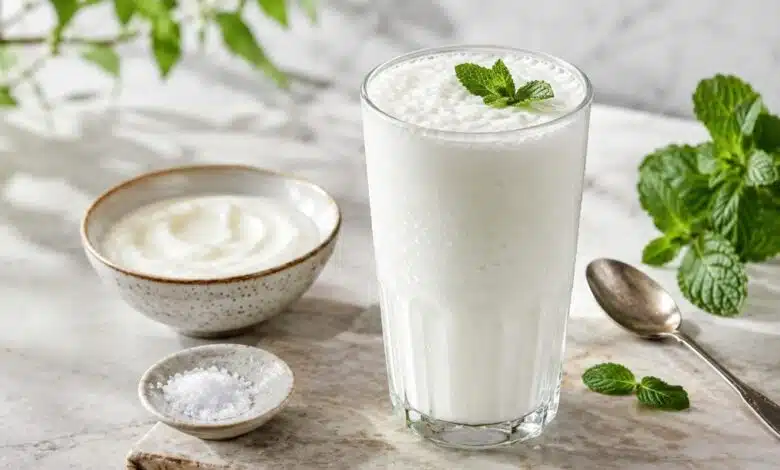
Ayran is a cold, savory yogurt drink made with yogurt, water, and a little salt. It tastes tangy, lightly salty, creamy yet refreshing, and it is especially good beside kebabs, grilled meat, rice, pide, börek, and other richly seasoned foods.
In this guide
What is ayran?
Ayran is one of those drinks that makes immediate sense once it is placed next to food. On its own, the first sip can surprise people who expect yogurt drinks to be sweet. Ayran is not a smoothie, dessert shake, or fruit-flavored dairy drink. It belongs to the savory side of the table. Its job is to cool, refresh, soften spice, and provide a clean contrast to roasted, grilled, salty, or heavily seasoned dishes.
The simplest ayran contains only three ingredients: plain yogurt, water, and salt. Those ingredients are mixed until the yogurt becomes drinkable and evenly smooth. Depending on the yogurt and the amount of water, the final drink can be rich and spoon-coating, light and thirst-quenching, or somewhere between the two. In restaurants, it may arrive in a glass with a substantial white foam. In grocery stores, it is commonly sold in sealed cups, bottles, or larger family-size containers.
Türkiye is the place most international diners associate with ayran, and it is deeply embedded in everyday Turkish dining. It is sold with fast food, served in traditional restaurants, poured beside home-cooked meals, and carried in convenience-store refrigerators. Official Turkish tourism sources describe it as a yogurt drink made with yogurt, water, and salt and emphasize how commonly it accompanies the Turkish table.
At the same time, ayran belongs to a broader family of diluted yogurt drinks found across a wide region. Similar beverages appear under names such as doogh, tan, chalap, and other local terms. They are related, but they are not always identical. Herbs, carbonation, mineral water, sourness, thickness, and salt level can vary from one country, household, or brand to another.
What does ayran taste like?
Ayran tastes tangy, gently salty, milky, and clean. The flavor is usually more refreshing than rich because water loosens the yogurt and reduces its heaviness. Good ayran should still taste clearly of yogurt, but it should flow easily and leave the mouth feeling cooled rather than coated.
The exact taste depends heavily on the yogurt. A mild yogurt creates a soft, approachable drink with only a little acidity. A more cultured or tart yogurt makes a sharper ayran with a noticeable fermented edge. Full-fat yogurt gives roundness and body, while lower-fat yogurt tends to feel thinner and more direct. Salt should sharpen the flavor rather than dominate it.
The easiest way to imagine the flavor
Think of plain yogurt transformed into a cold table beverage. It has the tang of yogurt, the salinity of a very lightly seasoned soup, and the refreshing quality of chilled water. It is not sweet, and traditional plain ayran does not need sugar.
Is ayran sour?
It can be pleasantly tart, but it should not taste spoiled or aggressively sour. A stronger tang is normal when the yogurt itself is highly cultured. Commercial ayran is often milder and more standardized than homemade versions.
Is ayran salty?
Yes, but usually only lightly. Salt is one of its defining ingredients. Some brands and restaurant versions are noticeably saltier than others, and this is one reason people often compare labels when buying packaged ayran.
What is ayran made of?
Traditional plain ayran is built from three ingredients, but the quality and proportion of each one changes the final drink.
Plain yogurt
The yogurt provides flavor, acidity, body, and the characteristic white color. Unsweetened yogurt is essential. Greek-style yogurt can work, but because it is strained and thick, it normally needs more water and more vigorous mixing. Standard whole-milk yogurt produces a texture closer to many everyday restaurant and packaged versions.
Water
Water turns yogurt into a beverage. Cold water is best because ayran is normally served chilled. Still water gives a classic smooth result. Sparkling or mineral water is more common in related regional drinks and modern variations, although some people also use it for a livelier homemade ayran.
Salt
Salt defines ayran as a savory drink. A small amount can make the yogurt taste brighter and cleaner. Too much, however, can overwhelm both the drink and the meal. It is easiest to begin with very little, blend, taste, and adjust.
Optional additions
Fresh mint is the most familiar addition, especially in warm weather. Dried mint can also be used, though it gives a more herbal and slightly rustic flavor. Ice is common when ayran is prepared for immediate drinking. Cucumber, garlic, and herbs move the drink toward a different family of yogurt preparations and are better treated as variations rather than the default formula.
How is ayran made?
At home, ayran can be made in less than five minutes. The method is simple, but the order and mixing technique affect smoothness and foam.
Start with yogurt
Place cold plain yogurt in a bowl, jug, blender, or large measuring cup. Stir it briefly on its own to remove dense lumps.
Add cold water gradually
Pour in part of the water and whisk until fully smooth before adding the rest. Gradual dilution prevents floating yogurt clumps.
Season lightly
Add a small pinch of salt. Blend or whisk again, then taste. The drink should be savory but still refreshing.
Create foam
Use a blender, milk frother, immersion blender, or vigorous whisking to trap air and create a light white foam on top.
Serve immediately
Pour into cold glasses. Add ice or mint only when desired, and stir again if the drink has been standing.
What is the best yogurt-to-water ratio for ayran?
There is no single universal ratio because yogurt thickness varies. A practical starting point is approximately equal parts yogurt and water by volume. From there, adjust according to whether you want a richer restaurant-style drink or a lighter summer drink.
| Style | Starting ratio | Result | Best use |
|---|---|---|---|
| Rich | 2 parts yogurt to 1 part water | Creamy and full-bodied | Small servings with grilled food |
| Classic | 1 part yogurt to 1 part water | Smooth and clearly yogurt-forward | Everyday meals |
| Light | 1 part yogurt to 1.5 parts water | Thin and very refreshing | Hot weather and spicy food |
Greek yogurt may require considerably more water than ordinary yogurt. Very loose yogurt may require less. The best guide is texture: ayran should pour easily without feeling watery or separated.
Why is Turkish ayran sometimes so foamy?
Foam is created by mixing air into the yogurt-and-water mixture. In some restaurants, especially places known for freshly prepared ayran, the foam is part of the appeal. It gives the drink a soft, almost cloudlike top and signals that it has been vigorously mixed rather than simply stirred.
A blender produces foam quickly, but a traditional-looking result does not require special machinery. Two covered containers can be used to pour the drink back and forth from a little height. A handheld frother also works well. The foam is primarily a texture feature; it does not mean the drink contains cream or egg white.
For stable foam: Use cold yogurt, do not over-dilute the mixture, and blend immediately before serving. Foam naturally settles, so serve the drink soon after mixing.
How do you drink ayran?
Ayran is normally served cold and drunk with a meal. It is common at lunch and dinner, but there is no strict time rule. It can accompany a quick street-food meal, a family table, a picnic, or a full restaurant spread.
Serve it very cold
Cold temperature is part of the drink’s identity. Chilling softens the yogurt aroma, sharpens refreshment, and makes the salty-tangy flavor feel cleaner. Packaged ayran should remain refrigerated. Homemade ayran can be mixed with chilled ingredients or briefly rested in the refrigerator before serving.
Stir before drinking
Natural separation can occur, especially in homemade ayran and minimally stabilized products. A quick shake or stir returns it to an even consistency. Separation alone does not necessarily mean spoilage, but unusual odor, swelling, or an expired package should not be ignored.
Drink it beside food, not as dessert
Ayran is usually part of the savory course. It plays a role similar to a cooling side sauce, but in drinkable form. It is especially satisfying when the meal includes char, fat, heat, bread, or rice.
What food goes with ayran?
Ayran is one of the easiest drinks to pair because it does not compete with savory food. It is particularly useful when a dish is grilled, spicy, oily, smoky, or intensely seasoned.
Foods that may feel less natural
Sweet desserts, delicate seafood, and strongly sweet-and-sour dishes are not impossible pairings, but they are less traditional. Ayran is at its best when the meal already welcomes yogurt, salt, or cooling dairy flavors.
Ayran vs kefir, lassi, doogh, and other yogurt drinks
Many cultures have yogurt-based or fermented dairy drinks, and grocery-store labels sometimes blur the differences. The most useful distinction is not which drink is “authentic,” but what ingredients and flavor profile a specific product has.
| Drink | Typical flavor | Common ingredients | Main difference from ayran |
|---|---|---|---|
| Ayran | Tangy, salty, clean | Yogurt, water, salt | The reference point: simple and savory |
| Kefir | Tart, fermented, sometimes yeasty | Milk fermented with kefir cultures | Fermented as a drink rather than yogurt diluted with water |
| Lassi | Sweet, fruity, or savory | Yogurt, water or milk, spices or fruit | Often sweeter and more varied in flavor |
| Doogh | Tangy, salty, often herbal | Yogurt, water, salt, sometimes mint and carbonation | Frequently associated with herbs or sparkling texture |
| Tan | Salty and refreshing | Cultured dairy, water, salt | Regional production and texture vary |
Ayran vs kefir
Kefir is usually fermented directly as a milk drink using kefir cultures. Ayran begins with yogurt that is diluted and seasoned. Kefir may taste more complex, fizzy, or yeasty, while ayran is usually cleaner and saltier.
Ayran vs lassi
Lassi covers a broad family of South Asian yogurt drinks. Sweet mango lassi is very different from ayran, but savory lassi can be closer. Even then, savory lassi may include cumin, herbs, chili, or other spices that are not required in plain ayran.
Ayran vs doogh
Doogh and ayran are close relatives. Doogh is strongly associated with Iranian and neighboring cuisines and may include mint, other herbs, or carbonation. Some packaged versions of each drink can taste almost interchangeable, while traditional preparations may be more distinct.
Where does ayran come from?
Ayran is most closely identified internationally with Turkish cuisine, where it is an everyday national favorite and a standard companion to many meals. The wider story is regional: people across a vast area have long mixed cultured dairy with water to make it easier to drink, more refreshing, and suitable for hot climates and hearty foods.
Because similar yogurt drinks exist across Türkiye, Iran, the Caucasus, the Balkans, Central Asia, and the Middle East, claims about one single point of invention are difficult to prove and often become cultural arguments rather than useful food history. A better approach is to understand ayran as the Turkish name and expression of a broad, old tradition of savory diluted yogurt beverages.
Common regional relatives
These names should not be treated as perfectly interchangeable. A restaurant, household, or brand may use a familiar regional label while following its own recipe.
Where can you buy ayran?
Ayran is easiest to find in Turkish, Middle Eastern, Balkan, Caucasian, halal, and international grocery stores. It is often stocked beside kefir, drinkable yogurt, labneh, and other refrigerated dairy products. Turkish restaurants and kebab shops frequently sell individual cups or bottles.
What to look for on the label
What is the best ayran brand?
The answer depends on where you live and what texture you prefer. A good first comparison is to buy one thick version and one lighter version, then taste both with the same meal. Brand loyalty often comes down to salt level, yogurt tang, and whether the drink feels creamy or clean.
Easy homemade ayran recipe
This simple method makes two small glasses and can be adjusted without special equipment.
Ingredients
Method
Whisk the yogurt until smooth. Add half the water and whisk again. Add the remaining water and salt, then blend for 20 to 30 seconds or whisk vigorously. Pour into chilled glasses. For a stronger foam, use a handheld frother immediately before serving.
How to fix homemade ayran
Can you make ayran without a blender?
Yes. A whisk, fork, sealed jar, cocktail shaker, or two jugs can all work. The blender mainly makes the drink smoother and creates foam faster. When using a jar, leave enough empty space for vigorous shaking.
Is ayran healthy?
Ayran can be a useful part of a balanced diet, but “healthy” depends on the product, portion, and individual dietary needs. Because it is made from yogurt, it may provide protein, calcium, and live cultures when the yogurt contains them. Dilution often makes it lighter per glass than eating the same volume of undiluted yogurt.
The main point to watch is sodium. Traditional flavor includes salt, and packaged brands vary. People who have been advised to limit sodium should check the nutrition label and choose lower-sodium products or make a lightly salted version at home. Nutrition values also change with yogurt fat level, serving size, and added ingredients.
Does ayran contain probiotics?
It may contain live cultures if it is made from yogurt that retains active cultures and if processing has not reduced them. The label is the best guide for a packaged product. It is safer to say that ayran is made from cultured dairy than to assume every brand provides the same probiotic amount.
Is ayran good for hydration?
Ayran contains water and is commonly enjoyed as a refreshing drink, especially in warm weather. However, it should not be treated as a medical rehydration solution. Its salt content varies, and anyone dealing with dehydration, illness, or a medical condition should follow appropriate medical guidance.
Is ayran high in calories?
Calorie content depends mainly on the yogurt and dilution ratio. A drink made with full-fat yogurt will be richer than one made with low-fat yogurt, while a more diluted ayran usually contains fewer calories per glass. Packaged products should be compared by serving size rather than by container alone.
Does ayran contain lactose?
Usually yes, because it is a dairy drink. Fermentation may reduce some lactose compared with fresh milk, but ayran is not automatically lactose-free. Lactose-free yogurt can be used for homemade ayran, and some markets sell lactose-free packaged versions.
How long does ayran last?
Commercial ayran should be kept refrigerated and used according to the package date and storage instructions. Once opened, it is best consumed promptly. Homemade ayran is at its best on the day it is mixed because the foam fades and separation increases over time.
When storing homemade ayran, use a clean covered container and refrigerate it immediately. Stir or shake before serving. Discard it if it develops an unusual smell, visible mold, unexpected gas pressure, or a flavor that seems different from normal yogurt tang.
Can ayran be frozen?
Freezing is not ideal. Yogurt can separate and become grainy after thawing, so the restored drink may be less smooth. Since ayran is quick to make, preparing a fresh small batch is usually better.
Why ayran works so well with food
Ayran succeeds because it solves several dining problems at once. Cold temperature refreshes. Yogurt acidity brightens heavy food. A little salt connects the drink to the savory plate. Its creamy texture softens heat without becoming as dense as a sauce. And because it contains no sweetness in its traditional form, it does not compete with garlic, onion, meat, herbs, or toasted bread.
This balance also explains why people who dislike drinking plain milk may still enjoy ayran. It behaves less like a glass of dairy and more like an active part of the meal. The drink has enough flavor to matter, but not so much that it dominates.
Is ayran an acquired taste?
For people raised on sweet yogurt drinks, the first sip may feel unusual. The easiest introduction is a mild, cold ayran with a familiar grilled meal. Once the brain stops expecting sugar, the drink often becomes surprisingly logical.
How to order ayran at a Turkish restaurant
Simply ask for ayran. Restaurants may offer packaged ayran, freshly mixed ayran, or a foamy house version. Fresh ayran is often served in a glass or metal cup, while packaged ayran may arrive sealed.
When the menu lists “yayık ayran,” it may refer to a churned or buttermilk-style preparation with a distinct tang and texture, though usage varies. “Köpüklü ayran” emphasizes foam. Mint may be included or offered as a garnish.
Good first order: Choose ayran with döner, Adana kebab, köfte, lahmacun, pide, or börek. These pairings make its purpose immediately clear.
Common misunderstandings about ayran
“Ayran is just salty milk.”
It is made from yogurt, not simply milk and salt. Fermentation provides the tang and body that define the drink.
“Ayran and kefir are the same.”
They are both cultured dairy drinks, but the production method and flavor are different. Ayran is generally yogurt diluted with water and seasoned with salt.
“Traditional ayran should be sweet.”
Plain ayran is savory. Sweetened yogurt drinks belong to other traditions and product categories.
“Foamy ayran contains cream.”
The foam normally comes from air introduced during vigorous mixing. It does not require cream.
“Any separation means the drink is spoiled.”
Natural separation can occur. Shaking often restores the texture. Spoilage should be judged by the date, package, smell, appearance, and overall condition, not separation alone.
Ayran in everyday life: from home kitchens to fast-food counters
One reason ayran matters so much is that it is not reserved for ceremonial meals or specialty restaurants. It belongs to ordinary daily eating. A student may drink it with a quick lunch, a family may place a large bottle on the dinner table, and a roadside restaurant may serve it in a tall metal cup beside grilled meat. That everyday presence gives ayran a different cultural role from beverages that are saved for holidays, formal dinners, or dessert.
In many places, ayran is also a practical choice. It is portable, filling without being heavy, and familiar enough to work with a wide range of foods. Packaged cups are common because they fit naturally into takeaway meals. Freshly mixed ayran, by contrast, feels more like part of the restaurant experience, especially when it arrives with a dense cap of foam.
Why restaurants often serve it with meat
Grilled meat brings smoke, fat, salt, and spice. Ayran responds with cold temperature, acidity, and a smooth texture. It does not erase the character of the dish; it resets the palate between bites. That is why it feels so natural beside döner, köfte, lamb skewers, chicken kebabs, and minced-meat dishes.
Why it also works with bread and pastry
Börek, pide, and filled breads can be rich even when they contain no meat. Cheese, butter, oil, and hot dough create a dense mouthfeel. Ayran lightens that experience and adds a refreshing contrast. In practical terms, it does what a side of yogurt might do, but in a form that can be sipped.
Fresh ayran, packaged ayran, and restaurant ayran
Not all ayran tastes the same, even when the ingredient list looks nearly identical. The preparation method, yogurt base, salt level, and amount of water can change the drink dramatically.
Freshly mixed ayran
Fresh ayran often tastes brighter and more aromatic because it is served immediately after mixing. It may have a softer texture and a noticeable foam. Since it is not designed for long shelf life, it can feel more natural and less uniform from one restaurant to another.
Packaged ayran
Packaged ayran is designed for consistency. The texture is usually even, the salt level is predictable, and the drink is easy to carry. Some brands are very light, while others are thick enough to feel almost like drinkable yogurt. Stabilizers or processing choices may affect texture, so two products with similar front labels can still drink differently.
Restaurant house ayran
House ayran can sit anywhere between the two. Some restaurants use a standard packaged base and froth it before serving. Others prepare it from yogurt in the kitchen. A generous foam, a metal cup, or a clay vessel can make the presentation memorable, but the most important signs are balance, freshness, and a clean yogurt flavor.
Tasting method: Compare the drink before and after taking a bite of food. Ayran may seem plain alone but much more complete once paired with a hot, salty, or spicy dish.
How to choose yogurt for homemade ayran
The yogurt is the foundation of the drink, so the best homemade ayran begins with a yogurt you already enjoy eating plain. A poor-tasting yogurt will not become better simply because it is diluted.
Whole-milk yogurt
Whole-milk yogurt usually creates the roundest flavor and the most satisfying body. It is a strong choice for a classic restaurant-style drink because it remains creamy even after water is added.
Low-fat yogurt
Low-fat yogurt can make a lighter ayran that feels especially refreshing in hot weather. It may need slightly less water because it often starts thinner than whole-milk yogurt.
Greek yogurt
Greek yogurt is much thicker because it has been strained. It can produce excellent ayran, but it requires more water and more careful blending. Add the water gradually, or the mixture may stay lumpy.
Homemade yogurt
Homemade yogurt gives the drink a personal character. Its acidity may vary from batch to batch, so the water and salt should be adjusted by taste rather than measured rigidly.
Plant-based yogurt
A dairy-free drink inspired by ayran can be made with unsweetened plant-based yogurt, but the result depends greatly on the base. Coconut yogurt may taste too sweet or aromatic, while soy-based yogurt may be closer in body. It is better described as an ayran-style drink rather than traditional ayran.
Serving temperature, glassware, and presentation
Ayran does not need elaborate presentation, but a few details make it noticeably better. The drink should be cold, the glass should be clean and neutral-smelling, and the foam should be added at the last moment if it is part of the presentation.
Glass
A clear glass shows the smooth white body and foamy top. It is practical for home serving and makes it easy to see whether the drink has separated.
Metal cup
Metal cups are associated with some restaurant presentations and help the drink feel especially cold. They also create a strong visual identity, particularly when foam rises above the rim.
Clay or ceramic vessel
Clay and ceramic cups add a rustic table feeling. They are attractive with grilled food, bread, and shared dishes, though they do not show the drink’s texture as clearly as glass.
Mint garnish
A small mint leaf or a light sprinkle of dried mint can add aroma. Too much mint changes the drink from simple ayran into a more strongly flavored variation, so restraint matters.
Can ayran be used in cooking?
Ayran is primarily a drink, but leftover plain ayran can sometimes be used in the kitchen. Because it contains yogurt, water, and salt, it can contribute acidity and moisture.
Marinades
It can be used as part of a marinade for chicken or other meats, especially when the ayran is not overly salty. Yogurt-based marinades are valued for their tang and their ability to coat food evenly.
Cold soups
Ayran can be a starting point for a chilled yogurt soup with cucumber, herbs, or grains. Once additional ingredients are added, however, the result is better understood as a soup rather than plain ayran.
Doughs and batters
In some home kitchens, a small amount may replace part of the liquid in savory doughs or pancakes. The acidity can affect tenderness, but the existing salt must be considered before additional seasoning is added.
Salad dressings
Thicker ayran can become a quick dressing base with herbs, lemon, or garlic. Again, this is a practical use for leftovers rather than a traditional definition of the drink.
Ayran for first-time drinkers
The biggest obstacle for many newcomers is expectation. The white color and yogurt aroma suggest sweetness, but the first sip is savory. That brief mismatch can make the drink seem stranger than it really is.
People who already enjoy plain yogurt, tzatziki, cacık, kefir, or savory dairy sauces often adapt quickly. Others may need two or three meals before the flavor feels natural.
Frequently Asked Questions
What is ayran made of?
Traditional ayran is made from plain yogurt, cold water, and salt. The ingredients are whisked or blended until smooth, and some versions are mixed vigorously to create a foamy top. Mint or ice may be added, but they are optional rather than essential.
What does ayran taste like?
Ayran tastes tangy, lightly salty, creamy, and refreshing. It is not sweet. The exact flavor depends on the yogurt, the amount of water, and the salt level, so one brand may taste mild while another is sharper or more savory.
Is ayran the same as kefir?
No. Kefir is normally fermented directly as a milk drink using kefir cultures. Ayran is usually made by diluting yogurt with water and adding salt. Kefir can taste more fermented or slightly yeasty, while ayran is cleaner and distinctly savory.
Is ayran the same as lassi?
They are related yogurt drinks but not the same. Lassi can be sweet, fruity, spiced, or savory. Plain ayran is much simpler and is traditionally made with yogurt, water, and salt, without fruit or sugar.
Why is ayran salty?
Salt is part of ayran’s traditional flavor and helps it pair with savory food. The drink should taste lightly seasoned rather than aggressively salty. Packaged brands vary, so checking the sodium label is useful when salt intake matters.
Can you make ayran at home?
Yes. Blend or whisk equal parts plain yogurt and cold water with a small pinch of salt. Adjust with more water for a lighter drink or more yogurt for a creamier one. Serve it cold and mix again just before pouring if it separates.
What food should I eat with ayran?
Ayran is especially good with kebabs, grilled meats, döner, lahmacun, pide, börek, köfte, rice, bulgur, dolma, and spicy street food. Its cold tang and gentle saltiness balance smoke, fat, heat, and rich seasoning.
Does ayran contain probiotics?
It may contain live cultures when it is made from yogurt with active cultures and the processing method preserves them. Not every packaged product is identical, so the label is the best source for information about a particular brand.
Where can I buy ayran?
Look in Turkish, Middle Eastern, Balkan, Caucasian, halal, and international grocery stores, usually in the refrigerated dairy section. Turkish restaurants, kebab shops, and some large supermarkets may also carry individual cups or bottles.
How long does homemade ayran keep?
Homemade ayran is best the day it is prepared. Keep it covered and refrigerated, stir or shake before serving, and discard it if the smell, appearance, pressure, or flavor seems abnormal. Commercial ayran should be stored and used according to its package directions.


