
Dumplings Around the World: A Practical Guide to Styles and Fillings
Vesti Food Atlas · Global collection
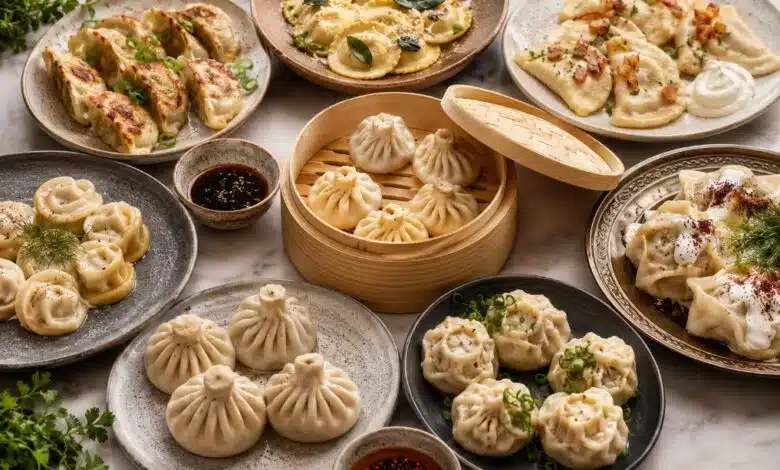
A dumpling is never just “dough with something inside.” Around the world, that idea becomes a boiled family supper, a pleated restaurant centerpiece, a crisp street snack, a soup garnish, a celebration food or a freezer staple. This guide maps the differences so you can recognize what is on the plate, order with confidence and understand why two foods that look similar may belong to very different traditions.
Dumplings are portions of dough that may be filled or unfilled, then boiled, steamed, simmered, baked, pan-fried or deep-fried. The category includes foods as different as Polish pierogi, Ukrainian varenyky, Georgian khinkali, Chinese jiaozi, Japanese gyoza, Korean mandu, Nepalese momo, Italian ravioli and Central Asian manti. Their wrappers, fillings, shapes, sauces and table manners are not interchangeable, even when English menus call all of them “dumplings.”
How to read a dumpling before the first bite
The fastest way to understand an unfamiliar dumpling is to stop asking only, “What is it filled with?” Filling matters, but it is only one layer of the story. A dumpling’s identity is usually carried by five signals: the flour in the wrapper, the thickness of the dough, the way the edges are sealed, the cooking method and the way the finished piece is served.
A thin wheat wrapper folded into a crescent and seared on one side behaves differently from a soft, hand-rolled dough pocket boiled and topped with butter. A soup dumpling is judged by whether its skin can hold hot broth. A large pleated khinkali is designed to be lifted by its top knot and eaten carefully. A filled pasta such as ravioli may share the broad dumpling idea, yet its dough, sauce relationship and place in the meal come from a different culinary system.
The wrapper decides more than people think
Two dumplings can contain nearly identical meat fillings and still feel completely different because of the dough. Wrapper thickness controls chew, moisture, fragility and how much sauce or broth the dumpling can carry. It also determines whether the dumpling is suited to boiling, steaming, frying or a combination of methods.
Thin wheat wrappers
Common in many East Asian dumplings, thin wheat skins are rolled or manufactured to be flexible enough for pleating. They may be boiled, steamed or pan-fried. A good wrapper stretches without becoming gummy and remains distinct from the filling.
Soft rolled dough
Pierogi, varenyky and related boiled dumplings often use a soft, thicker dough that feels tender rather than paper-thin. The wrapper is part of the meal, not merely a container. Butter, browned onions, sour cream or cracklings cling to its surface.
Elastic soup-holding skins
Soup dumplings and juicy pleated parcels need a wrapper strong enough to trap liquid. Too thick and the dough dominates; too thin and the parcel tears. The ideal skin has elasticity, a sealed pleat and enough strength to survive lifting.
Pasta-style dough
Ravioli, tortellini and similar filled pastas use egg or flour-and-water dough developed for rolling and sauce pairing. They sit within the wider family of filled dough foods, but their texture, shape language and service are distinctly tied to pasta traditions.
Rice-based wrappers create another experience entirely. Some are translucent and delicate; others are chewy or sticky. Potato can become part of the wrapper itself, as in several Central and Eastern European dumpling traditions. In other cases, the “dumpling” has no filling at all: the dough is dropped, rolled or sliced and cooked as a substantial side.
Inside the parcel: meat, cheese, vegetables, fruit and broth
There is no universal dumpling filling. Pork may dominate one menu, lamb another, potato and cheese another. The filling often reflects what a region grows, preserves, raises or serves during religious and seasonal cycles.
Meat and poultry
Pork, beef, lamb, chicken and mixed meats appear across many traditions. Aromatics may include onion, garlic, ginger, scallion, herbs or spices. Juiciness depends on fat, broth, vegetables and how tightly the mixture is worked.
Cheese and potato
Farmer’s cheese, curd cheese, potato and onion create soft, comforting fillings associated with several Eastern European dumplings. The balance can be tangy, buttery, peppery or mildly sweet.
Vegetables and mushrooms
Cabbage, sauerkraut, mushrooms, chives, spinach, squash and tofu can form either traditional meatless fillings or modern vegetarian versions. “Vegetable” does not automatically mean vegan because egg, dairy or animal fat may still be present.
Seafood
Shrimp, fish, crab and mixed seafood fillings are common in a number of coastal and East Asian styles. Texture can range from finely minced and springy to visibly chopped and delicate.
Fruit and sweet cheese
Cherry, blueberry, plum, strawberry and sweetened cheese fillings turn dumplings into dessert or a sweet main course. They may be topped with sugar, cream, butter or fruit sauce.
Broth and aspic
Some dumplings contain concentrated broth that melts during steaming. The engineering matters: the wrapper must remain sealed, and the diner must manage the hot liquid without tearing the parcel.
The same dumpling can change character in the pan
Cooking method is not a minor technical detail. It changes the wrapper’s surface, the moisture of the filling and the role of the dumpling in the meal. A boiled dumpling feels soft and comforting. A steamed dumpling preserves a clean wrapper flavor. A pan-fried dumpling adds contrast. Deep-frying turns the entire exterior crisp and often shifts the dish toward snack or appetizer territory.
| Method | Typical result | What to look for | Common service |
|---|---|---|---|
| Boiled | Soft, tender wrapper | Sealed edges, no waterlogged surface | Butter, sour cream, onions, broth or sauce |
| Steamed | Moist, elastic or delicate skin | Intact pleats and a wrapper that does not dry out | Vinegar, soy-based dip, chili oil or broth |
| Pan-fried | Crisp base with tender upper wrapper | Even browning without a leathery edge | Dipping sauce, chili crisp or a light garnish |
| Deep-fried | Crisp shell throughout | Dry, non-greasy crust and hot filling | Snack, appetizer or street-food format |
| Baked | Firm or flaky exterior | Evenly cooked seams and balanced filling-to-dough ratio | With sauce, broth or as a handheld food |
| Soup-simmered | Dumpling and broth become one dish | Wrapper that holds shape without turning mushy | In clear broth, stew or creamy soup |
Many dumplings are cooked twice. Jiaozi or gyoza may be pan-fried and then steamed under a lid. Leftover pierogi or varenyky may be boiled first and browned later. That second treatment is not merely reheating; it creates a new texture and sometimes a preferred next-day dish.
Regional stations on the dumpling map
The following foods are grouped for orientation, not to suggest that one evolved directly from another. Dumpling traditions often developed through trade, migration, empire, border changes and local adaptation. Similar shapes can arise from different histories, while closely related foods may look surprisingly different.
Eastern Europe: pierogi, varenyky and pelmeni
Polish pierogi and Ukrainian varenyky are usually larger boiled pockets with visible fillings such as potato and cheese, cabbage and mushroom, meat, sweet cheese or fruit. Pelmeni are generally smaller meat-filled dumplings with a thinner wrapper and a different serving rhythm. They are often boiled and served with butter, sour cream, vinegar, broth or black pepper.
The distinctions matter because English menus may call all three “dumplings.” Readers exploring traditional Ukrainian food and its best-known dishes will encounter varenyky as part of a wider table that also includes borshch, holubtsi, deruny and pampushky.
Georgia and the Caucasus: khinkali
Khinkali are large pleated dumplings associated with Georgian cuisine. The filling may include seasoned meat and liquid that becomes broth inside the wrapper. Diners commonly lift them by the top knot, take a careful bite, drink the broth and then eat the rest. The doughy knob may be left on the plate as a practical handle.
Khinkali are not simply oversized soup dumplings. Their seasoning, pleating, wrapper, eating method and place at the Georgian table form a specific identity.
Central Asia and neighboring regions: manti and related forms
Manti appear across a broad geographic area, with variations in size, filling, folding and cooking. Lamb or beef is common, often with onion and sometimes pumpkin or other vegetables. They may be steamed in stacked trays and served with yogurt, garlic, tomato sauce, butter, chili or regional condiments.
The name covers a family rather than one fixed restaurant plate. A small Turkish mantı dish covered in yogurt is a different experience from large steamed Central Asian manti, even though the names are related.
China: jiaozi, wontons and soup dumplings
Chinese dumpling traditions are too broad to collapse into one type. Jiaozi may be boiled, steamed or pan-fried and commonly contain pork, cabbage, chive, shrimp or mixed fillings. Wontons often have thinner wrappers and may be served in soup, chili oil or sauce. Xiaolongbao are steamed soup-filled buns with delicate skins and hot liquid inside.
The restaurant category matters. A northern dumpling house, a dim sum restaurant and a Shanghainese soup-dumpling specialist may all serve “Chinese dumplings,” but the ordering experience and expected textures are different.
Japan and Korea: gyoza and mandu
Japanese gyoza are often crescent-shaped, thin-skinned and pan-fried for a crisp base. Common fillings include pork, cabbage, garlic, ginger and chives. Korean mandu vary widely: they may be steamed, boiled, pan-fried or served in soup, with fillings that can include pork, beef, tofu, kimchi, glass noodles and vegetables.
A crisp-bottomed gyoza plate often functions as a side or appetizer, while mandu may appear as a snack, a substantial plate or part of a broth-based meal.
Himalayan regions: momo
Momo are strongly associated with Nepal, Tibet and neighboring Himalayan communities, with regional and diaspora variations. They may be filled with meat, vegetables, cheese or combinations, then steamed, fried or served in sauce or soup. The accompanying chutney can be as memorable as the dumpling itself, ranging from tomato-based and sesame-rich to intensely spicy.
On a menu, “momo” is only the starting point. Look for the filling, cooking style and whether the order is dry, sauced, fried or served in broth.
Italy and beyond: ravioli, tortellini and filled pasta
Ravioli and tortellini belong to pasta traditions, yet they are essential to any global discussion of filled dough. Their wrappers are rolled pasta dough; their fillings may include cheese, meat, squash, greens, seafood or mushrooms; and their final identity is inseparable from sauce or broth.
The comparison is useful because it reveals what the word dumpling can and cannot do. It can describe a broad structural idea, but it should not erase the culinary language of pasta.
Foods that look related but are not interchangeable
Visual similarity is one of the easiest ways to misread a menu. A crescent shape does not guarantee the same dough or cooking method. Pleats do not always mean soup inside. A small filled parcel may be pasta, a steamed bun, a boiled dumpling or a fried snack.
Pierogi versus varenyky
They overlap in structure and many fillings, but they belong to Polish and Ukrainian naming and culinary contexts. Restaurant preparation, dough, garnish and filling traditions may differ by cook and region.
Pelmeni versus pierogi
Pelmeni are typically smaller, thinner and meat-centered, while pierogi commonly appear in larger portions with a broader range of savory and sweet fillings.
Gyoza versus jiaozi
Gyoza developed from Chinese dumpling traditions but are often thinner-skinned, more garlic-forward and commonly served pan-fried in Japanese restaurants. Jiaozi encompass a wider set of boiled, steamed and fried forms.
Khinkali versus xiaolongbao
Both may contain broth, but they differ in size, wrapper, pleating, seasoning, cooking tradition and eating technique. Treating them as versions of the same dish misses what makes each one distinctive.
Manti versus momo
The names refer to broad families across different regions. Their fillings, sauces, wrapper thickness, size and cooking methods vary too much for a one-line equivalence.
Ravioli versus “dumplings”
Ravioli fit the structural idea of filled dough, but in practice they are ordered, cooked and understood as pasta. The useful comparison is conceptual, not a reason to rename them on an Italian menu.
How to order dumplings without guessing
A good dumpling order starts with three questions: What is the filling? How is it cooked? What comes with it? Those questions prevent most surprises, especially when a menu lists only a local name and a short English translation.
Confirm the filling. Meat, cheese, potato, seafood, vegetables and fruit can appear under the same dumpling name.
Ask about the cooking method. Steamed and fried versions of the same dumpling may have very different textures.
Check the portion role. Six pieces may be a starter in one restaurant and a complete meal in another.
Read the accompaniments. Sour cream, broth, vinegar, chili oil, yogurt or browned onions can define the experience.
Ask whether a sampler mixes fillings. Identical-looking pieces are not always labeled individually.
At a restaurant, one dumpling plate can be satisfying, but a shared comparison is often more informative. Order one boiled style, one steamed or pan-fried style and a vegetable or cheese option if available. The contrast reveals how wrapper, heat and garnish change the category.
For local discovery, specialty markets, delis and prepared-food counters can be as useful as restaurants. The broader guide to Russian restaurants, delis and markets near you explains how frozen and prepared dumplings may appear outside formal dining rooms. In South Florida, international markets and neighborhood restaurants are also part of the city’s wider food map; the Miami and South Florida food guide shows how those formats vary by neighborhood.
Dietary questions hiding inside the wrapper
Dumplings are difficult to judge by appearance alone. A vegetable filling may contain egg, dairy, fish sauce or meat broth. A meat dumpling may include breadcrumbs, soy sauce or milk. A gluten-free filling does not make a wheat wrapper gluten-free. Fried dumplings may share oil with breaded foods, seafood or other allergens.
Gluten
Most classic wrappers are wheat-based. Rice wrappers exist, but cross-contact and sauces still need verification.
Egg and dairy
Some doughs use egg. Cheese, butter, sour cream and yogurt appear in fillings or toppings even when the dumpling itself looks plain.
Meat and broth
Vegetable dumplings may be cooked in meat broth or finished with animal fat. Ask how they are prepared, not only what is visible inside.
Frozen, fresh or restaurant-made: what changes at home
Frozen dumplings are not automatically inferior. Many styles freeze well because the wrapper protects the filling and the pieces can be cooked directly from frozen. The key is following the correct method. Boiling a dumpling designed for pan-frying can produce a weak wrapper. Frying a thick boiled dumpling from raw may brown the exterior before the center is cooked.
Buying from a freezer
Read whether the product is raw, partially cooked or fully cooked. Check the recommended method, serving size and whether the package contains sauce. Look at the dumplings themselves: pieces should remain separate rather than frozen into one damaged block, and the seams should be intact.
Buying from a deli counter
Ask whether the dumplings were made in-house, delivered frozen or cooked earlier that day. None of those answers is automatically bad; the point is to know what you are buying. Confirm reheating instructions and whether toppings are packed separately.
Reheating leftovers
Soft boiled dumplings can be refreshed gently with steam, a covered skillet or a brief simmer, depending on the filling. Pan-fried dumplings regain texture best in a skillet. Microwave reheating is convenient but can make thin wrappers tough at the edges and thick wrappers rubbery if overheated.
Do not crowd the pan or pot. Dumplings need room to move, release steam and cook evenly. For frozen pieces, avoid thawing unless the package specifically recommends it; partial thawing often makes wrappers sticky and prone to tearing.
A one-table tasting plan
To understand the world of dumplings without turning dinner into a marathon, build a tasting around contrast rather than quantity. Start with one soft boiled dumpling, one steamed pleated dumpling and one crisp-bottomed or fried style. Add a meat filling, a cheese or vegetable filling and one unfamiliar sauce.
First: the mildest boiled or steamed dumpling. Second: a meat or broth-filled style. Third: the crisp or spicy version. Last: a fruit or sweet-cheese dumpling if the menu offers one.
This sequence keeps chili, fried crust and strong vinegar from overwhelming more delicate wrappers. It also makes the meal feel coherent: you are comparing techniques, not simply collecting dishes from unrelated menus.
Shape is a language, but not a universal one
Dumpling shapes often begin as practical solutions. A crescent is easy to fold from a round wrapper. A square parcel wastes less dough when wrappers are cut in a grid. Pleats distribute tension around a juicy filling. A twisted top creates a handle. A ring shape can help a small dumpling hold its form in broth. Yet shape is not a reliable shortcut to origin because similar techniques appear in different places.
What matters is the relationship between shape and function. A soup-filled dumpling needs a seal that can resist pressure. A dumpling intended for pan-frying benefits from a broad base. A delicate boiled pocket should not have a bulky knot that stays raw after the center is cooked. A tiny tortellini ring behaves differently in broth than a large stuffed pasta square covered in sauce.
Crescents
Common because they are efficient to fold and easy to seal. They may be boiled, steamed or pan-fried, but the wrapper thickness and pleating style change the result.
Pleated purses
Pleats create structure around a central filling. They are especially useful for juicy fillings, but the number and style of folds vary by tradition and cook.
Squares and rectangles
Cut dough can be folded into neat parcels with minimal waste. Filled pasta, wontons and several bakery-style dumplings use this practical geometry.
Rings, knots and bundles
These forms may create handles, reinforce seams or help pieces hold their identity in soup. They are not decorative details alone.
For diners, shape is most useful as a handling clue. A large pleated dumpling may need to be lifted carefully. A small soup dumpling may belong in a spoon before biting. A flat, crisp-bottomed crescent is usually easier to dip. Watching how a restaurant serves the dumpling often tells you how it is meant to be eaten.
Table manners change with the dumpling
There is no single correct way to eat dumplings. Chopsticks may be ideal for one style and awkward for another. A spoon protects broth-filled dumplings. A fork works naturally for pierogi or ravioli. Some dumplings are designed to be held by hand, while others are too delicate or hot for that approach.
The most important habit is to pause before biting into anything that may contain liquid. Lift it gently, place it in a spoon if one is provided, open a small vent and let steam escape. This is both safer and more respectful to the work that kept the broth inside the wrapper.
For large khinkali, the top knot acts as a handle. For small dumplings in soup, chasing each piece with chopsticks may be less practical than using the spoon provided. For sauced dumplings, cutting one cleanly is better than crushing several pieces at once and spilling filling into the plate.
If the restaurant provides a special spoon, dipping dish, tongs or slotted utensil, use it as a clue. Service ware is often part of the intended eating method, not table decoration.
Sweet dumplings are not an afterthought
In many cuisines, dumplings cross the border between main course and dessert. Fruit-filled varenyky, plum dumplings, sweet cheese pierogi and filled dough served with sugar or cream can be a complete meal, a seasonal dish or a dessert. Their sweetness may be restrained, especially when the filling is tart fruit or fresh cheese.
Sweet dumplings also show why broad categories can mislead. A diner expecting pastry may receive soft boiled dough. Another expecting a savory cheese filling may encounter sweetened farmer’s cheese with vanilla, raisins or fruit sauce. The cooking method remains dumpling-like even when the flavor belongs at the end of the meal.
Seasonality matters. Cherry, blueberry, strawberry and plum dumplings may appear only during part of the year or as frozen products. Restaurants sometimes list them under dessert, while delis place them beside savory dumplings in the freezer. Read both the filling and the serving suggestion.
Frequently Asked Questions
What counts as a dumpling?
A dumpling is a portion of dough that may be filled or unfilled and then cooked by boiling, steaming, simmering, frying or baking. The category is broad, so foods with very different wrappers, fillings and cultural roles can all be described as dumplings in English.
Are pierogi and dumplings the same thing?
Pierogi are a specific Polish dumpling tradition, not a synonym for every dumpling. They are commonly made from soft rolled dough and filled with potato and cheese, meat, cabbage and mushrooms, sweet cheese or fruit, then boiled and sometimes pan-fried.
What is the difference between pierogi, varenyky and pelmeni?
Pierogi and varenyky are usually larger pockets with a wide range of savory and sweet fillings. Pelmeni are generally smaller, thinner and most often filled with meat. The names also belong to different Polish, Ukrainian and regional culinary contexts, so they should not be treated as interchangeable labels.
Which dumplings contain soup inside?
Xiaolongbao and some other soup-filled dumplings contain concentrated broth that liquefies during steaming. Georgian khinkali may also hold flavorful meat juices or broth, but their size, wrapper, pleating, seasoning and eating method are different.
Are vegetable dumplings always vegetarian or vegan?
No. The filling may contain egg, dairy, fish sauce or animal fat, and the dumplings may be cooked in meat broth or on shared equipment. Ask about the wrapper, filling, sauce and cooking method.
Can frozen dumplings be cooked without thawing?
Most commercial frozen dumplings are designed to be cooked directly from frozen, but the correct method depends on the product. Follow the package directions because boiling, steaming and pan-frying require different timing and amounts of water or oil.
Why do dumpling wrappers tear?
Common causes include dry edges, weak seals, overfilling, partial thawing, aggressive boiling and lifting delicate dumplings with the wrong utensil. A torn wrapper is especially problematic for soup-filled dumplings because the liquid escapes before serving.
What sauces are commonly served with dumplings?
There is no universal sauce. Dumplings may be served with sour cream, butter, browned onions, vinegar, soy-based dips, chili oil, garlic yogurt, tomato sauce, broth or fruit sauce. The accompaniment is often part of the dish’s regional identity.
Are ravioli considered dumplings?
Structurally, ravioli are filled dough parcels and can fit a broad definition of dumplings. In culinary practice, however, they belong to Italian pasta traditions and are best understood and ordered as pasta rather than renamed with a generic English category.
How can I compare dumplings from different countries in one meal?
Choose contrasting methods instead of ordering many similar plates: one boiled dumpling, one steamed style and one pan-fried or crisp version. Include different fillings and keep sauces separate at first so you can notice the wrapper, seasoning and texture of each style.


