
Vesti Food Atlas · Countries
Ukrainian food is built around grains, vegetables, dairy, mushrooms, fruit, preserved ingredients, slow-cooked meats and dough-based dishes that change from region to region. This guide introduces the foods most likely to appear in Ukrainian homes, restaurants, bakeries, community kitchens and specialty markets, while also explaining what to order first and how to recognize the differences between dishes that are often grouped together.
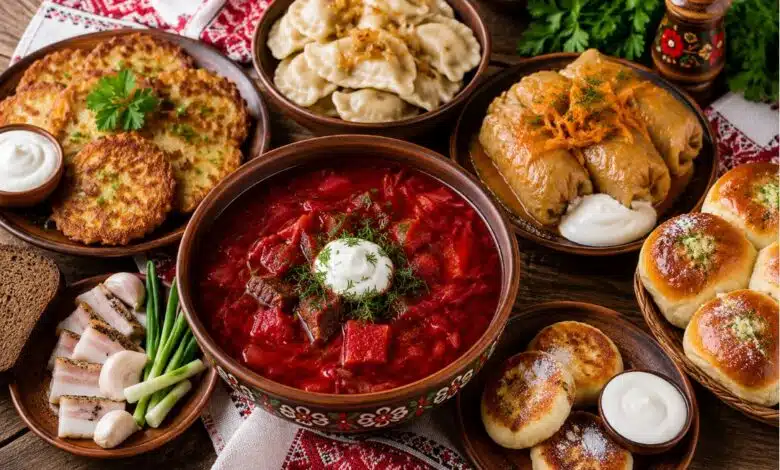
Ukrainian cuisine is a regional Eastern European food tradition known for borshch, varenyky, holubtsi, deruny, syrnyky, pampushky, buckwheat, cabbage dishes, cured foods and seasonal preserves. It is not defined by one soup or one dumpling. The cuisine ranges from delicate cheese pancakes and mushroom-filled dough to garlic breads, beet soups, potato dishes, festive meat preparations and fruit desserts.
What defines Ukrainian food
Ukrainian food is often described as hearty, but “hearty” explains only part of it. Many dishes are substantial because they were shaped by agricultural life, cold seasons and the need to use local ingredients efficiently. Yet the same cuisine also contains light herb salads, fruit soups, fresh cheese dishes, delicate dumplings, mushroom broths, fermented vegetables and pastries that depend more on balance than weight.
The cuisine is highly seasonal. Summer brings tomatoes, cucumbers, cherries, berries, dill and fresh dairy. Autumn shifts toward mushrooms, cabbage, apples, pears, pumpkins and preserved vegetables. Winter menus rely more heavily on roots, grains, cured foods, frozen fruit and fermented ingredients. Spring cooking often feels greener and brighter, with young herbs, sorrel, onions and lighter broths.
Another defining feature is the relationship between everyday and ceremonial food. A bowl of buckwheat, a plate of deruny or a simple cabbage soup may belong to an ordinary weekday. Kutia, decorated breads, layered cakes, stuffed fish or elaborate meat dishes may appear at holidays, weddings or family gatherings. The cuisine makes room for both modest nourishment and highly symbolic food.
It is also a cuisine of textures. Soft varenyky may be paired with crisp onions. Tender holubtsi sit under a tangy tomato or sour-cream sauce. Syrnyky should be browned outside but soft and cheese-forward inside. Borshch combines a broth with vegetables that may be finely cut, grated, stewed or layered in stages. These contrasts matter as much as the ingredient list.
Regional traditions shape the Ukrainian table
There is no single Ukrainian menu that represents every household or region. Geography, agriculture, migration, trade and neighboring food traditions all influence what appears on the table. A useful way to understand the cuisine is to notice recurring ingredients while leaving room for regional differences.
Central Ukraine
Central regions are often associated with classic borshch, dumplings, wheat-based dishes, pork, poultry, cabbage, beets and festive breads. Many recipes that outsiders think of as broadly Ukrainian have strong central associations, although families prepare them differently.
Western Ukraine
Western menus often highlight mushrooms, beans, cornmeal, smoked ingredients, cheese, dumplings, cabbage and mountain-style dishes. Carpathian influences appear in foods such as banosh, bryndza, mushroom gravies and hearty soups.
Southern Ukraine
Southern cooking reflects access to the Black Sea, warmer growing conditions and multicultural port histories. Fish, tomatoes, peppers, eggplant, grapes, herbs and lighter vegetable dishes may be more visible, especially around Odesa and coastal areas.
Northern and eastern regions
Potatoes, grains, mushrooms, dairy, preserved foods and filling meat dishes remain important. Industrial cities and border regions also developed distinctive urban food habits, bakery traditions and combinations shaped by migration.
Essential Ukrainian dishes to know
A first encounter with Ukrainian food is easier when dishes are grouped by how they function on the table rather than treated as an isolated list. Some are complete meals, some are accompaniments, and some move between breakfast, dessert and snack.
Borshch
A beet-centered soup with many regional and family versions. It may include cabbage, potatoes, beans, meat, tomatoes or fermented beet liquid. Sour cream, dill and garlic bread are common companions, but not every bowl is served the same way.
Varenyky
Boiled filled dumplings made with soft dough. Fillings may include potato, cheese, cabbage, mushrooms, meat, cherries, berries or other seasonal ingredients. They are often finished with butter, onions, sour cream or sweet toppings.
Holubtsi
Cabbage leaves wrapped around a filling, usually grain with meat or vegetables. Sauces vary from tomato-forward to creamy, and meatless versions may use mushrooms, buckwheat or rice.
Deruny
Potato pancakes made from finely grated potato, often with onion and sometimes flour or egg. The best versions balance crisp edges with a tender center and are commonly served with sour cream.
Syrnyky
Pan-fried farmer’s-cheese pancakes that can be breakfast, dessert or a café dish. They are usually mildly sweet and served with sour cream, jam, berries, honey or condensed milk.
Pampushky
Soft yeast rolls, often brushed with garlic, oil and herbs when served with borshch. Sweet versions also exist, so the name alone does not always indicate a savory bread.
Chicken kotleti
Ground or chopped chicken patties with a soft, cohesive interior. They may be pan-fried, baked or breaded and often appear with potatoes, buckwheat, cabbage salad or vegetables. See the separate guide to chicken kotleti for their major styles and menu names.
Banosh
A Carpathian cornmeal dish enriched with cream or sour cream and commonly served with bryndza, mushrooms or cracklings. It should be understood as a regional specialty rather than a universal daily dish across Ukraine.
Kapusniak
A cabbage soup that may use fresh or fermented cabbage, meat, millet or potatoes. Its flavor can range from gently savory to distinctly sour, depending on the cabbage and broth.
Nalysnyky
Thin filled crêpes, often rolled or folded around sweet cheese, meat, mushrooms or other fillings. They may be baked after filling and served with sour cream or sauce.
Kholodets
A savory meat aspic traditionally served cold. It is strongly associated with festive or family tables and may be accompanied by horseradish or mustard.
Uzvar
A drink made from dried fruits, especially apples, pears and prunes. It is connected with winter and holiday traditions but may also appear as a refreshing homemade beverage.
Borshch is a family of soups, not one fixed formula
Borshch is the Ukrainian dish most widely recognized outside the country, but it is also one of the easiest to oversimplify. Beet is common and often central, yet the soup’s identity comes from the relationship between broth, vegetables, acidity, sweetness, aroma and the final resting time. Two red borshch recipes can taste very different even when they share the same basic ingredients.
Some versions are made with meat stock, while others are fully vegetable-based. Beans may replace or supplement meat. Cabbage may be prominent or restrained. Potatoes may be cut into chunks, while beets may be grated, julienned, roasted or stewed separately. Tomato can add body and acidity, but fermented beet liquid, vinegar or another souring element may also shape the flavor.
Green borshch is a different seasonal preparation, often associated with sorrel and herbs rather than beets. Cold beet soups belong to another branch of the family. White borshch and similarly named soups in neighboring cuisines may refer to very different ingredients, so the word “borshch” should not be assumed to describe one universal red soup.
A good bowl should taste integrated rather than like vegetables floating in plain water. Beet sweetness should not overwhelm the acidity, and garlic or dill should support rather than flatten the soup. Many cooks believe borshch improves after resting because the flavors continue to combine.
Varenyky, halushky and other dough traditions
Ukrainian dough dishes are often grouped together as dumplings, but their forms and functions differ. Varenyky are filled and sealed. Halushky are unfilled pieces of dough that may be boiled and served with butter, onions, meat or sauce. Nalysnyky are thin crêpes with fillings. Pampushky are yeast rolls. Each uses flour, but they create very different eating experiences.
Varenyky are especially flexible. Savory potato fillings may include onion, cheese or mushrooms. Cabbage can be fresh, stewed or fermented. Sweet cheese fillings range from lightly sweetened to nearly dessert-like. Cherry varenyky are valued for the contrast between tart fruit, soft dough and juice released during cooking.
Restaurant menus sometimes translate varenyky as pierogi because that term is familiar to many English-speaking diners. The comparison is understandable, but the names belong to different culinary and language contexts. The dough, fillings and serving style may overlap without making every filled dumpling interchangeable. The existing Vesti guide to food names and transliteration explains why related dishes often appear under several English spellings.
| Dish | Basic form | Common fillings or accompaniments | Typical texture |
|---|---|---|---|
| Varenyky | Filled boiled dumplings | Potato, cheese, cabbage, mushrooms, meat, cherries | Soft dough with a distinct filling |
| Halushky | Unfilled boiled dough pieces | Butter, onions, meat, gravy, cheese | Tender, chewy or fluffy depending on dough |
| Nalysnyky | Thin filled crêpes | Cheese, meat, mushrooms, fruit | Delicate wrapper, soft filling |
| Pampushky | Baked yeast rolls | Garlic-herb topping or sweet filling | Soft, airy bread |
The everyday Ukrainian table is broader than restaurant highlights
Restaurant menus tend to emphasize recognizable dishes, but everyday Ukrainian meals often rely on simpler combinations. Buckwheat with butter, roast chicken, stewed cabbage, baked potatoes, cucumber and tomato salad, cottage cheese, eggs, soup, bread and pickled vegetables can be more representative of ordinary home eating than a parade of elaborate specialties.
Breakfast may include eggs, bread, cheese, porridge, syrnyky or leftovers rather than one fixed national formula. Lunch has traditionally been a substantial meal in many households, often beginning with soup and followed by a main dish with grain, potato or vegetables. Dinner may be lighter or may repeat prepared foods from earlier in the day.
Bread has a central place, both practically and symbolically. Rye, wheat and mixed-grain loaves accompany soups and savory dishes. Festive breads may be braided, decorated or shaped for ceremonies. Everyday bread is respected as a basic food, while ritual breads can carry meanings tied to welcome, marriage, remembrance or religious observance.
Dill, parsley, green onion, garlic and sour cream appear frequently, but they do not belong in every dish. Sunflower oil is important in salads, frying and preserving. Pork is common, yet poultry, beef, fish and meatless dishes also have established places. The cuisine should not be reduced to either “meat-heavy” or “vegetarian”; it contains both traditions.
Preservation is another ordinary part of the table. Pickled cucumbers, fermented cabbage, tomatoes, mushrooms, fruit preserves and compotes extend seasonal produce. These foods are not merely side condiments. Their acidity and texture balance rich potatoes, meats, dumplings and grains.
Potatoes, buckwheat and cabbage perform different jobs
Three ingredients appear so often in discussions of Ukrainian food that they can blur together. In practice, each has a different role.
Potatoes provide structure and comfort
Potatoes may be mashed, boiled, roasted, grated into deruny, added to soups or used as a filling for varenyky. Their neutral flavor carries butter, onions, mushrooms, herbs, sour cream and meat drippings. A potato dish can be the center of a simple meal or the calm side beside a more intense sauce.
Buckwheat brings a toasted, earthy flavor
Buckwheat is not simply a substitute for rice. It has a distinctive nutty aroma and remains slightly separate when cooked well. It is often served with kotleti, chicken, mushrooms, liver, gravy or butter. In meatless meals, it may be combined with onions, mushrooms or vegetables.
Cabbage links fresh, cooked and fermented cooking
Cabbage appears raw in salads, softened in soups, wrapped around fillings, stewed with meat or fermented for winter. Fresh cabbage brings sweetness and crunch, while fermented cabbage adds acidity and depth. Holubtsi demonstrate its structural role; kapusniak shows its ability to shape an entire broth.
Ukrainian dairy dishes are not all the same
Dairy may appear as sour cream, butter, milk, cream, farmer’s cheese or regional cheeses. English menus often translate several different products as “cottage cheese,” even when the texture is drier and more suitable for cooking than standard supermarket cottage cheese.
Syrnyky rely on a pressed fresh cheese that provides body. If the cheese is too wet, excessive flour is needed and the pancakes become bready. Nalysnyky may use a smoother sweet cheese filling. Varenyky can contain savory or sweet cheese. Banosh is finished with cream and often paired with bryndza, a salty regional cheese.
How Ukrainian food appears in restaurants
Ukrainian restaurants outside Ukraine vary widely. Some focus on traditional family-style food. Others present modern regional cooking. A bakery-café may concentrate on pastries, dumplings and soups. A banquet restaurant may emphasize platters, grilled meat, elaborate salads and celebratory dishes.
The same dish may be portioned differently depending on the format. Varenyky can arrive as a full entrée, a side dish or a small tasting portion. Borshch may be served alone or as part of a lunch combination. Holubtsi can be plated individually or sold by weight. Syrnyky may appear at brunch with fruit and cream, even when a home version would be simpler.
English translations often prioritize familiarity. Kotleti may be called patties or cutlets. Holubtsi may become stuffed cabbage. Nalysnyky may be described as crêpes. Pampushky may be listed as garlic rolls. These translations help diners, but they can hide distinctions between dishes.
Look beyond the headline entrées. A restaurant’s side dishes often reveal its style more clearly: buckwheat, mushroom gravy, stewed cabbage, mashed potatoes, beet salad, pickles and bread can show whether the kitchen leans toward home cooking, banquet food or contemporary presentation.
Traditional presentation versus modern presentation
Traditional-style restaurants may use generous portions, familiar garnishes and shared platters. Modern kitchens may reduce portion size, clarify regional origins, plate components separately or reinterpret a familiar dish with new techniques. Neither approach is automatically more authentic. The relevant question is whether the dish’s core identity remains understandable.
What “homemade” usually signals
On a menu, “homemade” often suggests soft textures, recognizable fillings and familiar comfort rather than a formal regional certification. It may also indicate that dumplings, breads or patties are made in-house. Because the term is promotional, ask specific questions when preparation matters.
Ukrainian bakeries, markets and prepared-food counters
Some of the most useful Ukrainian food experiences happen outside full-service restaurants. Bakeries, delis, church kitchens, market counters and frozen-food sections may offer foods that are rarely prepared to order.
At a bakery
Look for pirozhky, sweet buns, poppy-seed rolls, honey cakes, layered tortes, cheesecakes, festive breads and savory pastries. Names vary, and some businesses combine Ukrainian, Polish, Jewish, Romanian or broader Eastern European baking traditions.
At a prepared-food counter
Common options may include kotleti, holubtsi, salads, roasted meats, mashed potatoes, buckwheat, stewed vegetables, pancakes and chilled appetizers. Ask whether foods are sold by piece, weight or portion. Also ask whether an item is ready to eat or requires reheating.
In the freezer
Frozen varenyky, pelmeni, nalysnyky, syrnyky and kotleti can be practical entry points. Packaging should clarify whether the product is raw, partially cooked or fully cooked. Dumplings may need boiling, while stuffed crêpes or patties may only need reheating.
At community events
Ukrainian churches, cultural organizations and fundraising events may serve varenyky, borshch, holubtsi, baked goods and holiday foods. Availability is often occasional rather than daily, so schedules and ordering instructions should be checked directly.
What to order first at a Ukrainian restaurant
A good first meal should show several textures without becoming a checklist. Choose one soup or starter, one dough or grain dish, one main item and one fresh or preserved side.
The classic introduction
Borshch with pampushky, potato-and-cheese varenyky, holubtsi and a cucumber-tomato salad. This combination introduces soup, filled dough, cabbage and fresh herbs.
The lighter route
Vegetable borshch, mushroom varenyky, beet salad and stewed vegetables. Confirm whether butter, sour cream or meat stock is used if you need a fully vegetarian meal.
The comfort-food route
Chicken kotleti with mashed potatoes or buckwheat, mushroom gravy, pickles and a side of cabbage salad. Add syrnyky if you want a dessert that is not heavily frosted.
The Carpathian route
Banosh with bryndza and mushrooms, a regional soup, and a meat or vegetable dish associated with western Ukraine. This works best at a restaurant that clearly identifies regional specialties.
The bakery-café route
A savory pirozhok, soup, nalysnyky or syrnyky, followed by a poppy-seed pastry or slice of honey cake. This is useful when a full restaurant menu is unavailable.
The shared-table route
Order several kinds of varenyky, one plate of deruny, holubtsi, a seasonal salad and a dessert to divide. Ask how many pieces come in each portion before ordering.
For a first visit, avoid ordering six starch-heavy dishes without contrast. Dumplings, potatoes, pancakes and bread are all appealing, but the meal becomes clearer when balanced with soup, salad, pickles, mushrooms or vegetables.
Breakfast, lunch and dessert do not always stay in fixed categories
Syrnyky can be breakfast, dessert or an afternoon café order. Nalysnyky may be sweet or savory. Varenyky with cherries can function as a main dish, a seasonal treat or dessert. Porridge may be breakfast for one person and a side dish for another.
This flexibility is important when reading menus. A restaurant may place syrnyky under brunch, while a deli sells them in a refrigerated case. Sweet varenyky may be listed with entrées because they are filling. A slice of cake may be served with tea in the afternoon rather than after a formal dinner.
Holiday foods also cross categories. Kutia is sweet but ceremonial rather than a conventional dessert. Paska is bread with religious and seasonal meaning. Uzvar is a beverage connected with ritual meals but also enjoyable on its own.
Common misunderstandings about Ukrainian food
“It is all heavy winter food”
Winter dishes are visible because soups, dumplings, potatoes and cabbage travel well and feel comforting. Ukrainian cuisine also includes fresh summer salads, fruit dishes, cold soups, fish, herbs, berries and vegetable-forward cooking.
“Borshch is always made with beef”
Meat-based versions are common, but vegetarian, bean-based, poultry and fish variations exist. The broth should never be assumed from the soup’s color.
“Every dumpling is pierogi”
English-language menus may use pierogi as a familiar category, but Ukrainian varenyky have their own name and culinary context. Pelmeni, halushky and filled crêpes are different preparations.
“Sour cream goes on everything”
Sour cream is common, especially with borshch, varenyky, deruny and holubtsi, but it is not mandatory in every dish. Some foods rely on butter, oil, gravy, fruit, honey or no topping at all.
“Ukrainian food and Russian food are interchangeable”
The cuisines share ingredients and some related dishes because of geography and history, but they are not interchangeable labels. Ukrainian food has distinct language, regional traditions, ceremonial foods and culinary identities. A broad guide to Russian restaurants, delis and markets serves a different discovery task from this Ukrainian country guide.
Dietary and ingredient questions worth asking
Traditional labels do not reliably identify allergens or dietary suitability. A vegetable soup may use meat stock. Potato varenyky may contain dairy in the filling or butter in the finish. Deruny can include egg or flour. Syrnyky contain dairy and usually egg, while flour content varies.
- Ask whether soup stock contains meat, poultry or fish.
- Confirm whether dumpling dough contains egg.
- Check whether fillings include butter, cheese or sour cream.
- Ask whether fried items share oil with breaded meat or fish.
- Confirm whether kotleti contain bread, milk or egg.
- Ask whether buckwheat is cooked separately if gluten cross-contact matters.
- Check whether salads contain mayonnaise, nuts or seeds.
- For packaged food, follow the ingredient label and preparation instructions rather than relying on the product name.
Many Ukrainian dishes can be prepared meatless, but a meatless appearance is not proof of a vegetarian preparation. During fasting periods, some restaurants or community kitchens may offer explicitly meat-free and dairy-free foods, yet ingredients still need confirmation.
How to recognize a thoughtful Ukrainian menu
A thoughtful menu does more than list familiar names. It explains fillings, regional origins, sauces and portion formats. It distinguishes varenyky from pelmeni, identifies whether borshch contains meat, and clarifies whether sour cream is included.
Regional dishes should be named with context rather than presented as universal. A Carpathian item can be described as such. A family recipe can be identified as a house style. Seasonal foods should be marked when availability changes.
Menu quality also appears in side dishes. Freshly cooked buckwheat, balanced cabbage salad, properly browned deruny and well-made bread suggest attention beyond the headline entrée. A long menu is not automatically better; a shorter list prepared carefully can offer a clearer introduction.
Building a Ukrainian meal at home from a deli or market
A prepared-food counter makes it possible to assemble a complete meal without buying every item from the hot case. Choose one main dish, one grain or potato side, one vegetable component and one acidic or fresh element.
A practical combination might be chicken kotleti, buckwheat, cabbage salad and pickled cucumbers. Another might be holubtsi, bread, beet salad and sour cream. Frozen varenyky can be paired with sautéed onions, mushrooms and a fresh salad. Borshch becomes a fuller meal with pampushky and a small plate of vegetables or cured fish.
Avoid purchasing only brown, soft foods. Texture matters. Pickles, cucumbers, radish, cabbage or fresh herbs create contrast. Ask whether sauces are packed separately, especially for fried foods that will be reheated later.
Ukrainian desserts and sweet baking
Ukrainian sweets range from simple fruit preparations to elaborate layered cakes. A bakery case may include honey cake, poppy-seed rolls, walnut pastries, sweet cheese buns, fruit-filled pirozhky and sponge cakes with cream. Home desserts may be less decorative but equally connected to season and family habit.
Medivnyk and other honey-based cakes often develop flavor after resting. Poppy seed appears in rolls, pastries and holiday dishes. Cherries, plums, apples, apricots and berries are used fresh, preserved or baked into dough. Cottage-cheese fillings bring a mild tang that balances sugar.
Some desserts are defined more by texture than sweetness. Syrnyky are browned and tender, while nalysnyky with sweet cheese are soft and delicate. Pampushky may be savory with garlic or sweet with filling, so the same general word can refer to different experiences.
At a bakery, ask whether cakes are sold by slice, weight or whole order. Many festive cakes require advance ordering, and popular pastries may sell out earlier in the day. A plain-looking item may contain poppy seed, nuts or dried fruit, so allergen questions remain important.
Holiday and ceremonial foods
Holiday food adds another layer to Ukrainian cuisine because dishes may carry religious, family or seasonal meaning beyond taste. The same ingredient can appear in an ordinary weekday dish and in a ceremonial preparation with a very different role.
Christmas traditions
Kutia, made from cooked grain with honey, poppy seed and other additions, is strongly associated with Christmas Eve traditions. Uzvar, dried-fruit drink, often appears alongside it. Meatless dumplings, fish, beans, cabbage and mushroom dishes may be part of the meal, although family practice varies.
Easter foods
Paska is a prominent Easter bread, often enriched and decorated. Eggs, cured meats, cheese and other foods may be prepared for blessing and a family meal. Bakery versions can differ substantially from home versions in sweetness, decoration and richness.
Weddings and family celebrations
Korovai and other decorated breads may serve ceremonial purposes. Banquet tables can include cold appetizers, salads, meats, fish, stuffed dishes, cakes and fruit. These meals are not useful as a picture of everyday eating, but they show the cuisine’s hospitality and symbolic side.
When a restaurant advertises a holiday menu, do not assume every item is available year-round. Some dishes appear only during a short seasonal window or by advance order.
Drinks that belong beside Ukrainian food
Ukrainian food is commonly accompanied by tea, coffee, mineral water, fruit drinks, compotes and fermented beverages. The drink choice can lighten a rich meal or reinforce seasonal flavors.
Kompot is made by simmering fresh or preserved fruit in water, usually with modest sweetness. Uzvar relies on dried fruit and has a deeper, smokier character. Kvas is a fermented beverage with a tangy grain-based profile, though commercial versions vary widely. Kefir and other cultured dairy drinks may accompany breakfast or a simple meal.
Tea is an everyday social drink and often appears with jam, honey, lemon or pastries. Coffee culture is strong in many Ukrainian cities, especially in western regions, and modern cafés may pair traditional desserts with espresso-based drinks.
Alcoholic drinks also have historical and regional contexts, but they are not required to understand the cuisine. A useful food guide should not reduce Ukrainian hospitality to vodka or celebratory drinking.
How Ukrainian food changes outside Ukraine
Migration reshapes menus. A restaurant in New York, Toronto, London or Miami may adapt portion sizes, use locally available cheese, combine Ukrainian and neighboring dishes, or translate familiar names for a broader audience. These changes do not automatically erase identity, but they make menu descriptions important.
Some businesses identify as Ukrainian while also serving Polish, Jewish, Romanian, Georgian or broadly Eastern European food. Others specialize closely in one region. A mixed menu can reflect the owner’s family history, neighborhood demand or the practical realities of running a small restaurant.
Ingredients may also change. Farmer’s cheese can be wetter or drier than the product used in Ukraine. Flour behaves differently. Produce varies by season and country. Smoked meats, mushrooms and sour cream may have different levels of salt, fat or acidity. Good cooks adjust technique while preserving the dish’s recognizable character.
Community kitchens and volunteer organizations have also become important places where Ukrainian food is prepared abroad. Their menus may focus on foods that can be made in batches, frozen, transported or sold for fundraising. Varenyky, holubtsi, borshch and baked goods suit that purpose particularly well.
Choosing between a restaurant, bakery, deli and market
The best place to start depends on what you want to learn. A restaurant is useful for a composed meal and table service. A bakery provides breads, pastries and small savory foods. A deli or prepared-food counter gives access to home-style dishes sold by piece or weight. A specialty market is best for frozen products, pantry ingredients and foods to prepare at home.
| Place type | Best for | What to verify |
|---|---|---|
| Restaurant | Borshch, varenyky, deruny, holubtsi, regional entrées | Portion size, included sides, meat stock, service format |
| Bakery or café | Pirozhky, sweet buns, cakes, syrnyky, coffee | Freshness schedule, fillings, nuts, advance orders |
| Deli counter | Kotleti, salads, buckwheat, stuffed cabbage, complete take-home meals | Price by weight, reheating, sauce packaging |
| Specialty market | Frozen varenyky, preserves, dairy, bread, pantry foods | Cooking status, storage, label language, allergens |
A first visit does not need to cover every format. One restaurant meal and one market visit often reveal more than ordering a large number of unrelated dishes at once.
Continue exploring Ukrainian and Eastern European food
Use this country guide as the broad introduction. For a specific dish, the Vesti Food Atlas article on chicken kotleti explains texture, restaurant wording, deli formats and frozen products in greater detail. The separate terminology guide helps decode several common spellings used for kotlet-style dishes.
Frequently Asked Questions
What are the most famous Ukrainian foods?
Borshch, varenyky, holubtsi, deruny, syrnyky and pampushky are among the best-known Ukrainian dishes. Buckwheat, nalysnyky, banosh, kotleti, festive breads and preserved vegetables are also important parts of the cuisine.
Is Ukrainian borshch always red?
No. Red beet borshch is the most widely recognized version, but Ukrainian cooking also includes green borshch made with sorrel and other seasonal or regional variations. Even red borshch changes from one family and region to another.
What is the difference between varenyky and pierogi?
Both are filled dumplings and may share similar fillings, but varenyky is the Ukrainian name and belongs to a Ukrainian culinary context. Pierogi is the Polish term. English-language menus sometimes use pierogi as a familiar general label, so the filling and preparation description matters.
Is Ukrainian food vegetarian-friendly?
It can be. Potato or mushroom varenyky, deruny, vegetable borshch, buckwheat, salads and some holubtsi may be vegetarian. However, meat stock, butter, sour cream, egg or shared frying oil can still be used, so it is worth confirming the ingredients.
What should I order first at a Ukrainian restaurant?
A balanced first meal could include borshch, one type of varenyky, holubtsi or chicken kotleti, plus a fresh or pickled vegetable side. Syrnyky make a good dessert or breakfast-style finish.
Are syrnyky sweet or savory?
Most syrnyky are mildly sweet rather than heavily dessert-like. They are commonly served with sour cream, jam, berries, honey or condensed milk. Savory versions exist, but they are less common on restaurant menus.
What is usually served with Ukrainian kotleti?
Kotleti are often served with mashed potatoes, buckwheat, rice, cabbage salad, fresh vegetables, pickles or mushroom gravy. The pairing depends on whether the meal comes from a restaurant, deli counter, takeout service or home-style kitchen.
Do Ukrainian restaurants serve regional dishes?
Some do. Carpathian dishes such as banosh, mushroom sauces and bryndza may appear on western Ukrainian menus, while southern menus may place more emphasis on fish, tomatoes, peppers and coastal influences. Menus that identify regional origins are especially useful.
Where can I buy Ukrainian food besides a restaurant?
Look for Ukrainian or Eastern European bakeries, delis, specialty markets, prepared-food counters, church kitchens, cultural events and frozen-food sections. Some foods may be available only on certain days or around holidays.
Is Ukrainian food the same as Russian food?
No. The cuisines share some ingredients and related dishes because of geography and history, but Ukrainian cuisine has its own language, regional traditions, ceremonial foods and culinary identity. The two labels should not be treated as interchangeable.
