
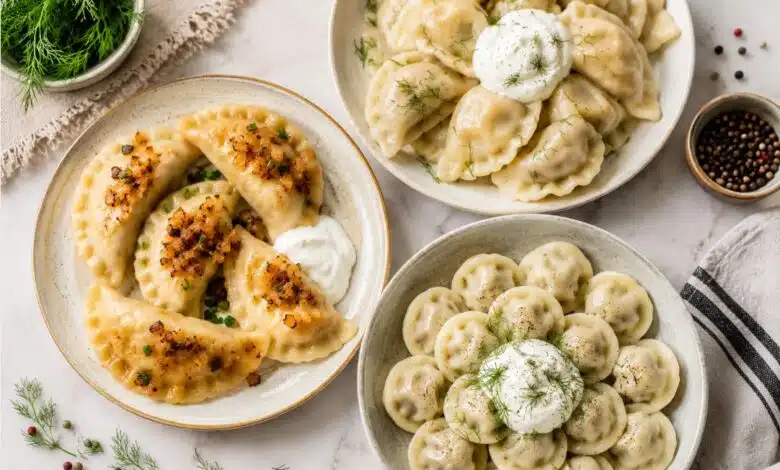
Pierogi, varenyky and pelmeni often appear in the same conversation because all three wrap filling in dough. Put them on one table, though, and the resemblance stops being the whole story. Their dough, shape, size, fillings, cooking habits and emotional meaning lead in different directions. This is the kind of comparison that becomes much clearer once you stop asking which one is “the real dumpling” and start tasting what each tradition is trying to do.
Pierogi are most strongly associated with Polish cooking and commonly hold potato, cheese, meat, cabbage, mushrooms or fruit. Varenyky belong to Ukrainian food culture and overlap in shape and filling with pierogi, but carry their own names, regional habits and serving traditions. Pelmeni are smaller, usually meat-filled dumplings associated with Russian and Siberian traditions, made for quick boiling and often served with butter, sour cream, broth or vinegar.
Three dumplings, three different intentions
Imagine three plates arriving at once. The first carries broad half-moons, glossy with butter, tucked beside fried onion and a spoonful of sour cream. The second looks similar at first glance, but the filling and context may pull it toward potato, farmer’s cheese, cabbage, cherries or another Ukrainian variation. The third plate is covered with small, compact parcels that can be eaten quickly, almost by the spoonful. Those are pelmeni, and they behave less like a filled side dish and more like a complete bowl of meat dumplings.
The easiest mistake is to treat the three names as interchangeable translations. They are not. A restaurant may use the English word dumplings for all of them, but the original names hold more information than that broad label. They tell you something about national cuisine, expected size, likely filling, the way the dough is handled and what tends to appear beside the plate.
Pierogi
Usually larger, half-moon shaped and highly varied in filling. Polish menus may move from savory potato-and-cheese versions to cabbage, mushrooms, meat or sweet fruit pierogi without changing the basic category.
Varenyky
Ukrainian filled dumplings with a broad savory and sweet range. Their visual resemblance to pierogi can be strong, but the name, culinary setting and regional repertoire matter.
Pelmeni
Smaller, rounder or ear-like meat dumplings designed for compactness, freezing and fast cooking. Their identity is much more tightly connected to meat filling than either pierogi or varenyky.
None of the three is simply a superior version of another. Pierogi can feel generous and meal-like, especially when pan-fried after boiling. Varenyky can move from everyday comfort food to seasonal fruit dumplings with astonishing ease. Pelmeni excel at concentration: thin dough, savory meat, many small bites and a bowl that becomes deeply satisfying without requiring elaborate garnish.
That distinction is useful when ordering. A person craving potato, cheese, cabbage or fruit should not default to pelmeni merely because the menu translates everything as dumplings. Someone looking for a meat-centered bowl may find sweet cherry varenyky delightful but completely unrelated to the hunger they arrived with. The category matters less than the intention of the dish.
The dough tells on them before the filling does
Dough is the quietest part of the comparison, yet it gives away a surprising amount. Pierogi and varenyky are typically made with a pliable unleavened dough that must stretch around substantial filling without tearing. Pelmeni dough is also unleavened, but the final pieces are usually smaller, so the balance between wrapper and filling feels different in the mouth.
A well-made pierogi wrapper is tender but not limp. It should hold a generous filling and survive boiling, draining and sometimes a second trip to the skillet. If the dough is too thick, the dumpling becomes heavy. If it is too thin, the seam opens or the filling presses through. This tension between generosity and durability is part of the craft.
Varenyky operate in much the same physical space, but Ukrainian households and regions may favor slightly different dough methods, levels of softness and thickness. Some versions are delicate enough to emphasize soft cheese or fruit. Others are sturdy, home-style dumplings built for potato, cabbage or other hearty fillings. The word identifies a tradition, not one laboratory-standard wrapper.
Pelmeni ask the dough to do something else. Because the pieces are small and the filling is often raw meat before cooking, the wrapper must seal reliably and cook through without becoming gummy. A good pelmeni wrapper feels thin enough to let the meat remain central, but strong enough to survive freezing and boiling. That is why excellent pelmeni often taste more compact and focused than larger filled dumplings.
Dough also changes after cooking. Freshly boiled pierogi and varenyky are soft and slightly glossy. Once fried in butter or oil, their flat sides gain color and chew, while the seams become crisp at the edges. Pelmeni are more often kept boiled, where the dough stays supple and the meat juices remain inside. Pan-frying pelmeni exists, especially with leftovers or modern restaurant presentations, but it is not the same cultural default as browning pierogi after boiling.
Frozen supermarket versions complicate the picture. Industrial dough may be thicker because the product must survive mechanical shaping, transport, long freezing and impatient cooking. That does not automatically make a frozen dumpling bad, but it means the cooking method matters. A violent boil can split delicate pieces, while undercooking leaves the seam dense. Gentle boiling and a careful test piece are often more useful than blindly following the shortest package time.
Fillings reveal the deepest difference
Fillings are where the three traditions stop looking like cousins at a family reunion and begin speaking in their own voices. Pierogi and varenyky have wide repertoires. Pelmeni are narrower, and that narrowness is part of their identity rather than a limitation.
Pierogi: a category with room to roam
Polish pierogi may contain potato and cheese, meat, sauerkraut, mushrooms, buckwheat, lentils, sweet cheese, blueberries, strawberries or other fruit. One restaurant can serve several savory varieties and a dessert plate without leaving the pierogi family. The famous potato-and-cheese filling called pierogi ruskie deserves special attention because English-language diners often misread the name as “Russian pierogi.” In Polish culinary usage, the historical name is connected to the Ruthenian region and tradition; it is not simply a nationality label for modern Russia.
That potato-and-cheese filling is comforting but not bland when made well. The potato gives body, the cheese brings acidity and character, and fried onion adds sweetness and depth. A poor version can taste like mashed potato sealed in heavy dough. A strong version has contrast: creamy center, tender wrapper, savory onion and enough seasoning to make every component legible.
Varenyky: Ukrainian range from savory to fruit-filled
Varenyky are equally comfortable with potato, cheese, cabbage, mushrooms, meat and fruit. Ukrainian tables may feature potato varenyky as an everyday meal, farmer’s-cheese varenyky with either savory or sweet treatment, and cherry varenyky that release tart juice when cut. That ability to move between dinner and dessert is not a gimmick. It reflects the flexibility of the form and the seasonal logic of home cooking.
Cherry varenyky are especially revealing. They are not simply sweet dumplings with jam inside. The best versions balance tart fruit, sugar and a wrapper strong enough to contain the juice without becoming leathery. Served with sour cream, butter or a light sweetening, they can feel more refreshing than many baked desserts. They also make clear why the word varenyky cannot be reduced to “Ukrainian pierogi” without losing cultural and culinary specificity.
For a broader look at the dishes that surround varenyky on the same table, the Vesti guide to traditional Ukrainian food and what to order first places them alongside borshch, holubtsi, deruny, syrnyky and regional specialties.
Pelmeni: meat is the center of gravity
Pelmeni are most strongly associated with raw minced meat filling sealed inside small dough pieces and cooked together in boiling water or broth. Beef, pork, lamb or mixed meats may appear, depending on the recipe and region. Onion, salt and pepper are common. The point is not an elaborate filling with many visible ingredients. The point is seasoned meat enclosed in a thin wrapper, cooked so the juices stay where they belong.
This is why cheese pelmeni or cherry pelmeni sound unusual. Restaurants may innovate, but once the filling moves too far from meat, the dish begins to overlap with other dumpling traditions rather than expressing the classic pelmeni idea. Pierogi and varenyky invite variety as part of their normal identity. Pelmeni gain strength from repetition and concentration.
A folding table: half-moons, little ears and sealed pockets
Shape is not mere decoration. It affects how a dumpling cooks, how much filling it carries and how people recognize it before tasting.
Pierogi and varenyky are commonly cut into circles, filled and folded into half-moons. The seam can be pinched plainly, pressed with a fork or finished with a more decorative edge. The broad center gives room for soft potato, cheese, cabbage, fruit or meat. That wide body also creates a good surface for browning after boiling.
Pelmeni usually begin with smaller circles. After filling and folding, the ends may be brought together to create the familiar compact, rounded form sometimes compared to a little ear. The shape reduces wasted space and makes the dumplings easy to freeze in large batches. It also allows many pieces to fit into a bowl without feeling oversized.
Handmade shape is rarely perfectly uniform. A tray of home-folded varenyky may contain slightly different curves and seams. That variation can be a sign of handwork, although irregularity alone does not prove quality. A badly sealed handmade dumpling still opens in the pot. A machine-made dumpling can cook beautifully if the dough and filling are well formulated.
On mobile, the practical lesson is even simpler than the table: broad half-moons with potato, cheese, cabbage or fruit are likely pierogi or varenyky; small compact meat dumplings are likely pelmeni. The name on the menu should settle the question, but the visual clues help when labels are translated loosely.
Boiling is only the beginning
All three are commonly boiled, but their journeys after the pot differ. Fresh pierogi or varenyky usually enter gently boiling salted water and cook until the dough is tender and the pieces are heated through. Restaurants may serve them directly with butter, or transfer them to a skillet for browned spots and crisp edges.
That second stage changes the personality of the dish. A boiled potato pierogi is soft, comforting and almost creamy from wrapper to center. A pan-fried version adds chew and caramelization. Neither is automatically more authentic; the context matters. Freshly boiled dumplings can be ideal at home, while restaurant plates often benefit from a little browning because it adds texture and keeps the dumplings visually distinct.
Varenyky may be finished with butter, fried onion, cracklings, sour cream or other accompaniments depending on filling and household tradition. Sweet fruit varenyky need a different hand. Heavy onion or bacon would make no sense beside cherries. Butter, sour cream, sugar or fruit juices are more natural partners. The filling determines the finish.
Pelmeni are usually boiled and served without the same expectation of pan-browned surfaces. Their smaller size means they cook quickly, and their meat filling releases savory juices inside the wrapper. They may arrive in broth, with butter, sour cream, vinegar, mustard, black pepper or herbs. Some diners add several condiments; others prefer only butter and pepper so the filling remains clear.
Leftovers create another branch of the story. Refrigerated pierogi and varenyky are excellent candidates for skillet reheating because their broad surfaces brown well. Pelmeni can also be fried, especially after boiling, but the result feels like a transformation rather than the default serving style. Frozen uncooked pelmeni should normally go directly into water without thawing, while frozen pierogi or varenyky should be handled according to the product because fillings and dough thickness vary.
The broad world of filled dough extends far beyond these three. The Vesti collection on dumplings from different culinary traditions compares them with khinkali, momo, manti, jiaozi, gyoza, mandu, ravioli and other relatives without pretending they are all versions of one dish.
The plate around the dumpling matters
A dumpling never arrives alone, even when the plate looks simple. Butter, onion, sour cream, herbs, broth, vinegar or cracklings tell you how the kitchen expects the dish to be eaten.
Pierogi often appear with fried onion, sour cream or butter. Meat pierogi may be paired with stronger savory garnishes; fruit pierogi may receive cream, sugar or fruit sauce. A mixed pierogi platter can be useful for first-time diners, but it can also blur distinctions if the restaurant serves every filling under the same blanket of toppings.
Varenyky follow similar visual logic while retaining Ukrainian naming and traditions. Potato varenyky with fried onion and sour cream feel entirely different from cherry varenyky, even though the wrapper and half-moon form connect them. Cheese-filled varenyky can move either savory or sweet depending on the cheese, seasoning and garnish.
Pelmeni are often more compactly plated. A bowl with butter and black pepper may be enough. Sour cream provides richness and acidity. Vinegar cuts through meat fat. Broth turns the dish into something between dumplings and soup. Dill or other herbs may appear, but an overloaded sauce can hide the main pleasure: the contrast between thin dough and seasoned meat.
Portion size also shifts expectations. Six large pierogi can be a complete meal. A plate of varenyky may be similar. Pelmeni usually arrive in greater numbers because each piece is small. Counting pieces alone therefore tells you little about value. Weight, filling ratio and the role of side dishes matter more.
Names travel badly, but menus can still be decoded
English-language menus often flatten distinctions. Pierogi may be called Polish dumplings. Varenyky may become Ukrainian dumplings or, less helpfully, simply pierogi. Pelmeni may be labeled Russian dumplings, Siberian dumplings or meat dumplings. These translations help unfamiliar diners, but they can also erase useful information.
The original word should be treated as the primary identity whenever possible. “Ukrainian dumplings” is a helpful explanation of varenyky, not a replacement for the name. The same is true of pierogi and pelmeni. A menu that includes both the traditional name and a plain-English description gives the diner the best of both worlds.
Spelling varies because these names move between alphabets and languages. Varenyky may also appear as vareniki. Pelmeni may appear as pelmeny. Pierogi is already plural in Polish, although English speakers often use “pierogies.” Correcting every diner at the table is less useful than understanding what the menu means. Still, retaining the original plural forms shows respect and improves clarity.
The naming issue is similar to the broader problem explored in Vesti’s guide to kotlet, kotleta, kotlety and kotleti terminology: transliteration changes the spelling, but cultural context decides the meaning.
Restaurant plate, deli tray or freezer bag?
The same name can describe very different products depending on where you buy it. A restaurant may make fresh dough daily, boil dumplings to order and finish them with onions or butter. A deli may sell cooked dumplings by weight. A market may offer locally made frozen bags beside imported commercial brands. None of these formats is inherently superior; they serve different needs.
Fresh restaurant pierogi and varenyky give the clearest view of wrapper tenderness and filling balance. They are also the most vulnerable to inconsistency. If the kitchen holds boiled dumplings too long, the wrappers stick or dry. If it fries them too aggressively, the edges become tough. A good plate tastes prepared, not merely reheated.
Deli versions are practical for family meals. Ask whether the dumplings are sold cooked or frozen, how they should be reheated and whether toppings are packed separately. Sour cream and fried onion travel better when separated from dumplings that will be reheated later.
Frozen pelmeni are especially natural because freezing has long been central to the dish’s practicality. Small meat dumplings freeze efficiently, cook from frozen and can turn a quiet weeknight into dinner with almost no planning. Frozen pierogi and varenyky are equally useful, although fruit versions require gentle handling because split seams create a pot full of colored water and no filling.
Restaurants and stores that serve these dishes often sit within broader Eastern European food networks. Vesti’s guide to restaurants, delis and markets serving Russian food explains how to distinguish a sit-down restaurant from a prepared-food counter, specialty grocery or frozen-food section when the search results mix them together.
What should you order first?
Choose pierogi when you want variety, especially potato-and-cheese, cabbage-and-mushroom, meat or fruit on the same menu. They are an approachable entry point for diners who like soft filled pasta, dumplings or browned skillet textures.
Choose varenyky when you want to understand Ukrainian food on its own terms. Potato versions are comforting and familiar, cheese versions reveal the character of the dairy filling, and cherry varenyky show how naturally the format moves into dessert. A mixed plate can be useful, but a single filling often tells a clearer story.
Choose pelmeni when you want meat, broth-like juiciness and many compact bites. They are especially satisfying in cold weather, after travel or whenever a bowl of hot, direct food sounds better than a composed restaurant plate.
For a first comparative tasting, order one savory pierogi filling, one Ukrainian varenyky filling and one classic meat pelmeni. Keep the toppings simple at first. Taste each dumpling before adding extra sour cream, vinegar or sauce. The goal is not to declare a winner. It is to notice how three traditions solve the same basic challenge—dough around filling—in completely different ways.
The best comparison is generous rather than competitive. Pierogi are not merely oversized pelmeni. Pelmeni are not miniature pierogi. Varenyky are not an alternate spelling of either. Their overlap makes them easy to place on one table; their differences are why the table is worth setting.
A shared region does not create a single ownership story
Food histories become messy when modern borders are treated as if they have always existed in their current form. Pierogi, varenyky and pelmeni developed in regions shaped by migration, trade, empire, seasonal work, religious calendars and household necessity. Similar methods traveled because people traveled. Ingredients crossed borders long before food websites tried to assign every dish to one neat national box.
That does not mean origin no longer matters. It means origin should be described carefully. Pierogi are central to Polish food culture. Varenyky are central to Ukrainian food culture. Pelmeni are deeply associated with Russian and Siberian traditions. Those statements can all be true without claiming that one nation invented the universal idea of wrapping filling in dough.
The more useful question is not “Who owns dumplings?” but “What does this version reveal about the place that serves it?” Potato-and-cheese pierogi say something about Polish dairy and potato traditions. Cherry varenyky say something about Ukrainian seasonality and the pleasure of balancing tart fruit with sour cream. Pelmeni say something about compact food that can be frozen, stored and cooked quickly in cold climates.
Restaurants sometimes simplify history because a short menu description has limited space. A line such as “traditional Eastern European dumplings” may be understandable marketing, yet it should not replace the dish’s real name. The more specific the menu, the easier it is for a diner to learn rather than merely consume.
Food stories also become personal when families migrate. A grandmother may call a dumpling by the name used in her village. A child raised elsewhere may adopt an English plural. A restaurant owner may choose the spelling customers recognize. None of these choices erases the culinary roots, but they explain why the same dish can appear under several labels in one city.
The best editorial approach is generous and precise at the same time: acknowledge overlap, name the traditions clearly, avoid turning food into a competition, and let the differences remain visible.
A first tasting works better as a sequence than a buffet
Ordering ten dumpling varieties at once sounds ambitious and usually teaches less than expected. Butter, onion, sour cream and mixed fillings begin to blur together. A better tasting has an order.
Start with one mild savory pierogi, ideally potato-and-cheese. Taste it before adding extra sauce. Notice whether the wrapper is tender, whether the filling is seasoned and whether onion supports the center instead of covering it. Then move to a Ukrainian varenyky filling that is either clearly savory or clearly sweet. Potato is useful for direct comparison; cherry is better for showing how far the form can travel. Finish with pelmeni, where the scale becomes smaller and the meat filling becomes the main event.
Temperature matters. Dumplings are at their best while hot, but not so hot that the filling cannot be tasted. Fruit varenyky deserve particular caution because the juice can remain hotter than the wrapper. Cut one open and wait a moment rather than discovering the problem with your mouth.
Condiments should be introduced gradually. Sour cream can be wonderful, but a heavy spoonful makes three different dumplings taste more alike than they really are. Vinegar can wake up pelmeni, yet it can also dominate delicate meat seasoning. Fried onions add sweetness and aroma, though they can overwhelm fruit or subtle cheese fillings.
If the restaurant offers a mixed plate, ask whether the fillings are identified. A plate of six half-moons becomes a guessing game when potato, meat and cabbage all look identical from the outside. Good service may separate them by arrangement, garnish or explanation. A small note from the server can improve the entire experience.
Texture should be judged in layers. First the seam: is it thick, dry or well integrated? Then the wrapper: tender, elastic or gummy? Finally the center: generous, balanced and distinct, or vague and underseasoned? This method sounds analytical, but in practice it simply helps explain why one dumpling feels memorable and another merely filling.
The dietary questions hidden inside a plain-looking dumpling
Dumplings can look simple while hiding several ingredients that matter to people with allergies, dietary restrictions or religious concerns. Wheat is the most obvious because the wrapper is usually flour-based. Egg may or may not be used in the dough. Dairy can appear in cheese fillings, mashed potato mixtures, butter finishes and sour cream toppings.
Meat fillings require more specific questions than “Is this meat?” Pelmeni may contain beef, pork, lamb or a blend. A menu that says “beef dumplings” is clear. A menu that says only “meat dumplings” is not. Diners avoiding pork should ask directly rather than assuming the filling is beef.
Vegetarian pierogi or varenyky may still be finished with bacon, cracklings or onion fried in animal fat. Mushroom filling can be vegetarian, but broth or sauce may not be. Sweet fruit versions are often the simplest choice, yet butter and sour cream still matter for vegan diners.
Shared cooking water is another overlooked issue. Restaurants may boil different dumplings in the same pot, which matters for severe allergies and for people avoiding meat cross-contact. Shared pans and serving utensils create similar concerns. A respectful kitchen will answer honestly even when it cannot guarantee separation.
Frozen products make ingredient checking easier because the package provides a list, but the front label can still be vague. “Farmer’s cheese style” is not always the same as traditional farmer’s cheese. “Potato and cheese” may contain powdered dairy, flavoring or stabilizers. A long ingredient list does not automatically make a product poor, but it changes expectations.
For people monitoring sodium, pelmeni and commercial frozen dumplings can be surprisingly concentrated because both filling and serving sauce contribute salt. The solution is not necessarily to avoid them, but to use a lighter condiment and add unsalted vegetables or salad alongside the meal.
Gluten-free versions exist, though the wrapper texture is usually different because wheat gluten gives traditional dough its stretch. A good gluten-free dumpling can still be enjoyable, but it should be judged as its own technical solution rather than expected to behave exactly like wheat dough.
Home kitchens and restaurants are solving different problems
Home cooks often make dumplings in batches because the labor is front-loaded. Dough is rolled, circles are cut, fillings are portioned and dozens of pieces are sealed before cooking or freezing. The reward comes later: several meals are ready, and the freezer becomes a quiet form of generosity.
Restaurants face a different problem. They need speed, consistency and attractive plating. Some prepare dumplings fresh each day. Others freeze handmade batches. Some buy from a specialist producer. The method matters less than transparency and execution. A purchased dumpling cooked beautifully can be more satisfying than a handmade one held too long under heat.
Handmade claims should therefore be understood carefully. Handmade may describe folding, not every stage of production. “House-made” may mean made by the restaurant, while “locally made” may indicate an outside supplier. None of these terms guarantees quality on its own.
At home, irregular shapes are normal and often charming. In a restaurant, extreme inconsistency can create uneven cooking: one dumpling is tender while another has a raw seam. Uniformity is not the enemy of tradition. It is useful when it protects texture.
The home table also allows toppings to be personalized. One person takes sour cream, another vinegar, another only butter. Restaurant plating tends to choose a single interpretation. That can be elegant, but it can also become overdesigned. Dumplings do not need microgreens, three sauces and decorative dust to prove they belong in a modern dining room.
The most convincing restaurant plates preserve the logic of the dish. Pierogi need a filling that tastes complete. Varenyky need their Ukrainian identity named, not buried. Pelmeni need thin dough and juicy meat. Everything else is styling.
Frequently Asked Questions
Are pierogi and varenyky the same thing?
They are closely related filled dumplings and may look almost identical, especially when both are shaped as half-moons. Pierogi belong to Polish culinary tradition, while varenyky belong to Ukrainian tradition. Their fillings overlap, but the names, cultural context, regional habits and serving traditions are not interchangeable.
What is the main difference between pelmeni and pierogi?
Pelmeni are usually smaller and filled with seasoned raw meat before boiling. Pierogi are generally larger and can contain potato, cheese, meat, cabbage, mushrooms or fruit. Pierogi are also more commonly pan-fried after boiling, while pelmeni are usually served boiled with butter, sour cream, broth or vinegar.
Are varenyky always vegetarian?
No. Potato, cheese, cabbage, mushroom and fruit fillings are common, but meat-filled varenyky also exist. Always check the filling and toppings because fried onion may be prepared with animal fat, and savory garnishes can include bacon or cracklings.
Why are pierogi ruskie called that if they are Polish?
The historical Polish name refers to the Ruthenian or Rus’ regional tradition associated with areas that are now connected with Ukraine and southeastern Poland. It should not be read as a simple modern label meaning Russian pierogi. The filling is typically potato, cheese and onion.
Can pelmeni be fried?
Yes, especially after boiling or when reheating leftovers. Fried pelmeni develop crisp surfaces and a different texture, but boiling remains the classic and most common preparation. If frying raw frozen pelmeni, use a tested method that ensures the meat filling cooks safely all the way through.
Which dumpling is best for someone who does not eat meat?
Pierogi and varenyky offer the widest meatless choices. Potato, cheese, cabbage, mushroom, buckwheat and fruit fillings are common. Ask about butter, animal fat, bacon toppings and shared cooking surfaces if strict vegetarian preparation matters.
Are sweet pierogi and varenyky eaten as dessert?
Often, yes. Fruit-filled versions with cherries, blueberries, strawberries or plums may be served with sour cream, sugar, butter or fruit sauce. Sweet cheese fillings are also common. In some households they can function as a main meal rather than a small final dessert.
How can I tell whether frozen dumplings are fully cooked?
Read the package carefully. Products may be raw, partially cooked or fully cooked, and the same brand can sell more than one type. The cooking instructions and ingredient panel are more reliable than appearance. Meat-filled dumplings require particular attention because a tender wrapper does not always prove the center is fully cooked.
What should I serve with pierogi, varenyky or pelmeni?
Pierogi and savory varenyky pair well with fried onion, sour cream, butter, herbs or cabbage-based sides. Fruit varenyky need lighter sweet accompaniments. Pelmeni are commonly served with butter, sour cream, black pepper, vinegar, mustard or broth. Start simply so the filling remains easy to taste.
Which one should a first-time diner try first?
Potato-and-cheese pierogi are the easiest familiar entry point. Potato or cherry varenyky are excellent for understanding Ukrainian range, while classic mixed-meat pelmeni are the clearest introduction to the Russian and Siberian style. The most informative choice is a small tasting of all three rather than searching for one universal winner.


