
Vesti Food Atlas · Vietnam
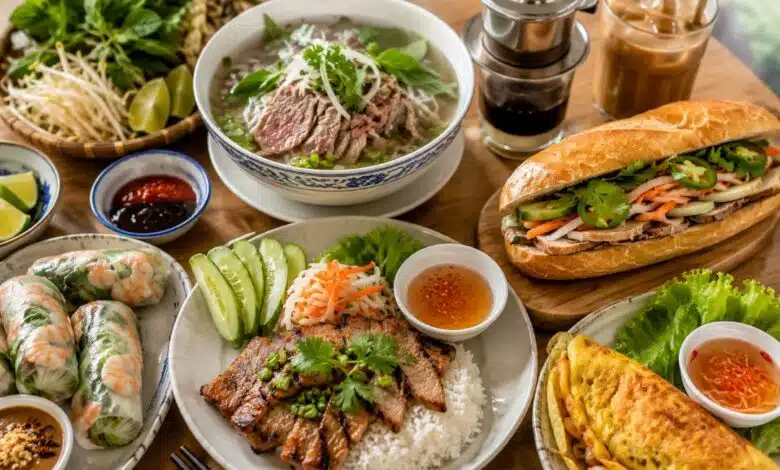
Vietnamese food is much larger than a bowl of phở and a bánh mì sandwich. Those two dishes are excellent entrances, but the cuisine stretches through delicate northern broths, the concentrated heat and small composed plates of Central Vietnam, generous southern herb baskets, rice meals, street-side snacks, bakeries, family tables and cafés built around slow-dripped coffee. This guide follows a full day of eating so that first-time diners can recognize the major dishes, regional clues and restaurant formats without reducing the country to a short checklist.
Vietnamese cuisine is a diverse collection of regional food traditions shaped by rice, noodles, broths, herbs, fermented seasonings, vegetables, seafood, pork, beef, chicken and local climates. Northern cooking is often described through clarity and restraint, Central cooking through stronger spice and concentrated flavors, and Southern cooking through abundant herbs, tropical ingredients and sweeter edges. These patterns help readers navigate a menu, but they are tendencies rather than rigid rules for every cook or restaurant.
A day of eating across the Vietnamese table
Phở, bánh cuốn, sticky rice, cháo or a fresh bánh mì with strong coffee.
A rice plate, bún bowl, grilled meat, fresh herbs and a sharp dipping sauce.
Café drinks, fruit, chè, bakery snacks or a quick street-food stop.
Shared dishes, vegetables, fish, meat, soup and rice—or a regional noodle specialty.
Vietnamese food is a network of regional tables
The easiest mistake is to treat Vietnamese food as one national menu repeated from Hanoi to Ho Chi Minh City. In reality, climate, agriculture, history, local taste and urban food culture shape different experiences. A dish may keep the same name while its broth, garnish, sweetness, heat or portion changes. Another dish may be closely tied to one city and appear elsewhere only as a specialty.
Regional language is useful when it gives context. Northern food often places more emphasis on balance, clean broths and a quieter use of sweetness. Central dishes can bring concentrated chile heat, fermented flavors and smaller portions designed to be eaten in sequence. Southern cooking often uses more herbs, tropical produce, coconut and sweeter seasoning. Yet no region fits a single adjective, and migrant communities have carried dishes across the country and around the world.
Outside Vietnam, restaurant menus add another layer. A family from one region may open a restaurant in a city where customers expect dishes associated with another. A pho shop may serve southern-style garnish plates even if the broth is restrained. A bakery may combine Vietnamese cold cuts with modern grilled chicken or tofu. These adaptations do not erase regional identity; they show how cuisines travel.
For a first order, use the regional map as a compass rather than a courtroom. Ask what the restaurant is known for. Read the full dish description. Notice whether the menu identifies Hanoi, Huế, Hội An, Saigon or the Mekong Delta. Those place names often tell you more than a generic label such as “traditional Vietnamese.”
Breakfast begins with broth, rice or bread
Vietnamese breakfast can look substantial to diners used to cereal or toast. A steaming noodle soup, rice dish or savory bánh mì is not necessarily reserved for lunch. Morning food is often practical: warm, quick, fragrant and filling enough to carry a person into the day.
Phở is the best-known example, but it is not the only one. Bánh cuốn brings thin steamed rice sheets rolled around savory filling and served with herbs and dipping sauce. Cháo offers a comforting rice porridge that can be plain or enriched with chicken, pork, fish, offal, herbs and fried garnishes. Xôi, or sticky rice, may be savory or sweet and can appear in compact takeaway portions.
Bánh mì fits breakfast especially well because the bread can be assembled quickly with egg, pâté, cold cuts, grilled meat or a simpler combination of cucumber, herbs and seasoning. In some settings, bread and eggs arrive deconstructed, allowing the diner to tear pieces of baguette and dip them into yolk, sauce or a sizzling pan.
Coffee completes many morning scenes. Vietnamese coffee is usually strong and often sweetened with condensed milk, though black versions are common. The phin filter slows the process and turns a quick caffeine stop into a small ritual. In a busy bakery or café, the drink may arrive over ice while the sandwich is wrapped for the road.
Phở is a family of bowls, not one universal recipe
Phở combines broth, flat rice noodles, meat or chicken, aromatics and carefully chosen garnishes. That definition sounds simple, but the bowl depends on the broth’s depth, clarity, seasoning and regional style. Beef phở—phở bò—may include rare sliced beef, brisket, tendon, meatballs or combinations. Chicken phở—phở gà—has its own broth and character rather than being merely a lighter substitute.
Northern-style phở is often associated with a clearer, more restrained bowl in which broth and meat remain central. Garnishes may be simpler. Southern-style phở commonly arrives with a larger side plate of herbs, bean sprouts, lime and chile, and diners may find a sweeter broth or more condiment options. These descriptions are broad; individual shops build their own signatures.
First taste the broth before adding hoisin, chile sauce, lime or herbs. Condiments are tools, not a compulsory paint set. A well-made broth already has a balance the cook intended. Once you understand it, adjust gradually. Lime brightens, chile changes the heat, herbs alter the aroma, and sweet or salty sauces can quickly dominate.
Read the meat options carefully. “Special” or “combination” phở may include several cuts and textures. Rare steak cooks further in the hot broth. Tendon is gelatinous. Tripe has a distinct chew. Meatballs are springy and seasoned. A first-time diner who prefers familiar textures may start with brisket, chicken or a straightforward rare-beef bowl.
Takeout phở requires sensible packaging. Broth should travel separately from noodles, meat and herbs. If everything sits together during a long drive, noodles soften and herbs wilt. Reheat the broth until properly hot according to the restaurant’s instructions, then assemble the bowl so the texture resembles restaurant service more closely.
Northern Vietnamese food: clarity, balance and layered restraint
Northern food is often introduced through Hanoi, where the bowl, grill, noodle basket and street-side table all matter. The region’s cooking can feel precise rather than quiet: broth is expected to carry flavor without becoming muddy, herbs are chosen for function, and fermented seasonings may bring depth in small amounts.
Bún chả is a useful example. Grilled pork arrives with rice vermicelli, herbs, greens and a dipping broth or sauce. The diner builds each bite rather than receiving one fully mixed bowl. Smoke, sweet-sour dressing, fresh herbs and noodles create movement across the meal.
Bánh cuốn shows another kind of delicacy. Thin steamed rice sheets are soft and translucent, often wrapped around minced pork and mushroom, then served with fried shallots, herbs and dipping sauce. The dish can look modest, but its pleasure depends on the contrast between tender rice sheets, savory filling and crisp garnish.
Chả cá brings turmeric-marinated fish, dill, scallions, noodles and accompaniments into a fragrant table experience. The dish’s identity is not simply “grilled fish”; the herb profile and assembly matter. Likewise, northern noodle dishes often reveal their character through the relationship among broth, fermented sauce, herbs and texture rather than through extreme heat.
A diner should avoid translating northern restraint as lack of flavor. Many dishes rely on subtler layers that disappear if the first action is to flood them with chile sauce. Taste, then add. The same principle applies to a careful cup of broth or dipping sauce: intensity is not the only measure of complexity.
Central Vietnam: concentrated flavor, heat and composed dishes
Central Vietnamese food is often described through Huế and the surrounding culinary traditions, but the region includes many distinct cities and local specialties. The food can be more assertive in chile, salt, fermented seasoning and color, while portions may be smaller so that several dishes can share the table.
Bún bò Huế is one of the most recognizable bowls. Its broth is aromatic and robust, commonly associated with lemongrass, chile and a deeper savory profile than phở. The noodles are rounder and thicker. Beef, pork and other components may appear depending on the shop. Ordering it simply as “spicy pho” misses the dish’s separate identity.
Mì Quảng is another Central landmark. It often uses wide noodles, a relatively small amount of concentrated broth, herbs, peanuts, rice crackers and proteins such as shrimp, pork or chicken. The bowl is neither a dry noodle salad nor a soup in the usual sense. Its pleasure comes from the coated noodles, crunch and intense seasoning.
Cao lầu is strongly associated with Hội An. Thick, chewy noodles, pork, greens and crisp elements create a distinctive texture. Outside the region, restaurants may offer interpretations because certain local ingredients and production traditions are difficult to reproduce exactly. A thoughtful menu should present the dish as a regional specialty rather than just another generic noodle bowl.
Smaller rice-based dishes such as bánh bèo, bánh nậm and related specialties reward diners who enjoy tasting several textures. They may involve steamed rice batter, leaves, shrimp, scallion oil, crisp toppings and dipping sauce. A table of small dishes can feel ceremonial without being formal.
Central food is sometimes flattened into “the spicy region.” Heat matters, but it is only one dimension. Fermented seafood, lemongrass, herbs, texture and careful portioning also shape the experience. Ask the restaurant how hot a dish is prepared rather than assuming every Central specialty will be unbearable—or mild.
Southern Vietnamese food: herbs, abundance and sweeter edges
Southern Vietnamese cooking draws on the agricultural abundance and tropical climate of the south, including the Mekong Delta and the vast food culture of Ho Chi Minh City. Menus can feel generous in herbs, vegetables, fruit, coconut and sauce. Sweetness may be more noticeable, but the best dishes balance it with acidity, salt, smoke and fresh greens.
Cơm tấm, or broken rice, is a classic southern plate. It often arrives with grilled pork, shredded pork skin, a steamed egg-and-meat loaf, pickled vegetables, cucumber, scallion oil and fish-sauce dressing. The plate is modular: customers may choose one protein or a combination.
Hủ tiếu can appear as soup or dry noodles with broth on the side. The noodle type, toppings and broth vary, making it a useful example of southern flexibility. A menu may specify pork, seafood or a special combination. Do not assume that every bowl resembles phở simply because both involve noodles and broth.
Bánh xèo brings a dramatic crisp crepe colored by turmeric and filled with ingredients such as pork, shrimp and bean sprouts. It is usually eaten with herbs, greens and dipping sauce. The right experience depends on the brittle edge and the contrast between hot crepe and fresh leaves, which is why delivery can soften it quickly.
Southern phở often comes with an abundant garnish plate. Basil, bean sprouts, lime and chile allow customization. This does not mean the broth is unfinished. Taste it first, then use the garnish plate to shape aroma and texture one addition at a time.
Southern tables can also reveal strong Cambodian, Chinese and regional river-delta influences. The cuisine is not a single sweetened version of northern food; it has its own ingredient networks, urban histories and local specialties.
Bánh mì begins at the bakery counter
Bánh mì can refer broadly to bread, but on an English-language menu it usually signals a Vietnamese baguette sandwich. The best way to understand it is not as one fixed recipe but as a bakery format: crisp, airy bread filled to order with savory ingredients, pickles, cucumber, herbs, chile and seasoning.
A classic combination may include pâté, Vietnamese cold cuts and mayonnaise-like richness, but menus also feature grilled pork, chicken, meatballs, shredded pork, eggs, sardines, tofu and modern plant-based fillings. The pickled carrot and daikon provide acidity and crunch. Cilantro adds fragrance. Fresh chile can turn a mild sandwich into a hot one quickly.
Bread quality matters enormously. The crust should crack rather than fight back, while the interior should be light enough to hold fillings without becoming a heavy loaf. A sandwich prepared too far in advance can lose this contrast as sauces and pickles soak into the crumb.
At a bakery counter, look for a visible filling list rather than ordering “one bánh mì” and hoping for the default. Ask whether the house special contains pâté, head cheese, pork roll or other cold cuts. A “grilled pork bánh mì” is a different eating experience from a cold-cut combination.
Breakfast versions may center on fried eggs. Some cafés serve bread beside a sizzling pan of eggs, pâté, sausage or beef, allowing the diner to tear and dip. Other shops build egg directly into the sandwich. These are not minor substitutions; they change the structure of the meal.
Vegetarian bánh mì needs ingredient confirmation. Tofu and vegetables may be obvious, but spreads, mayonnaise, pâté substitutes and seasoning sauces vary. Ask whether fish sauce or animal-derived seasoning is used. A shop with a dedicated chay menu is usually easier to navigate than one offering a single improvised vegetable sandwich.
Rice dishes are the everyday backbone
Phở attracts international attention, but rice is the quiet architecture of countless Vietnamese meals. It can anchor an individual plate, sit at the center of a family meal or become noodles, cakes, rolls and batter. Understanding rice formats immediately widens the menu.
An individual rice plate usually combines steamed or broken rice with a protein, pickled vegetables, cucumber, herbs, soup or sauce. Grilled pork, chicken, beef and fish are common. The plate may arrive fully composed, making it easy for a solo diner to order.
Family-style dining works differently. Rice is shared alongside several dishes: a vegetable, a soup, fish, meat, tofu, eggs or a braised preparation. No single plate has to contain every flavor because the meal is assembled across the table. A visitor who orders several entrées without rice may miss the intended balance.
Clay-pot dishes bring caramelized, concentrated flavor and are designed to be eaten with rice. Braised fish or pork can be salty and rich by itself; rice softens and extends it. Similarly, a sharp vegetable pickle or simple broth may seem minor until it completes the meal.
When ordering rice dishes for takeout, sauces and grilled proteins generally travel well, though fried eggs and crisp garnishes are more fragile. Ask for fish-sauce dressing separately if you want control over salt and moisture. Reheat rice carefully so it does not dry out.
Noodles beyond phở
Vietnamese menus use several noodle words, and learning them is more useful than memorizing a list of isolated dishes. The noodle changes the shape, chew, sauce and broth relationship.
| Menu word | General meaning | What to expect |
|---|---|---|
| Phở | Flat rice noodles and the dishes built around them | Most famously an aromatic broth with beef or chicken |
| Bún | Thin round rice vermicelli | Soup, grilled-meat bowls, herbs, salads or dipping formats |
| Mì | Wheat or egg noodles in many contexts | Soup or dry dishes with a firmer chew |
| Hủ tiếu | A southern noodle family with multiple styles | Soup or dry service, often with pork or seafood |
| Bánh canh | Thick, chewy noodles made from rice, tapioca or a blend | A substantial soup with a distinctive slippery chew |
| Miến | Glass noodles, commonly mung-bean based | Light, springy noodles in soups or stir-fried dishes |
These definitions are practical rather than absolute. Regional language and restaurant translation can vary. A menu photograph, ingredient description or server explanation may be more reliable than an English label alone.
For a second Vietnamese meal, choose a noodle type you have not tried. A bún bowl with grilled meat and herbs teaches a different logic from phở. Bánh canh offers chew and body. Mì Quảng uses concentrated sauce and toppings rather than a full bowl of broth. Variety becomes easier once you stop asking only, “Which soup is closest to phở?”
Street food is a format, not a quality category
Street food can be breakfast from a stall, a noodle bowl on a low table, a bánh mì assembled curbside, a market snack or a specialty sold for only a few hours each day. It is not automatically cheaper, more authentic or better than restaurant food. The term describes how food is sold and eaten as much as what the food is.
Many street vendors specialize deeply. One stall may serve a single noodle dish. Another may sell only rice rolls or grilled skewers. That focus can create consistency, but it also means timing matters. A breakfast vendor may close before late morning. A lunch stall may sell out.
Outside Vietnam, “street food” is often recreated in food halls, pop-ups, festivals and compact restaurants. The format changes, but the dish can still preserve its essential method. Judge it by freshness, balance, texture and transparent menu description rather than by whether the table is literally on a sidewalk.
Bánh xèo, grilled skewers, rice-paper rolls, bánh cuốn, sticky rice and noodle bowls can all appear in casual settings. The practical question is how the food is prepared and served. Crisp dishes should arrive quickly. Herb-heavy plates need fresh greens. Broths should be hot and aromatic. Dipping sauces should support rather than drown the food.
Fresh rolls and fried rolls are different orders
English menus often use “spring rolls” broadly, which can produce a surprise. Fresh rice-paper rolls—commonly known as gỏi cuốn in many southern contexts—are soft, translucent and filled with ingredients such as herbs, rice vermicelli, shrimp, pork or tofu. They are served cool with dipping sauce.
Fried rolls, often called chả giò in southern usage and nem rán in northern usage, are crisp, hot and filled with a seasoned mixture that may include pork, vegetables, mushrooms and noodles. Wrapper styles vary, and some produce a blistered rice-paper crust while others resemble familiar wheat-wrapper spring rolls.
Ask whether the menu item is fresh or fried. Photographs help, but names differ across regions and translations. A “vegetable spring roll” may be fried even if the word fresh appears elsewhere on the menu. A tofu rice-paper roll may still come with a fish-sauce-based dip.
For takeout, fresh rolls need protection from drying, while fried rolls need ventilation to preserve crispness. Sealing hot fried rolls in a tight container traps steam. Keeping dipping sauce separate helps both types arrive in better condition.
Vietnamese cafés are part of the food map
A Vietnamese café is not merely a place to end the meal. Coffee culture has its own rhythms, equipment and sweetness levels. Strong coffee may drip through a small phin filter over condensed milk, arrive black over ice, or become the base for modern coconut and creamier drinks.
Cà phê sữa đá—iced coffee with condensed milk—is bold, sweet and cooling. Black iced coffee is sharper. Egg coffee, associated especially with Hanoi, uses a whipped egg mixture to create a rich foam. Coconut coffee leans toward a dessert-like experience. Menus increasingly include flavored and blended variations, so ask about sweetness if you prefer restraint.
Cafés may also serve yogurt, fruit, tea, light snacks, bánh mì and small savory plates. In immigrant neighborhoods, a café can double as bakery, lunch counter and social meeting place. This makes it a useful destination for first-time diners who want a low-pressure introduction.
Do not assume dairy-free because a drink looks black or because coconut appears in the name. Condensed milk, creamers and prepared mixes vary. Request less sweet before the drink is made; reducing sweetness after mixing is difficult.
How to order vegetarian Vietnamese food
Vietnamese vegetarian food is not limited to removing meat from standard dishes. Dedicated chay restaurants may offer tofu, mushrooms, vegetables, plant-based mock meats, noodle soups, rice plates, rolls and regional dishes built around a separate vegetarian tradition.
The word chay is the most useful menu clue. It commonly indicates vegetarian food, though a diner seeking a strict vegan meal should still confirm eggs, dairy and other ingredients. “Không thịt” means no meat, but that request alone may not exclude fish sauce, shrimp paste or meat broth.
A dish can look vegetarian while depending on animal-derived seasoning. Vegetable phở may use meat broth unless specifically marked chay. Tofu can be seasoned with fish sauce. A plate of stir-fried greens may contain oyster sauce. Fresh rolls with vegetables may arrive with a fish-sauce dip.
Dedicated vegetarian restaurants reduce some ambiguity, but individual standards still vary. Ask direct questions in plain language: Is the broth vegetarian? Does the sauce contain fish sauce or shrimp paste? Is there egg? Is the fryer shared? Staff can answer more clearly when the question identifies the exact ingredient.
A menu description may list only vegetables while omitting broth, sauce or seasoning details. Confirm the complete preparation when dietary restrictions matter.
Restaurant, pho shop, bakery or café?
The right venue depends on what you want to learn from the meal. A specialist shop may outperform a broad restaurant in one category, while a full restaurant offers the best chance to compare regions and formats.
| Place type | Best known for | What to check |
|---|---|---|
| Phở shop | Broth, noodles and a focused list of beef or chicken options | Meat cuts, bowl size, garnish style and takeout packaging |
| Bánh mì bakery | Fresh bread, sandwiches and savory takeaway | Fillings, pâté, chile, daily bread and vegetarian sauces |
| Full restaurant | Rice dishes, noodles, shared plates and regional specialties | House specialties, portion format and regional identity |
| Vegetarian restaurant | Chay soups, tofu, vegetables and plant-based versions | Vegan ingredients, eggs, dairy and shared preparation |
| Café | Coffee, cold drinks, snacks and light meals | Sweetness, condensed milk, café-only foods and hours |
| Market counter | Prepared foods, rolls, rice plates and take-home items | Preparation date, refrigeration and reheating instructions |
How to build a first Vietnamese order
A first meal does not need ten dishes. Variety should reveal structure, not create clutter. Two or three well-chosen items teach more than a giant platter of foods you cannot identify.
What sauces and condiments are telling you
Vietnamese food often invites participation. A bowl may arrive with herbs, lime and chile. A rice plate may come with fish-sauce dressing. Fresh rolls need a dip. This does not mean the kitchen failed to finish the dish. The condiments allow the diner to control brightness, heat, salt and aroma.
Nước chấm is a broad term for dipping sauce and often includes fish sauce, water, sugar, lime or vinegar, garlic and chile. Its balance changes by dish and household. Hoisin and chile sauce frequently appear at phở shops, especially outside Vietnam. Peanut-based dips are common with some rolls.
Use condiments sequentially. Taste the unaltered food. Add a little lime or sauce. Taste again. This protects delicate broth and helps you understand what each addition does. Pouring every bottle into the bowl may create a strong flavor, but it teaches very little about the original dish.
Vegetarian diners should ask whether a sauce contains fish sauce, shrimp paste or oyster sauce. A separate vegetarian sauce may be available even when it is not placed on the table automatically.
What travels well for takeout—and what needs careful packing
Vietnamese food includes excellent takeout choices, but different dishes fail in different ways. Bánh mì can lose crust if wrapped too tightly or held too long. Phở noodles soften if stored in broth. Bánh xèo steams itself limp in a closed box. Fresh rolls dry out when exposed to air.
Rice plates, grilled meats, many bún bowls and braised dishes usually travel well when wet components are separated. Herbs and pickles should stay fresh. Fish-sauce dressing can travel in a small container so the diner controls moisture.
Noodle soup should arrive as a kit: hot broth, noodles, protein, herbs and condiments separated as needed. Reassembly takes a moment but preserves the bowl. Fried rolls need a container that releases some steam. A bakery sandwich is best eaten soon after purchase.
Our broader guide to foods that travel well for takeout and delivery explains the same texture problem across cuisines. Here, the relevant lesson is simple: choose packaging that protects the feature you ordered the dish for—crisp bread, hot broth, fresh herbs or delicate rice paper.
Common mistakes on a first Vietnamese menu
Assuming phở is the only noodle soup
Phở is famous, but bún bò Huế, hủ tiếu, bánh canh, mì and miến dishes offer different noodles, broths and regional identities.
Treating all spring rolls as the same
Fresh rice-paper rolls and fried rolls have opposite textures and service temperatures. Ask which one the menu means.
Ordering bánh mì without naming the filling
The bread is only the format. Cold cuts, grilled pork, chicken, eggs, meatballs and tofu create very different sandwiches.
Calling northern food bland
Restraint can mean clarity, careful broth and measured seasoning. Taste before adding strong sauces.
Reducing Central food to heat
Chile matters, but fermented flavors, herbs, texture and concentrated sauces matter too.
Assuming vegetable means vegetarian
Broth, fish sauce, shrimp paste and oyster sauce may not appear in the dish name.
Judging the entire cuisine through delivery
Softened bánh xèo, wilted herbs and overcooked noodles may reflect packaging rather than the kitchen’s intended result.
Adding every condiment before tasting
A broth or dipping sauce has already been balanced. Adjust only after you understand the base.
The family table explains what single dishes cannot
A restaurant menu often separates foods into appetizers and entrées, but a Vietnamese family meal is built through relationships. Rice, soup, vegetables, protein, pickles and dipping sauces share the work. A rich braise needs plain rice. A simple vegetable dish refreshes the palate. Soup changes the pace of the meal.
This is why judging a dish in isolation can be misleading. A salty fish preparation may seem intense until eaten with rice and greens. A light soup may feel incomplete until it follows a grilled or braised dish. Balance happens across the table.
When dining with a group, ask which dishes are designed for sharing. Choose different methods—one grilled, one braised, one vegetable, one soup—rather than four items covered in similar sauces. The result will feel more coherent and more representative of family-style eating.
A Vietnamese table should become wider with every order
Phở and bánh mì deserve their fame because they are deeply satisfying and easy to approach. They should function as doors, not fences. The next meal might replace flat rice noodles with bún, move from a bakery to a rice restaurant, or compare a northern dish with a Huế specialty.
Pay attention to the restaurant’s identity. A menu with one Central dish buried among generic favorites may not be the best place to explore Huế cooking. A family shop with a short specialist list may teach more than a hundred-item menu. A café may reveal as much about Vietnamese food culture as a dinner restaurant.
The most useful habit is curiosity with precision: ask what a dish is called, where it is associated, how it is eaten and what the kitchen does especially well. That approach respects regional difference while leaving room for family recipes, migration and contemporary creativity.
Questions people ask before ordering Vietnamese food
The answers below cover regional style, menu language, vegetarian ordering and the most common first-meal decisions.
What are the most common Vietnamese dishes for beginners?
Phở, bánh mì, fresh rolls, fried rolls, cơm tấm and bún bowls are approachable starting points. Choose dishes with different formats so you can compare broth, rice, grilled food, herbs and dipping sauces.
How is Northern Vietnamese food different from Southern Vietnamese food?
Northern cooking is often associated with clearer broths, measured sweetness and restrained seasoning, while southern cooking commonly uses more herbs, tropical ingredients and sweeter edges. These are broad patterns rather than strict rules for every cook.
Is all Vietnamese food spicy?
No. Some Central Vietnamese dishes can be assertively hot, but many Vietnamese foods are mild until fresh chile or chile sauce is added. Ask about the kitchen’s heat level because the same dish name can vary.
What is the difference between fresh rolls and fried spring rolls?
Fresh rolls use soft rice paper and are served cool with herbs, noodles and fillings such as shrimp, pork or tofu. Fried rolls are hot and crisp, with a seasoned filling inside a wrapper that is cooked in oil.
Can Vietnamese food be vegetarian or vegan?
Yes. Dedicated chay restaurants and vegetarian menus can offer noodle soups, tofu, rice dishes, rolls and vegetables. Still, confirm fish sauce, shrimp paste, oyster sauce, meat broth, egg and dairy when those ingredients matter.
What should I order besides phở?
Try bún chả, cơm tấm, bún bò Huế, mì Quảng, hủ tiếu, bánh xèo, bánh cuốn or a regional rice plate. The best choice depends on whether you want broth, grilled meat, crisp texture, rice or a dry noodle bowl.
What does bánh mì mean?
Bánh mì can refer to bread, while English-language menus commonly use the term for a Vietnamese baguette sandwich. The filling—such as cold cuts, grilled pork, chicken, egg or tofu—defines the specific order.
Should I add hoisin and chile sauce to phở?
Taste the broth first. Then add lime, herbs, chile or sauce gradually. Adding everything immediately can hide the broth’s balance and make it difficult to understand the shop’s style.
Which Vietnamese dishes travel well for takeout?
Rice plates, grilled meats, many bún bowls, braised dishes and carefully packed bánh mì generally travel well. Phở should be packed with broth separate, while bánh xèo and fried rolls need ventilation to protect crispness.
