
Vesti Food Atlas · City Table Map
Toronto does not reward the traveler who asks for one definitive local dish and then waits for the city to place it neatly on a plate. Its food story is spread across subway lines, suburban plazas, market streets, family bakeries, banquet rooms, food courts and tiny counters where the shortest menu item may carry the longest migration story.
That can feel thrilling or slightly inconvenient, depending on whether you enjoy choosing dinner before you understand the map. The useful way into Toronto is not to collect famous restaurants like souvenirs. It is to decide what kind of eating day you want, then choose the neighborhood that is best equipped to give it to you.
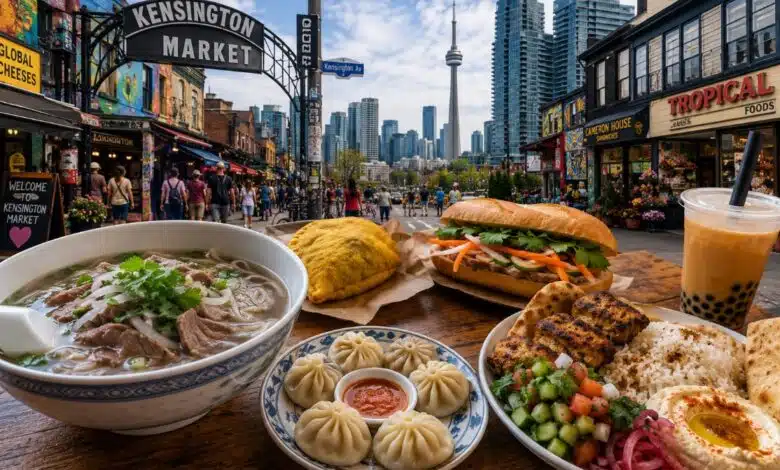
For a first Toronto food trip, use Kensington Market for variety within walking distance, Scarborough for deep international choice across plazas and arterial roads, and North York for concentrated Chinese, Korean, Persian, Japanese and other Asian dining corridors. Add a downtown market when you want ingredients, prepared foods and an easy indoor stop. Toronto’s most interesting meals often appear outside the postcard center, so plan by neighborhood rather than by a single citywide ranking.
Toronto is a food city built in layers, not a single downtown scene
Some cities reveal themselves around one historic center. Toronto is less obliging. Downtown contains major markets, polished dining rooms, Chinatown, Koreatown, casual counters and restaurants that suit a short visit. Yet many of the city’s strongest everyday food traditions live farther out, where immigrant communities built grocery networks, banquet restaurants, bakeries, butcher counters and takeout kitchens around the practical geography of housing, transit and shopping plazas.
This matters because “Toronto food” does not mean one homogeneous fusion cuisine. It means that a diner can move between highly specific culinary traditions without leaving the city: Tamil breakfast, Jamaican patties, Cantonese barbecue, Persian kebabs, Ukrainian baked goods, Filipino silog, Hakka chili chicken, Levantine pastries, Korean soups, Afghan rice dishes, Tibetan momos, Caribbean roti and much more. The city’s strength lies in proximity without sameness.
The mistake is trying to experience all of this in one afternoon. Toronto is physically large. Scarborough alone is not a single compact restaurant district, and North York is not one block of conveniently arranged dining rooms. Travel time is part of the meal plan. A restaurant that looks “nearby” on a citywide map may require a long transit ride, a bus connection or a drive through rush-hour traffic.
Choose the shape of the day before choosing the dish
A practical Toronto food map begins with mood. Are you walking and grazing? Shopping for ingredients? Meeting a family group? Looking for one focused regional meal? The same city produces very different experiences depending on the format.
Walk, browse and taste
Choose Kensington Market or a compact downtown corridor. This is the easiest format for a visitor who wants several small stops, coffee, bakery food, a market counter and room to change plans.
Drive or ride for one serious meal
Choose Scarborough or North York and build the outing around a specific cuisine, plaza or restaurant cluster. The reward is depth rather than visual convenience.
Shop first, eat second
Begin at a public market or international grocery, notice what people are buying, then choose a prepared-food counter or nearby restaurant that uses the same culinary vocabulary.
Make it a shared table
Toronto is particularly good for cuisines built around multiple dishes. Bring enough people for dim sum, mezze, Korean barbecue, a Caribbean spread or a table of South Asian curries and breads.
There is no moral superiority in finding the most obscure restaurant in the farthest plaza. A city guide should make dinner better, not turn hunger into an endurance sport. The wise route balances curiosity with the actual energy of the day.
Kensington Market is the rehearsal room: noisy, flexible and easy to improvise
Kensington Market is the most forgiving place to begin because the neighborhood allows the plan to change every few minutes. It is compact enough for walking, varied enough for a mixed group and casual enough that one stop does not have to carry the entire day. Grocery storefronts, cafés, bakeries, takeout windows, small restaurants, vintage shops and street life overlap rather than separating themselves into tidy visitor categories.
The food appeal is not that every cuisine has its definitive Toronto expression here. It is that the neighborhood makes comparison possible. You can notice how a Latin American grocery differs from a specialty spice shop, how a bakery counter organizes sweet and savory pastries, or how a tiny lunch counter solves the problem of serving a complete meal in a narrow room.
The ideal Kensington afternoon is slightly underplanned: one savory stop, one market browse, one drink, then enough appetite left for the thing you did not know you wanted until you smelled it.
For a first visit, resist the urge to order a full entrée at the first appealing place. Start with something portable or shareable. Empanadas, tacos, patties, dumplings, baked goods, sandwiches and small plates fit the neighborhood’s rhythm. Then walk. The second choice will be more informed because you have seen the street, the lines, the menus and the portions.
Kensington also demonstrates an important Toronto truth: a neighborhood can be historically shaped by several immigrant communities without becoming a museum of one cuisine. Its identity has changed through successive waves of migration, and the food landscape continues to change. The respectful way to read it is not to search for a frozen idea of authenticity. Look instead at which businesses are serving local residents now, which foods are sold as everyday staples and which are presented mainly as visitor experiences.
A smart order of operations
Scarborough is where the map becomes more serious—and the food becomes more specific
Scarborough is often described as one of Toronto’s great international food landscapes, but the phrase can sound vague until you understand the geography. This is not one walkable restaurant strip. It is a broad eastern area with many neighborhoods, shopping plazas, major roads and community clusters. The food discovery method is different: choose a cuisine or corridor, check the route, then let the surrounding businesses deepen the visit.
Scarborough is particularly valuable for diners interested in South Asian, Sri Lankan Tamil, Chinese, Caribbean, Filipino, Middle Eastern, Southeast Asian and East African food, among many other traditions. The exact mix changes from one part of the area to another. A plaza may contain a grocery, bakery, halal butcher, sweet shop, tea counter and restaurant whose menus make sense together because they serve the same local community.
This is where Toronto rewards attention to ordinary commercial spaces. A modest exterior tells you almost nothing about the care inside. Banquet dishes, slow-cooked stews, hand-shaped breads and regional breakfast foods may all appear in places that were designed for convenience rather than visual drama.
South Asian food: ask what region the menu is speaking
“Indian food” is too broad to be a useful ordering strategy in Scarborough. Menus may emphasize North Indian curries and tandoor dishes, South Indian dosas and idli, Sri Lankan Tamil kothu roti and string hoppers, Pakistani kebabs and biryani, Kerala specialties, Gujarati snacks, Bengali sweets or a restaurant’s own mix of regional and diaspora cooking.
Start by reading the starches and breakfast section. Dosa, appam, parotta, naan, roti, rice and string hoppers lead to different meals. A restaurant known for one style of bread or fermented batter may be more revealing than a place with a giant menu promising everything.
Spice level is not the only question. Ask whether a dish is dry or saucy, whether it comes with rice, whether bread is separate and how large the portion is. Family-style ordering works best when the table includes contrast: one grilled or roasted item, one sauce-based dish, a vegetable, rice or bread, and something acidic or fresh.
Caribbean food: look beyond the single famous item
Jamaican patties are an excellent snack, but they should not become the only Caribbean food visitors recognize. Scarborough offers opportunities to explore jerk preparations, curry goat, oxtail, stewed chicken, rice and peas, fried plantain, roti, doubles, pepper sauces and bakery items shaped by Jamaican, Trinidadian, Guyanese and other Caribbean traditions.
The menu wording matters. “Roti” can refer to flatbread, a wrapped meal or a restaurant category depending on context. A counter may ask whether you want dhalpuri or paratha-style roti, whether gravy should be inside or separate, and which filling you prefer. That conversation is not a delay. It is the menu explaining itself.
For takeaway, ask what will travel well. Patties and some baked goods are easy. Fried foods lose crispness. Saucy dishes often improve after a short rest but need secure containers. If you are carrying food across the city, separate anything crisp from anything wet.
Chinese food in Scarborough: use the specialty, not the word “Chinese”
Toronto’s Chinese dining landscape includes Cantonese, Hong Kong-style café food, northern Chinese noodles and dumplings, Sichuan dishes, Hunan flavors, barbecue meats, hot pot, seafood restaurants and regional traditions that deserve more precise names. Scarborough’s plazas and dining rooms make this range visible.
The easiest first question is: what does the restaurant appear built to do? A barbecue counter with hanging meats is a different experience from a seafood banquet restaurant. A dumpling shop should not be judged by the same criteria as a congee café. A hot-pot restaurant is a social cooking format, not simply a bowl of soup.
For a small group, choose a specialty place and order narrowly. One noodle, one dumpling, one vegetable and one house specialty often reveal more than six unrelated dishes. For a large group, banquet-style ordering opens the menu because whole fish, shared seafood, larger vegetable plates and slow-cooked dishes become practical.
Hakka food: a Toronto menu category worth understanding
In Toronto, “Hakka” often refers to an Indo-Chinese restaurant tradition shaped by Chinese communities in South Asia and by further migration to Canada. Menus may include chili chicken, Manchurian-style dishes, fried rice, noodles and sauces that combine Chinese cooking techniques with South Asian seasoning preferences.
Do not approach it as a purity test between two national cuisines. It is a diaspora food language with its own local familiarity. The useful questions concern heat, sweetness, sauce level and whether a dish is dry or served with gravy.
North York works best when you follow a corridor and let dinner become the evening
North York can feel easier than Scarborough in some areas because restaurants gather along recognizable transit corridors, yet it still demands geographic discipline. Around major north-south streets and subway access points, you can find dense clusters of Korean, Chinese, Japanese, Persian and other international dining, often supported by dessert cafés, bakeries, karaoke venues, late-night restaurants and specialty groceries.
This is a good part of Toronto for a deliberate dinner rather than constant grazing. Choose one cuisine, book or queue for the main meal, then leave room for a café or dessert stop nearby.
Korean food: understand the table before counting the dishes
Korean dining can seem abundant before the main order arrives because banchan—small accompanying dishes—may be placed on the table. They are part of the meal’s structure, not random free appetizers to be judged only by quantity.
For a first group meal, choose between three broad formats. Korean barbecue is interactive and social. Soup and stew restaurants center individual or shared bubbling dishes. Home-style menus may offer grilled fish, marinated meats, noodles, rice dishes and seasonal specialties.
Ask whether barbecue is cooked at the table, whether there is a minimum order and whether certain cuts are intended for sharing. For soups, confirm whether the broth is spicy, whether rice comes with it and whether the portion is individual. Raw marinated crab and other highly specific dishes can be memorable, but they are not obligatory proof of culinary seriousness. Order them because you enjoy the texture and preparation, not because the internet declared them advanced.
Persian food: start with rice, herbs and the style of grill
North York is an important area for Persian food, and a first meal becomes much clearer when you stop thinking only in terms of “kebab.” The rice matters. The herbs matter. The char and seasoning of the meat matter. Stews offer a completely different route into the cuisine.
A balanced table might include one grilled meat, one stew, rice, herbs, yogurt and a salad or pickled element. Ask whether portions are designed for one person or sharing. Some platters are generous enough to rearrange the entire table plan.
Bakery and sweet-shop stops can extend the experience without requiring another full restaurant meal. Persian breads, cookies, nuts, tea and frozen desserts provide a different view of the same culinary world.
Chinese and Japanese dining: distinguish everyday comfort from occasion food
North York supports both casual and celebratory dining. A hand-pulled noodle shop, sushi counter, izakaya, hot-pot restaurant and polished seafood dining room may sit within a short ride of one another, but they solve different needs.
For weekday comfort, noodles, rice bowls, dumplings and set meals are easier to order and often faster. For an evening with friends, hot pot or shared plates justify more time. For a special dinner, reservation-driven restaurants may require planning and a clearer budget.
Fast and warming
Noodles, soup, dumplings, congee or a rice set. Best when the weather is unfriendly or the day has already been long.
Long and social
Korean barbecue, hot pot or a shared Persian spread. Best when the table wants conversation and no one is rushing to the next attraction.
Late and sweet
Tea, shaved ice, pastries, frozen desserts or a café stop after dinner. North York often makes the second venue as important as the first.
Eastern European food in Toronto often appears where restaurant and grocery culture overlap
Eastern European food is not confined to one picturesque district. It appears through Polish, Ukrainian, Russian, Jewish, Balkan, Romanian and other community businesses across Toronto and the wider metropolitan area. The most useful places may be delis, bakeries, prepared-food counters and supermarkets rather than formal restaurants.
This is why a deli counter deserves to be read as a menu. Trays of cabbage rolls, kotleti, schnitzel-like cutlets, buckwheat, potatoes, salads, dumplings and baked goods can build a complete meal. Labels may use English, transliteration or the language of the community, and the same food may appear under more than one spelling.
Our guide to reading an Eastern European deli counter is useful before shopping because it explains prepared foods, chilled items, frozen products and the questions that help distinguish ready-to-eat food from something that still needs cooking.
Dumplings are an especially good example of why names matter. Pierogi, varenyky and pelmeni are related but not interchangeable. Their dough, fillings, shape, serving traditions and cultural identities differ. For a clearer menu comparison, see how pierogi, varenyky and pelmeni differ.
If the goal is specifically Polish food, Toronto’s shops and restaurants may offer pierogi, sausages, soups, cakes, bread and prepared meals. The broader Polish food discovery guide can help distinguish a restaurant meal from a bakery, deli or grocery trip.
How to build an Eastern European takeaway dinner
Prepared-food availability can change through the week, and some items are more common around holidays. Ask what was made that day and how each dish should be reheated. A friendly counter conversation is often more useful than an old online menu.
Middle Eastern food is not one shawarma lane—and Toronto gives you room to notice
Shawarma is widespread and useful, especially when you need a quick meal, but Toronto’s Middle Eastern food landscape includes Levantine, Persian, Turkish, Iraqi, Egyptian, Afghan and other traditions with different breads, grills, rice dishes, breakfast foods, pastries and vegetable preparations.
The fastest way to improve the order is to ask what the place specializes in. A bakery with flatbreads and pies should not be approached like a kebab restaurant. A Persian grill has a different rice and herb vocabulary from a Levantine shawarma counter. An Afghan restaurant may center rice, dumplings, kebabs and slow-cooked dishes in combinations that do not fit a generic “Middle Eastern platter.”
At a bakery, look for what is being produced continuously. Fresh flatbread, cheese-filled pastries, meat pies, sesame breads and syrupy sweets are best understood through timing. Ask what has just come out rather than relying only on the printed menu.
At a grill, order contrast: one meat, one vegetable or salad, one bread or rice, and a sauce that belongs to the food rather than a collection of every condiment available. At a mezze restaurant, fewer carefully chosen plates often make a more coherent meal than ordering ten dips because they fit on the table.
Toronto also makes it possible to compare yogurt drinks across these meals. Ayran may appear in Turkish or Middle Eastern settings, while related drinks have different names and seasoning traditions. The Vesti explanation of ayran, kefir, tan and lassi helps prevent ordering a sweet drink when you expected a salty one—or the reverse.
Markets are not a separate attraction; they are the city’s edible index
Toronto’s public markets and specialty groceries reveal how the city eats when nobody is assembling a sightseeing itinerary. A market visit teaches portion sizes, seasonal produce, bakery habits, butcher cuts, prepared-food rhythms and the ingredients that restaurants translate into finished dishes.
St. Lawrence Market is a straightforward downtown choice when you want an indoor food stop, vendors, prepared foods and ingredients in one place. Kensington Market is a neighborhood rather than a single enclosed hall, so it rewards wandering. Community farmers’ markets and smaller neighborhood markets change by season and day, which means current schedules matter more than memory.
Do not expect every market to function as a ready-made lunch hall. Some are strongest for grocery shopping, some for specialty products, some for prepared foods, and some for the social rhythm of a weekend morning. Check what kind of market it is before arriving hungry.
The five things worth noticing before buying
A market is also where the city’s culinary overlap becomes visible without requiring the word “fusion.” A local ingredient may enter several food traditions. A bakery may adapt sweetness or size to neighborhood preferences. A prepared-food counter may carry dishes from neighboring cultures because customers buy them together.
One day in Toronto: choose concentration over ambition
A visitor with one food day should not attempt a heroic cross-city tasting marathon. The best one-day plan depends on transportation and appetite.
Without a car: downtown plus one transit corridor
Begin at a downtown market or bakery, use Kensington Market for a flexible lunch and reserve dinner along a subway-accessible corridor. North York can work well for an evening meal if you are comfortable with the ride. This route offers contrast without too many bus transfers.
With a car: build the day around Scarborough
Choose one Scarborough lunch based on a specific cuisine, then visit a nearby grocery, bakery or dessert counter. Return toward downtown only after the food excursion is complete. Parking and traffic can change the timing, so avoid stacking reservations too tightly.
For a mixed group: use a market-and-sharing strategy
Start somewhere with flexible snacks, then choose a dinner format built around sharing. Dim sum, mezze, Korean barbecue, hot pot, a Persian spread or a table of South Asian dishes gives different eaters some control without splitting the group into separate restaurants.
Three weekends reveal more than thirty rushed stops
For residents or repeat visitors, Toronto becomes much more legible when each outing has a theme.
Weekend one: the walking city
Explore Kensington Market and a nearby downtown corridor. Focus on portable food, bakery counters, groceries and the relationship between food and street life. Notice how much of the experience comes from browsing rather than reserving.
Weekend two: the plaza city
Choose Scarborough. Pick one regional cuisine you know little about, read the menu in advance, then add a specialty shop or dessert stop nearby. The goal is depth: one lunch that changes how you understand a category such as “South Asian food” or “Chinese food.”
Weekend three: the evening city
Choose North York for a long dinner and a second stop. Korean barbecue followed by dessert, Persian food followed by tea, or noodles followed by a late café creates the kind of layered evening that a single restaurant review cannot capture.
This rhythm is more respectful to the city and kinder to the stomach. Toronto’s food map is too large to conquer. It is better treated as a relationship that improves with return visits.
How to read a Toronto menu without flattening the cuisine
International restaurant menus often perform two jobs at once. They serve people who already know the food, and they translate enough of it for people who do not. That translation may be elegant, awkward, incomplete or highly strategic.
When a dish name is unfamiliar, read the surrounding section before asking what it is. Is it grouped with breakfast, grilled meat, noodles, breads, snacks or sweets? The placement explains function. Then ask one concrete question: “Is this dry or saucy?” “Is it meant for one person?” “Does it include rice?” “Is the meat bone-in?” “Is it usually spicy?”
Avoid asking for “the most authentic thing.” The answer can force a server to perform cultural authority rather than help with dinner. Ask what the restaurant does particularly well, what regular customers order, or which dish best represents the menu’s specialty.
Also notice language variants. A familiar food may appear under a transliterated name, an English description or a regional spelling. The Vesti article on why dishes carry different names across countries explains how migration, alphabet changes and menu translation create these differences without making one spelling automatically wrong.
Takeout in Toronto succeeds when texture is part of the order
Toronto’s distances make takeaway practical, but not every dish wants a long ride. The question is not simply whether a restaurant offers takeout. It is whether the dish can survive steam, delay and reheating.
Stews, braises, curries, rice dishes, dumplings intended for reheating and many prepared deli foods travel well. Crisp fried foods, delicate noodles, tabletop barbecue and composed plates often lose the qualities that justified ordering them.
Ask for sauce separately when it protects breading or pastry. Keep cold garnishes away from hot containers. Reheat broth before adding noodles. Open containers briefly when trapped steam is softening fried food, but follow safe food-handling practices and refrigerate leftovers promptly.
For a broader breakdown of which textures survive the trip, use our takeout and delivery food guide.
Budget is easiest to control by choosing the restaurant format
Prices change too quickly for a useful city guide to promise exact totals, but restaurant format gives reliable clues. Bakeries, food courts, takeout counters and lunch specials often offer lower-cost entry points. Hot pot, Korean barbecue, seafood banquets and tasting menus can rise quickly because the social format encourages extra ordering.
Markets are not automatically cheap. Specialty ingredients, prepared foods and famous counters may cost more than expected. Likewise, a suburban plaza restaurant is not automatically inexpensive simply because the dining room is casual.
The most effective budget question is not “How expensive is Toronto food?” It is “What kind of meal are we ordering?” One bowl of noodles, a bakery lunch and a shared dinner produce a very different day from three full-service restaurant reservations.
Dietary questions should be precise, especially in shared kitchens
Toronto’s international variety creates many vegetarian, halal and plant-forward possibilities, but menu labels do not answer every allergy or dietary question. Broths may contain meat even when the visible toppings are vegetables. Fried foods may share oil. Dumpling fillings and sauces may contain sesame, soy, nuts, shellfish, dairy or egg.
Ask about the specific dish and the kitchen practice that matters to you. “Is the broth vegetarian?” is more useful than “Do you have vegetarian food?” “Is this fried in shared oil?” is clearer than asking whether the entire restaurant is allergy-friendly.
For halal food, confirm the restaurant’s own practice if certification or sourcing is important. For gluten concerns, remember that soy sauce, marinades, noodles and cross-contact can complicate dishes that appear wheat-free. A confident menu icon is helpful, but a direct conversation is better when the risk is serious.
Let the weather choose part of the menu
Toronto’s seasons change the pleasure of eating. Winter makes steaming noodle soups, Korean stews, pho, dumplings and slow-cooked dishes feel almost architectural: the meal creates a warm room around you. Summer invites market wandering, patios, grilled food, chilled desserts and food that can be eaten without carrying a heavy coat through a crowded dining room.
Rain changes neighborhood strategy. Kensington is still interesting, but constant outdoor movement becomes less charming. An enclosed market, a long North York dinner or a plaza where several businesses sit close together may be wiser.
Heat also affects takeaway. Dairy, meat, seafood and prepared foods should not travel casually for hours. If shopping before sightseeing, bring an insulated bag or schedule perishables for the end of the day.
What Toronto tastes like is not fusion—it is adjacency
Toronto is often praised for fusion, and the city certainly produces creative hybrid dishes. Yet its deeper culinary character may be adjacency: distinct food traditions existing close enough to influence one another while remaining recognizable.
A Caribbean bakery can sit near a Chinese barbecue shop. A Persian grocery may be a short ride from Korean restaurants. Eastern European prepared foods may share a shopping area with Middle Eastern breads. Diners move between them, ingredients cross household boundaries and second-generation cooks develop new habits. Still, the original food languages remain meaningful.
This is why a good Toronto food guide should not turn every meal into a symbol of multicultural harmony. Food businesses are also workplaces, family projects, rent calculations, supply chains and responses to what a neighborhood will buy. The city’s variety is impressive because people maintain it every day, not because diversity is a decorative slogan.
The visitor’s role is pleasantly simple: arrive curious, read carefully, order with enough specificity to learn something and resist the urge to declare one version the winner for an entire culture.
Leave one meal unplanned
The Toronto food day that looks perfect in a spreadsheet can become exhausting on the street. Leave one opening. It may become a bakery stop because the bread is still warm, a bowl of noodles because the weather changed, a market snack because lunch was smaller than expected, or a return visit to the place everyone liked more than they admitted.
Toronto does not need to be conquered through a list of famous dishes. It becomes memorable when the geography, the menu and your appetite finally agree with one another.
Questions travelers ask before eating across Toronto
Neighborhoods, transit and menu formats matter as much as cuisine. These answers help turn a broad city search into a realistic food plan.
Which Toronto neighborhood is best for a first food-focused visit?
Kensington Market is the easiest starting point for most first-time visitors because it is walkable and offers groceries, bakeries, cafés, casual restaurants and small takeaway foods within a compact area. It does not represent the full depth of Toronto’s food scene, but it lets you sample the city’s variety without spending much of the day in transit.
Is Scarborough worth visiting mainly for food?
Yes. Scarborough is one of Toronto’s most rewarding areas for international food, especially when you choose a specific cuisine or plaza before going. It is geographically large, so treat it as a planned excursion rather than a single walkable restaurant district.
What kinds of food are especially useful to explore in North York?
North York is particularly strong for Korean, Chinese, Japanese and Persian dining, along with many other cuisines. It works well for a long dinner followed by tea, dessert or a café stop because several corridors contain clusters of restaurants and late-evening businesses.
Can I explore Toronto food without a car?
You can build an excellent food trip around the subway, streetcars and walking, especially downtown, in Kensington Market and along accessible North York corridors. Some Scarborough destinations and suburban plazas take longer by transit, so check the complete route rather than looking only at distance on a map.
Where should I look for Eastern European food in Toronto?
Look beyond formal restaurants. Polish, Ukrainian, Russian, Jewish, Balkan, Romanian and other Eastern European foods often appear in bakeries, delis, supermarkets and prepared-food counters across Toronto and the Greater Toronto Area. Availability can vary by day, and holiday foods may be seasonal, so calling ahead is useful when you want a specific dish.
What is the smartest way to order at an unfamiliar international restaurant?
First identify the restaurant’s specialty from the menu sections, then ask one or two concrete questions: whether a dish is dry or saucy, how spicy it is, what comes with it and whether the portion is meant for sharing. Asking what regular customers order is usually more useful than asking for the single “most authentic” dish.
Is St. Lawrence Market or Kensington Market better for food?
They serve different purposes. St. Lawrence Market is a defined market building with vendors, ingredients and prepared foods, making it convenient in poor weather. Kensington Market is a larger neighborhood of shops, cafés, restaurants and street life, so it is better for wandering and several spontaneous stops.
How many Toronto food neighborhoods can I visit in one day?
Two areas are usually enough, especially when one is outside downtown. A market or Kensington visit can pair with dinner in North York. Scarborough is better treated as the main event for half a day rather than squeezed between several downtown stops.
Which Toronto foods travel best for takeaway?
Curries, braises, stews, rice dishes, many dumplings and prepared deli foods usually travel better than delicate noodles or crisp fried items. Ask for sauces and cold garnishes separately, and avoid leaving perishable food unrefrigerated during a long sightseeing day.
Do I need restaurant reservations for a Toronto food trip?
Not for every meal. Markets, bakeries, food courts and many casual counters are flexible. Reservations become more important for popular dinner restaurants, Korean barbecue, special-occasion dining and larger groups. Weekend evenings deserve more planning than weekday lunches.


