
Vesti Food Atlas
Pho looks simple from across the dining room: broth, noodles, meat, herbs. Then the menu arrives with unfamiliar beef cuts, regional clues, several sizes, optional meatballs, a plate of greens, and two squeeze bottles that can completely change the bowl. This guide turns that apparent complexity into a practical first-order route, so you can choose a broth, read the vocabulary, season carefully, and know what to request when the soup is packed to go.
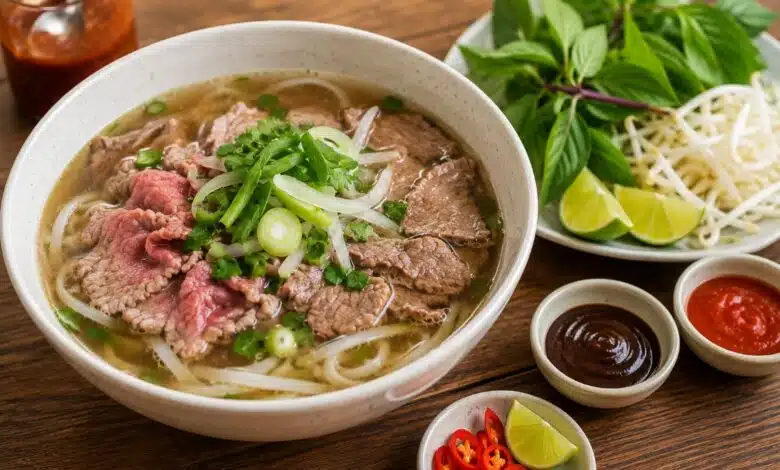
Pho is a Vietnamese noodle soup built around aromatic broth and flat rice noodles, most commonly served as beef pho, pho bo, or chicken pho, pho ga. For a first bowl, choose a regular-size pho ga or a straightforward pho bo with cooked brisket or flank. Taste the broth before adding lime, herbs, hoisin, or chili; those extras are adjustments, not mandatory ingredients.
Pho at a glance
- Cuisine
- Vietnamese
- Dish type
- Rice-noodle soup served as breakfast, lunch, dinner, or a late meal
- Core structure
- Aromatic broth, bánh phở rice noodles, meat or another protein, scallions, herbs, and optional condiments
- Common versions
- Pho bo with beef and pho ga with chicken
- Regional frame
- Northern and southern traditions differ in seasoning, garnishes, and table presentation
- Takeaway priority
- Broth should travel separately from noodles, herbs, and most toppings
The bowl most first-time diners actually want
The most useful first bowl is not necessarily the restaurant’s largest combination. It is the bowl that lets you notice the structure of pho without making every bite a different experiment. A regular portion of chicken pho or beef pho with one familiar cut gives you a clear view of the broth, noodle texture, meat, and fresh garnishes. Once you understand that foundation, tendon, tripe, fatty brisket, meatballs, extra noodles, and stronger condiments become meaningful choices rather than obstacles.
Pho ga is often the gentler entry. Its chicken broth can feel lighter, and the pieces of chicken are usually visually familiar. Pho bo offers the deeper aroma many diners associate with the dish, but beef menus vary more. One restaurant may list brisket, flank, rare steak, tendon, tripe, and meatballs separately; another may compress the same possibilities into a “special” or “combination” bowl. Neither approach is more legitimate. The practical difference is how much information the menu gives you before you order.
If rare beef makes you hesitant, do not assume you must accept it to order pho correctly. Ask for cooked beef, brisket, flank, or for the thin steak to be cooked through. If you enjoy rare steak, the thin slices may arrive pink because they finish cooking in the hot broth. What matters is knowing which treatment you ordered. A first bowl should not require guesswork after it reaches the table.
One more restraint helps: do not begin with extra noodles simply because they appear inexpensive. Pho is satisfying because broth, noodles, protein, aromatics, and herbs stay in proportion. A mountain of noodles can absorb broth, crowd the meat, and turn the final third of the meal into a heavy tangle. Start with the restaurant’s standard portion. You can judge the format far more accurately from there.
A pho menu is really five decisions
Long menus create the impression that pho has dozens of unrelated forms. In practice, most first orders can be made by answering five questions in sequence. When you follow the sequence, unfamiliar Vietnamese terms stop arriving all at once.
The broth decision narrows the entire menu. Once you choose beef or chicken, the protein terms become easier because you are no longer comparing every ingredient in the restaurant. Next, look at meat cuts or chicken treatments. Then confirm portion size. The noodles are usually the least complicated part because classic pho uses flat rice noodles, but some restaurants offer different widths or alternatives. Herbs and sauces come last because they are adjustable at the table.
This order also prevents a common mistake: choosing a dramatic-looking topping list before deciding whether you actually want the underlying broth. A house special may include everything, yet it remains a beef-broth bowl. If you prefer the cleaner character of chicken broth that day, the impressive topping list does not solve the mismatch.
Restaurants outside Vietnam may organize the menu differently. Some place all pho under one heading and use numbers. Some separate beef, chicken, vegetarian, and seafood versions. Some use English descriptions without Vietnamese cut names. The five decisions still work because they describe the bowl rather than the typography of the menu.
Pho bo or pho ga: choose the broth before the toppings
Pho bo is beef pho. Pho ga is chicken pho. That distinction sounds elementary, but it changes the aroma, body, seasoning, and topping logic of the entire meal. The choice should happen before you become distracted by meatballs, rare steak, extra herbs, or the restaurant’s special combination.
What to expect from pho bo
Beef pho is usually built on beef bones and aromatics, though exact recipes vary. A well-made bowl may smell of toasted or charred onion and ginger along with warm spices. The broth can be clear yet deep, or slightly darker depending on the cook’s method and regional preference. “Clear” does not mean weak. A broth can look transparent while carrying a long, rounded savory finish.
Different beef cuts change the eating experience. Thin steak is tender and quick-cooking. Brisket can be soft, beefy, and substantial. Flank is often leaner and more structured. Fatty brisket adds richness. Tendon contributes a soft, gelatinous texture rather than the chew of a steak. Beef meatballs are springy and seasoned. A combination bowl deliberately brings several textures together.
What to expect from pho ga
Chicken pho is not merely beef pho with poultry exchanged at the last moment. Its broth is usually built and seasoned as a chicken broth, and the entire bowl can feel more delicate. The chicken may be sliced, shredded, or served in pieces. White meat is leaner; dark meat gives more richness. Some menus allow you to choose, while others use a house mixture.
Pho ga can be especially useful when you want to understand the noodles and fresh garnishes without the more complicated texture vocabulary of a beef combination. It is also a practical choice for diners who enjoy chicken soup but want the fragrance, rice noodles, herbs, and table ritual of pho.
Neither broth requires you to add sauces. In fact, the first spoonful should be broth alone. That spoonful tells you how the kitchen balances salt, sweetness, spice, meatiness, and freshness. If you season first, you taste your squeeze-bottle technique rather than the work already in the bowl.
Northern and southern pho do not arrive at the table the same way
Regional differences are most useful when they help you understand what is placed in front of you. Northern pho, strongly associated with Hanoi and northern Vietnam, is commonly described as more restrained in garnish and more focused on the broth’s clean savory character. Southern pho often arrives with a larger plate of herbs and bean sprouts, along with more freedom to sweeten, brighten, or heat the bowl at the table. These are broad patterns, not rigid border controls.
A northern-leaning bowl may present fewer side garnishes. Scallions, onion, cilantro, or other herbs can already be arranged in the soup, while the table may offer lime, chili, or a smaller set of additions. The broth may taste less sweet and the overall composition more edited. The point is not austerity for its own sake. The cook is asking the broth, noodles, and meat to carry the meal with less intervention.
A southern-leaning presentation often treats the herb plate as an active part of the meal. Thai basil, bean sprouts, lime, chilies, and sometimes culantro or other greens may be served separately. Hoisin-style sauce and chili sauce are more likely to sit within reach. The broth can lean sweeter, and the diner is invited to keep adjusting fragrance, crunch, acidity, sweetness, and heat.
Then migration complicates the neat picture—in a good way. Vietnamese communities have carried pho across regions and continents. Restaurants adapt to ingredient supply, family preference, customer expectations, and the habits of the city around them. A bowl in Los Angeles, Houston, Paris, Toronto, Sydney, or Prague may preserve a family method while also reflecting local meat cuts, herb availability, menu conventions, and portion expectations.
For that reason, it is more accurate to say a bowl has northern or southern characteristics than to declare that every garnish proves a fixed identity. A restaurant may serve a restrained broth with a generous southern-style herb plate. Another may make a sweeter broth but offer few table condiments. Ask how the restaurant describes its style when the distinction matters to you.
Beef vocabulary: what tai, chin, nam, gau and dac biet usually mean
Beef pho menus often become easier once you recognize a handful of recurring terms. Spellings may lose accent marks, translations may differ, and the same English cut label may not describe identical trimming at every restaurant. Use the vocabulary as a guide, then read the restaurant’s own description.
The most beginner-friendly cooked options are usually brisket, flank, or another menu item explicitly labeled cooked beef. Rare steak is also approachable when you are comfortable with thin beef finishing in hot broth. Tendon and tripe are not “advanced” in any moral sense; they are simply more texturally specific. Order them when their texture sounds appealing, not because a special bowl seems more impressive.
Dac biet deserves particular caution because the phrase promises the restaurant’s special combination, not a standardized global recipe. One version may contain rare steak, brisket, tendon, tripe, and meatballs. Another may omit offal. A third may add oxtail or a premium cut. Read the listed ingredients or ask. The name alone cannot tell you what will arrive.
The noodles should support the broth, not dominate it
Pho uses bánh phở, flat rice noodles that can vary in width and texture. Their job is not to behave like springy wheat ramen or firm Italian pasta. They should be tender enough to absorb and carry broth while remaining distinct strands. A good bowl lets you lift noodles without pulling up one fused block.
Fresh noodles can feel softer and more supple. Dried rice noodles can also produce an excellent bowl when cooked and handled well. The meaningful distinction at the table is not fresh versus dried as a status symbol. It is whether the noodles were prepared for the bowl in front of you: properly softened, drained, portioned, and combined with broth at the right moment.
Undercooked rice noodles may feel rigid or chalky in the center. Overcooked noodles lose definition, break easily, and thicken the broth with excess starch. Noodles that sit too long in hot liquid continue to soften, which is why a dine-in bowl should be eaten with some attention and takeaway pho should be packed in separate components.
Some restaurants offer extra noodles, a larger noodle portion, or alternative noodle sizes. More is not always better. An oversized portion cools the broth and disrupts the ratio of liquid to solid ingredients. If you are especially hungry, extra meat or a side dish may preserve the balance better than doubling the noodles. If noodles are your favorite element, add them knowingly and expect a denser bowl.
Use chopsticks to lift noodles and a soup spoon for broth, meat, and smaller garnishes. There is no need to construct a perfect spoonful every time. Pho alternates naturally: a mouthful of noodles, a spoon of broth, a piece of meat, a fresh herb, then another combination. That changing rhythm is part of the meal.
The herb plate is not a required checklist
A generous herb plate can make a first-time diner feel as though every leaf must be identified and added. It does not. The plate offers a set of controls: fragrance, crunch, acidity, heat, and freshness. Use only the controls that improve your bowl.
Start with the broth untouched. Then consider lime. A small squeeze can sharpen a rich beef broth and brighten chicken pho, but too much makes acidity the dominant flavor. Add herbs next. Tear larger basil leaves so their aroma releases, but begin with one or two rather than burying the surface. Bean sprouts add cool crunch and dilute heat slightly. Chilies change the entire pace of the meal, so add a small piece and wait.
The exact garnish plate varies. Thai basil is common in many southern-style presentations outside Vietnam. Cilantro and scallions may already be in the bowl. Culantro, sometimes called sawtooth coriander, has a stronger aroma and should not be confused with a decorative leaf. Some restaurants include sliced jalapeño because it is locally available; others offer small, sharper chilies. Lemon may replace lime where supply or local practice makes it more practical.
Bean sprouts can be eaten raw for maximum crunch or briefly submerged in the hot broth to soften them. If you want them tender, push a small portion beneath the noodles instead of emptying the entire plate at once. The broth cools every time a large handful of cold vegetables is added.
Herbs are also where individual preference and restaurant tradition meet. A diner who dislikes cilantro can still enjoy pho. A restaurant that serves fewer greens is not automatically withholding an essential component. A northern-style bowl may intentionally rely on fewer table garnishes. Judge whether the served elements make sense together.
Hoisin, chili sauce and the problem with seasoning too early
Condiment bottles are invitations, not instructions. Hoisin-style sauce adds sweetness, salt, and body. Chili sauce adds heat, acidity, garlic, or sweetness depending on the brand. Once either sauce is squeezed generously into the broth, the kitchen’s spice balance becomes harder to taste.
A useful first approach is to put a small amount of sauce in a side dish. Dip a piece of beef into hoisin, chili sauce, or a mixture. This lets you season the meat without converting the entire bowl. It is especially practical with brisket or meatballs, which can carry a richer sauce without losing their identity.
If you prefer sauce in the broth, add a small amount to one side of the bowl and taste from that area before stirring. The broth will gradually mix as you eat. You keep a reference point instead of committing every spoonful at once.
Fresh sliced chili, chili oil, chili crisp, sambal-style sauce, and bottled red chili sauce do not produce the same effect. Fresh chili gives direct heat and green or fruity aroma. Oil carries heat across the surface. A thick sauce adds sweetness and garlic as well as spice. Read the table rather than treating every red condiment as interchangeable.
The same restraint applies to fish sauce when it is available. Fish sauce can deepen savoriness and salt, but the broth may already contain it or another salty seasoning. Add drops, not a pour. Pho should remain broth, not become a table-sauce mixture with noodles floating inside.
Small, regular, large, extra meat or house special?
Portion labels are not standardized. A small bowl in one restaurant may resemble a regular bowl elsewhere, and North American large portions can be considerably larger than the everyday bowls a traveler encounters in Vietnam. Choose according to appetite and menu context, not the emotional promise of the word “large.”
A regular bowl is the most informative first order. It usually reflects the restaurant’s intended ratio of broth, noodles, and protein. A small bowl is useful when you are sharing appetizers, ordering another dish, or testing an unfamiliar combination. A large bowl makes sense when pho is your complete meal and the restaurant’s regular portion is modest.
Extra meat changes the bowl differently from extra noodles. Meat adds richness and substance without absorbing as much broth. Extra noodles add volume but can make the bowl feel drier as they sit. Extra broth is useful when you prefer a soup-forward meal, but not every restaurant lists it. A house special increases variety rather than merely quantity.
Children’s portions, when offered, may be simplified and smaller, but parents should still check broth temperature, meat texture, and chili garnish. Some restaurants serve plain noodles and broth for young diners. Others simply divide a standard bowl. Ask what the children’s format includes rather than assuming it is automatically mild or allergen-free.
Side broth can also be a practical order when you want additional liquid for a large bowl or plan to reheat leftovers. Availability and pricing vary, so it should never be assumed. In a takeaway order, confirming that the container can safely hold very hot broth matters more than receiving the largest possible volume.
Three first orders for three kinds of diners
There is no single first bowl that suits every appetite. The most sensible recommendation depends on how much richness, meat texture, and customization you enjoy.
For someone who wants the clearest introduction
Order regular pho ga with the standard noodles and garnishes on the side. Taste the chicken broth, add a modest squeeze of lime, then try one herb at a time. This route makes the structure easy to read and avoids unfamiliar beef cuts.
For someone who likes a deeper beef flavor
Choose regular pho bo with cooked brisket or flank. Ask for rare steak only when you want it. Keep hoisin in a dipping dish for the first half of the meal, so the broth remains visible as a flavor rather than merely a liquid base.
For someone who actively enjoys varied textures
Order the house special after confirming its contents. Tendon, tripe, meatballs, rare steak, and brisket each behave differently. A combination bowl is rewarding when that contrast is the goal; it is distracting when you were expecting only sliced beef.
Vegetarian pho needs its own question. A bowl labeled vegetable pho may use vegetable broth, but vegetables added to beef or chicken broth do not make the dish vegetarian. Ask whether the broth itself is meat-free and whether fish sauce or other animal-derived seasoning is used. Vegan diners should confirm both broth and condiments.
Seafood pho appears on some menus, especially outside Vietnam, but it is not simply another universal counterpart to beef and chicken pho. The broth and restaurant style vary widely. Treat it as that restaurant’s seafood noodle-soup offering and read the description carefully.
How to judge the bowl before changing it
A useful evaluation begins before the first garnish is added. Smell the bowl. Warm spices should support the broth rather than resemble perfume. Onion, ginger, meat, and fresh scallion may all appear in the aroma. One note should not flatten everything else.
Next, taste the broth for balance. It can be savory, gently sweet, salty, and aromatic without announcing every component separately. Northern-leaning pho may feel cleaner and less sweet. Southern-leaning broth may offer more sweetness and a rounder seasoning profile. Neither description requires blandness or syrupy intensity.
Temperature matters. Pho should arrive hot enough to warm the noodles and, when rare steak is included, help cook the thin slices. Broth that is merely lukewarm cannot perform those tasks well. Extremely boiling broth can overcook delicate meat and make immediate tasting difficult, but it should retain serious heat.
Look at the noodles after a few minutes. They should separate and remain tender. Some breakage is normal, especially as rice noodles soften, but the bowl should not become paste. Meat should match the promised cut. Brisket should not be mistaken for rare steak, and tendon should not be described as an accidental fatty piece.
Fresh garnish does not need to be flawless like a studio photograph. It should, however, look clean and lively rather than wilted into an anonymous pile. Lime should provide juice. Bean sprouts should smell fresh. Herbs should contribute fragrance when torn.
Finally, notice proportion. A good bowl is not measured by how completely the surface is covered with meat. Broth remains central. Noodles provide body. Protein gives flavor and texture. Herbs and condiments sharpen selected moments. When one element takes over, the meal becomes less dynamic.
Pho for takeout: ask how the bowl will be packed
Pho can travel well when the restaurant treats it as a kit rather than a finished bowl. Hot broth belongs in a secure container. Noodles and most meats should be separate. Herbs, sprouts, lime, and sauces need their own package. When everything sits together during a drive, noodles continue absorbing liquid, herbs wilt, sprouts lose crunch, and the broth cools faster.
The ideal packing method depends partly on the meat. Cooked brisket, chicken, meatballs, and tendon can travel with the noodles if the restaurant normally assembles them that way. Thin rare beef is often packed separately so very hot broth can cook it at home. Follow the restaurant’s instructions, especially when raw or undercooked meat is involved.
At home, place the noodles and appropriate toppings in a heat-safe bowl. Bring the broth to a full steaming heat according to the restaurant’s guidance, then pour it over the noodles. Add herbs and sprouts afterward. If the noodles are tightly clumped, loosen them gently before or immediately after adding broth.
Do not microwave a sealed takeaway container of broth. Transfer it to microwave-safe cookware if reheating that way, leave room for bubbling, and handle it carefully. Stovetop reheating gives more control when available. The goal is hot broth, not prolonged boiling that concentrates salt and dulls aroma.
Leftover assembled pho deteriorates quickly in texture because the noodles remain in liquid. Separate any remaining broth as soon as practical. Refrigerate promptly and follow local food-safety guidance and the restaurant’s instructions. When storage history is uncertain, texture is not the only concern.
Pho therefore belongs in a useful middle category of delivery food. It is less immediately convenient than a sandwich, but it can arrive in excellent condition when components stay separate. For a broader look at which dishes survive the trip and why packaging matters, see Vesti’s guide to foods that travel well for takeout and delivery.
What to order alongside pho—and what may be unnecessary
A large bowl of pho is already a complete meal for many diners. The broth hydrates, noodles provide starch, meat or another protein adds substance, and herbs create freshness. Side dishes are most useful when shared, when the pho portion is small, or when you want a contrasting texture.
Fresh spring rolls, often listed as gỏi cuốn or summer rolls, offer herbs, rice paper, noodles, and a cool texture that contrasts with hot soup. Fried spring rolls add crispness and richness, but a full order plus a large pho can become heavy. Share them or choose a smaller bowl when you want both.
Vietnamese coffee is enjoyable but intense, sweet, and separate in character from the soup. It can work after the meal rather than beside every spoonful. Hot or iced tea is a quieter companion. Water remains the most neutral choice when you want to pay attention to broth and condiments.
Bánh mì, rice plates, and vermicelli bowls are not required additions to pho; they are separate meals. Ordering several major dishes at once makes sense for a group that plans to share. For one person exploring pho for the first time, it can blur the experience and create unnecessary leftovers.
When an appetizer sampler appears attractive, inspect whether every item is fried or heavily sauced. Pho is aromatic and fluid. Too many rich starters can numb the palate before the broth arrives. One contrasting plate usually teaches you more about the restaurant than a crowded table chosen from fear of missing out.
Ingredients to confirm when dietary needs matter
Pho’s visible ingredients do not reveal every component of the broth. Diners with allergies, intolerances, religious restrictions, or strict dietary preferences should ask direct questions about the liquid base and condiments. A bowl can look like noodles, vegetables, and herbs while the broth contains beef, chicken, fish sauce, or another seasoning not obvious from appearance.
Rice noodles are commonly made primarily from rice and water, sometimes with additional starches, but gluten-free diners should confirm ingredients and cross-contact procedures at the restaurant. Soy sauce, hoisin-style sauce, meatballs, and processed toppings may introduce wheat or soy. A gluten-free noodle does not make every condiment gluten-free.
Fish sauce is a common Vietnamese seasoning and may be present in broth or table sauces. Diners with fish allergy should not assume beef or chicken pho is automatically free of fish-derived ingredients. Shellfish risk depends on the restaurant’s kitchen, menu, and stock practices. Ask the business rather than relying on a generic recipe description.
Beef meatballs may contain seasonings, starches, or additives beyond beef. Chicken preparations can include skin, dark meat, or mixed cuts. Vegetarian broth may contain mushroom or soy ingredients, while a dish called “vegetable pho” may still use meat broth. Vegan diners need confirmation about broth, fish sauce, meat-based garnish, and shared preparation.
Herb plates also matter for people with strong sensitivities, though they are usually easier to omit. Ask for sprouts, basil, cilantro, chilies, or lime on the side when needed. Communicate the allergy rather than merely requesting an omission; the kitchen must understand whether cross-contact is a concern.
A short history that explains the bowl without reducing it to one origin story
Pho is closely associated with northern Vietnam and became prominent in the late nineteenth and early twentieth centuries. Accounts of its development often discuss northern Vietnamese noodle traditions, changing beef availability during the French colonial period, and possible linguistic or culinary influences from Chinese and French foodways. The exact path is debated, and a tidy single-invention story is less convincing than a picture of cooks adapting ingredients, markets, and existing noodle practices.
Nam Dinh and Hanoi are central to many histories of the dish. Street vendors helped make pho portable and public. Over time, political change, migration, and regional movement carried it south, where ingredients, tastes, and table garnishes evolved. Later migration brought pho to Vietnamese communities around the world.
This history helps explain why the bowl can be recognizably pho while changing in meaningful ways. Beef pho may feel foundational, yet chicken pho has its own long presence. Northern and southern styles differ without becoming unrelated soups. Overseas restaurants may preserve a family’s regional preference, combine practices, or adapt to local supply.
The result is not a dish without boundaries. Pho remains tied to bánh phở rice noodles, aromatic broth, and Vietnamese culinary practice. But its identity is strong enough to hold variation. Understanding that balance is more respectful than either extreme: declaring every noodle soup pho, or rejecting every bowl that differs from one remembered version.
The broader Vietnamese table around pho
Pho may be the first Vietnamese dish many diners recognize, but it should function as a doorway rather than a summary of the cuisine. Vietnamese food includes multiple rice-noodle traditions, wheat-noodle dishes, rice plates, braises, salads, rolls, breads, pancakes, grilled meats, seafood, vegetable preparations, sweets, and regional specialties with very different flavor structures.
Bún noodles are round rice vermicelli rather than the flat bánh phở used in pho. They appear in dishes such as bún chả, bún thịt nướng, and bún bò Huế. The last is a spicy, aromatic noodle soup from central Vietnam with a character distinct from pho. Hủ tiếu has its own noodle and broth traditions. Mì may refer to wheat or egg noodles in various contexts. Recognizing the noodle name prevents the common mistake of calling every Vietnamese soup “a type of pho.”
Bánh mì offers crisp bread, savory fillings, pickled vegetables, herbs, and condiments. Gỏi cuốn wraps fresh herbs, noodles, and protein in rice paper. Cơm dishes center rice rather than soup. Each format reveals another way Vietnamese cooking balances fragrance, texture, temperature, salt, sweetness, sourness, and freshness.
Readers who want that wider map can continue with Vesti’s guide to Vietnamese food and the dishes worth recognizing. The purpose of the broader guide is not to make pho less important. It is to place the bowl within a cuisine too varied to be represented by one famous dish.
Small ordering mistakes that change the bowl more than expected
The first mistake is ordering by price alone. The most expensive pho may be a combination with cuts you do not enjoy. The least expensive may be smaller than you expect. Read the contents and size before treating cost as a quality ladder.
The second is assuming “special” means universally superior. Dac biet means the restaurant’s special or combination format. It is ideal for variety, not automatically for a beginner. A focused bowl with one cut can reveal the broth more clearly.
The third is emptying the condiment bottles immediately. Hoisin and chili sauce are powerful. Their flavors remain long after the novelty of squeezing them has passed. Season in stages.
The fourth is adding the whole herb plate because it was served. A plate is an offer. It may be sized for several preferences or shared diners. Use what improves your bowl.
The fifth is ignoring the takeaway assembly. Pho that arrives separated may look like extra work, but the separation protects the noodles and herbs. A container in which everything is already submerged is easier for thirty seconds and worse for the rest of the trip.
The sixth is judging authenticity by one visual cue. Clear broth, abundant herbs, minimal garnish, dark color, wide noodles, or a particular sauce bottle can be meaningful, but no single cue explains the restaurant’s regional or family style.
The seventh is using “pho” as a generic label for every Vietnamese noodle soup. Learn the names on the menu. That small effort leads to better orders and more accurate appreciation of regional dishes.
The final mistake is believing you failed when you prefer one style over another. You may like chicken pho more than beef pho, northern restraint more than southern abundance, brisket more than rare steak, or broth without hoisin. Preference becomes useful when it is informed.
Your first bowl should be readable, not impressive
A memorable first pho order does not need every cut, every herb, the largest portion, and three sauces. It needs a broth you wanted, noodles that still have shape, a protein you understand, and enough restraint to notice how the bowl changes as you eat.
Begin with pho ga or a simple pho bo. Taste the broth. Add lime only if it helps. Introduce herbs in small amounts. Keep hoisin and chili beside the bowl until you know what they contribute. Notice whether you prefer brisket, flank, rare steak, chicken, meatballs, or no extra texture at all.
The second visit is where the menu opens. Try tendon if its softness interests you. Choose a house special after reading the components. Compare a southern-style garnish plate with a more restrained presentation. Order takeout and see whether the restaurant packs it as carefully as it serves it.
Pho rewards repetition because the basic form is stable enough for comparison and flexible enough for discovery. You do not need to master the entire vocabulary before lunch. You only need to make one clear decision at a time.
Questions people ask before ordering pho
The answers below cover the choices that most often affect a first bowl: broth, meat, noodles, sauces, herbs, and takeaway assembly.
What is the difference between pho bo and pho ga?
Pho bo is beef pho, usually made with beef-based broth and served with one or more beef cuts. Pho ga is chicken pho, built around chicken broth and chicken meat. Pho ga often feels lighter, while pho bo can offer deeper beef flavor and more topping choices. The exact seasoning and richness depend on the restaurant and regional style.
Which pho should a beginner order first?
A regular pho ga or a simple pho bo with cooked brisket or flank is an easy first order. It keeps the bowl understandable and lets you taste the broth before exploring tendon, tripe, fatty brisket, meatballs, or a full house combination.
What does pho dac biet mean?
Pho dac biet usually means the restaurant’s special or combination pho. It may contain several beef cuts, such as rare steak, brisket, flank, tendon, tripe, and meatballs. There is no universal ingredient list, so check the menu or ask which meats are included.
Is the beef in pho served raw?
Thin rare beef may be placed in the bowl pink and finish cooking in very hot broth. Other cuts, including brisket, flank, tendon, and meatballs, are typically already cooked. Ask for the steak well done or choose a cooked-beef option when you do not want pink meat.
Are pho noodles made from rice?
Classic bánh phở are flat rice noodles. Recipes and commercial products may include additional starches, and restaurant kitchens can have cross-contact with wheat-containing foods. Diners who require gluten-free food should confirm the noodle ingredients, broth, sauces, meatballs, and kitchen procedures.
Should hoisin sauce go directly into pho?
It can, but it does not have to. Taste the broth first. Many diners place hoisin and chili sauce in a small side dish for dipping meat, which preserves the broth’s original balance. When adding sauce to the soup, begin with a small amount.
What herbs are usually served with pho?
The garnish may include Thai basil, cilantro, scallions, culantro, bean sprouts, lime, and sliced chilies. The selection changes by region, season, and restaurant. Northern-style pho may come with fewer table garnishes, while southern-style service often offers a larger herb plate.
Is pho good for takeout or delivery?
Pho can travel very well when the hot broth is packed separately from noodles, herbs, sprouts, lime, and sauces. Separate packing prevents the noodles from over-softening and keeps the greens fresh. Ask how the restaurant packages the order before choosing a long delivery.
How do you reheat takeaway pho without ruining the noodles?
Heat the broth separately until it is fully steaming, following the restaurant’s instructions. Put the noodles and appropriate toppings in a heat-safe bowl, loosen any clumps gently, and pour the hot broth over them. Add herbs, sprouts, lime, and sauces afterward. Avoid repeatedly microwaving an already assembled bowl because the noodles continue to soften.


