
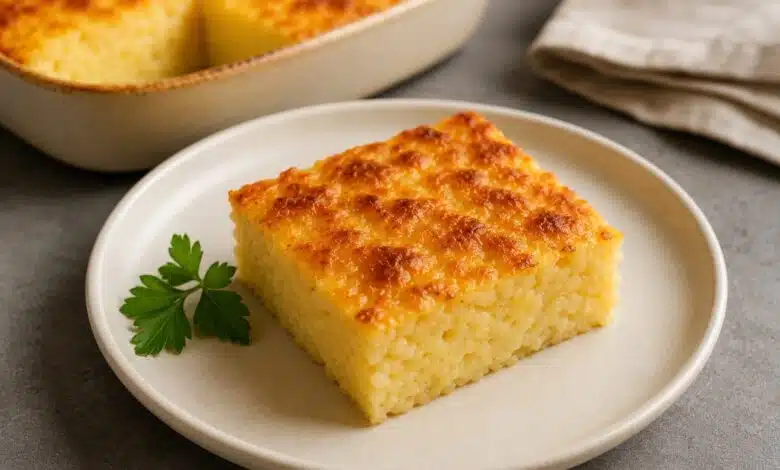
Sonso de yuca can be refrigerated, frozen and reheated successfully, but its texture changes quickly when it is stored uncovered or exposed to too much heat. The goal is to keep the cassava-and-cheese center moist while restoring the golden surface that makes baked, skillet-cooked and grilled sonso so satisfying.
Fresh sonso is soft, warm and slightly elastic because the cheese is melted and the cooked yuca still holds moisture. As it cools, the starch firms and the dairy fat solidifies. A refrigerated piece therefore feels denser than one served directly from the oven or grill, even when it has been stored correctly.
The best reheating method depends on the form. Baked sonso responds well to an oven or toaster oven. A firm square can develop new browning in a skillet. Sonso al palo benefits from dry heat and careful turning. A microwave is useful when speed matters, but it cannot restore the toasted exterior by itself.
Traveling instead of reheating leftovers at home? Our guide to Bolivian places where you may find freshly prepared sonso explains which restaurants are worth calling and what menu names to ask about.
How long does sonso last, and what is the best way to reheat it?
| Sonso style | Best storage form | Best reheating method | Main risk |
|---|---|---|---|
| Baked sonso | Individual squares in a shallow container | Oven or toaster oven | Dry edges or a soft top |
| Skillet sonso | Single layer separated with parchment | Covered skillet, then uncovered browning | Burned exterior with a cold center |
| Sonso al palo | One layer in a long rigid container | Oven, grill or air fryer | Breaking around the stick |
| Soft family-style sonso | Covered in its baking dish or divided into portions | Low oven with light covering | Uneven reheating |
| Frozen sonso | Individually wrapped portions | Thaw in refrigerator, then use dry heat | Excess surface moisture |
The refrigerator preserves sonso for short-term use, while freezing is better when you know it will not be eaten within the next few days. Texture is usually better when sonso is frozen as separate portions rather than as one deep tray.
Why does sonso become firm after refrigeration?
Sonso contains a large amount of starch from cooked yuca. Warm starch feels soft and flexible because it holds moisture and has not yet fully set. Cooling causes the structure to tighten, making the same portion feel firmer and more compact.
The cheese also changes. Melted dairy fat becomes solid in the refrigerator, while stretchy cheese becomes less elastic. A portion that had a soft, creamy center while hot may therefore look dense and slightly waxy when cold.
This firmness is not automatically a sign of spoilage
Properly stored sonso commonly becomes firm. Gentle reheating softens the starch and melts the cheese again.
Moisture moves during storage
Steam from warm sonso can collect inside a sealed container. The surface absorbs that moisture and becomes soft, even while the interior gradually loses tenderness.
This is why sonso should cool briefly before it is covered, but it should not remain at room temperature for an extended period.
Different cheeses behave differently
Fresh cheese may remain soft but crumbly. Mozzarella-style cheese becomes firm when cold and stretchy again after heating. Aged cheese may release more oil during reheating.
The original moisture level matters
A dry sonso becomes noticeably firmer after storage. A very wet sonso may release liquid in the container. Properly balanced sonso should remain cohesive without leaving a puddle underneath.
How to cool sonso before refrigeration
Sonso should not be sealed immediately while it is still producing large amounts of steam. Trapped steam softens the browned top and creates condensation inside the container.
At the same time, cooked sonso should not remain on the counter for hours. The practical approach is to divide it, allow excess steam to escape briefly and refrigerate it promptly.
Divide a large tray
A deep baking dish stays warm in the center for a long time. Cut the sonso into portions or transfer it to shallow containers so it can cool more evenly.
Use a clean rack or plate
Firm baked squares can be moved to a plate or rack for a short cooling period. This keeps the bottom from sitting in trapped steam.
Do not stack hot pieces
Stacking creates a warm, moist center between the portions. Allow them to cool in one layer before closing the container.
Remove heavy coverings
If the sonso was transported under foil, loosen or remove the covering briefly so steam can escape.
How to store sonso de yuca in the refrigerator
Place cooled sonso in a clean, airtight container and refrigerate it promptly. A refrigerator temperature of 40°F or 4°C or below is appropriate for cooked leftovers.
Use shallow containers
Shallow containers allow the center to cool more quickly and make individual servings easier to remove later.
Keep portions separate
Place parchment between layers or arrange the pieces in one layer. This prevents the soft cheese surfaces from sticking together.
Cover exposed edges
Cut edges dry faster than the browned top. Airtight storage protects them from refrigerator air.
Label the container
Write the date on the lid, especially when you are storing several prepared foods. Sonso can look and smell acceptable even after it has been forgotten for too long.
Store sauces separately
Tomato salsa, llajua, salads and other moist accompaniments should have their own containers. Sauce sitting against sonso quickly softens the browned surface.
Avoid the refrigerator door
The door experiences more temperature changes than the main interior shelves. Store sonso in a colder, more stable part of the refrigerator.
What container is best for stored sonso?
Glass containers
Glass does not absorb odors and allows you to see moisture collecting inside. Oven-safe glass may also simplify reheating, although chilled glass should not be exposed to sudden extreme temperature changes.
Rigid plastic containers
These are lightweight and useful for individual portions. Choose a container that closes securely without crushing the sonso.
Foil
Foil protects a baking dish for short storage but does not always create an airtight seal. Wrap the dish carefully or place the portions in a sealed container.
Resealable bags
Bags save space in the freezer, but soft sonso can lose its shape. Freeze the portions until firm before placing them together in a bag.
Parchment paper
Parchment is useful between layers and underneath frozen pieces. It does not replace an airtight outer container.
Long containers for sonso al palo
Choose a container that fits the entire stick without bending it. If storage space is limited, remove the stick only after the cooked cylinder is firm enough to hold together.
How to store baked sonso
Baked sonso is the easiest version to refrigerate because it can be divided into clean squares or wedges.
Let it rest before cutting
Very hot sonso may collapse when cut. A brief rest allows the starch and cheese to settle.
Choose portion sizes before storage
Cut small squares for snacks and larger pieces for meals. Reheating only what you plan to eat protects the remaining portions from repeated temperature changes.
Protect the browned top
Do not place a wet piece directly on top of another. Use parchment between layers.
Keep soft sonso in its dish
A very tender casserole-style sonso may be difficult to transfer. Cover the baking dish once the food has cooled enough and refrigerate it.
Avoid adding fresh cheese before storage
Extra cheese placed on top during storage can release moisture. Add a small amount shortly before reheating if a fresher topping is desired.
How to store skillet sonso
Skillet portions already have browned surfaces, so the main goal is to prevent those surfaces from becoming damp.
Cool in one layer
Do not pile warm patties on a plate. Steam trapped between them will soften the crust.
Use parchment between layers
Once cool, the portions can be stacked carefully with parchment between each layer.
Avoid paper towels inside an airtight container
A paper towel may absorb condensation, but it can stick to exposed cheese or dry the surface unevenly. Parchment is usually cleaner and more reliable.
Refrigerate without sauce
Keep salsa or salad in a separate container so the patties remain firm enough for skillet reheating.
How to store sonso al palo
Sonso al palo requires more space and gentle handling because the cooked yuca mixture can crack around the stick.
Allow the exterior to set
Freshly grilled sonso is soft inside. Let it rest briefly before moving it into a container.
Use one layer
Stacking heavy skewers can flatten the lower portions or push them away from the sticks.
Keep the sticks dry
Do not store the skewers in sauce or liquid. Moisture can soften the sonso where it touches the wood.
Remove the sticks only when necessary
A cooled cylinder may be slid carefully from the stick for compact storage. Do not force it if the sonso begins to break.
Wrap frozen cylinders individually
Separate wrapping protects their shape and prevents them from freezing together.
Can you freeze sonso de yuca?
Yes. Sonso freezes reasonably well because cooked yuca and cheese both tolerate freezing, although the texture may become slightly firmer or more crumbly after thawing.
Freezing works best when:
- the yuca was cooked until completely tender;
- the mixture was not overly wet;
- the portions are wrapped tightly;
- air is removed from the package;
- the sonso is thawed gradually;
- dry heat is used to restore the surface.
Which form freezes best?
Firm baked squares usually freeze most successfully. They keep their shape and can be wrapped separately.
Which form is most delicate?
Very soft family-style sonso may release moisture and become less cohesive after thawing. It can still be reheated in a baking dish, but clean slices may be difficult.
How long can sonso stay frozen?
For the best flavor and texture, use it within about two to three months. Longer frozen storage may still preserve safety when the food remains continuously frozen, but quality gradually declines.
How to freeze uncooked sonso mixture
The prepared yuca-and-cheese base can be frozen before the final baking, skillet cooking or grilling stage.
Cool the mixture first
Do not seal a warm mixture in a freezer container. Allow it to cool safely before packaging.
Freeze it in practical amounts
Divide the mixture according to how much you will cook at one time. A large frozen block thaws slowly and unevenly.
Use a freezer-safe container
Press a piece of parchment or freezer wrap close to the surface, then close the container securely.
Label the cooking plan
Mark the package as baked, skillet or al palo if the mixture has already been adjusted for a specific method.
Check the consistency after thawing
Yuca and cheese may release moisture. Stir the mixture gently and decide whether it needs more mashed yuca, a little cheese or brief chilling before shaping.
Do not blend the thawed mixture
Overworking the starch can make the texture gluey. Fold it gently with a spoon or spatula.
How to freeze cooked sonso portions
Cool the sonso completely
Warm portions create condensation and ice crystals inside the wrapping.
Arrange the pieces on a tray
Place them in one layer on parchment so they do not touch.
Freeze until firm
This initial freezing protects the shape before the portions are placed together.
Wrap each portion
Use freezer wrap, foil or a small freezer-safe container.
Place the wrapped pieces in an outer bag
An additional layer reduces freezer burn and keeps odors away.
Add the date
Labeling prevents older portions from being forgotten behind newer food.
Why individual wrapping helps
You can reheat one portion without thawing the entire batch. Smaller pieces also warm more evenly.
How to thaw frozen sonso
Refrigerator thawing
Transfer the portion from the freezer to the refrigerator and let it thaw gradually. This is the most controlled method and reduces the amount of moisture released suddenly.
Reheating from frozen
A firm baked square can be reheated from frozen in an oven, but it will need additional time and may benefit from loose covering during the first stage.
Microwave defrosting
Use low power and short intervals. High power can melt the outer cheese while the center remains frozen.
Do not thaw at room temperature for hours
The outside can warm long before the center has thawed. Refrigerator thawing is safer and produces a more even texture.
Remove excess surface moisture
If condensation collects on the thawed portion, blot it gently before using an oven, skillet or air fryer. A wet surface will steam instead of brown.
How to reheat sonso in the oven
The oven is the most dependable method because it warms the center gradually while allowing the exterior to dry and brown.
For individual baked squares
- Preheat the oven to about 325°F to 350°F.
- Place the sonso in a small baking dish or on parchment.
- Cover loosely with foil if the piece appears dry.
- Heat until the center is hot.
- Remove the foil during the final minutes to restore the top.
For a firmer crust
Move the sonso closer to the upper heat source for the final few minutes. Watch it carefully because exposed cheese can burn quickly.
For a very dry piece
Brush the cut edges lightly with milk, melted butter or a small amount of water before covering. Avoid pouring liquid over the browned top.
For frozen portions
Begin covered at a lower temperature so the center can warm. Uncover once the piece has softened and finish with stronger dry heat.
Check more than the surface
A golden exterior can hide a cool center. Insert a thermometer into the thickest part or cut into the portion when necessary.
Can you reheat sonso in a toaster oven or air fryer?
Both appliances work well for individual portions because they use concentrated dry heat.
Toaster oven
Use the same general method as a full oven. Keep the sonso away from the heating elements and check it earlier because the smaller space warms quickly.
Air fryer
An air fryer can restore crisp edges efficiently. It is especially useful for skillet sonso and firm baked squares.
Use moderate heat rather than the highest setting. Strong airflow can dry the exterior before the center is hot.
Line only when necessary
Parchment can catch melted cheese, but completely covering the basket reduces air circulation. Use a small piece that fits under the sonso.
Turn firm portions
Turning halfway through reheating helps both sides brown. Very soft sonso should remain in a small oven-safe dish.
Watch the cheese
Cheese near the surface may brown faster than the yuca. Reduce the heat if it begins to darken before the center is ready.
How to reheat sonso in a skillet
A skillet is ideal when you want fresh browning and the portion is firm enough to turn.
Start over medium-low heat
High heat burns the outside before the center warms. Let the sonso heat gradually.
Add only a small amount of fat
A thin film of butter or oil prevents sticking and improves the crust. Too much makes the sonso greasy.
Cover during the first stage
A lid traps enough warmth to heat the center. Remove it once the portion is hot so the surface can dry and brown.
Turn carefully
Use a wide spatula. A narrow utensil can split a soft square through the center.
Reheat cut sides
A baked square can be placed cut-side down to create new golden edges. This is one of the best ways to make leftovers feel freshly prepared.
Avoid pressing
Pressing the sonso against the pan forces moisture and cheese out of the center.
How to reheat sonso in a microwave
The microwave is the fastest method, but it produces a soft surface and may heat the cheese unevenly.
Use medium power
Lower power allows the center to warm before the edges become rubbery.
Cover loosely
A microwave-safe cover prevents excessive moisture loss. Do not seal the container tightly.
Heat in short intervals
Pause, rotate the plate and check the center. Thick portions can remain cold in one area while another section becomes extremely hot.
Allow a brief rest
Standing time helps the heat move through the dense yuca mixture.
Finish with dry heat
For better texture, transfer the warmed sonso to a hot skillet, toaster oven or air fryer for a few minutes.
Do not overheat
Long microwave heating can separate the cheese, release oil and make the yuca rubbery.
How to reheat sonso al palo
Sonso al palo tastes best when the exterior is restored without loosening the mixture from the stick.
Oven method
Place the skewers on a baking sheet and warm them at moderate heat. Turn once or twice so several sides receive dry heat.
Grill method
Use a clean grill over low to moderate heat. Rotate the stick slowly and avoid direct flames.
Air-fryer method
Use only sticks that fit safely inside the appliance and are suitable for the heat. Rotate the cylinder halfway through.
Skillet method
Remove the stick only if the sonso remains firm. Brown the cylinder gently on several sides.
Why high heat is risky
The outside may burn while the dense center remains cold. Sudden heat can also cause cheese pockets to expand and split the cylinder.
Handle the stick carefully
The exposed end can become hot. Use heat-resistant gloves or tongs when necessary.
How to reheat a large tray of baked sonso
A large tray requires more time than individual portions because the center is protected by a thick layer of yuca and cheese.
Bring the dish out briefly
If the baking dish can tolerate the temperature change, allow it to lose some refrigerator chill while the oven preheats. Do not leave it out for an extended period.
Cover the tray initially
Loose foil reduces moisture loss while the center heats.
Use moderate oven heat
A very hot oven browns the top before the middle is warm.
Uncover for the final stage
Removing the foil allows steam to escape and refreshes the top.
Check the center
Measure the thickest part rather than an edge. Edge pieces warm much faster.
Rest briefly before serving
A short rest allows the heat to distribute and makes the portions easier to cut.
How to reheat sonso without drying it out
Dryness usually comes from too much exposed heat, an uncovered container or a sonso mixture that was already low in moisture.
Cover first, uncover later
This is the most reliable method. The covering protects the center while the final uncovered stage restores browning.
Add moisture only to dry areas
Brush the cut sides with a small amount of milk, melted butter or water. Do not soak the entire piece.
Use moderate heat
Lower heat takes longer but gives the center time to soften before the edges harden.
Reheat only once when possible
Repeated cycles remove more moisture and make the cheese increasingly oily or rubbery.
Serve immediately
Reheated sonso firms again as it cools. Bring it to the table while the cheese and yuca are still tender.
How to restore a crisp or browned surface
Refrigeration softens the crust because moisture moves from the center toward the surface and condensation develops inside the container.
Dry the surface
Blot visible moisture gently before reheating.
Use a preheated surface
A hot skillet, baking sheet or air-fryer basket begins browning immediately.
Avoid covering at the end
Once the center is hot, remove the lid or foil so steam can escape.
Add a small amount of cheese
A light sprinkle can create fresh browning, but too much may release oil and hide the original texture.
Use the broiler carefully
A short broil can refresh a baked top. Watch continuously because cheese burns quickly.
Can sonso be made ahead of time?
Yes. Sonso can be prepared in stages, which makes it practical for breakfast, brunch and larger gatherings.
Cook the yuca in advance
Boil, drain and remove the central fibers. Refrigerate the cooked yuca in a covered container, then mash and season it later.
Prepare the mixture one day ahead
Combine the yuca and cheese, place the mixture in a covered container and refrigerate it. Check the consistency before cooking because chilling makes it firmer.
Assemble baked sonso ahead
Spread the mixture in a greased dish, cover it and refrigerate. Bake it when you are ready to serve.
Shape skillet portions ahead
Place the shaped pieces on parchment and keep them covered. Chilled patties often hold together well in the pan.
Shape sonso al palo shortly before grilling
The mixture may be prepared ahead, but shaping close to cooking time reduces the chance that the cylinders will crack or pull away from the sticks.
Allow extra cooking time
Refrigerated sonso begins colder than freshly mixed sonso. Bake or grill it gently so the center becomes fully hot.
How to transport sonso safely
For short trips while hot
Use an insulated carrier and a rigid container. Keep the sonso covered, but allow limited ventilation if trapped steam is making the crust soft.
For longer trips
Transport the sonso chilled in a cooler with ice packs, then reheat it at the destination.
Keep sauces separate
Pack salsa, salad and other wet accompaniments in sealed containers.
Use a tray that will not slide
Place a nonslip liner underneath the baking dish or container.
Protect sonso al palo
Use a long container with enough room so the skewers do not press against one another.
Do not leave the food in a warm vehicle
A parked vehicle can heat rapidly. Move the sonso into refrigeration, a cooler or hot-holding equipment as soon as possible.
How can you tell whether stored sonso should be discarded?
Time and temperature are more reliable than appearance alone. Food can become unsafe before it develops a dramatic smell or visible mold.
Discard sonso that remained out too long
Do not refrigerate and save a tray that sat at room temperature for several hours.
Look for visible mold
Any mold growth means the entire portion should be discarded. Do not cut away only the affected area.
Notice unusual odors
A sour dairy smell, fermented aroma or stale oily odor can indicate deterioration.
Check for unexpected liquid
A small amount of condensation is normal. Slimy liquid, unusual separation or a sticky surface may signal spoilage.
Do not taste food to test its safety
When storage time or temperature is uncertain, discard the sonso rather than sampling it.
Respect the refrigerated storage period
Use refrigerated leftovers within three to four days or freeze them earlier.
Common mistakes when storing and reheating sonso
| Mistake | What happens | Better approach |
|---|---|---|
| Sealing very hot sonso | Condensation softens the surface | Let excess steam escape briefly before covering |
| Leaving a large tray on the counter | The center cools too slowly | Divide it into shallow portions |
| Storing sonso with salsa | The browned surface becomes wet | Keep sauces in separate containers |
| Using very high oven heat | The outside burns before the center warms | Use moderate heat and finish uncovered |
| Microwaving for one long interval | Cheese becomes oily and heating is uneven | Use medium power and short intervals |
| Freezing one large block | Thawing and reheating become uneven | Freeze individual portions |
| Adding too much liquid before reheating | The sonso becomes wet and loses structure | Brush only dry cut edges lightly |
| Reheating the entire batch repeatedly | Texture becomes dry and rubbery | Warm only the amount being served |
| Stacking warm skillet portions | The crust softens from trapped steam | Cool them in one layer |
| Relying only on smell | Unsafe food may appear normal | Track storage time and temperature |
How storage affects each style of sonso
Baked sonso
It stores and freezes most easily, especially when cut into squares. The oven restores its top more effectively than a microwave.
Skillet sonso
It loses crispness in the refrigerator but develops a fresh crust quickly when returned to a lightly greased pan.
Sonso al palo
It requires careful packing and gentle turning. Dry heat is important because steam makes the exterior loose around the stick.
Soft family-style sonso
It remains moist but may not cut neatly after freezing. Reheat it in the baking dish and serve it with a spoon if necessary.
How to make sonso that reheats well
Storage quality begins with the original preparation. A balanced mixture holds moisture without becoming wet and remains tender after reheating.
Drain the yuca thoroughly
Excess cooking water creates a weak mixture and forms ice crystals during freezing.
Do not overprocess it
Hand-mashed yuca reheats more naturally than a gluey blended paste.
Use enough cheese and butter
They help the sonso remain tender, but excessive fat may separate during microwave heating.
Add milk gradually
A mixture that begins too wet can become watery after thawing.
Brown without overcooking
A deeply dried first bake leaves little moisture for later reheating.
Choose a practical thickness
Very thick portions heat slowly, while very thin portions dry quickly. Moderate pieces are easiest to store and reheat.
Frequently asked questions about storing sonso
How long does sonso de yuca last in the refrigerator?
Properly cooled and covered sonso should generally be used within three to four days.
Can sonso de yuca be frozen?
Yes. Firm baked squares freeze especially well when they are cooled, wrapped individually and stored in an airtight freezer package.
What is the best way to reheat baked sonso?
Use a moderate oven or toaster oven, covering the portion at first if it appears dry and uncovering it at the end to restore the golden surface.
Can sonso be reheated in a microwave?
Yes. Use medium power and short intervals, then finish the portion in a skillet or toaster oven when you want a browned exterior.
Why does refrigerated sonso become hard?
The yuca starch and cheese firm as they cool. Gentle reheating softens the center again.
How do I keep reheated sonso from drying out?
Use moderate heat, cover it during the first part of reheating and add only a small amount of moisture to exposed cut edges when needed.
Can I freeze uncooked sonso mixture?
Yes. Freeze the cooled mixture in practical portions, thaw it in the refrigerator and check its consistency before shaping or baking.
Can sonso al palo be reheated?
Yes. Warm it gently in an oven, on a clean grill or in an air fryer while rotating it carefully so the exterior heats evenly.
Should sonso be stored with salsa?
No. Store salsa and other wet accompaniments separately so they do not soften the browned surface.
How hot should reheated sonso be?
Reheated leftovers should become hot throughout and reach approximately 165°F or 74°C in the center.
Gentle heat restores sonso better than rushing it
Sonso de yuca naturally becomes firmer when chilled because both the cassava starch and cheese set as they cool. That change is expected and can be reversed with patient reheating.
For the best results, refrigerate individual portions in airtight containers, keep sauces separate and use the leftovers within three to four days. Freeze portions you will not eat soon, preferably as firm squares or patties wrapped separately.
An oven or toaster oven provides the best balance of a tender center and browned exterior. A skillet creates excellent fresh edges, while a microwave works best as the first stage of a two-step method.
Cover the sonso while its center warms, uncover it when the surface needs to dry and avoid reheating the same batch several times. These simple steps preserve the contrast that makes sonso memorable: warm cheese, tender yuca and a lightly toasted exterior.


