
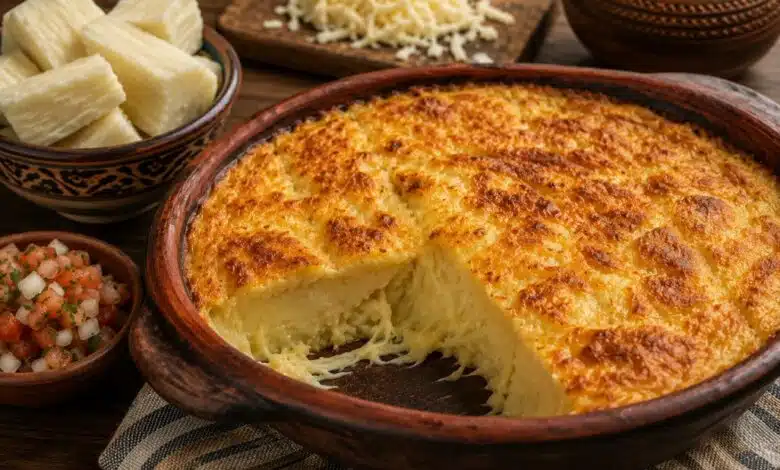
Traditional sonso de yuca can be gluten-free because its essential ingredients are cooked yuca and cheese, neither of which naturally contains gluten. However, a restaurant version is not automatically safe for someone with celiac disease or a serious gluten sensitivity.
The basic dish is made by boiling yuca until tender, removing the firm central fibers, mashing the cooked root and mixing it with cheese. The mixture may then be baked, browned in a skillet or formed around a stick and grilled as sonso al palo.
None of those steps requires wheat flour. The problem is that individual recipes can include flour, breadcrumbs, seasoning blends, processed cheese products or other additions. Sonso can also come into contact with gluten through shared utensils, cutting boards, baking trays, grills, frying oil or preparation surfaces.
When you want to ask a restaurant about the dish, use our guide to finding sonso de yuca at Bolivian restaurants near you. Call before visiting and explain the level of gluten avoidance you require.
Is sonso de yuca naturally gluten-free?
The traditional idea of sonso is naturally compatible with a gluten-free diet. Cooked cassava and cheese form the main mixture, and no wheat-based dough is required.
A simple version may contain:
- fresh or frozen yuca;
- fresh cheese;
- butter;
- milk;
- eggs;
- salt.
Those ingredients do not normally introduce gluten by themselves. That means a carefully prepared traditional sonso can be appropriate for many people who avoid wheat, barley and rye.
The word traditional, however, does not guarantee that every cook follows the same formula. Some recipes add flour to make the mixture firmer. A restaurant may dust a baking dish with flour, use breadcrumbs, add a commercial seasoning or cook sonso on equipment that also handles bread.
The most accurate answer is therefore: sonso can be gluten-free, but the exact batch needs to be checked.
What is gluten?
Gluten is a group of proteins found in wheat, barley, rye and related grains. It gives wheat-based dough elasticity and helps breads, pastries and other baked foods hold their structure.
Cassava is not one of those grains. Yuca is a root vegetable, which is why cooked yuca, cassava flour and tapioca starch do not naturally contain gluten.
That difference matters because some people assume that every starchy food contains gluten. Potatoes, rice, corn and yuca are naturally different from wheat, barley and rye.
Where gluten may appear unexpectedly
Even when the main starch is gluten-free, gluten may enter through:
- wheat flour used as a binder;
- breadcrumbs;
- malt-containing ingredients;
- soy sauce containing wheat;
- commercial sauces;
- seasoning blends;
- processed cheese sauces;
- shared frying oil;
- shared preparation surfaces.
Sonso is a good example of why the name of a dish alone cannot answer every dietary question. Its traditional base is simple, but restaurant preparation can add complexity.
Which traditional sonso ingredients contain gluten?
None of the basic ingredients needs to contain gluten. Problems arise from optional additions or contamination.
| Ingredient | Usually gluten-free? | What to check |
|---|---|---|
| Fresh yuca | Yes | Peeling, preparation surfaces and added sauces |
| Frozen plain yuca | Usually | Ingredient list and factory cross-contact statement |
| Fresh cheese | Usually | Added starches, flavorings and manufacturing |
| Butter | Usually | Flavored butter and shared utensils |
| Milk | Yes when plain | Flavored or processed dairy products |
| Eggs | Yes | Preparation surfaces and mixed products |
| Salt | Yes | Seasoning blends rather than plain salt |
| Wheat flour | No | May be added as a binder or coating |
| Breadcrumbs | Usually no | Unless specifically made from gluten-free bread |
A short ingredient list does not eliminate the need for questions when the food is prepared outside your home. A cook may use a small amount of flour without considering it important enough to mention in a brief menu description.
Is yuca gluten-free?
Yes. Plain yuca is naturally gluten-free. It is a root vegetable also known as cassava or manioc.
Yuca is used in many forms:
- fresh cassava root;
- frozen peeled yuca;
- cassava flour;
- tapioca starch;
- cassava starch;
- grated cassava;
- pre-cooked yuca.
All of those begin with a naturally gluten-free plant. Packaged or prepared products may still require label checking because manufacturers can add seasonings, coatings or other ingredients.
Fresh yuca
Fresh whole yuca contains no wheat, barley or rye. Once peeled and fully cooked, it can form the gluten-free base of sonso.
Frozen yuca
Plain frozen peeled yuca is also generally suitable. Check that the package contains only cassava or yuca and does not include a coating or sauce.
Cassava flour
Cassava flour is made from the root and does not naturally contain gluten. It is not, however, the traditional base of sonso, which normally uses cooked whole yuca.
Tapioca starch
Tapioca starch is also derived from cassava. It is commonly used in gluten-free baking, but it behaves differently from cooked mashed yuca.
Does the word “flour” mean it contains wheat?
No. The word flour describes a powdered ingredient, not necessarily wheat. Cassava flour, rice flour, corn flour and almond flour do not naturally contain gluten.
The exact product still needs to be identified. A menu that says only “flour” usually requires clarification.
Is the cheese in sonso gluten-free?
Most plain cheese is naturally gluten-free, including many fresh cheeses used in Latin American cooking. Milk, cultures, salt and enzymes do not normally introduce gluten.
Sonso may use:
- fresh Bolivian-style cheese;
- queso fresco;
- farmer’s cheese;
- mozzarella;
- Monterey Jack;
- a mixture of fresh and melting cheeses.
Why cheese still needs checking
Processed cheese products can contain stabilizers, starches, flavorings or sauces. Most of those ingredients are not necessarily sources of gluten, but the label should be read rather than assumed.
Cheese that has been cut on the same board as bread can also be exposed to crumbs. A restaurant may use the same gloves, knife or grater for several foods.
Pre-shredded cheese
Pre-shredded cheese often contains anti-caking ingredients to prevent clumping. These are commonly starches or cellulose rather than wheat, but the package should still be checked when strict avoidance is necessary.
Cheese sauce
A prepared cheese sauce is more complicated than plain cheese. Some sauces are thickened with wheat flour or made from a commercial base that includes gluten-containing ingredients.
Traditional sonso does not need a separate cheese sauce, but adapted restaurant versions may use one.
Are butter, milk and eggs gluten-free?
Plain butter, plain milk and whole eggs do not naturally contain gluten. These ingredients may appear in sonso to improve richness, moisture or binding.
Butter
Plain butter is generally suitable. Flavored butter can contain spice blends or additives that need to be checked.
A shared butter container is another concern. A knife used on wheat bread can leave crumbs in the butter, which then transfers to other foods.
Milk
Plain dairy milk is naturally gluten-free. Flavored milk, condensed products or prepared cream sauces may contain additional ingredients.
Eggs
Whole eggs are naturally gluten-free. Some sonso recipes use eggs to help the mixture hold together, while others do not.
Why these ingredients still matter
Although they are not sources of gluten, they introduce other dietary considerations. Sonso typically contains dairy, and some versions contain eggs.
A dish can therefore be gluten-free without being dairy-free, vegan or egg-free.
Why might a sonso recipe contain wheat flour?
Wheat flour is not necessary for traditional sonso, but some cooks may add it to make a wet mixture firmer or easier to shape.
Possible reasons include:
- the cooked yuca was not drained thoroughly;
- the cheese released too much moisture;
- too much milk was added;
- the cook wants the mixture to hold on a skewer;
- the restaurant uses one standardized binder for several dishes;
- the sonso is being adapted into a croquette or fried patty.
Flour as a binder
A small spoonful may seem insignificant to the cook, but it matters to someone avoiding gluten. This is why asking only whether the main ingredient is yuca is not enough.
Flour in the baking dish
A kitchen may grease and flour a baking dish to prevent sticking. The flour may not appear in the sonso mixture itself, but it can remain on the bottom and edges.
Flour on hands or surfaces
Restaurant staff may dust hands, trays or work surfaces with flour while shaping food. This practice is common with doughs and can affect a food that would otherwise contain no gluten.
Breadcrumb coating
A modern fried sonso preparation may be breaded before cooking. Once breadcrumbs are used, the dish is no longer gluten-free unless the coating is specifically made from gluten-free ingredients.
Can seasonings add gluten to sonso?
Traditional sonso is often seasoned simply, which lowers the risk. Salt may be the only seasoning beyond the natural flavor of cheese and butter.
Adapted versions may include:
- commercial spice blends;
- bouillon powder;
- seasoned salt;
- soy sauce;
- prepared salsa;
- marinades;
- cheese sauce;
- smoky flavoring.
Plain spices
Individual herbs and spices do not naturally contain gluten. Processing and packaging can introduce cross-contact, especially when the product is not labeled for gluten-free use.
Bouillon and seasoning powders
These products can contain starches, flavorings and hydrolyzed ingredients. The ingredient list needs to be checked.
Soy sauce
Many standard soy sauces contain wheat. Soy sauce is not a traditional sonso ingredient, but it may appear in a fusion preparation or accompanying sauce.
Prepared salsa
Fresh tomato-and-onion salsa is often gluten-free, but bottled or restaurant sauces may contain additional ingredients.
What is gluten cross-contact?
Cross-contact occurs when a gluten-free food touches gluten-containing food, crumbs, flour, surfaces or equipment.
The sonso recipe itself may contain no gluten, yet the finished portion may come into contact with gluten during preparation.
Common cross-contact points
- cutting boards used for bread;
- knives with visible crumbs;
- mixing bowls used for wheat dough;
- shared wooden spoons;
- countertops dusted with flour;
- baking trays used for pastries;
- shared grill surfaces;
- shared frying oil;
- toaster ovens containing crumbs;
- gloves used to handle bread and sonso.
Why flour is difficult to control
Wheat flour is light and can spread through a busy bakery or kitchen. A restaurant that makes bread, empanadas or pastries in the same small space may have flour on counters, aprons and equipment.
Why visible cleanliness is not enough
A surface can look clean while still carrying small amounts of gluten. For someone with celiac disease, wiping a board may not provide the same protection as using a separate clean surface and utensils.
Wooden equipment
Wooden boards and spoons can be difficult to clean completely because they are porous and can develop scratches. A dedicated gluten-free tool is safer than one regularly used with wheat dough.
Is restaurant sonso safe for a gluten-free diet?
It depends on the restaurant, recipe and level of gluten avoidance required.
A restaurant may serve sonso that contains only yuca, cheese, butter and salt. Another may add flour or prepare it beside wheat pastries. Both may describe the dish simply as cassava and cheese.
Menu description versus kitchen reality
A short menu description usually lists the most appealing ingredients rather than every component. “Yuca and cheese” does not confirm the absence of flour, breadcrumbs or seasoning blends.
Staff knowledge
Some servers know the recipe well. Others may assume that yuca automatically makes the entire dish gluten-free.
Ask whether they can check with the kitchen rather than expecting an immediate guess.
Busy service periods
Even a kitchen capable of safer preparation may struggle during peak service. Calling ahead allows staff to answer questions before the restaurant becomes busy.
Special preparation
A restaurant may be able to prepare a separate portion on a clean tray, especially when sonso is made to order. A pre-baked shared tray cannot be changed after it has already been prepared.
Never assume that a Bolivian restaurant is automatically gluten-aware
A restaurant can prepare authentic food without having a formal allergy protocol. The staff may understand the ingredients but not the difference between a preference, sensitivity, wheat allergy and celiac disease.
Is baked sonso more likely to be gluten-free?
Baking avoids shared frying oil, which removes one common source of cross-contact. It does not remove every risk.
The baking dish
Ask whether the dish was greased only with butter or oil, or whether it was also dusted with wheat flour.
The oven
Food baked in the same oven as bread is not automatically contaminated. The larger concern is direct contact with crumbs, flour, racks, trays or circulating loose flour in a bakery environment.
Shared trays
A tray previously used for wheat pastries should be cleaned thoroughly before gluten-free sonso is placed on it. Parchment can add separation, but it does not correct contaminated utensils or mixture.
Cheese topping
Plain grated cheese is usually suitable. Prepared toppings, sauces or breadcrumb mixtures require checking.
Serving utensils
A clean sonso tray can still be exposed if the same spatula is used for bread-based casseroles or pastries.
Baked sonso can be one of the easier restaurant versions to assess because it usually has a short ingredient list. The kitchen still needs to confirm how the tray was prepared.
Is sonso al palo gluten-free?
Sonso al palo can be gluten-free when the yuca-and-cheese mixture contains no gluten and the sticks, hands and grill are clean.
The grilled method introduces its own questions.
The mixture
Some cooks add flour to help the sonso stay attached to the stick. Ask specifically whether wheat flour or breadcrumbs are used as a binder.
The sticks
Plain food-safe wooden sticks do not contain gluten. The concern is what they touched before or after the sonso was shaped.
The grill
A grill may also cook bread, burgers with buns, marinated meats or foods coated in flour. Gluten-containing crumbs and sauces can remain on the grates.
Shared brushes
A brush used for sauces containing wheat can transfer gluten to the sonso even when the grill surface is cleaned.
Charcoal and wood
Plain charcoal and untreated cooking wood do not create gluten. The risk comes from food residue, sauces and shared handling.
Foil as a protective surface
A clean sheet of foil may reduce direct contact with a shared grill. It does not solve problems inside the mixture or from contaminated utensils.
What about skillet-cooked or fried sonso?
Skillet sonso can be safe when prepared in a clean pan with gluten-free ingredients. Fried sonso requires more caution.
Shared skillet
A pan used for breaded foods should be cleaned before sonso is added. Crumbs can remain around rivets, edges and scratches.
Cooking fat
Plain oil and butter are gluten-free. Fat reused after cooking breaded food is not suitable for strict gluten avoidance.
Shared deep fryer
A fryer used for breaded chicken, empanadas, croquettes or flour-coated foods can transfer gluten to otherwise gluten-free sonso.
Breaded sonso
A croquette-style sonso may be rolled in breadcrumbs before frying. That version is not gluten-free unless a separate gluten-free coating and fryer are used.
Griddle surface
A restaurant griddle may cook bread, pancakes or flour tortillas. Scraping the surface does not always provide the level of separation required for celiac disease.
Can someone with celiac disease eat sonso de yuca?
Someone with celiac disease may be able to eat sonso when the recipe contains no gluten and the kitchen prevents cross-contact.
The ingredient list alone is not enough. Even a small amount of gluten can matter, so preparation practices need to be discussed clearly.
Explain that it is a medical requirement
Saying “I have celiac disease” or “I need strict gluten-free preparation” communicates more than saying “I prefer no gluten.”
Ask whether the answer is based on the recipe or an assumption
A server may say the dish is gluten-free because it contains yuca. Ask whether the kitchen confirmed that there is no flour, breadcrumb coating or shared fryer.
Consider the setting
A dedicated gluten-free kitchen provides a different level of control than a small bakery where wheat flour is used throughout the day.
When the restaurant is uncertain
An uncertain answer is not the same as confirmation. Choosing another dish or preparing sonso at home may be the safer decision.
What about non-celiac gluten sensitivity?
People with non-celiac gluten sensitivity avoid gluten because it causes symptoms, although they do not have celiac disease.
The level of cross-contact concern may vary from person to person. Some need strict preparation, while others focus primarily on avoiding gluten-containing ingredients.
Sonso can fit such a diet when it contains no wheat, barley or rye. Restaurant questions remain useful because flour may be added as a binder without appearing in the dish name.
Each person should follow the plan recommended by their healthcare professional rather than assuming that one restaurant practice works for everyone.
Is gluten avoidance the same as a wheat allergy?
No. Celiac disease, non-celiac gluten sensitivity and wheat allergy are different conditions.
A person with a wheat allergy reacts to proteins in wheat. Gluten is one of several proteins associated with wheat, but allergy management may involve different risks and medical advice.
A sonso recipe without wheat may be appropriate, but cross-contact with wheat still matters. A person with an allergy should communicate the specific allergy rather than asking only whether the dish is gluten-free.
Why wording matters
Tell the restaurant:
- which ingredient must be avoided;
- whether cross-contact is a concern;
- whether shared equipment is acceptable;
- whether the request is related to an allergy or celiac disease.
Restaurant staff cannot make an informed decision when they do not understand the seriousness of the request.
Questions to ask before ordering sonso
A clear way to ask
“I need to avoid gluten. Does your sonso contain wheat flour or breadcrumbs, and is it prepared on equipment shared with bread or breaded foods?”
For celiac disease, add:
“This is for celiac disease, so cross-contact matters. Could you please confirm the recipe and preparation with the kitchen?”
How to make gluten-free sonso at home
Home preparation gives you control over every ingredient and surface. The traditional recipe does not need wheat flour.
Use plain yuca
Choose fresh yuca or frozen peeled yuca with a simple ingredient list. Cook it until completely tender and remove the firm central fibers.
Choose labeled ingredients when needed
Plain cheese, butter, milk, eggs and salt are straightforward. Packaged products labeled gluten-free can provide additional confidence when cross-contact during manufacturing is a concern.
Use clean equipment
Wash bowls, utensils, baking dishes and countertops before beginning. Avoid wooden tools that regularly contact wheat dough when strict separation is necessary.
Do not add wheat flour
If the mixture feels wet, correct the cause rather than automatically adding flour.
You can:
- drain the yuca more thoroughly;
- allow steam to escape;
- use less milk;
- add more cooked mashed yuca;
- use a lower-moisture cheese;
- chill the mixture before shaping.
Prepare the baking dish safely
Grease it with butter or oil. There is no need to dust it with wheat flour. Parchment can make removal easier.
Protect the grill
Use a thoroughly cleaned grill or a clean sheet of foil when shared surfaces are a concern.
Gluten-free substitutions for common sonso additions
Traditional sonso usually does not need a flour substitute. When a recipe calls for flour or breadcrumbs, several alternatives may work depending on the purpose.
| Original ingredient | Why it is used | Possible gluten-free approach |
|---|---|---|
| Wheat flour | Firming a wet mixture | Add more mashed yuca or reduce liquid |
| Wheat flour | Dusting a baking dish | Use oil, butter or parchment |
| Breadcrumbs | Creating a crisp coating | Use certified gluten-free crumbs |
| Breadcrumbs | Absorbing moisture | Use more yuca or a small amount of gluten-free starch |
| Regular soy sauce | Adding savory flavor | Use labeled gluten-free tamari when appropriate |
| Commercial seasoning | Adding flavor | Use individual herbs, spices and salt |
Cassava flour
Cassava flour is gluten-free, but it absorbs moisture differently from wheat flour. Use only a small amount when necessary.
Tapioca starch
Tapioca starch can improve binding, but too much may create an elastic or gummy texture that changes the character of sonso.
Rice flour
Rice flour can be used for dusting or light coating. It is not needed in a well-balanced traditional mixture.
Gluten-free breadcrumbs
These can produce a crisp croquette-style coating, although the result becomes an adaptation rather than a classic unbreaded sonso.
What can you serve with gluten-free sonso?
Many natural accompaniments are also gluten-free when prepared simply.
Fresh tomato and onion salad
Tomato, onion, herbs, citrus and salt add freshness without requiring a processed dressing.
Grilled vegetables
Peppers, zucchini, corn and onions balance the rich cheese and dense yuca.
Plain eggs
Eggs can make baked sonso part of a substantial gluten-free breakfast.
Fresh fruit
Fruit adds acidity and lightness beside a warm cheesy portion.
Grilled meat
Plain grilled meat can pair well when marinades and shared grill surfaces are checked.
Coffee or tea
Plain coffee and tea are natural accompaniments to sonso at breakfast or in the afternoon.
Pairings that need more caution
- bread baskets;
- empanadas;
- regular pastries;
- breaded meats;
- shared fried foods;
- malt beverages;
- commercial sauces;
- soups thickened with flour.
Serving sonso beside gluten-containing food does not automatically make it unsafe, but utensils, crumbs and shared plates need attention.
Common gluten-free assumptions to avoid
“Yuca is gluten-free, so the entire dish must be safe”
Yuca is gluten-free. The flour, coating, seasoning and preparation environment may not be.
“Traditional means no modern ingredients are used”
Restaurants adapt recipes for consistency, cost and convenience. A traditional name does not guarantee a fixed ingredient list.
“Baked food cannot have cross-contact”
Baking avoids shared frying oil but may involve floured pans, shared trays and contaminated spatulas.
“Grilling removes gluten”
Heat does not make gluten contamination disappear. Residue from buns, sauces or flour-coated food can remain on the grill.
“A tiny amount of flour does not count”
A small amount may still matter to someone with celiac disease or a wheat allergy.
“Gluten-free means dairy-free”
Sonso typically contains cheese and may also contain butter and milk.
“No bread is visible, so there is no gluten”
Flour and gluten-containing ingredients can be mixed into food without being visually obvious.
“The server said yes, so no additional question is needed”
Ask whether the answer was confirmed with the kitchen and whether cross-contact was considered.
Frequently asked questions about gluten and sonso
Is traditional sonso de yuca gluten-free?
Traditional sonso can be gluten-free because its main ingredients are cooked yuca and cheese. Individual recipes and preparation methods still need to be checked.
Does yuca contain gluten?
No. Plain yuca, cassava and manioc are naturally gluten-free root vegetables.
Does sonso contain wheat flour?
Wheat flour is not required, but some cooks may add it as a binder or use it to dust a baking dish.
Is sonso al palo gluten-free?
It can be gluten-free when the mixture contains no wheat and the sticks, utensils and grill are protected from cross-contact.
Is baked sonso safer than fried sonso?
Baked sonso avoids shared frying oil, but the baking dish, ingredients and utensils still need to be checked.
Can someone with celiac disease eat sonso?
Possibly, when the recipe contains no gluten and the kitchen prevents cross-contact. A restaurant should confirm both ingredients and preparation.
Is the cheese in sonso gluten-free?
Plain cheese is usually gluten-free, but processed cheese products, sauces and shared cutting equipment may require additional checking.
Can sonso be made without flour?
Yes. Properly cooked and drained yuca combined with cheese can hold together without wheat flour.
Can shared frying oil add gluten?
Yes. Oil used for breaded or flour-coated foods can transfer gluten to sonso.
How can I make sonso gluten-free at home?
Use plain yuca, cheese and other verified ingredients, avoid wheat flour and prepare the dish with clean utensils, surfaces and cookware.
Sonso can fit a gluten-free diet, but the preparation matters
The traditional combination of cooked yuca and cheese does not require wheat, barley or rye. This makes sonso one of the Bolivian foods that can be naturally compatible with gluten-free eating.
The greatest uncertainty comes from recipe adaptations and kitchen practices. Flour may be added as a binder, a tray may be dusted with wheat, a grilled portion may touch bread residue or a fried version may share oil with breaded food.
For general gluten avoidance, checking the ingredient list may be enough. For celiac disease, wheat allergy or strict sensitivity, ask about flour, coatings, utensils, surfaces, grills and frying oil.
When the restaurant cannot provide a clear answer, making sonso at home offers the most control while preserving the traditional flavor of tender yuca, warm cheese and a golden toasted surface.


