
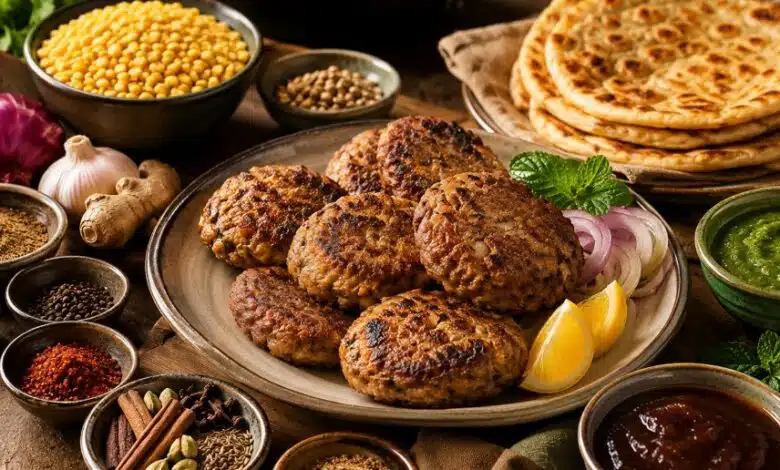
A useful shami kebab setup is much smaller than most shopping lists suggest. For a first batch, the essentials are a suitable meat or protein, chana dal or the binder required by your recipe, a balanced group of spices and aromatics, and a dependable pan. A food processor, kitchen scale, patty mold, vacuum sealer and decorative serving set can help in specific situations, but none of them replaces good moisture control, careful seasoning or sensible cooking technique.
This guide separates genuinely useful purchases from optional conveniences. It covers ingredients, masala blends, processors, pans, freezer storage, chutneys, breads and serving pieces, while explaining what to inspect before following any commercial link. Recipes vary across Pakistani, Indian, Bangladeshi and family traditions, so no single basket is universally correct. Use the sections below to build a setup around the recipe you actually plan to cook.
What belongs in a useful shami kebab setup?
A useful setup has four parts: pantry ingredients, preparation and cooking tools, accompaniments, and storage supplies. The first two determine whether you can make the patties successfully. The latter two determine how conveniently you can serve or prepare them ahead. The mistake is treating all four groups as equally urgent.
For a first attempt, concentrate on the recipe itself. Confirm the protein, the type of dal, whether egg or another binder is used, and whether the mixture is cooked before grinding. Then check your existing kitchen. A normal saucepan may already be suitable for cooking the meat-and-dal mixture. A standard skillet may be perfectly adequate for frying. A bowl and spoon may be enough for shaping a small batch. Buying specialized equipment before understanding the method often adds expense without improving the result.
Frequent batch cooks have different needs. A larger processor can reduce repetitive work, a kitchen scale can improve portion consistency, and parchment separators can prevent frozen patties from sticking together. Even then, the best purchases solve a repeated inconvenience rather than merely looking relevant to the dish.
| Category | Priority | Main purpose | Best for | What to check |
|---|---|---|---|---|
| Protein and chana dal | Essential | Forms the body and texture | Every recipe | Freshness, package identity, recipe compatibility |
| Spices and aromatics | Essential | Builds aroma, heat and depth | Every recipe | Salt, heat level, allergens, package size |
| Processor or mashing tool | Helpful | Creates a cohesive mixture | Medium or large batches | Pulse control, capacity, cleanup |
| Skillet or griddle | Essential if frying | Browns and sets the patties | Fresh cooking and reheating | Heat control, sticking, batch capacity |
| Press, scale or scoop | Optional | Improves uniformity | Freezer batches and events | Storage space, easy cleaning |
| Freezer supplies | Useful for batch cooking | Separates and protects portions | Meal preparation | Freezer suitability, sealing, labeling |
| Chutneys and serving pieces | Optional | Completes the meal | Family meals and entertaining | Ingredients, refrigeration, practical size |

Curated product categories
These categories follow the order in which most home cooks encounter decisions: ingredients first, then texture and frying, then storage and serving. Each link opens a broad category rather than promising that one fixed item will remain available forever.
Shami Kebab Masala
Convenient for cooks who want a repeatable spice base without measuring every ingredient separately.
Chana Dal
Split Bengal gram commonly contributes body, firmness and the characteristic meat-and-lentil texture.
Chutneys
Mint, coriander and tamarind styles can bring freshness, acidity or sweetness to a rich kebab plate.
Spice Sets
Useful when a pantry lacks the individual cumin, coriander, cardamom, cloves and cinnamon used across many South Asian dishes.
Food Processors
A processor can help combine a cooked meat-and-dal mixture, especially for larger batches, but pulse control matters more than aggressive power.
Frying Pans
A normal nonstick, cast-iron or stainless-steel skillet is usually enough. A specialized kebab pan is not required.
Freezer Containers
Rigid containers protect shaped patties and can be easier to stack than loose bags in a busy freezer.
Parchment Separators
Small parchment sheets keep uncooked or cooked patties from freezing into one solid stack.
Patty Molds
Optional molds can improve uniformity when freezing dozens of patties, but hand shaping remains perfectly adequate.
Pressure Cookers
Useful for cooks whose method begins by cooking meat, dal and aromatics together in a pressure cooker.
Air Fryers
Often more useful for reheating or an alternative finish than for reproducing the exact crust of shallow frying.
Vacuum Sealers
Potentially useful for frequent batch cooks, but unnecessary for readers who make only occasional small portions.
Electric Griddles
A broad cooking surface can help when preparing many patties for a family meal or event.
Serving Bowls
Small bowls are practical for chutneys, onions, lemon and yogurt sauces when serving several people.
Chutney Dishes
Divided dishes or small ramekins can keep sweet, hot and cooling sauces separate during a shared meal.
Cookbooks
Useful for understanding regional approaches, family-style cooking and how shami kebab fits into a larger meal.
Bread Warmers
Optional but useful when naan, roti, paratha or buns need to stay warm during a larger family meal.
Measuring Tools
Helpful when adjusting spice blends or troubleshooting patties that vary between batches.
Kitchen Scales
A scale can make portioning and recipe adjustments easier, especially when preparing freezer batches.
Spice Organizers
Useful only when a growing spice collection has become hard to see, date and rotate.
Meat and protein choices
There is no single meat that is automatically correct for every shami kebab. Beef, lamb or mutton, chicken, mixed meat and vegetarian adaptations can all produce coherent versions when moisture, fat, dal and seasoning are balanced for that protein. The better buying decision is the one that suits the recipe, household preference and reliable local supply.

Beef
Beef often provides a familiar savory base and enough structure for patties that hold together well. Lean ground beef may need careful moisture management because a dry cooked mixture can become crumbly after grinding. A somewhat richer grind can feel more tender, but excessive fat can make shaping and frying more difficult.
Chicken
Chicken is lighter in flavor and can absorb aromatics readily, but it is less forgiving when overcooked. Recipes may compensate with moisture, egg, potato or another binder. A chicken mixture also tends to look paler before frying, so visual color alone is not a reliable guide to doneness.
Lamb or mutton
Lamb or mutton brings a deeper, more distinctive flavor. It can stand up well to warming spices, but the amount of fat varies considerably. A rich grind may need less added fat and careful chilling before shaping.
Mixed-meat versions can balance flavor and texture, but they are harder to reproduce unless proportions are recorded. Vegetarian adaptations commonly rely on lentils, potato or other legumes, yet they should be presented as adaptations rather than assumed to taste or behave exactly like a meat-based patty.

Chana dal and binding ingredients
Chana dal—split Bengal gram—is common in many shami kebab recipes because it contributes structure while still allowing a tender interior. It absorbs cooking liquid, adds body after grinding and helps transform seasoned meat into a cohesive patty mixture. It is not merely a decorative lentil added for appearance.
Packages may use the terms chana dal, split Bengal gram or split chickpeas. Ordinary yellow split peas are not always an identical substitute. They can cook differently and may change the flavor or moisture balance. When the recipe specifically calls for chana dal, buying the correctly labeled pulse removes one avoidable variable.
A modest bag is usually enough for several home batches. Bulk packages make sense only for households that cook dal and related dishes regularly. Store dry lentils in a cool, dry place inside a tightly closed container, and inspect the package for damage or moisture before use.

Other binders and texture adjustments
Egg, breadcrumbs, gram flour, mashed potato and reduced cooking liquid may appear in different recipes, but they do not all solve the same problem. Egg can help a loose mixture set. Breadcrumbs absorb moisture but can make a patty dense when overused. Gram flour thickens and adds its own flavor. Mashed potato softens and binds vegetarian or meat mixtures. Often the most effective correction is simply cooking off excess liquid before grinding.
Spices and aromatics
The spice profile of shami kebab is layered rather than dependent on one dominant seasoning. Cumin and coriander provide an earthy base. Black pepper and red chili add different kinds of heat. Cloves, cinnamon and cardamom contribute warm aromatic notes. Garam masala can reinforce those elements, while ginger, garlic, fresh green chili, cilantro and mint bring freshness and complexity.

| Format | Advantages | Limitations | Best use |
|---|---|---|---|
| Whole spices | Strong aroma, flexible toasting and grinding | Requires extra work and careful removal or grinding | Cooks who already use whole spices regularly |
| Freshly ground spices | Good aroma with precise control | Needs a grinder and adds cleanup | Readers refining a preferred recipe |
| Pre-ground individual spices | Fast, flexible and easy to adjust | Can lose aroma during long storage | Most home kitchens |
| Packaged shami kebab masala | Convenient and repeatable | Less control over salt, heat and proportions | Beginners or occasional cooks |
Before buying a blend, inspect the ingredient order, sodium, allergens, artificial colors, heat level, serving directions and package size. Some mixes include salt, flour, flavor enhancers or ingredients a buyer may not expect. A large box is not automatically better value if the flavor fades before it is used.
Is packaged shami kebab masala worth buying?
Packaged shami kebab masala is worth considering when convenience and consistency matter more than full control. It is not required, and it is not automatically more authentic than a carefully balanced combination of individual spices.
Choose a blend if…
You cook shami kebab occasionally, do not keep many South Asian spices, or want a dependable baseline while learning how the mixture should taste.
Choose individual spices if…
You already own the core spices, prefer to control salt and chili, or want to adjust the aroma for beef, chicken, lamb or a family recipe.
Use both if…
You like the convenience of a blend but want to deepen it with fresh ginger, garlic, green chili, cilantro, mint or a small amount of freshly ground spice.
Skip a new purchase if…
Your pantry already contains nearly every ingredient in the blend. Buying another packet may simply duplicate what you own.
Food processors, grinders and mixing tools
A food processor is useful when the cooked meat-and-dal mixture must become cohesive without requiring prolonged hand mashing. It is especially helpful for medium and large batches. It is not essential for every recipe, and it can damage texture when the mixture is processed continuously into a wet paste.
The most useful features are a bowl capacity appropriate to the batch, responsive pulse control, blades that can handle a dense cooked mixture, a stable base, easy cleaning and replacement parts that are realistically available. A very large processor can be awkward for a small batch because the mixture may sit below the blade’s effective working area.

| Tool | Suitability | Main advantage | Main risk |
|---|---|---|---|
| Food processor | Very useful | Fast, cohesive processing | Overprocessing into paste |
| Meat grinder | Useful in some methods | Controlled grind texture | More setup and cleaning |
| Potato masher | Useful for small batches | Cheap and controlled | More effort, less uniformity |
| Mortar and pestle | Best for spices, not full batches | Fresh aroma and control | Impractical for large meat mixtures |
| Immersion blender | Usually poor for this task | Convenient to store | Uneven blending and pasty areas |
| Hand mixing | Good after grinding | Excellent final control | Cannot replace grinding in every recipe |
Cookware for frying and reheating shami kebab
Most readers do not need a specialized “shami kebab pan.” The best pan is one that heats predictably, releases the patties without tearing them and provides enough surface area for the batch.
| Method | Browning | Sticking | Oil use | Best for |
|---|---|---|---|---|
| Nonstick skillet | Moderate and even | Lowest when coating is intact | Usually modest | Beginners and delicate patties |
| Cast iron | Strong crust potential | Depends on seasoning and heat | Moderate | Cooks comfortable with heat control |
| Stainless steel | Excellent when preheated correctly | Higher if added too early or moved too soon | Often moderate | Experienced cooks and multipurpose use |
| Flat griddle | Good across a large area | Depends on surface | Varies | Large batches |
| Air fryer | Drier surface, less pan contact | Generally low | Often lower | Reheating or alternative cooking |
| Oven tray | More even than deeply browned | Use parchment or an appropriate liner | Often lower | Hands-off batch cooking |
Air-fried or oven-baked patties should not be described as identical to shallow-fried shami kebab. They may be convenient and can reheat well, but the crust and moisture distribution differ because the patty has less direct contact with hot fat and metal.
Patty shaping and portioning tools
Shaping by hand is the default method and remains the most flexible. Slightly damp or lightly oiled hands can help with a mixture that wants to stick. A measuring scoop can speed portioning, while a scale can make a freezer batch more uniform.
Ring molds and burger presses are conveniences, not requirements. They are most useful when a cook wants dozens of patties with consistent diameter and thickness for even frying, stacking and freezing. A press that compresses the mixture too tightly can produce a dense result, so gentle pressure is preferable.
Parchment squares are often more useful than the press itself. They allow shaped patties to move to the freezer without sticking to a tray and later separate cleanly into portions.
Oil and frying considerations
A neutral cooking oil with a flavor and heat tolerance suitable for shallow frying is the simplest choice. The exact oil depends on household preference, local availability, the pan and the recipe. Avoid relying on marketing claims such as “detoxifying,” “the healthiest oil” or other medical-style promises.
Oil quantity also depends on method. A nonstick skillet may need only a thin layer for a prepared mixture that already contains some fat. Cast iron or stainless steel may require more attention to coating the surface. Adding excessive oil does not fix a weak mixture; it can instead make the exterior greasy while the patty still breaks.
For a large batch, an oil dispenser, splatter screen and wide turner can make the process cleaner, but these are general kitchen tools rather than shami-specific necessities.
Chutneys, sauces, breads and accompaniments
Mint-cilantro chutney, tamarind chutney, yogurt-based sauces, sliced onion, lemon, cucumber and raita are common partners because they balance the richness and spice of the patty. Paratha, naan and roti can turn shami kebab into a fuller meal, while buns create a sandwich or bun-kebab style presentation.

Prepared chutneys are convenient, but their sweetness, heat and salt vary. Check allergens, ingredient clarity, package size and refrigeration instructions after opening. A sauce associated with Pakistani or South Asian cuisine should not automatically be assumed halal; review the current package when that status matters.
Fresh chutney may be a better choice when the household already keeps cilantro, mint, yogurt, lemon and green chili. A commercial jar makes more sense when consistency and shelf life are more important than customization.
Serving dishes and tableware
Ordinary plates are completely sufficient. Serving pieces become useful when they solve a real table problem: a platter that holds a family batch, small bowls that separate sweet and spicy chutneys, tongs that keep a shared plate tidy, or an insulated basket that prevents flatbread from cooling too quickly.
Decorative dishes make the most sense for gatherings, Eid meals, family celebrations or food photography. They should come after ingredients and dependable cookware. A beautiful platter cannot correct a dry mixture, and a divided tray is unnecessary when existing ramekins already work.
Freezing, storage and meal preparation
Shami kebab is well suited to batch preparation because patties can be portioned before freezing and removed as needed. The key is organizing the process so hot food is cooled safely, portions do not stick together and the package protects against drying and freezer damage.

Freezing shaped uncooked patties
Arrange shaped patties on a lined tray with enough space to prevent them from touching. Once firm, transfer them to a freezer-safe container or bag with parchment between layers. This prevents one large frozen block and reduces handling later.
Freezing cooked patties
Allow cooked patties to cool promptly in accordance with current food-safety guidance, then pack them in shallow portions. Separating layers protects the crust and makes reheating smaller quantities easier. Label the package with the contents and date so older batches are used first.
USDA guidance recommends refrigerating perishable leftovers within two hours, using shallow containers to encourage faster cooling, keeping the refrigerator at 40°F or below, and reheating leftovers to 165°F. FoodSafety.gov explains that freezer time limits are generally quality recommendations when food remains continuously frozen at 0°F or below. Readers should follow current official guidance and instructions relevant to the specific ingredients used.
Frozen and ready-to-cook shami kebab
Frozen and ready-to-cook products can be practical when a local restaurant does not offer shami kebab or when a household wants a fast freezer option. They should be evaluated as perishable packaged foods, not as permanent marketplace listings.

Before ordering, verify whether the patties are beef, chicken, lamb, mixed meat or vegetarian. Read the ingredient list, allergen statement, package weight, number of pieces, cooking method and storage directions. Review how the seller handles frozen shipping and whether return or refund limitations apply to perishable products.
Halal-labeled options may be available, but the current package and manufacturer information must be checked. Certifications and formulations can change. A product should not be described as guaranteed halal merely because its title contains “shami kebab,” because it is sold by a South Asian merchant or because it uses a particular meat.
Pressure cookers and large-batch preparation
A pressure cooker can shorten the first cooking stage in methods that combine meat, chana dal, aromatics and whole spices before grinding. It is useful when the recipe already depends on pressure cooking; it should not be purchased merely because shami kebab is on the menu. A heavy saucepan or Dutch oven remains a valid choice when time is less important or when a cook wants to watch the liquid reduce gradually.
Capacity is the first buying question. A very small cooker can become crowded, while an oversized cooker occupies storage space and may be awkward for a modest household batch. Consider the volume of meat, dal and liquid after expansion rather than judging only by the number of patties planned. The cooker also needs enough room for safe operation under the manufacturer’s instructions.
Electric pressure cookers offer programmed controls and may suit cooks who want a repeatable process. Stovetop models heat and depressurize differently and often appeal to experienced users who prefer direct control. Neither format guarantees better kebab. The important result is a cooked mixture with tender ingredients and little excess liquid before grinding.
What matters more than extra accessories
A dependable sealing ring, a clear pressure indicator, an inner pot that is practical to clean and access to replacement parts matter more than a large accessory bundle. Extra racks, egg holders and baking inserts may have no role in shami kebab preparation. Read the manufacturer’s current operating and cleaning instructions instead of relying on generic online advice.
For large batches, a wide pot, strong colander, large mixing bowl and heat-resistant spatula may provide more value than upgrading the cooker itself. The cooked mixture must still be spread or cooled appropriately, checked for excess moisture and processed in manageable portions.
Air fryers, ovens and reheating equipment
An air fryer is most convincing as a reheating tool or as an alternative cooking method for readers who already own one. It circulates hot air around the patty, which can refresh the surface without returning the kebab to a pan of oil. It does not reproduce the same contact browning or richness as shallow frying, and the difference should be treated as a tradeoff rather than disguised as an identical result.
Basket size matters more than a long list of cooking presets. Patties need enough space for air to circulate; tightly packed layers reheat unevenly. A compact basket can be practical for one or two people, while a larger family may prefer a wider basket or countertop convection oven. Liners can reduce cleanup, but solid liners may also restrict airflow if they cover too much of the basket.
An ordinary oven is better suited to a broad tray of patties, especially when reheating for several people. A wire rack can increase airflow beneath the kebabs, although it adds another item to wash. A microwave is the fastest fallback, but it tends to soften the crust. Covering food and rotating it can improve even heating; official USDA guidance recommends reheating leftovers thoroughly to 165°F.
When a thermometer is useful
An instant-read thermometer is valuable when cooking raw ground-meat patties or reheating a large, cold batch whose center may lag behind the surface. USDA guidance lists 160°F for ground beef, pork, lamb and veal and 165°F for poultry. A thermometer is a general food-safety tool, not a shami-specific gadget, which makes it easier to justify in a multipurpose kitchen.
Do not buy an air fryer only because one frozen package includes air-fryer directions. First compare the cost and counter space with the frequency of use. A skillet, oven or toaster oven may already cover the same practical need.
Flatbreads, buns and sandwich essentials
Shami kebab is often served as part of a plate, but it also works inside paratha, naan, roti or a soft bun. That flexibility does not mean every reader needs specialized bread equipment. Fresh bread from a local bakery or market may be more practical than purchasing mixes, rolling boards and a tawa for occasional meals.
For a wrap, the bread should be flexible enough to fold without cracking and sturdy enough to hold chutney and onion. For a bun-style sandwich, softness matters, but an overly sweet or heavily flavored bun can compete with the patty. Toasting the cut surface lightly can provide structure without turning the sandwich dry.
A bread warmer becomes useful when several breads are served at once. An insulated basket can keep paratha or naan warmer at the table, but a clean towel inside an existing basket often accomplishes the same task. Rolling pins, boards and a cast-iron tawa are sensible purchases only for households that plan to make flatbreads regularly.
What to buy for a bun-kebab style meal
The most useful additions are usually the bun, chutney, onion and optional egg rather than more equipment. Prepared tamarind or mint chutney can save time, while a squeeze bottle is optional. A small griddle may help toast several buns and warm patties together, but a normal skillet performs the same job for a small household.
Buy according to the problem you are trying to solve
Shopping becomes more useful when it begins with a cooking problem. A new appliance is not the answer to every failure. In many cases, the mixture, temperature or timing needs adjustment before the equipment does.
If the patties fall apart
First examine moisture. A mixture containing too much cooking liquid may remain loose no matter how carefully it is shaped. Return it to gentle heat to reduce moisture, then cool it before deciding whether a binder is needed. Egg, breadcrumbs, gram flour or mashed potato may help in recipes designed for them, but adding several binders at once can produce a heavy patty.
A kitchen scale or scoop can improve consistency when some patties are much larger than others. A nonstick skillet and a broad thin turner can reduce breakage during frying. A patty press is rarely the first solution; compressing a wet mixture does not make it stable.
If the mixture becomes pasty
Continuous processing is a common cause. Use short pulses and stop while the mixture still has some texture. Process in smaller batches if the bowl is overloaded. A larger motor does not prevent overprocessing; good control does. Readers who prefer a more textured kebab may combine coarse processing with final hand mixing.
If the kebabs taste flat
Check salt, spice freshness, acidity and fresh aromatics before buying another appliance. Old ground spices can smell muted even when the package is not empty. Fresh ginger, garlic, green chili, cilantro or mint may restore brightness. A small spice grinder is useful only if whole spices are already part of the cooking routine.
If the outside browns before the center heats
The patties may be too thick, too cold or cooked over excessive heat. Uniform portioning can help. A scale, scoop or ring mold may be useful for large batches, but the first correction is usually lower heat and adequate time. For frozen patties, follow the product or recipe instructions rather than assuming every patty can go directly from freezer to a very hot skillet.
If freezer patties develop dry edges
Air exposure and poor wrapping are likely causes. Use tighter packaging, remove excess air from freezer bags and separate portions so the entire package does not need to be opened repeatedly. A vacuum sealer may be justified for frequent large batches, but a well-sealed freezer bag inside a rigid container is enough for many households.
A sensible workflow for batch cooking
Batch cooking succeeds when each stage is planned before the meat and dal are cooked. Clear freezer space, prepare parchment, choose container sizes and decide how many patties belong in one meal portion. This prevents a hot finished mixture from sitting while storage supplies are located.
Cook the mixture according to the recipe, paying attention to liquid reduction. Allow it to become manageable for the next step without leaving perishable food at room temperature longer than official guidance permits. Process in batches that the machine can handle evenly, then combine and adjust the seasoning before shaping.
Portion consistently enough that patties cook at similar rates. Exact uniformity is not required for a family meal, but visibly different thicknesses create uneven results. Arrange shaped patties on parchment-lined trays. If freezing uncooked patties, freeze them until firm before transferring them to labeled packages. If freezing cooked patties, cool them promptly, then package in shallow portions.
Store chutneys separately. Fresh herb chutneys and yogurt sauces have different storage needs from the patties, and bread should not be packed against moist kebabs. For planned meals, label the kebab package with the meat type when several versions are in the freezer.
Useful tools for this workflow
A processor reduces repeated mashing. A scale or scoop improves portioning. Parchment prevents sticking. A broad tray creates space for initial freezing. Rigid containers protect patties from being crushed, while bags use less space. Labels prevent mystery packages. Each tool has a clear job; none needs to be purchased as a themed “shami kebab kit.”
Match the purchase to how often you cook
Frequency changes the value of almost every category in this guide. A person making shami kebab once for a weekend meal should not shop like a household preparing freezer batches every month. For occasional cooking, small ingredient packages, one dependable pan and existing storage supplies usually provide the best balance. The goal is to complete the recipe without creating a cabinet of products that will age before the next use.
Monthly cooks can justify better organization. A medium food processor, kitchen scale, labeled spice jars and stackable freezer containers become more useful because the same tasks repeat. At this level, consistency saves time: recorded spice amounts, similar patty weights and predictable freezer portions make future batches easier to reproduce.
Frequent large-batch cooks may benefit from a wider griddle, larger processor, pressure cooker or vacuum sealer, but only after measuring the practical limits of the kitchen. Counter space, cabinet height, electrical outlets, cleaning time and freezer capacity can matter more than advertised power. A large appliance that is difficult to retrieve and wash may be used less than a modest tool kept within reach.
Consider the full cost of ownership
The purchase price is only one part of the decision. Food processors may require replacement bowls, lids or blades. Vacuum sealers require compatible bags. Air fryers and electric griddles occupy counter or cabinet space. Cast-iron cookware needs drying and maintenance. Spice organizers can encourage unnecessary decanting unless dates and ingredient labels are preserved.
Also consider whether the category depends on changing marketplace inventory. Pantry products can change formulation, package size or seller. Electrical equipment can be replaced by a newer model while accessories for the older version become harder to find. Choosing broadly useful specifications instead of chasing a fashionable model keeps the recommendation useful for longer.
Before buying, imagine the complete routine: where the item will live, how it will be cleaned, what consumables it requires and whether it replaces an existing tool. This simple check prevents a curated guide from becoming an excuse for clutter.
Starter shopping lists for different readers
First-time cook on a budget
Buy now: correct protein, chana dal, missing spices or one suitable masala blend.
Use what you own: saucepan, bowl, spoon and skillet.
Consider later: processor if hand mashing is difficult.
Skip: press, vacuum sealer and decorative serving pieces.
Regular batch cook
Buy now: medium-size pantry packages, parchment, freezer containers and labels.
Use what you own: dependable cookware.
Consider later: processor, scale, griddle or vacuum sealer.
Skip: tools that duplicate equipment already working well.
Small apartment kitchen
Buy now: small ingredient packages and compact storage.
Use what you own: one multipurpose skillet and nesting bowls.
Consider later: compact processor.
Skip: large pressure cooker, oversized griddle and bulky press.
Host preparing a family meal
Buy now: enough ingredients, freezer supplies and two complementary chutneys.
Use what you own: platters, bowls and tongs.
Consider later: electric griddle or bread warmer.
Skip: décor that does not improve service or temperature.
What not to buy
A trustworthy shopping guide should help readers avoid unnecessary purchases. Shami kebab does not require a countertop full of specialized gadgets.
- Oversized spice packages for one recipe: aroma declines during long storage, and a low unit price does not help if most of the package is unused.
- Single-purpose tools that duplicate a bowl, scoop or skillet: buy only when the repeated task is genuinely inconvenient.
- A large processor for a tiny kitchen: a compact machine or hand tool may fit the batch more effectively.
- Decorative serving pieces before core ingredients: presentation is optional; flavor and texture are not.
- Poorly labeled masala: avoid products with unclear ingredients, allergens or preparation directions.
- Perishable foods from unclear sellers: seller and shipping quality matter when a cold chain is required.
- Products promoted as halal without visible supporting information: inspect the current package or contact the manufacturer.
- Several similar blends at once: learn one flavor profile before buying duplicates.
How to compare products without relying only on ratings
Marketplace star ratings are a starting point, not a complete buying method. Ratings can combine different package sizes, sellers or product versions, and an old review may not describe the current formula.
Read recent reviews for recurring patterns rather than isolated praise or complaints. Look for package-size confusion, damaged seals, expiration concerns, seller substitutions, ingredient changes and poor frozen delivery. For equipment, compare actual usable capacity, cleaning difficulty, stability, replacement parts and return rules. A processor with a large advertised bowl may still perform poorly with a small dense batch. A pan described as nonstick may be difficult to maintain at the heat you prefer.
Do not assume the cheapest listing is the best value. Compare how much of the product you will realistically use, whether the seller is responsible for fulfillment and whether a return is possible for that category.
Where to buy shami kebab essentials
South Asian grocery stores often provide the strongest combination of chana dal, spices, prepared chutneys and knowledgeable staff. Halal markets may be a better choice for fresh meat when the store clearly communicates sourcing. International supermarkets offer broader comparison shopping, while local spice shops can be useful for smaller quantities or fresher turnover.
Mainstream supermarkets may carry cumin, coriander, ginger, garlic, breadcrumbs and cookware but not a dedicated shami kebab masala. Online retailers provide convenience and wider category access, though seller, package and perishable-shipping details require closer inspection.
Readers still looking for a restaurant, takeaway counter or local grocery option can use the complete Kebabs Shami Near Me guide. For a clearer explanation of the dish’s texture, ingredients and variations, see the main shami kebab guide. Local availability differs by neighborhood; the Long Island City and Queens guide is one geographic example rather than a nationwide inventory list.
A practical buying order
- Confirm the recipe style. Identify the protein, dal, binders, cooking method and serving plan.
- Check the pantry. List the spices, cookware and storage supplies already available.
- Buy the protein and chana dal. These define the core mixture.
- Add individual spices or one appropriate blend. Avoid buying both unless each has a clear role.
- Use existing cookware first. Test the method before purchasing specialized equipment.
- Add storage tools for batch cooking. Parchment, labels and freezer-safe containers usually come before a vacuum sealer.
- Purchase serving pieces last. Chutney bowls and bread warmers are optional finishing touches.
Build the smallest setup that solves your real needs
The most useful shami kebab setup is not the most expensive one. Flavor depends more on the relationship among meat or protein, dal, spice, moisture and cooking technique than on a large collection of gadgets. A first-time cook may need only the correct ingredients and a dependable pan. A frequent batch cook may benefit from a processor, scale and organized freezer system. A host may value a griddle and practical serving pieces.
Start with what affects the food directly. Add convenience tools after the same inconvenience appears more than once. Use the curated categories above to compare options, but keep ordinary kitchen tools whenever they already do the job well.
Frequently asked questions
What are the essential ingredients for shami kebab?
The essentials are a suitable meat or protein, chana dal or the binder specified by the recipe, aromatics such as ginger and garlic, and a balanced spice mixture. Exact ingredients vary among Pakistani, Indian, Bangladeshi and household traditions, so the recipe should be confirmed before shopping.
Is chana dal required for every shami kebab recipe?
No. Chana dal is common because it gives body and helps create a cohesive meat-and-lentil texture, but some recipes use different proportions or other binders. When a recipe specifically calls for chana dal, ordinary yellow split peas should not automatically be treated as identical.
Can I use a blender instead of a food processor?
A standard blender is usually less suitable because dense mixtures may not circulate evenly and can become pasty near the blades. A food processor with pulse control, a grinder, a potato masher or careful hand processing generally provides better texture control.
Is packaged shami kebab masala necessary?
No. A packaged blend is a convenience for cooks who want consistency or do not own the individual spices. Cooks who already keep cumin, coriander, black pepper, chili and warming spices may prefer to build and adjust the seasoning themselves.
Which pan works best for frying shami kebab?
A dependable nonstick skillet is the easiest choice for delicate patties. Cast iron can create strong browning, and stainless steel works well with correct preheating and enough oil. Most cooks do not need a specialized shami kebab pan.
Can shaped shami kebab patties be frozen?
Yes. Shape the patties, freeze them separately on a lined tray until firm, then transfer them to a freezer-safe container or bag with parchment between layers. Follow current official food-storage guidance and the instructions relevant to the ingredients used.
What chutney is commonly served with shami kebab?
Mint-cilantro chutney and tamarind chutney are common choices. Yogurt sauces, raita, sliced onion and lemon can also balance the richness and spice. The best pairing depends on whether the kebab is served as an appetizer, meal, wrap or bun sandwich.
How can I check whether a frozen shami kebab product is halal?
Read the current package and manufacturer information for explicit halal labeling or certification. Do not infer halal status from the cuisine, seller name, meat type or product title. When the label is unclear, contact the manufacturer before purchasing.
Do I need a kebab press?
No. Shami kebab can be shaped by hand. A press, ring mold, scoop or kitchen scale is useful only when uniform size matters for large batches, freezing or event service.
What should a first-time cook buy first?
Buy the correct protein, chana dal, missing spices and any required binder. Use an existing saucepan, bowl and skillet before investing in a processor, press, vacuum sealer or serving collection.
Are ready-to-cook products the same as restaurant shami kebab?
Not necessarily. Frozen products may differ in meat, dal proportion, spice level, size, coating and cooking method. Review the ingredient list and directions rather than assuming the package will match a restaurant or family-style version.
Which tools are useful for large batches?
A suitably sized food processor, large mixing bowl, kitchen scale, wide griddle, parchment separators, freezer-safe containers and clear labels can reduce repetitive work. A vacuum sealer is optional and is most useful when batch freezing happens frequently.


