
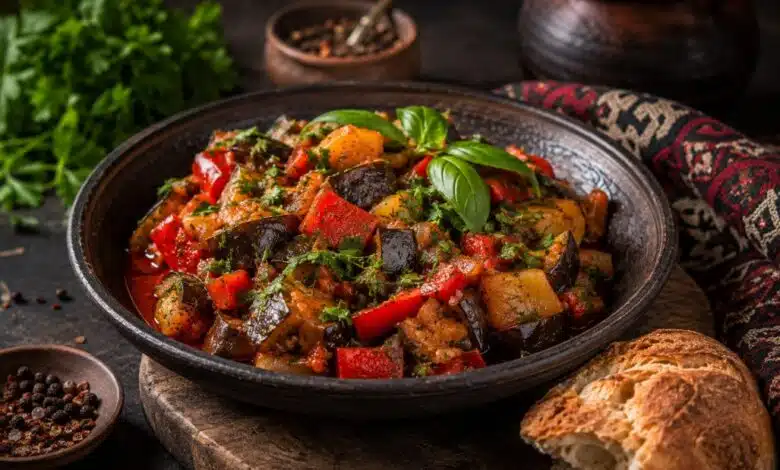
Ajapsandali tastes savory, garlicky, herbaceous and naturally sweet, with tender eggplant absorbing the flavors of ripe tomatoes, peppers, onions and Georgian seasonings. Depending on how it is prepared, the dish may also taste smoky, mildly spicy, tangy or deeply roasted. It should be rich enough to feel satisfying without tasting like a heavy meat stew or a bowl of plain boiled vegetables.
The first flavor many diners notice is usually tomato, followed by soft eggplant, sweet peppers and garlic. Fresh cilantro, parsley and basil add brightness, while ground coriander and black pepper can create warmth without making the dish hot. Adjika or fresh chile may introduce noticeable heat, but strong spiciness is not required.
Texture is an important part of the experience. Eggplant should be fully tender and almost creamy inside. Tomatoes create a light sauce around the vegetables, while peppers may retain a slight bite. Potatoes, when included, make the dish firmer, milder and more substantial.
Ajapsandali may be served hot, warm, at room temperature or chilled. The temperature changes the way it tastes. Warm ajapsandali feels softer, sweeter and more aromatic. Chilled ajapsandali tastes firmer, sharper and more garlicky, with tomato acidity becoming more noticeable.
To find restaurants and current menu leads, visit our guide to ajapsandali near me.
What does ajapsandali taste like in simple terms?
Ajapsandali tastes like a deeply seasoned combination of eggplant, tomatoes and sweet peppers, lifted by garlic and fresh herbs. It is usually savory rather than sweet, although cooked onions, ripe tomatoes and red peppers contribute natural sweetness.
The dish often feels richer than its ingredient list suggests. Eggplant absorbs oil, tomato juices, garlic and spices, creating a soft, almost creamy bite. Fresh herbs prevent the richness from becoming flat.
A good comparison for someone unfamiliar with Georgian food is a more herbaceous and sometimes spicier eggplant stew than ratatouille. That comparison is only approximate. Ajapsandali develops its own identity through cilantro, coriander, garlic, Georgian seasoning and its place beside Georgian bread, beans, walnut dishes and grilled foods.
The dish should not taste strongly creamy, cheesy or meaty unless a restaurant has added dairy or served it as part of a larger preparation. The core flavor comes from vegetables, herbs, garlic and oil.
What should you notice in the first bite?
The first bite should reveal tender vegetables coated in a tomato-rich mixture. The eggplant may not produce a strong flavor by itself, but it carries the garlic, herbs and spices into a soft, satisfying texture.
If the dish is warm, the aroma often reaches you before the full flavor. Garlic, tomato, cooked peppers and herbs become more noticeable as steam rises from the bowl.
A chilled serving behaves differently. Its aroma is quieter, but garlic, salt and acidity feel more concentrated on the tongue. The vegetables are firmer, and the oil may feel slightly heavier.
The opening flavors
Tomato and pepper usually arrive first because they provide the most recognizable sweetness and acidity. Garlic may follow immediately, particularly when some is added late in the cooking process.
The middle of the bite
Eggplant becomes more apparent through texture than through aggressive flavor. It feels soft, earthy and substantial, holding the tomato and herbs together.
The finish
Cilantro, basil, parsley, coriander or black pepper may remain after swallowing. A spicy version may finish with gentle chile warmth or the sharper flavor of adjika.
Does it have one dominant flavor?
Eggplant is normally the central vegetable, but properly balanced ajapsandali should not taste only of eggplant. Tomato, peppers, garlic and herbs need to remain recognizable.
What does the eggplant taste like in ajapsandali?
Eggplant has a mild, earthy flavor and a strong ability to absorb surrounding ingredients. In ajapsandali, it acts almost like a sponge for tomato, garlic, herbs, salt, oil and spices.
The best eggplant pieces taste seasoned throughout rather than bland in the center. They should not feel dry, raw or squeaky.
Roasted eggplant
Roasting concentrates the eggplant and may create browned edges. The result tastes deeper and slightly sweeter than boiled or gently simmered eggplant.
Fried eggplant
Frying creates the richest texture. The interior becomes silky, and the oil carries garlic and spices effectively. Poorly controlled frying can make the dish greasy.
Grilled eggplant
Grilling introduces smoke and mild bitterness from charred surfaces. A small amount of char gives ajapsandali complexity; excessive burning makes it harsh.
Simmered eggplant
Simmered eggplant becomes soft and integrated with the tomato sauce. It may lose clear edges but absorb more of the surrounding flavors.
Can eggplant make ajapsandali bitter?
Strong bitterness is not the intended flavor. It may come from burned skin, charred garlic, very mature eggplant or excessive green pepper. Ripe tomato and proper seasoning should balance mild natural bitterness.
How do tomatoes shape the taste?
Tomatoes provide acidity, sweetness, moisture and much of the sauce that binds the vegetables. Their quality strongly affects the final dish.
Ripe fresh tomatoes
Ripe tomatoes create a bright, naturally sweet result. They usually require less correction from sugar or tomato paste.
Less-ripe tomatoes
Pale or underripe tomatoes may taste sharply acidic and watery. The cook may need to reduce them longer or add a small amount of concentrated tomato.
Canned tomatoes
Good canned tomatoes can create a richer, more consistent sauce outside tomato season. They may produce a deeper red color and a more cooked flavor.
Tomato paste
A small quantity adds body and concentration. Too much can make ajapsandali taste like generic tomato sauce and hide the eggplant.
Should the dish taste strongly of tomato?
Tomato should be clear but not overwhelming. Ajapsandali is not simply tomato sauce with vegetables added. Eggplant, peppers, garlic and herbs must still matter.
Why does chilled ajapsandali taste more acidic?
Cold temperatures reduce the perception of sweetness. The tomato’s acidity therefore becomes more prominent, even when no extra acid has been added.
What flavor do peppers add?
Bell peppers contribute sweetness, fresh vegetable aroma and color. Their flavor depends on type and cooking method.
Red peppers
Red peppers are sweet and become even sweeter after roasting. They add a rounded, almost fruity flavor.
Yellow and orange peppers
These provide similar sweetness with a slightly lighter flavor. They can make the dish visually brighter.
Green peppers
Green peppers taste more vegetal and slightly bitter. A small amount can add complexity, but too much may make ajapsandali taste harsher.
Roasted peppers
Roasting concentrates sweetness and introduces char. Peeled roasted peppers feel soft and silky.
Simmered peppers
Simmered peppers retain a fresher vegetable taste. Depending on cooking time, they may provide a slight bite beside soft eggplant.
Do peppers make ajapsandali spicy?
Sweet bell peppers do not. Heat comes from hot chile, red pepper, adjika or another spicy seasoning.
How do onions and garlic affect the flavor?
Onions build the savory base, while garlic gives ajapsandali much of its recognizable intensity.
Cooked onions
Slowly softened onions become sweet and mellow. They connect the tomato with the eggplant and reduce harsh acidity.
Browned onions contribute deeper caramelized notes. Burned onions create bitterness that can spread throughout the entire pot.
Garlic added early
Garlic cooked with onions becomes mellow and rounded. It supports the vegetables without standing out sharply.
Garlic added late
Late garlic tastes fresher, hotter and more aromatic. It is especially noticeable in chilled ajapsandali.
Can ajapsandali be very garlicky?
Yes. Some versions have a pronounced garlic flavor. It should still be balanced by tomato, herbs and salt rather than tasting like raw garlic paste.
Why does garlic become stronger overnight?
As the dish rests, garlic compounds spread through the vegetables and sauce. Cold temperature can also make the sharpness feel more noticeable.
What do fresh herbs add to ajapsandali?
Fresh herbs distinguish ajapsandali from a generic vegetable stew. They add aroma, brightness and regional identity.
Cilantro
Cilantro provides a fresh, citrus-like and slightly peppery character. For many diners, it is one of the clearest differences between ajapsandali and a typical French ratatouille.
Parsley
Parsley tastes cleaner and milder than cilantro. It adds freshness without dominating the dish.
Basil
Basil contributes sweet fragrance. Depending on the variety, it may taste lightly peppery, clove-like or floral.
Purple basil
Purple basil can have a stronger, darker aroma than common sweet basil. Its flavor may feel more peppery or spicy.
Herbs cooked from the beginning
Long cooking integrates herbs but reduces their fresh aroma. They become part of the background flavor.
Herbs added at the end
Freshly added herbs create a brighter finish and stronger aroma. Many cooks use both early and late additions.
Can dried herbs replace fresh herbs?
Dried herbs can add flavor, but they do not provide the same freshness. A small amount of dried basil or parsley may support the dish, yet fresh herbs remain important to the final character.
Which spices can you taste in ajapsandali?
Ground coriander
Ground coriander seed tastes warm, citrus-like and slightly nutty. It supports fresh cilantro while adding a deeper layer.
Black pepper
Black pepper brings gentle heat and an aromatic finish. It is usually less aggressive than chile.
Red pepper
Ground red pepper may add warmth or clear heat depending on the variety and amount.
Blue fenugreek
Some Georgian cooks may use blue fenugreek or a spice blend containing it. It contributes an earthy, slightly sweet aroma, but it is not mandatory in every recipe.
Adjika
Adjika can contain chile, garlic, herbs, salt and spices. A small amount deepens flavor. A larger amount makes the dish distinctly spicy and more concentrated.
Bay leaf
Bay leaf may provide a subtle background aroma during simmering. It should not become the main flavor.
Should ajapsandali taste heavily spiced?
No. Spices should support ripe vegetables. The dish should still taste clearly of eggplant, tomato and peppers rather than one dominant seasoning blend.
Is ajapsandali spicy?
Ajapsandali can be mild, moderately spicy or hot. Strong chile heat is optional rather than essential.
Aromatic does not mean spicy. Cilantro, basil, coriander and garlic can make the dish intense without producing a burning sensation.
How can you tell before ordering?
Ask whether the restaurant uses adjika or fresh chile. Menu descriptions may list only vegetables and omit the heat level.
Can a restaurant make it less spicy?
If the dish is prepared in batches, the kitchen may not be able to remove chile from an individual serving. A cheese or bread accompaniment can soften the perceived heat but will not eliminate it.
Is Georgian food generally spicy?
Georgian food can be highly aromatic and well seasoned without always being hot. Ajapsandali reflects that distinction.
Does ajapsandali taste sweet?
Ajapsandali has natural sweetness but is not a dessert-like or sugary dish.
Sweetness comes from:
- ripe tomatoes;
- red and yellow peppers;
- slowly cooked onions;
- roasted eggplant;
- carrots when included;
- caramelization during roasting or frying.
Should sugar be added?
Sugar is not necessary when the vegetables are ripe. A very small amount may be used to balance harsh tomatoes, but noticeable sweetness would change the intended savory character.
Why does roasted ajapsandali taste sweeter?
Dry heat removes water and concentrates natural sugars. Browned edges also create caramelized flavors.
Why does cold ajapsandali taste less sweet?
Cold food generally releases aroma less readily and can reduce the perception of sweetness. Tomato acidity and garlic then seem stronger.
Is ajapsandali sour or tangy?
It can be gently tangy because tomatoes naturally contain acid. It should not normally taste sharply sour.
Sources of acidity
- fresh tomatoes;
- canned tomatoes;
- tomato paste;
- lemon juice in some modern recipes;
- vinegar in adapted recipes;
- fermented or acidic adjika.
Is vinegar traditional?
Vinegar is not required to define ajapsandali. Some cooks may add a small amount for balance, particularly in a cold appetizer version.
How much acidity is appropriate?
Enough to keep the eggplant and oil from feeling heavy. The dish should remain savory and vegetable-focused.
Why might restaurant ajapsandali taste very tangy?
The kitchen may use acidic canned tomatoes, vinegar, lemon or a concentrated cold preparation. Chilling also increases the perception of sharpness.
Should ajapsandali taste bitter?
No. Strong bitterness usually indicates an ingredient or cooking problem.
Possible causes of bitterness
- burned garlic;
- burned tomato paste;
- heavily charred eggplant skin;
- too many green peppers;
- old or very mature eggplant;
- scorched spices;
- excessive raw herbs or stems;
- burned onions.
Can mild bitterness be pleasant?
Yes. A small amount from eggplant skin, green pepper or char can balance tomato sweetness. It should remain a background note.
Does salting eggplant remove bitterness?
Salting can draw out moisture and may reduce bitterness in mature eggplant. Modern eggplants are often less bitter, so the technique is optional rather than universal.
Can ajapsandali taste smoky?
Yes. Smoke is common in versions made with fire-roasted, grilled or heavily browned eggplant and peppers.
Wood-fire or charcoal grilling
Direct grilling produces the strongest natural smoke. The vegetable skins may blacken before being peeled.
Gas-flame charring
Eggplant or peppers can be charred over a gas flame. This gives a roasted aroma without outdoor grilling.
Oven roasting
A hot oven produces browning and mild smokiness, though less than direct flame.
Smoked spices
Some modern recipes use smoked paprika. This can imitate part of the effect but is not required.
How smoky should it be?
Smoke should complement the garlic, tomato and herbs. If it dominates everything, the dish may taste like charred eggplant dip rather than a balanced vegetable stew.
What is the texture of ajapsandali?
Ajapsandali should be tender, moist and cohesive. It can range from chunky to very soft depending on technique.
| Component | Expected texture | Common problem |
|---|---|---|
| Eggplant | Silky and fully tender | Raw, spongy or excessively oily |
| Tomatoes | Reduced into a light sauce | Watery or tasting raw |
| Peppers | Tender with possible slight bite | Raw or completely dissolved |
| Onions | Soft and sweet | Crunchy, burned or stringy |
| Potatoes | Tender but intact | Hard in the center or disintegrated |
| Zucchini | Soft but recognizable | Watery and mushy |
| Sauce | Coating the vegetables | Thin soup or separated oil |
Chunky ajapsandali
Large vegetable pieces remain visible and distinct. This style is attractive on restaurant plates and works well for takeout.
Soft home-style ajapsandali
Long cooking blends tomato, onion and eggplant into a softer mixture. It may be more comforting and deeply seasoned.
Should it be mushy?
It can be very soft, but it should not feel carelessly overcooked. The texture should reflect deliberate cooking rather than random collapse.
Should it be watery?
No. A little juice is normal, especially when served hot. A bowl of thin liquid suggests insufficient reduction or too many water-rich vegetables cooked together.
Should it be oily?
A glossy surface is normal. A large layer of separated oil can make the dish heavy and obscure the fresh herbs.
How do potatoes change the taste and texture?
Potatoes make ajapsandali milder, thicker and more filling. They absorb tomato, garlic and seasoning, creating bites that are less intense than the eggplant.
Flavor effect
Potatoes soften acidity and chile heat. A potato-rich version may taste more comforting and less sharply herbal.
Texture effect
They add firm, starchy pieces beside creamy eggplant. As the dish rests, potatoes absorb more sauce.
Does potato make it bland?
It can when the dish is underseasoned. Potatoes require enough salt and sauce to avoid tasting separate from the rest.
Potato-free ajapsandali
Without potatoes, eggplant, tomato and peppers become more concentrated. The dish may feel lighter and more appropriate as a starter.
Which version is better?
Choose potato-rich ajapsandali for a substantial meal. Choose potato-free ajapsandali for a stronger eggplant flavor and lighter texture.
How does zucchini change ajapsandali?
Zucchini adds mild sweetness, moisture and another soft vegetable texture.
Flavor
Zucchini has a delicate taste and does not compete strongly with garlic or herbs. It can make the dish feel fresher and more similar to a broad summer vegetable stew.
Moisture
Zucchini releases water quickly. If it is not browned or reduced properly, it can dilute the tomato sauce.
Texture
Properly cooked zucchini remains tender and recognizable. Overcooked zucchini blends into the sauce and can make the mixture mushy.
Does zucchini make ajapsandali taste like ratatouille?
It increases the visual and textural similarity, but cilantro, coriander, garlic, adjika and Georgian meal context can still make the dish clearly ajapsandali.
Does hot ajapsandali taste different from cold ajapsandali?
Yes. Temperature changes sweetness, acidity, aroma and texture.
Hot ajapsandali
Soft, aromatic and comforting. Garlic feels rounder, tomatoes taste sweeter and the vegetables release more aroma.
Warm ajapsandali
Balanced and expressive. The flavors are easier to distinguish than when the dish is steaming hot.
Room-temperature ajapsandali
Herbs, garlic and tomato remain clear while the oil stays fluid. This works well for a shared appetizer table.
Chilled ajapsandali
Firmer, sharper and more garlicky. Tomato acidity and salt become more noticeable, while sweetness is reduced.
Which temperature is best?
There is no universal answer. Warm service gives the fullest aroma. Room temperature offers balance. Chilled service works well for a concentrated appetizer.
Can cold ajapsandali feel greasy?
Yes. Oil thickens as it cools, particularly when a large quantity was used. Allowing the dish to sit briefly outside the refrigerator can improve texture.
Why does reheated ajapsandali taste more integrated?
Resting allows garlic, herbs and tomato to penetrate the vegetables. Gentle reheating releases those aromas again.
How does the cooking method change the flavor?
One-pot simmered ajapsandali
This style tastes integrated and comforting. The vegetables exchange juices and become part of one cohesive mixture.
It may have less browning but more uniform seasoning. Long simmering can reduce the freshness of herbs, so a final herb addition is useful.
Separately fried vegetables
This method creates stronger individual flavors and a richer mouthfeel. Eggplant becomes silky, potatoes brown and peppers remain distinct.
The dish can become oily when each ingredient absorbs too much fat.
Oven-roasted ajapsandali
Roasting concentrates sweetness and produces caramelized edges. The result is usually less watery and more structured.
Grilled ajapsandali
Grilled eggplant and peppers create a smoky, rustic version. Garlic and herbs may be added after grilling to preserve freshness.
Slow-cooked ajapsandali
Low heat produces very soft vegetables and a deep, cohesive sauce. Delicate herbs become less noticeable unless refreshed before serving.
Quick skillet ajapsandali
A faster version may taste brighter and fresher, but eggplant can remain undercooked if the process is rushed.
How does restaurant ajapsandali differ from home-style ajapsandali?
Restaurant presentation
Restaurants may emphasize clean vegetable pieces, bright herbs and controlled portions. The dish may be served in a small ceramic bowl or shaped as a cold appetizer.
Some chefs add cheese, herb oil, microgreens or a smoky eggplant purée. These additions can make the plate more polished but are not essential to the dish.
Home-style preparation
Home-style ajapsandali may be softer, more generous and less visually precise. It often prioritizes flavor and practicality over individual vegetable shape.
A large pot may contain potatoes, seasonal peppers, garden tomatoes and whichever herbs are available.
Which tastes more authentic?
Authenticity cannot be judged only by rustic appearance. A restaurant version can preserve traditional flavors, while a home-style version can be heavily adapted.
Look for the central flavor structure: tender eggplant, tomato, peppers, onions or garlic, herbs and balanced seasoning.
Why might restaurant ajapsandali include cheese?
Cheese adds salt, richness and visual contrast. It changes the dietary profile but does not necessarily replace the vegetable base.
What familiar foods does ajapsandali resemble?
Ratatouille
The closest familiar comparison is French ratatouille because both combine eggplant, tomatoes, peppers and onions. Ajapsandali often tastes more garlicky and herbaceous, with cilantro, coriander, optional potatoes and adjika.
Our full Ajapsandali vs Ratatouille comparison explains the ingredient and flavor differences in detail.
Caponata
Sicilian caponata also uses eggplant and tomatoes, but it usually tastes sweeter and more acidic because of vinegar, sugar, capers and olives.
Imam bayildi
Turkish imam bayildi combines eggplant, onions, tomatoes, garlic and oil. The eggplant is normally stuffed or kept in larger halves rather than mixed into a stew.
Eggplant shakshuka
Some tomato-and-eggplant shakshuka variations share similar ingredients, but shakshuka normally includes eggs and a different spice profile.
Vegetable lecho
Lecho emphasizes peppers and tomatoes. Ajapsandali is more eggplant-centered and commonly uses Georgian herbs.
Roasted eggplant salad
Smoky ajapsandali may resemble a warm eggplant salad, but it normally contains more distinct tomatoes, peppers and onions.
What foods make ajapsandali taste even better?
Georgian bread
Warm bread absorbs the tomato-rich sauce and softens strong garlic or chile.
Khachapuri
The vegetable acidity and herbs balance rich cheese-filled bread.
Mtsvadi
Smoky grilled meat pairs naturally with tender eggplant and peppers.
Lobio
Beans add earthiness and protein, creating a filling vegetarian meal.
Pkhali
Walnut-rich vegetable spreads create a dense, nutty contrast.
Georgian salad
Cucumber, tomato and herbs add a fresh, crisp element beside soft vegetables.
Pickles
Acidic crunch contrasts with the soft eggplant and oil.
Grilled chicken or kebab
Ajapsandali functions as both vegetable side and flavorful accompaniment.
Does ajapsandali need bread?
No, but bread makes the sauce easier to enjoy and turns a small portion into a more satisfying plate.
Does it need extra sauce?
Usually not. Tomato and vegetable juices create a natural sauce. Adjika or tkemali may be served separately for extra heat or acidity.
Can it be eaten with rice?
Yes. Rice absorbs the sauce, although bread is more closely connected to the Georgian table.
Can it be served with pasta?
It can function as a vegetable pasta sauce, but that is an adapted use rather than the most traditional presentation.
What should a first-time diner expect when ordering ajapsandali?
Expect a vegetable-focused dish rather than a meat stew or cheese dish. The portion may be smaller than an entrée and designed for sharing.
Ask how it is served
Confirm whether the dish is hot, room temperature or chilled. This prevents the most common expectation mismatch.
Ask whether it contains potatoes
Potatoes make the dish heavier and milder. A potato-free version may taste more intensely of eggplant and peppers.
Ask whether it is spicy
Restaurants may use adjika or chile without emphasizing the heat level in the menu description.
Ask whether cheese is added
A cheese topping changes the flavor and makes the dish unsuitable for vegan diners.
Order contrasting textures
Ajapsandali is soft. Pair it with bread, salad, pickles, grilled meat or another dish that adds structure.
Do not judge it by appearance alone
A soft brown-red vegetable mixture may look less dramatic than khachapuri or grilled meat. Its appeal comes from aroma, seasoning and texture rather than height or elaborate plating.
How should properly prepared ajapsandali taste?
Balanced
No single ingredient should erase everything else. Tomato, garlic, herbs and eggplant should work together.
Fully seasoned
The eggplant and potatoes should taste seasoned inside, not only on their surfaces.
Fresh despite being cooked
Fresh herbs or late-added garlic should keep the dish lively.
Rich but not greasy
Oil should create tenderness and carry flavor without forming a heavy layer.
Sweet and acidic in balance
Tomatoes and peppers contribute sweetness, while natural acidity prevents heaviness.
Possibly smoky, but not burned
Char can add complexity. Burned garlic or blackened vegetable flesh creates harsh bitterness.
Soft, but not careless
The vegetables may be very tender, but the texture should feel intentional.
Recognizably Georgian
Cilantro, parsley, basil, coriander, garlic or adjika should distinguish the dish from a generic vegetable stew.
Why might ajapsandali taste bland, bitter or watery?
| Problem | Likely cause | Better result |
|---|---|---|
| Bland | Too little salt, garlic, herbs or acidity | Season in stages and finish with fresh herbs |
| Bitter | Burned garlic, charred skin or too much green pepper | Control browning and remove heavily burned areas |
| Watery | Crowded vegetables or insufficient reduction | Roast separately or simmer uncovered |
| Greasy | Eggplant absorbed excessive oil | Roast, salt or fry in controlled batches |
| Too sour | Underripe tomatoes or excessive added acid | Use ripe tomatoes and cook them longer |
| Too sweet | Added sugar or excessive sweet peppers | Balance with salt, garlic, herbs and tomato acidity |
| Raw eggplant flavor | Insufficient cooking | Cook until completely tender |
| Flat herb flavor | All herbs added too early | Add a fresh portion near the end |
| Hard potatoes | Added too late or cut too large | Begin potatoes earlier |
| Mushy zucchini | Overcooking or excess moisture | Brown separately and add later |
Can bland ajapsandali be fixed?
Yes. Add salt gradually, then consider fresh herbs, garlic, black pepper or a small amount of acidity. Do not add everything at once.
Can watery ajapsandali be fixed?
Simmer it uncovered over moderate heat. Stir gently so the eggplant does not become paste.
Can oily ajapsandali be fixed?
Allow excess oil to settle and remove some from the surface. Fresh herbs and acidity can improve balance, but they cannot fully reverse excessive fat.
Does ajapsandali taste better the next day?
It often does. Resting allows the tomato, garlic, herbs and spices to penetrate the eggplant and potatoes.
What improves overnight?
- the seasoning becomes more even;
- garlic spreads throughout the vegetables;
- potatoes absorb tomato juices;
- the sauce becomes slightly thicker;
- individual ingredients taste more integrated.
What may decline?
- fresh herbs lose some brightness;
- eggplant becomes softer;
- zucchini may release more moisture;
- oil may feel heavy when cold;
- potatoes may become denser.
How can leftovers be refreshed?
Add freshly chopped cilantro, parsley or basil. A small amount of black pepper, garlic or tomato acidity may also help after tasting.
Should leftovers be reheated?
Not necessarily. Ajapsandali may be served cold or at room temperature. For warm service, reheat gently in a covered skillet or saucepan.
Does freezing change the taste?
The flavor can remain good, but the texture becomes softer. Eggplant and zucchini lose structure, while potatoes may become slightly grainy.
Frequently asked questions about the taste of ajapsandali
What does ajapsandali taste like?
Ajapsandali tastes savory, garlicky and herbaceous, with soft eggplant, tomato acidity, sweet peppers and fresh cilantro, parsley or basil.
Is ajapsandali spicy?
It can be mild or spicy. Chile and adjika are optional, while garlic, coriander and herbs add flavor without necessarily creating strong heat.
Is ajapsandali sweet?
It has natural sweetness from ripe tomatoes, peppers and cooked onions, but it should remain a savory dish.
Is ajapsandali sour?
It can be gently tangy from tomatoes, but it should not normally taste sharply sour or strongly vinegary.
Is ajapsandali bitter?
Properly prepared ajapsandali should not be strongly bitter. Burned garlic, excessive char or mature eggplant can introduce unpleasant bitterness.
Does ajapsandali taste like ratatouille?
The dishes share eggplant, tomatoes and peppers, but ajapsandali usually tastes more garlicky and herbaceous and may include cilantro, coriander, adjika or potatoes.
What is the texture of ajapsandali?
The vegetables should be tender and lightly saucy. Eggplant is usually silky, while peppers and potatoes may retain more structure.
Does ajapsandali taste smoky?
It can when the eggplant and peppers are grilled, fire-roasted or heavily browned. Simmered versions may have little or no smoky flavor.
Does cold ajapsandali taste different?
Yes. Chilled ajapsandali tastes firmer, more acidic and more garlicky, while warm ajapsandali tastes softer, sweeter and more aromatic.
What should I eat with ajapsandali?
Serve it with Georgian bread, khachapuri, lobio, pkhali, salad, pickles, grilled meat or chicken.
Ajapsandali tastes richer and more complex than a simple vegetable stew
Ajapsandali combines the silky texture of eggplant with tomato acidity, sweet peppers, cooked onions, garlic and generous herbs. The ingredients are familiar, but their Georgian seasoning gives the dish a recognizable identity.
A warm version may taste sweet, soft and aromatic. A chilled version becomes sharper and more garlicky. Roasting creates concentration, grilling adds smoke and separate frying produces richer vegetable textures.
Potatoes make the dish milder and more filling. Zucchini makes it lighter and wetter. Adjika may add heat, but the dish does not need to be spicy.
The best ajapsandali is balanced rather than dominated by one ingredient. Eggplant should be completely tender, tomato should coat rather than drown the vegetables, and fresh herbs should keep the dish lively.
For a first taste, pair ajapsandali with warm Georgian bread and something with a contrasting texture, such as salad, pickles or grilled meat. That combination makes its soft vegetables, garlic, herbs and tomato-rich sauce easier to appreciate.


