
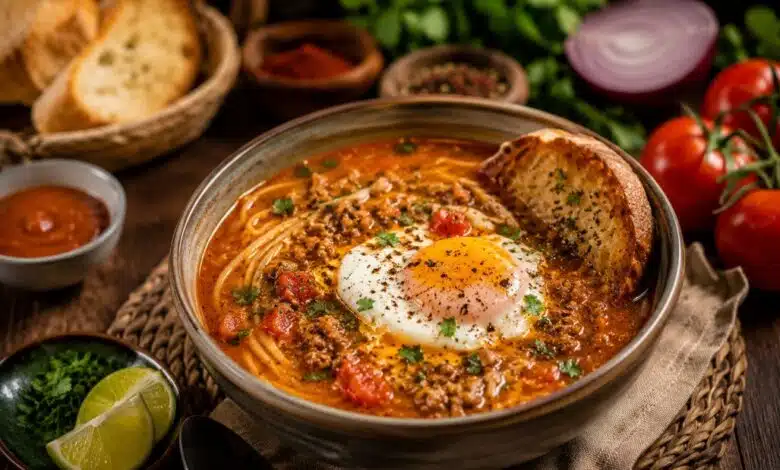
Sopa criolla is the kind of soup that can look familiar before it tastes unmistakably Peruvian. A bowl may contain beef, noodles, tomato, milk and egg—ingredients that appear in many comfort foods—but ají panca, oregano, a deeply cooked onion-and-tomato base and the particular way those elements meet in the broth give sopa criolla its own identity.
Sopa criolla is a traditional Peruvian beef-and-noodle soup built on a savory tomato, onion, garlic and ají panca aderezo. Many versions include thin noodles, beef broth, milk or evaporated milk, oregano and an egg cooked in or placed over the soup. Chopped beef and ground beef are both used, while potato, toasted or fried bread, lime, rocoto and rice may appear depending on the cook or restaurant.
The identity of sopa criolla lives in the combination
No single ingredient can define sopa criolla by itself. Beef soup is not automatically sopa criolla. Adding noodles does not settle the question, and neither does placing an egg on top. The identity comes from a recognizable relationship among a beef-based broth, a carefully cooked Peruvian aderezo, noodles, oregano and the softening influence of dairy and egg in many versions.
The soup usually begins with meat and aromatics rather than with a neutral pot of stock into which ingredients are dropped at the end. Onion, garlic, tomato and ají panca are cooked to create a concentrated base. Beef is browned or sautéed, broth is added, and noodles finish cooking in the seasoned liquid. Milk generally enters near the end so that the broth becomes rounded without turning into a heavy cream soup.
Egg is another identifying element, but it does not have one mandatory form. Some cooks crack eggs directly into the simmering soup and allow them to poach. Others stir egg more loosely into the broth. Restaurant versions may arrive with a fried egg resting on top. A cook may prepare one egg per serving or cook several eggs in the communal pot.
That flexibility explains why photographs of sopa criolla do not all look alike. One bowl may be rusty red and almost clear around the noodles. Another may be orange and visibly milky. A third may look darker because the beef stock and ají panca are more concentrated. The visual range is broad, but the underlying logic remains recognizable.
The bowl in one sentence
Sopa criolla combines the depth of beef broth, the warm red character of tomato and ají panca, the aroma of oregano, the comfort of noodles and the richness of egg, often finished with evaporated milk.
It is substantial enough to become lunch, yet fluid and aromatic enough to remain unmistakably a soup.
Beef broth or stock carries the savory structure and gives the soup more depth than water alone.
Onion, garlic, tomato and ají panca create the aderezo that gives the broth its Peruvian profile.
Beef and noodles turn the seasoned broth into a complete, spoonable meal.
Milk and egg add richness while oregano lifts the aroma just before serving.
The most concise way to describe sopa criolla to someone who has never seen it is “Peruvian beef noodle soup with tomato, ají panca, milk and egg.” That description is not exhaustive, but it distinguishes the dish from clear beef soup, chicken noodle soup, ramen and other bowls that might otherwise sound similar.
What does “criolla” mean in the name?
In this context, criolla connects the soup to Peru’s broad tradition of comida criolla rather than describing a single ingredient. Peruvian criollo cooking developed through layered cultural exchange, urban household cooking and the adaptation of local and introduced ingredients. The term appears across a wide range of dishes, sauces and preparations, so “criolla” should not be read as a universal flavor formula.
For sopa criolla, the name signals a recognizable Peruvian domestic and restaurant tradition. The bowl feels at home beside dishes such as ají de gallina, lomo saltado, cau cau, seco de res and tallarines, even though each has a different history and ingredient structure. What connects them is not sameness but their place within an evolving Peruvian criollo repertoire.
English menus occasionally translate the dish as “creole soup.” That wording can create confusion because “Creole” means different things in Louisiana, the Caribbean, Latin America and other culinary regions. A diner in the United States might expect Louisiana spices, seafood or sausage when none of those features defines the Peruvian soup.
For clarity, restaurants are usually better served by retaining the Spanish name and adding a short English explanation: “Sopa criolla — Peruvian beef noodle soup with tomato, milk and egg.” Keeping the original name protects the dish’s identity, while the description helps unfamiliar diners understand what they are ordering.
Useful menu-reading rule: when “creole soup” appears on a Peruvian menu, read the ingredient description before connecting it to any other cuisine’s use of the word Creole. Culinary terms travel, but they do not always carry the same meaning.
The ingredients that build sopa criolla
The ingredient list is accessible, but each component has a specific job. Replacing or omitting one ingredient does not always destroy the soup, yet understanding the role of each element makes it easier to recognize a thoughtfully prepared bowl.
Beef and beef broth
Beef gives sopa criolla its central savory identity. Cooks may use finely diced steak, small beef strips or ground beef. Chopped steak produces distinct tender pieces, while ground beef disperses throughout the liquid and gives the soup a more homestyle texture.
A well-made beef broth adds gelatin, aroma and length to the flavor. Some quick versions use water and depend on the browned meat and aderezo for depth. Restaurant menus may simply say “beef soup” without clarifying whether the stock is made in-house.
Ají panca
Ají panca is a dark red Peruvian chile commonly used as a paste. Its role is not to make the soup aggressively hot. It contributes color, mild pepper warmth and an earthy, slightly fruity depth that helps distinguish sopa criolla from ordinary tomato-based beef soup.
The amount varies. A restrained spoonful can quietly deepen the broth; a more generous quantity produces a darker red bowl with a clearer chile aroma. Heat-sensitive diners should still ask about spice because kitchens may combine ají panca with hotter peppers.
Onion and garlic
Red onion is common in Peruvian cooking, though restaurants may use the onion available to them. It is finely chopped and cooked until its sharpness fades. Garlic joins the onion and provides a savory bridge between meat, tomato and chile.
Rushing these ingredients leaves the broth tasting raw and separate. Cooking them patiently creates sweetness and continuity. The difference is noticeable even when the finished soup does not contain visible pieces of onion.
Fresh tomato and tomato paste
Tomato gives the soup color, gentle acidity and body. Some recipes use only fresh chopped tomato, while others reinforce it with tomato paste. The goal is not to create pasta sauce; tomato should remain part of a broth rather than turning the liquid dense and sweet.
A balanced version lets tomato brighten the beef without covering ají panca and oregano. Overly acidic soup may indicate undercooked tomato, too much paste or insufficient broth.
Thin noodles
Angel-hair pasta is strongly associated with many versions because it cooks quickly and distributes easily through the bowl. Restaurants also use spaghetti, linguine, fettuccine or other noodles depending on their kitchen and house style.
Fine noodles make the soup feel lighter and more integrated. Wider pasta creates a heavier meal and absorbs more broth. During delivery, every noodle continues softening, which is why the same soup can feel delicate in the restaurant and much thicker at home.
Milk or evaporated milk
Evaporated milk is a common finishing ingredient. It reduces the sharpness of tomato and gives the broth a smooth, gently creamy quality without requiring a large amount of dairy. Some restaurants use regular milk or cream, and others offer a version without milk.
The liquid should remain soup-like. If dairy dominates, the result can lose the clarity of the beef, chile and oregano. Because milk is sometimes omitted from brief menu descriptions, diners with allergies should always ask directly.
Egg
Egg transforms the soup from a flavorful broth with noodles into something more complete. A poached egg releases yolk gradually into the liquid, while a fried egg creates a visible topping. Eggs cooked directly in a communal pot may set differently from one serving to another.
The egg does not need to have a runny yolk. Some diners prefer it fully set, especially in takeout. What matters is that it feels integrated rather than like an unrelated garnish.
Oregano
Dried oregano gives sopa criolla a recognizable aromatic lift. Crushing it near the end releases more fragrance than adding stale powder at the beginning. The herb should be evident without making the soup taste medicinal.
Oregano is easy to underestimate because it appears in many cuisines. In this bowl, however, its fragrance helps connect tomato, chile, beef and dairy. A flat soup may simply be missing fresh aromatic energy.
Ingredients that appear in some versions
Potato is common enough to be familiar but not universal. Yellow potato adds softness and can slightly thicken the broth as it cooks. Rice may be served beside or inside the soup at some restaurants, producing an especially filling meal. Fried or toasted bread offers crisp contrast and absorbs the broth at the table.
Ají amarillo may join ají panca in certain household or restaurant versions. A slice of rocoto can provide sharper heat, while lime brightens the final bowl. Bay leaf, black pepper and other seasonings may support the broth without becoming defining ingredients.
These additions demonstrate an important principle: authenticity does not require every bowl to match one frozen ingredient list. A dish can have a stable identity and still allow regional, household and restaurant variation.
The aderezo is where the soup stops being generic
The difference between a convincing sopa criolla and a thin beef soup often begins before the broth enters the pot. The aderezo—the cooked aromatic and chile base—must be given enough time to develop. Onion, garlic, tomato and ají panca should lose their raw edges and merge into a concentrated foundation.
Some cooks brown the beef first, remove it and build the aderezo in the same pot. The browned residue left by the meat adds depth. Others begin with aromatics and add the beef afterward. Either sequence can work when the ingredients are properly cooked and the meat remains tender.
Ají panca paste deserves particular patience. Raw chile paste can taste harsh or muddy. Cooking it in oil mellows its flavor and allows its color to bloom. Tomato also benefits from time; the watery freshness should reduce into something sweeter and more cohesive before broth dilutes the mixture.
At home, this sequence explains why two recipes with almost identical ingredients can taste completely different. In restaurants, it explains why a bowl may be technically correct yet emotionally flat. The aderezo supplies the connective flavor—the sense that everything in the soup belongs together.
What does sopa criolla taste like?
Sopa criolla tastes savory, beefy, tomato-rich and aromatic, with mild chile depth and a gently creamy finish in versions made with milk. It is usually warming rather than fiercely spicy. Oregano gives the steam an herbal character, while egg and noodles make the broth feel substantial.
First impression
Warm beef broth, cooked tomato and onion arrive first. The soup feels familiar enough to be comforting but more aromatic than standard beef noodle soup.
Middle of the spoonful
Ají panca adds earthy pepper depth while noodles carry the broth. Milk softens acidity and links the ingredients.
Finish
Oregano, black pepper and the richness of egg remain after the broth. Lime or rocoto can make the finish brighter or hotter.
Is sopa criolla spicy?
Most versions are not intensely spicy. Ají panca has a relatively mild heat profile and is valued for color and flavor. Nevertheless, restaurants control their own seasoning. Some add ají amarillo, rocoto or another hotter chile, while others provide hot sauce separately.
A diner who avoids heat should request the table sauce on the side but does not usually need to fear the ají panca itself. A diner seeking more spice can add rocoto carefully after tasting. Covering the soup with hot sauce before the first spoonful makes it difficult to appreciate the balance of beef, tomato, oregano and dairy.
Is the broth creamy?
It can be creamy without being thick. Evaporated milk gives the broth opacity and softness, but a traditional-looking bowl may still flow freely around the noodles. Cream used by some restaurants can produce a richer result. Other cooks add only a small splash of milk or omit it entirely.
The planned companion article on what sopa criolla tastes like can explore these sensory differences in greater depth, including how ají panca, oregano, dairy and noodle choice change the experience.
Why two authentic-looking bowls can be surprisingly different
Sopa criolla has a recognizable core, but restaurants and families make meaningful choices around it. Those choices affect color, thickness, texture and serving size. Variation should be expected rather than treated as evidence that only one version is legitimate.
| Element | Possible versions | How the bowl changes |
|---|---|---|
| Beef | Ground, finely chopped, sliced or diced | Ground beef blends into the broth; chopped beef creates distinct bites |
| Noodles | Angel hair, spaghetti, linguine or fettuccine | Fine noodles feel delicate; wider noodles make the soup heavier |
| Dairy | Evaporated milk, fresh milk, cream or none | The broth ranges from clear red-brown to visibly creamy orange |
| Egg | Poached, fried, stirred in or fully set | The egg may enrich the broth gradually or remain a separate topping |
| Potato | Absent, diced or served in larger pieces | Potato adds softness, starch and greater meal-like weight |
| Bread | Fried slice, toast, crusty bread or none | Bread adds crisp contrast and absorbs the seasoned broth |
| Heat | Ají panca only, added ají amarillo or rocoto on the side | The soup can remain mild or become noticeably hotter |
Home-style versions
A home cook may use water instead of prepared beef stock, ground beef instead of steak and whatever thin pasta is already in the pantry. Potato can stretch the meal, and one egg per person turns a modest pot into a satisfying dinner. These practical decisions belong to the soup’s everyday character.
Home versions also allow immediate serving. Noodles and eggs reach the table as soon as they are ready, preserving texture. The soup may be less polished than a restaurant presentation but more precise in timing.
Restaurant versions
Restaurants often create a more concentrated broth or a larger ingredient list. A kitchen may add rice, potato and a fried egg, turning the soup into a substantial entrée. Another may serve a smaller bowl before the main course. Some restaurants keep a prepared soup base and finish noodles and egg to order; others serve the soup from a larger batch.
Menu descriptions tend to emphasize the ingredients most familiar to local diners. An American menu may call it “beef noodle soup,” while a Peruvian menu may assume the customer already understands the Spanish name. The same kitchen could use both descriptions on different platforms.
Versions outside Peru
Peruvian restaurants abroad adapt to ingredient supply, customer expectations and service format. Evaporated milk is generally easy to source, while specific potato varieties may not be. Pasta shape can reflect the restaurant’s existing inventory. Beef cuts and broth preparation may change according to local cost.
Adaptation does not automatically erase identity. The better question is whether the variation preserves the soup’s balance and logic. A bowl made with linguine rather than angel hair can still taste clearly like sopa criolla. A generic clear soup relabeled without ají, tomato, oregano or the characteristic richness is less convincing.
Sopa criolla versus sopa a la minuta
Sopa criolla and sopa a la minuta are closely related Peruvian beef-and-noodle soups, and the boundary between them is not applied consistently. Some families and restaurants use the names almost interchangeably. Others treat them as separate dishes and list both on the same menu.
The phrase a la minuta points toward quick preparation. A version may be assembled rapidly from beef, aromatics, broth, noodles and egg. Sopa criolla is often described with a more pronounced tomato-and-ají base and may include evaporated milk, though these distinctions are not universal enough to function as strict laws.
| Comparison point | Sopa criolla | Sopa a la minuta |
|---|---|---|
| Shared structure | Beef, broth, noodles, aromatics and often egg | Beef, broth, noodles, aromatics and often egg |
| Common emphasis | Tomato, ají panca, oregano and a criollo seasoning profile | Fast, everyday beef-and-noodle preparation |
| Dairy | Frequently appears in recipes and menu descriptions | May appear, but is not described consistently |
| Restaurant treatment | Sometimes listed as a distinct traditional soup | Sometimes used as an alternate or neighboring name |
| Best way to identify | Read the ingredients and ask how that particular kitchen distinguishes the two | |
The planned article on sopa criolla versus sopa a la minuta will give the comparison enough space to examine recipe patterns and restaurant naming. For everyday ordering, the practical rule is to search both names and focus on what the kitchen actually serves.
How sopa criolla is served
Sopa criolla is served hot and can occupy several positions in a meal. A small restaurant bowl works as a starter. A generous serving with beef, noodles, egg, potato and bread can stand alone as lunch or dinner. The correct interpretation depends on portion size rather than the word “soup.”
Egg in the bowl
A poached egg can be broken with the spoon so that the yolk enriches the surrounding broth. A fried egg remains more visually separate and may add crisp edges. Fully cooked egg is common and particularly practical for takeout.
Bread
Fried bread is a traditional-feeling accompaniment in some versions. It offers a crisp surface at first, then absorbs the broth. Toasted bread or a crusty roll can serve the same practical role. Bread is not mandatory, especially when the soup already contains potato or rice.
Lime and rocoto
A small amount of lime can brighten the soup’s beefy, creamy character. It should be added after tasting because too much acidity can overpower the balance. Rocoto provides sharper heat and should also be used cautiously.
Rice and potato
Some restaurant servings include rice on the side or potato in the broth. Both additions make the meal more filling. A diner ordering an entrée afterward should ask about the portion to avoid an unexpectedly heavy meal.
What pairs well with it?
For a first taste, the soup alone with bread and lime is enough. When sharing, pair one bowl with something texturally different, such as anticuchos or a modest serving of ceviche. Ordering it beside another rich, potato-heavy dish can make the meal feel repetitive.
How to recognize a well-made bowl
Quality is not determined by decorative plating. Sopa criolla succeeds when the broth tastes cohesive, the meat remains tender, the noodles retain enough structure and the dairy, egg and herbs support the soup rather than crowd it.
Signs of an underdeveloped soup
A thin broth with raw tomato acidity may indicate that the aderezo was rushed. Overly salty soup can rely too heavily on commercial stock concentrate. Dry meat suggests poor timing, while a thick mass of noodles may have been held too long before serving.
None of these observations should be made without considering delivery. A bowl that spent forty minutes in a closed container will naturally have softer noodles and a firmer egg than the same soup served at the restaurant.
Is sopa criolla suitable for special diets?
Traditional and restaurant versions commonly contain beef, wheat noodles, dairy and egg. The soup is therefore not normally vegetarian, vegan, gluten-free or dairy-free. Variations are possible, but they should be confirmed rather than assumed.
Vegetarian and vegan versions
A vegetarian adaptation can replace beef and beef broth with mushrooms, legumes or a vegetable stock, but it becomes a deliberate reinterpretation. A vegan version must also omit dairy and egg. Restaurants rarely prepare such substitutions unless they advertise a separate plant-based soup.
Gluten
Angel hair and other common pasta shapes are usually wheat-based. Broth concentrates and seasoning products may contain additional gluten. Shared pots, utensils and preparation surfaces matter for diners with celiac disease or severe allergies.
Dairy
Milk, evaporated milk or cream may be added near the end, but the base may be prepared in advance. Asking for “no milk on top” does not guarantee a dairy-free broth. Confirm whether dairy is already incorporated into the batch.
Egg
Egg can be visible or dispersed through the soup. Diners with an allergy should ask whether it is cooked directly in the communal pot. Removing a fried egg from the top may not be enough.
Halal requirements
Beef soup is not automatically halal. Confirm the source of the meat, broth ingredients, cooking fats and shared equipment. A statement that the soup contains no pork does not establish halal certification or preparation.
Sodium
Restaurant soups can be high in sodium, especially when stock reduces during service or concentrated bases are used. A kitchen may not be able to adjust a batch-prepared broth to order. Diners managing sodium intake should ask how the stock is prepared and choose an appropriate portion.
What first-time diners should expect
Expect a hearty, spoonable soup rather than a delicate consommé. The bowl should feel familiar enough to be comforting: beef, noodles, tomato and egg are recognizable. The Peruvian character emerges through ají panca, oregano, the cooked aderezo and the way dairy softens the broth.
Do not expect the chile color to predict intense heat. Do not assume that every bowl will contain potato. Do not be surprised if the egg arrives fried rather than poached. Most importantly, do not assume that a small menu description tells you the entire ingredient list.
A useful first order: choose dine-in when possible, request lime and hot sauce on the side, taste the broth before adding either, and ask whether the portion is intended as a starter or full meal.
Delivery is possible, but it is not the best format for learning the soup. Noodles continue absorbing broth, egg continues cooking and fried bread loses its crispness. Pickup from a nearby restaurant is a better compromise when dine-in is not practical.
If the restaurant lists both sopa criolla and sopa a la minuta, ask for the difference rather than selecting at random. The answer reveals how that kitchen understands the dishes and helps you choose the version closest to your expectations.
Can sopa criolla be made ahead?
The broth base can be prepared ahead more successfully than the complete soup. Beef, aderezo and stock can be cooked, cooled and refrigerated. Noodles, egg, milk and final oregano are better added when the soup is reheated for service.
Storing noodles in the broth causes them to absorb liquid and soften. The next-day soup may taste good but become considerably thicker. Keeping cooked noodles separate preserves more control, though freshly cooked angel hair gives the best texture.
Dairy should be reheated gently. A hard boil can cause separation and make the egg rubbery. Warm only the portion needed, and add a small amount of broth or water if storage has made the soup too thick.
Restaurant leftovers should be refrigerated promptly in a covered container. Reheat until thoroughly hot, but avoid repeated cycles of cooling and reheating. When storage instructions from a restaurant are available, follow those directions.
How sopa criolla fits among Peruvian soups
Peruvian soup traditions are broad. Sopa criolla occupies one recognizable corner: beef, noodles, tomato, chile, oregano, dairy and egg. Other soups can share individual ingredients while offering a completely different experience.
| Soup | Main character | How it differs from sopa criolla |
|---|---|---|
| Aguadito de pollo | Green cilantro-forward chicken-and-rice soup | Herbier, greener and based on chicken and rice |
| Caldo de gallina | Substantial hen broth with noodles, potato and egg | Paler poultry base without the same tomato–ají panca identity |
| Chupe de camarones | Rich shrimp soup with dairy, vegetables and starches | Seafood-centered and usually more elaborate |
| Parihuela | Bold fish-and-shellfish soup | Briny and marine rather than beefy and creamy |
| Menestrón | Green herb, vegetable, bean and pasta soup | More vegetable-driven with a pesto-like character |
| Sopa a la minuta | Quick Peruvian beef-and-noodle soup | The closest relative, with distinctions varying by kitchen |
The planned guide to Peruvian soups will help readers compare these bowls according to broth, protein, starch, herbs and richness. Sopa criolla should not be treated as the representative of every Peruvian soup, but it is an excellent entry point into the country’s comfort-food repertoire.
Why this modest-looking soup remains memorable
Sopa criolla does not depend on rare ingredients or theatrical presentation. Its appeal comes from proportion and timing. Beef must contribute savoriness without becoming tough. Tomato and ají panca must deepen the broth without turning it into sauce. Milk must soften without flattening. Noodles must cook without swallowing the entire pot. Egg must enrich without feeling pasted on.
When those relationships work, the bowl tastes more complex than its ingredient list suggests. It can be warming in cold weather, restorative after a long day and substantial enough to replace a larger meal. At the same time, its flavor remains specific. It is not merely “comforting beef soup”; it is a recognizable expression of Peruvian criollo cooking.
That specificity is also why the dish deserves to keep its Spanish name on menus. Translation can explain the bowl, but the name connects it to the tradition from which its flavor structure comes.
Common questions about sopa criolla
The name, ingredients and relationship to other Peruvian soups can create understandable confusion. These answers summarize the distinctions that matter most.
What is sopa criolla?
Sopa criolla is a traditional Peruvian beef-and-noodle soup made with a cooked base of onion, garlic, tomato and ají panca. Many versions also contain beef broth, thin pasta, oregano, milk or evaporated milk and an egg. Potato, fried bread, lime, rocoto and rice may also be served with it.
What country is sopa criolla from?
Sopa criolla is associated with Peruvian comida criolla. It is served in homes and Peruvian restaurants, including restaurants outside Peru. The word criolla connects the dish to Peru’s broader criollo cooking tradition rather than to Louisiana Creole cuisine.
What does sopa criolla taste like?
It tastes savory, beefy, tomato-rich and aromatic, with mild earthy chile flavor from ají panca and a gently creamy finish when milk is used. Oregano adds a noticeable herbal aroma, while noodles and egg make the soup filling.
Is sopa criolla spicy?
Sopa criolla is usually mild to moderately seasoned rather than intensely hot. Ají panca contributes deep color and pepper flavor with relatively gentle heat. Some cooks add hotter peppers or serve rocoto sauce separately, so restaurant versions can vary.
What are the main ingredients in sopa criolla?
The most common ingredients are beef, beef broth, onion, garlic, tomato, ají panca, thin noodles and oregano. Milk or evaporated milk and egg are also common. Some versions include potato, tomato paste, ají amarillo, fried bread, lime or rice.
Does sopa criolla always contain milk?
No. Milk or evaporated milk is common and gives the broth a rounded, gently creamy finish, but some cooks use only a small amount and others omit it. Restaurant menus may not list every ingredient, so diners with dairy allergies should ask directly.
Is sopa criolla the same as sopa a la minuta?
They are closely related Peruvian beef-and-noodle soups, and some cooks use the names interchangeably. Other restaurants list them separately and distinguish them through the aderezo, dairy, egg, potato, meat preparation or house tradition. Reading the ingredient description is more reliable than assuming one universal rule.
Is sopa criolla gluten-free?
Most traditional restaurant versions are not gluten-free because they contain wheat noodles such as angel hair, spaghetti, linguine or fettuccine. Broth concentrates and shared preparation equipment may create additional concerns. A restaurant must confirm the complete preparation before the soup can be treated as gluten-free.
Is sopa criolla a starter or a complete meal?
It can be either. A small bowl may be served before an entrée, while a large serving with beef, noodles, egg, potato, bread or rice can function as a complete lunch or dinner. Ask about the portion before ordering additional heavy dishes.
Where can I find sopa criolla near me?
Look for full-service Peruvian restaurants with broad traditional or criollo menus. Search for both sopa criolla and sopa a la minuta, check current online menus and call before making a long trip. Some U.S. restaurants list the soup for dine-in, pickup or delivery.


